
A United States Air Force A-10 Thunderbolt II crashed near the strategically vital waterway during a high-risk operation to locate a downed F-15E Strike Eagle. The incident occurred amid heightened military activity involving the United States Air Force and regional operations linked to Iran’s southern airspace.
According to The New York Times, two US officials confirmed the downing of the A-10 Thunderbolt II “on condition of anonymity” that the A-10 pilot ejected safely and was recovered, while the status of the F-15E crew remains central to ongoing rescue efforts.
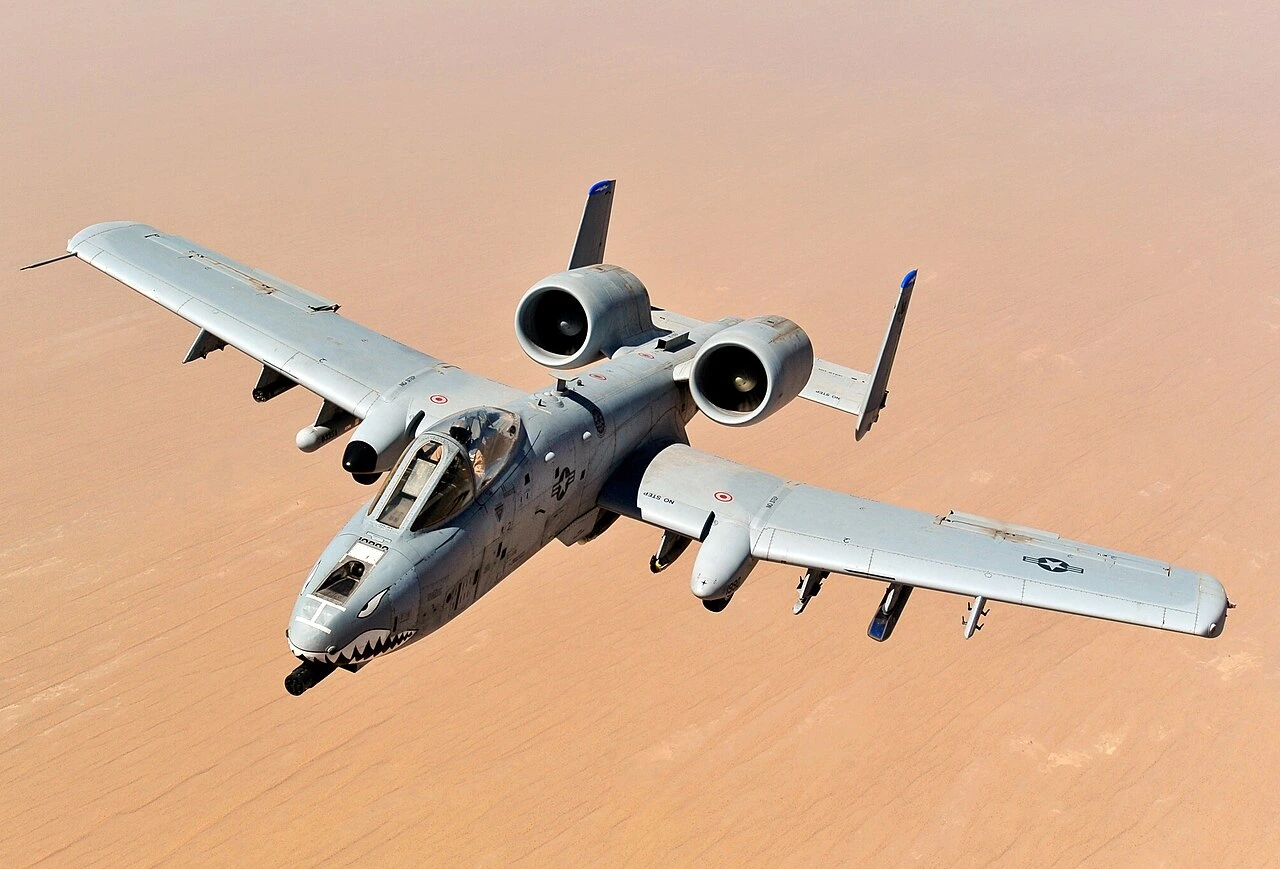
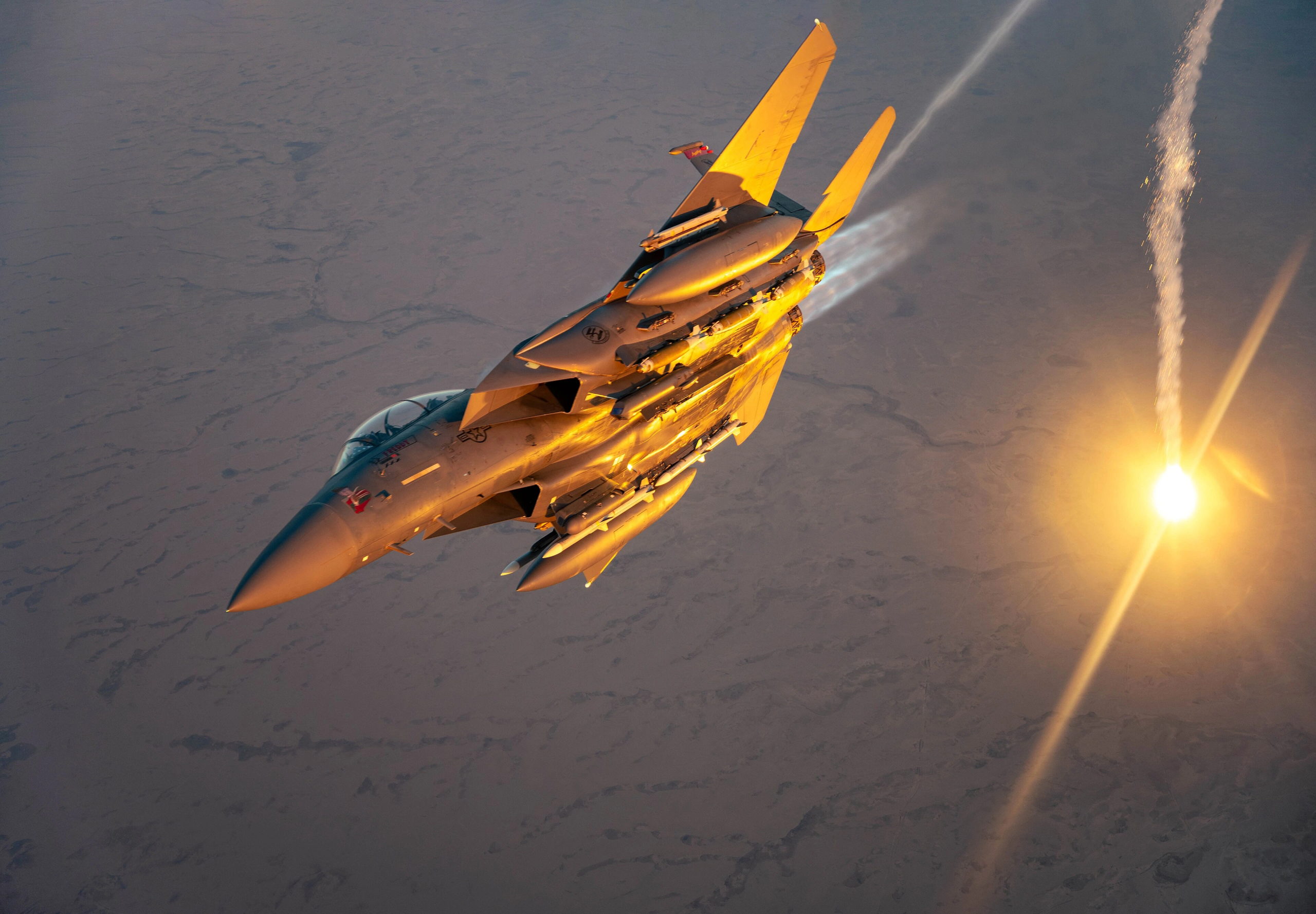
A-10 and F-15E: Twin Aircraft Loss for the USAF
The crash of the A-10 Thunderbolt II came just hours after a US Air Force F-15E Strike Eagle was shot down over Iran. The F-15E belonged to the 494th Fighter Squadron, a unit forward-deployed from RAF Lakenheath and heavily involved in ongoing regional operations.
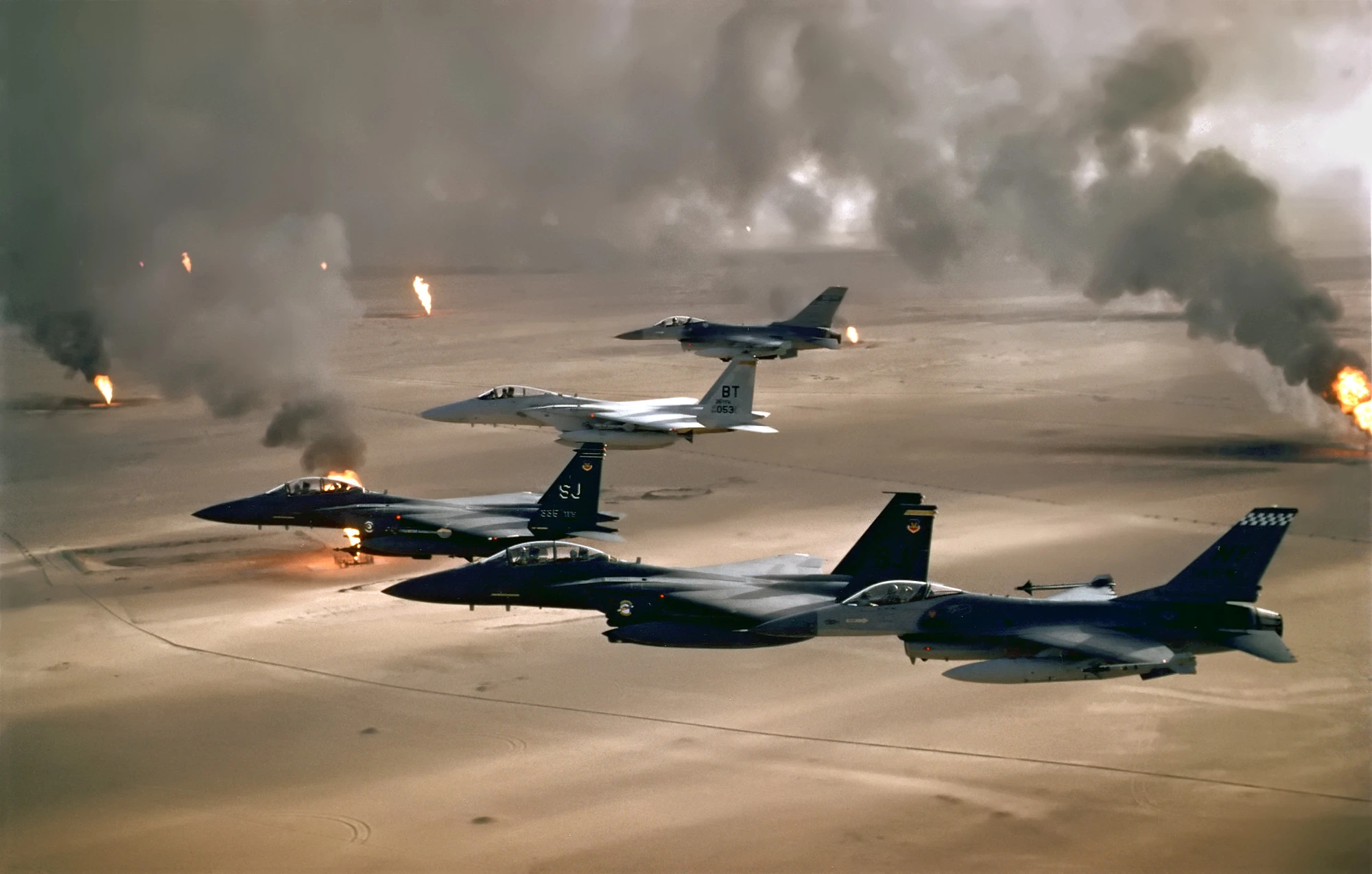
Here’s how the two aircraft stack up against one another:
A-10 Thunderbolt II vs F-15 E: Capability Comparison
| Capability | A-10 Thunderbolt II | F-15E Strike Eagle |
|---|---|---|
| Primary Role | Close air support (CAS) | Multirole strike fighter (air-to-air & air-to-ground) |
| Crew | 1 pilot | 2 (pilot + weapon systems officer) |
| Max Speed | ~450 knots (Mach 0.75) | ~1,875 mph (Mach 2.5) |
| Range | ~2,580 miles | ~2,400 miles (combat), higher ferry range |
| Service Ceiling | ~45,000 ft | ~60,000 ft class (Mach 2.5 high-altitude operations) |
| Payload Capacity | Up to 16,000 lbs | Up to ~23,000 lbs |
| Main Gun | 30mm GAU-8/A Avenger cannon | 20mm M61 Vulcan cannon |
| Air-to-Air Capability | Limited (AIM-9 Sidewinder) | Advanced (AIM-9, AIM-120 AMRAAM) |
| Air-to-Ground Capability | Specialized for tank killing and CAS | Precision strike with wide weapons suite |
| Survivability | Heavy armor, can withstand ground fire | High speed, electronic warfare systems |
| Maneuver Profile | Optimized for low-speed, low-altitude combat | High-speed, high-altitude, all-weather operations |
| Mission Endurance | Long loiter time over battlefield | Long-range deep strike capability |
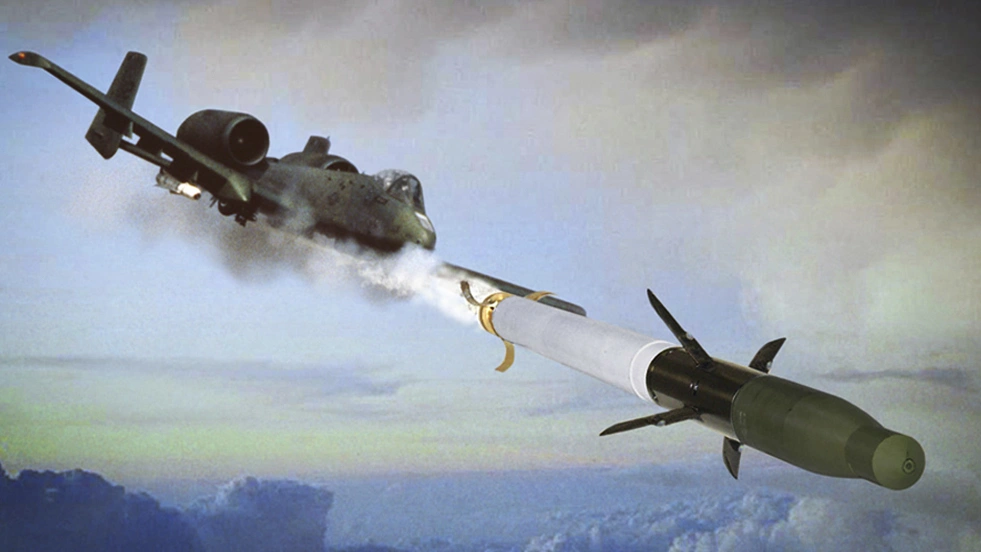
Visual evidence circulating online showed wreckage consistent with the squadron’s markings, reports Simple Flying:
Pictures appearing on social media show wreckage of an F-15E Strike Eagle photographed in mountainous terrain in central Iran. The vertical stabilizer carries the red band of the 494th Fighter Squadron, based at RAF Lakenheath, England. The USAF in Europe badge is also visible, and there are also images of an ACES II ejection seat reportedly recovered from the site.
One crew member, the pilot, was successfully rescued by US forces, while the second crew member’s status remains unknown. The crash of the F-15E marked the first confirmed shootdown of a US fighter jet by Iran in the current conflict. Notably, three additional F-15 aircraft were previously lost due to friendly fire incidents over Kuwait, and The Aviationist noted the following about USAF operated aircraft in the region:
| Category | Details |
|---|---|
| A-10 Deployment | Additional A-10 Thunderbolt II aircraft are being moved into the region via RAF Lakenheath, United Kingdom |
| F-22 Movement | F-22 Raptors previously positioned at RAF Lakenheath have departed and are returning to the United States |
| Additional Incident Reports | Unverified reports suggest a possible hit on a Black Hawk or Pave Hawk helicopter involved in CSAR operations |
| F-16 Emergency | A USAF F-16 Fighting Falcon squawked 7700 (general emergency) over Saudi Arabia near the Iraq border at approximately 1500 UTC |
| KC-135 Emergency | A KC-135 Stratotanker also squawked 7700 over Israel at approximately 1840 UTC |
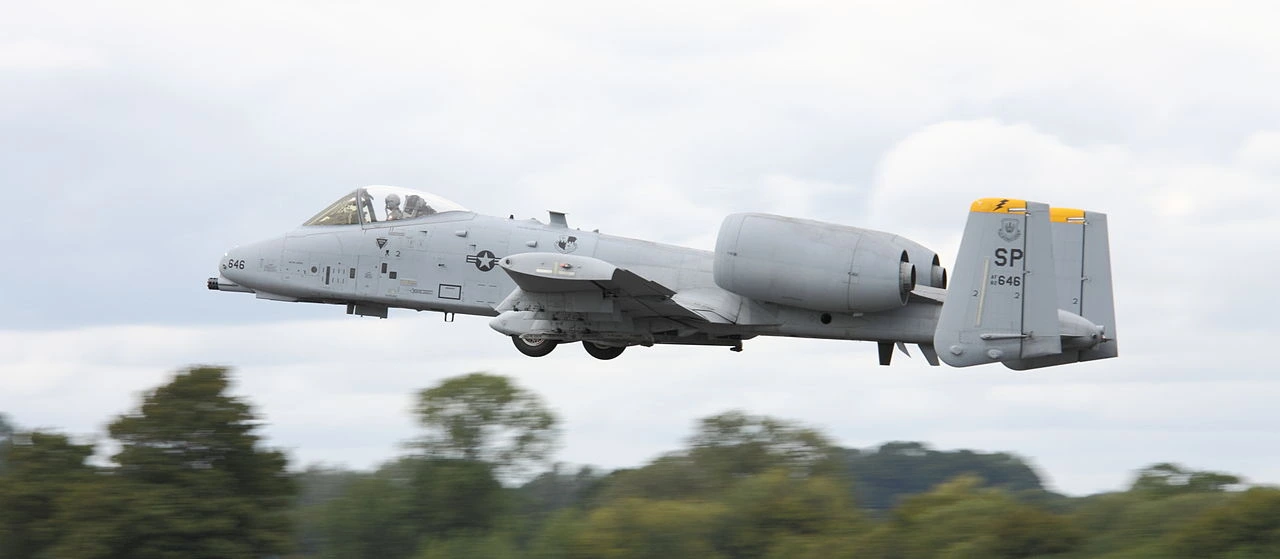

A-10 Mission Role
The exact mission of the A-10 at the time of the crash remains unconfirmed by defense authorities. However, the aircraft type is widely used for:
- close air support
- armed overwatch
- precision strikes against ground
- maritime threats
Given the timing, analysts suggest the aircraft may have been supporting the rescue mission or conducting parallel operations in the area. The A-10’s ability to operate in contested environments makes it a frequent choice for missions over high-risk zones.
Alternatively, the aircraft may have been part of routine patrol or strike operations, as multiple US assets operate continuously over the Strait of Hormuz. The region sees constant aerial surveillance and rapid-response readiness due to its strategic importance.
The following comparison table gives us a clue about the two USAF aircraft that have been downed:
| Category | A-10 Thunderbolt II Crash | F-15E Strike Eagle Shootdown |
|---|---|---|
| Aircraft Type | Close air support aircraft | Multirole strike fighter |
| Incident Type | Crash (cause unconfirmed) | Confirmed shootdown |
| Location | Strait of Hormuz (Persian Gulf) | Iranian territory |
| Timing | Occurred hours after F-15E loss | Occurred earlier the same day |
| Mission Role | Likely support or patrol mission (not confirmed) | Active combat sortie |
| Squadron | Not officially confirmed | 494th Fighter Squadron |
| Pilot Status | Pilot ejected and rescued safely | Pilot rescued |
| Second Crew Member | Not applicable (single-seat aircraft) | Status unknown |
| Cause | Under investigation | Enemy air defenses suspected |
| Operational Context | During rescue or parallel operations | Triggered combat search and rescue mission |
| Threat Environment | High-risk maritime airspace | Heavily defended inland airspace |
| Strategic Impact | Highlights operational hazards | Marks escalation in air combat losses |
The X account of Consulate General of the I.R. Iran in Mumbai posted a footage of the exact moment the A-10 warplane is struck by an air defense missile fired by the Iranian Army’s integrated air defense system.
Strategic Airspace Risks Over the Strait of Hormuz
The Strait of Hormuz remains one of the most sensitive and heavily monitored maritime corridors in the world. While the safe recovery of the A-10 pilot is a positive outcome, the dual aircraft loss marks a significant operational challenge. According to Times Now, “geolocated footage from Khuzestan Province showed low-flying aircraft in a formation typical of air-to-air refuelling operations“.