United Airlines (UA), which in response to the global jet fuel hike increased check baggae fees, has quietly broadened free inflight Wi-Fi access beyond its SpaceX Starlink-equipped aircraft, allowing MileagePlus members to connect at no additional cost on a growing number of aircraft fitted with Viasat and Panasonic systems. The development affects a substantial portion of the carrier’s fleet, including select long-haul international services.
The change has not been formally announced by the airline, but multiple passenger reports (as reported by One Mile at a Time) indicate that the streaming Wi-Fi package now appears at a zero-cost rate when users log in with their MileagePlus credentials. The move emerges shortly after United ended its long-standing inflight Wi-Fi agreement with T-Mobile on 13 April 2026.


Wi-Fi Expansion Across United’s Fleet
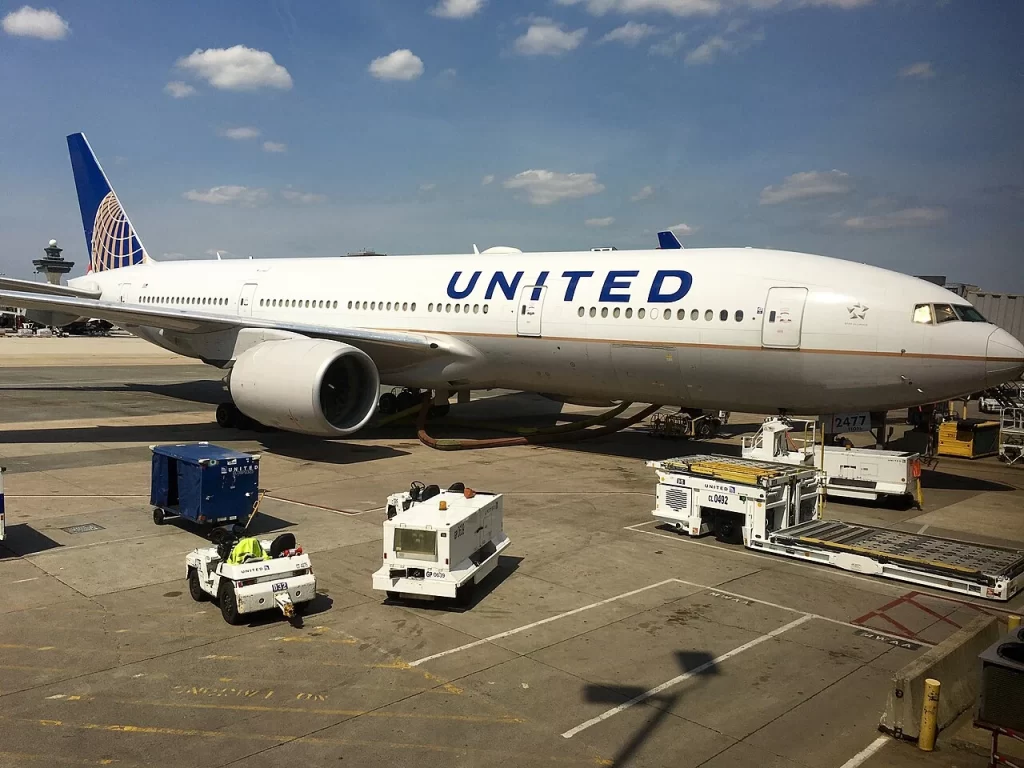
Passengers report that free Wi-Fi access is now available on several aircraft types, including Boeing 737 MAX jets equipped with Viasat connectivity and Boeing 777-200ER aircraft fitted with Panasonic systems. The benefit appears to apply across cabin classes and loyalty tiers, with no differentiation between Economy, Premium, or Business cabins.
On-board login portals reportedly display a $0.00 charge for the streaming package when authenticated through MileagePlus accounts. However, United’s official website continues to list standard pricing of $8 for members and $10 for non-members on non-Starlink aircraft, indicating the rollout may still be in an unconfirmed or phased state.
Industry observers have noted that the change could represent a limited trial or system-wide configuration shift rather than a formally announced policy update. Connectivity availability remains inconsistent across the fleet, with some flights still requiring payment for Wi-Fi access.


United’s T-Mobile Partnership Ends
The timing of the expanded access closely follows the termination of United’s inflight Wi-Fi partnership with T-Mobile, which ended on 13 April 2026. Under the previous arrangement, T-Mobile subscribers received complimentary connectivity across eligible United flights.
T-Mobile continues to provide free inflight Wi-Fi benefits on carriers including Delta Air Lines (DL) and other selected partner airlines, while American Airlines (AA) has already transitioned to alternative sponsored connectivity models. According to the words of a spokesperson of T-Mobile quoted in Simple Flying:
For over a decade, we have been a leader in free in-flight connectivity, setting the industry standard and keeping more people connected in the air. We continue to have more major U.S. airline partners than any competitor, including Delta, Alaska, Hawaiian and Southwest, that keep more travelers, including our competitors’ customers, connected with free T-Mobile-sponsored in-flight Wi-Fi through those programs.
United’s exit from the partnership has created a transitional gap in its connectivity offering.
The airline has not confirmed whether the expanded free Wi-Fi access is intended to permanently replace the previous T-Mobile-linked benefit or function as a temporary interim solution.

.jpg)
United’s Starlink Rollout Strategy
United continues to accelerate deployment of Starlink across its fleet, with more than 300 regional aircraft already equipped as of early 2026. The airline plans to extend installation to over 500 mainline aircraft by the end of 2026, targeting full fleet integration by late 2027.
Starlink-enabled aircraft offer significantly higher bandwidth compared to legacy Viasat and Panasonic systems, with passengers reporting performance comparable to ground-based broadband services. United positions the technology as a core pillar of its long-term inflight connectivity strategy.
However, the full transition remains years away, creating operational overlap between legacy satellite systems and next-generation connectivity. The interim expansion of free Wi-Fi across non-Starlink aircraft appears to bridge this gap while aligning United with competitors offering complimentary inflight internet.
_@_Washington_Dulles,_2016.jpg)
Competitive Pressure in US aviation connectivity
The US airline industry has increasingly shifted toward free inflight Wi-Fi as a baseline service offering. Delta Air Lines (DL) provides sponsored connectivity on most domestic and many international routes, while American Airlines (AA) currently offering AT&T-sponsored complimentary Wi-Fi across its entire narrowbody fleet, along with approximately 80% of its regional aircraft.
JetBlue Airways (B6) has long offered complimentary Wi-Fi across its entire network, placing additional competitive pressure on legacy carriers. United’s expanded access narrows a service gap that had previously placed it behind key US competitors in connectivity offerings.
Whether the current free Wi-Fi availability on non-Starlink aircraft becomes permanent or reverts to a paid model remains unconfirmed, as United has not issued an official policy statement on the change.