American Airlines Group, operator of American Airlines (AA), has formally rejected any interest in merger discussions with United Airlines (UA), ending speculation that emerged earlier in the week regarding a potential consolidation between two of the largest US carriers.
The announcement followed reports that United Airlines CEO Scott Kirby had approached senior US administration officials regarding a possible acquisition scenario. American Airlines issued its response after market close on Friday, clarifying its position and dismissing any ongoing negotiations or intent to engage in merger talks.
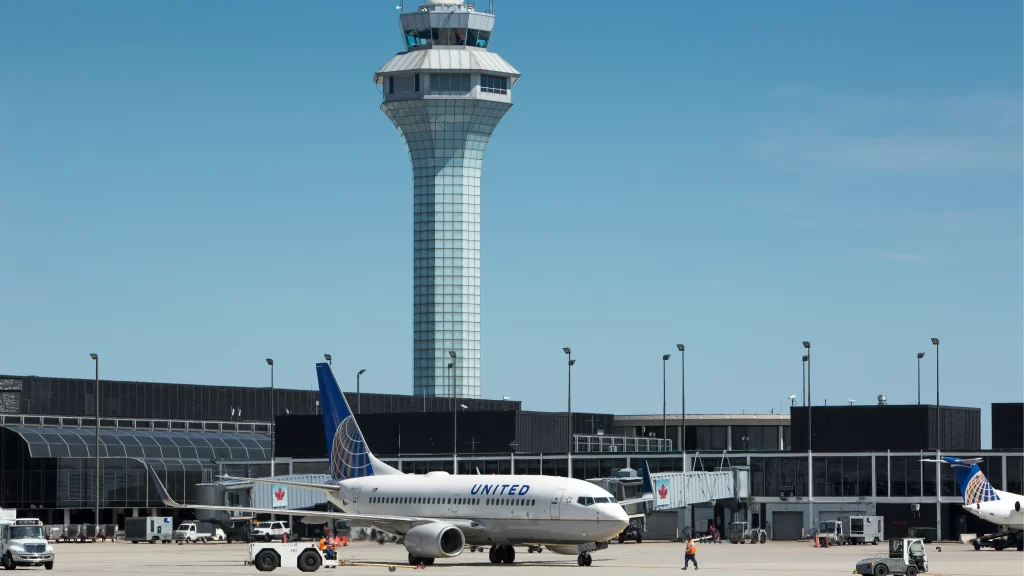
American Airlines’ Stance on Merger with United
American Airlines stated that it is “not engaged with or interested in any discussions regarding a merger with United Airlines,” effectively closing the door on the proposed consolidation narrative. The carrier also emphasised that such a merger would undermine competitive dynamics within the US aviation market.
The airline aligned its position with current regulatory expectations, noting that large-scale consolidation would face significant antitrust scrutiny. It further indicated support for maintaining a competitive industry structure that prioritises consumer choice and market balance, and was quoted in Reuters:
While changes in the broader airline marketplace may be necessary, a combination with United would be negative for competition and for consumers.
According to the company’s statement, American Airlines reaffirmed its focus on operational stability and its ongoing collaboration with US policymakers on broader aviation sector improvements.
Only a couple of days ago, a similar sentiment was expressed by the director of the Vanderbilt Policy Accelerator, Ganesh Sitaraman, (in a piece in Guardian), who said that the potential merger between two of the big three carriers of the US “proves how broken the airline industry is in America – and would be an absolute disaster for the flying public”
Fewer choices mean higher ticket prices, more fees, and fewer options for anyone who wants to get from point A to point B. Even the most permissive antitrust regulator should put their foot down at such a blatantly anticompetitive merger.
William McGee, a senior fellow for aviation and travel at the American Economic Liberties Project, was quoted in the same source as having said that the rumored merger between the two carriers was “undoubtedly the most absurd airline merger I’ve ever heard about in the 41 years that I’ve been working in, writing about and advocating about in this industry”.
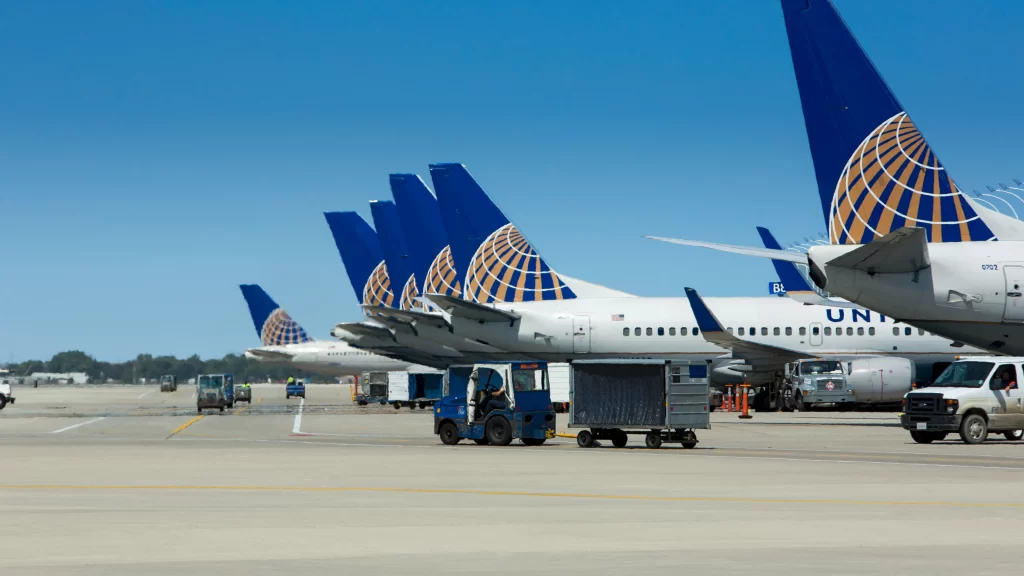
Speculation of United Airlines Acquisition
The merger speculation originated from reports suggesting United Airlines (UA) leadership had explored the feasibility of acquiring American Airlines through discussions with government officials. The sequence of engagement reportedly placed initial outreach with the administration before direct contact with American Airlines.
MarketWatch reported the impact of the United–American potential merger in the following way:
| Category | Data |
|---|---|
| Global market share (United) | 4.7% (2025) |
| Global market share (American) | 4.3% (2025) |
| Combined global share (pro forma) | ~9% |
| Global ranking impact | Would likely become world’s largest airline group |
| Nearest competitor (Delta Air Lines) | 4.3% global market share |
| Domestic network share impact | ~50%+ share of ASMs at 159 US airports |
The reports triggered a short-term rise in American Airlines’ stock price earlier in the week as markets reacted to the possibility of a large-scale industry consolidation. However, uncertainty persisted until American Airlines issued its formal rejection.
Industry observers noted that any such transaction would represent one of the largest airline mergers globally, significantly reshaping competition across domestic and international networks.
US Airline Industry Consolidation Challenges
A potential merger between American Airlines and United Airlines would face extensive regulatory review across multiple jurisdictions, including US federal antitrust authorities. Legal experts note that competition concerns would likely form the central obstacle to approval.
US aviation has been rife with potential and actual mergers. In January, Allegiant (ALGT) revealed plans to acquire rival low-cost carrier Sun Country (SNCY) in a deal valued at roughly $1.5 billion. Later, in March, a Semafor report indicated that JetBlue (JBLU) had engaged financial advisers to evaluate a potential sale to a competitor.
Separately, Alaska Airlines (ALK) agreed to acquire Hawaiian Airlines in December 2023, with regulatory approval granted in autumn 2024. Analysts noted that the two carriers had minimal network overlap, and where their operations did intersect—primarily West Coast–Hawaii routes—Alaska Airlines generally maintained lower fares, according to Trent.