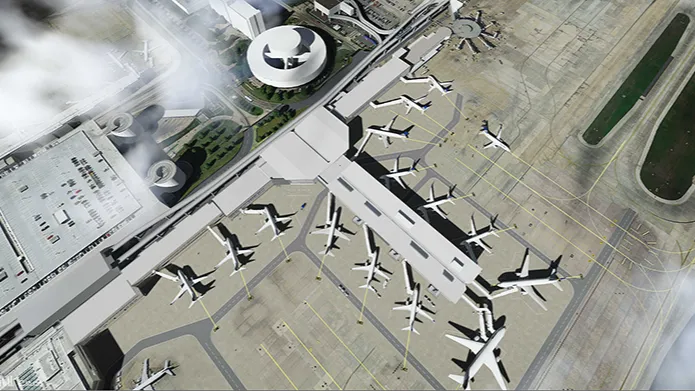
United Airlines Flight Reductions Amid Shutdown: What Travelers Should Know

In response to the ongoing U.S. federal government shutdown that has affected thousands of flights across the United States, United Airlines, the carrier with the highest number of employed pilots, has announced that it will cancel approximately four percent of its flight schedule across select domestic markets in coming days, reported a piece published in ABC News. The move comes after the Federal Aviation Administration (FAA) directed carriers to reduce operations at 40 major airports, citing fatigue and staffing shortages among air-traffic controllers.
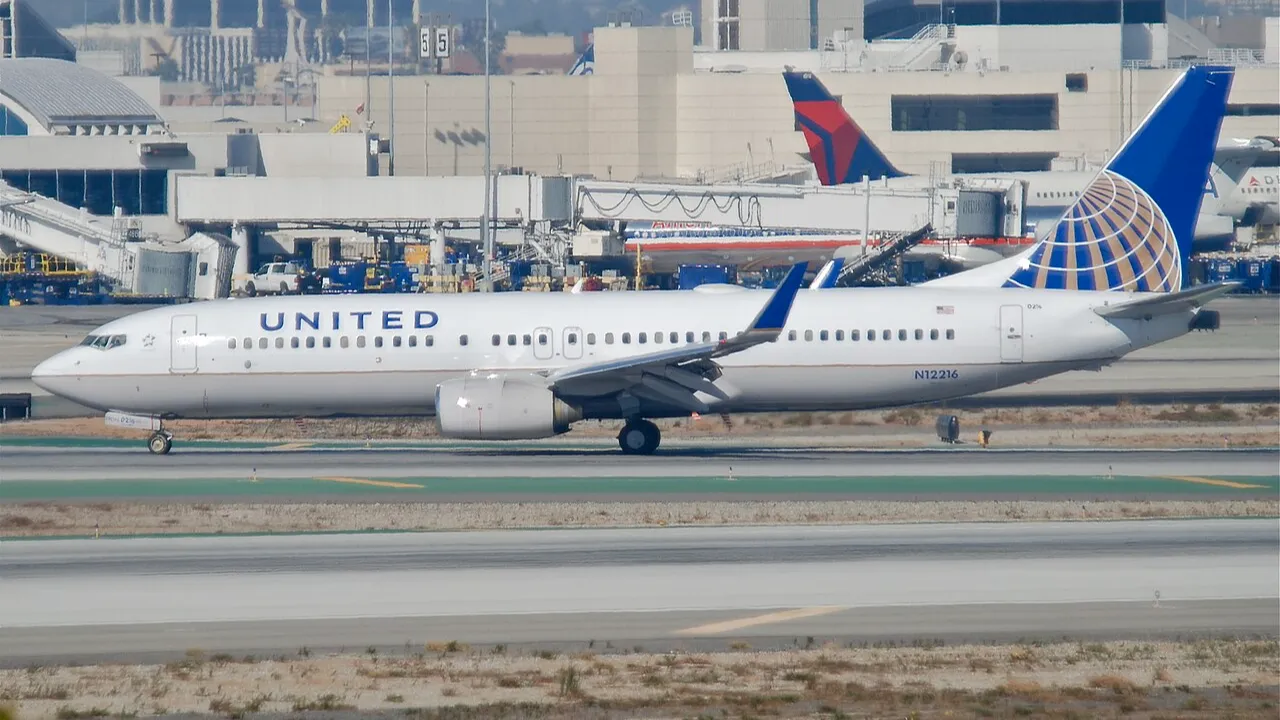
United Airlines Details
ICAO Code UAL
Callsign UNITED
Founded 1926 (as Varney Air Lines), became United Airlines in 1931
Headquarters Chicago, Illinois, USA
Hubs Chicago O’Hare International Airport (ORD), Denver International Airport (DEN), Houston George Bush Intercontinental Airport (IAH), Newark Liberty International Airport (EWR), San Francisco International Airport (SFO), Washington Dulles International Airport (IAD)
Fleet Size ~900 aircraft (as of 2025)
Aircraft Types Operated Boeing 737, 757, 767, 777, 787; Airbus A319, A320, A321
Destinations 350+ destinations in 50+ countries
Alliance Star Alliance
Frequent Flyer Program MileagePlus

Palm Beach Airport Could Be Renamed After Donald Trump

Photo: Aero Icarus | Wikimedia Commons

What United Airlines is doing to adjust its schedule

All the mjaor airlines across the United States have been hit by the FAA directive to reduce operations at the forty major airports in the US. United’s two biggest rivals, American Airlines and Delta Airlines, have come up with their own announcement of changes made to their schedule.
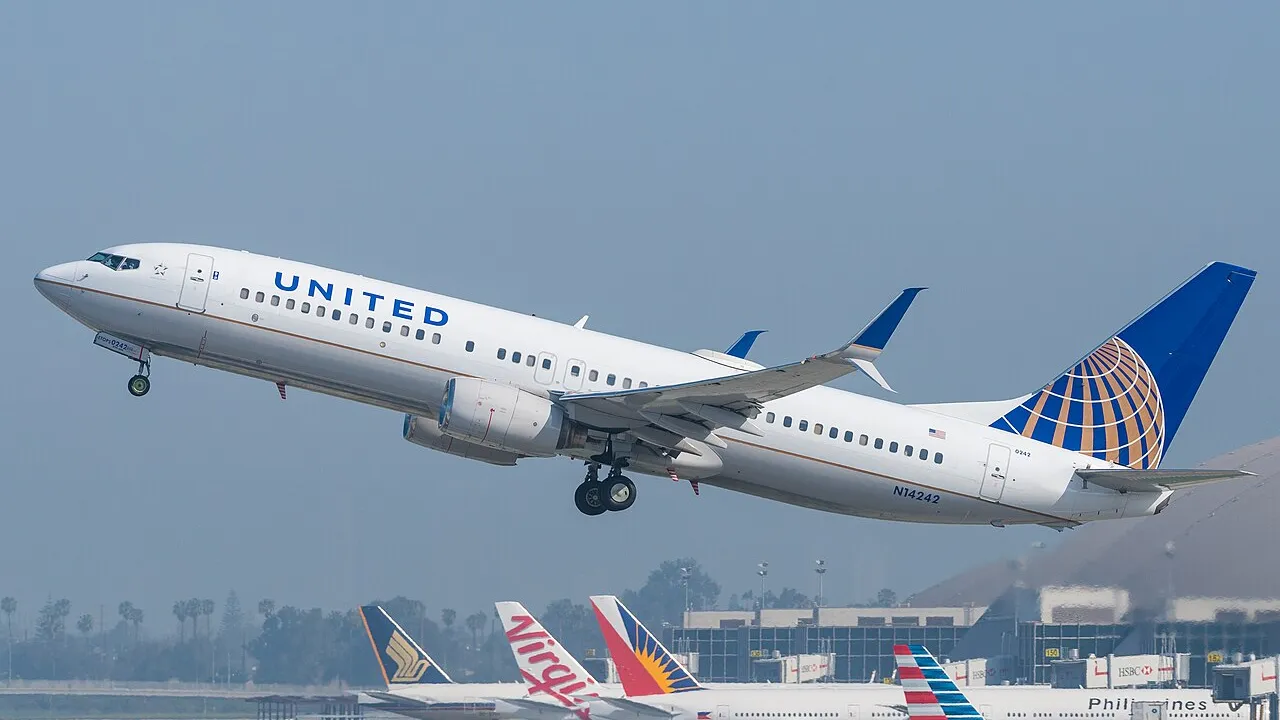
These are summarized in the table below:

Delta Air Lines vs. American Airlines Response to FAA Flight Reductions

Category Delta Air Lines (DL) American Airlines (AA)
Reason for Flight Reductions Compliance with FAA and U.S. Department of Transportation directive due to air traffic control staffing shortages during the government shutdown. Compliance with FAA directive following nationwide air traffic control staffing shortages caused by the government shutdown.
Effective Dates Beginning Friday, Nov 7, with FAA-directed cancellations through Nov 8 completed. Applies Friday through Monday, with an estimated duration of four days.
Extent of Reductions No percentage specified; Delta states it will operate “the vast majority” of flights as scheduled. Approximately 4% schedule reduction at 40 airports, translating to about 220 flights canceled daily.
Airports Affected 40 major U.S. airports 40 U.S. airports
Customer Flexibility Waiver for all fares, including Main Cabin Basic; customers can change, cancel, or refund without penalty. Travel waiver issued; customers can change, cancel, or refund their bookings without penalty if their flight is canceled or if they choose not to travel.
Communication Channels Encourages travelers to check delta.com or the Fly Delta app for updates. Advises checking aa.com or the American Airlines mobile app for real-time flight status.
Commitment to Safety “Safety is our top priority” and adjustments aim to maintain the safety of the national airspace system. Emphasizes FAA’s goal of maintaining “safe airspace operations” and praises federal aviation workers for upholding safety standards.
Customer Notification Delta pledges to provide as much notice as possible for any changes and apologizes for inconvenience. States it is continuing to communicate with all impacted customers.
Tone Toward FAA and Government Neutral and compliant; focuses on minimizing impact and ensuring safety. More outspoken; explicitly criticizes the ongoing shutdown, calling it “unacceptable,” and urges Washington to end it immediately.
Long-Haul Operations All long-haul international flights remain unaffected. No specific mention of long-haul international flight status.
Estimated Daily Operations Not stated, though implied to be near-normal levels. Will still operate around 6,000 daily flights despite reductions.
Public Communication Date November 7, 2025. November 7, 2025.
Primary Source Delta News Hub / delta.com American Airlines Newsroom / aa.com
Photo: BriYYZ | Wikimedia Commons

United, on the other hand, is gearing up for what it calls “select cancellations through select markets” over the coming days:

“The good news here for customers is we’re getting those cancellations in today for tomorrow through Sunday. That will help customers who might be traveling over the weekend to be able to look for alternatives during that course. And keep in mind, it’s select cancellations through select markets. United’s a large airline, so we are confident that we’ll be able to reaccommodate customers and still meet their travel needs,”

China and US Lawmakers Hint Multi-Billion 500 Boeing Aircraft Agreement

United operates a fleet of 1056 aircraft and employs over 17,000 pilots. United has stated that its international long-haul flights will not be affected, and neither will flights that connects its hub airports that are the following

  • Chicago O’Hare International Airport (ORD)

  • Denver International Airport (DEN)

  • George Bush Intercontinental Airport, Houston (IAH)

  • Los Angeles International Airport (LAX)

  • Newark Liberty International Airport (EWR)

  • San Francisco International Airport (SFO)

  • Washington Dulles International Airport (IAD)
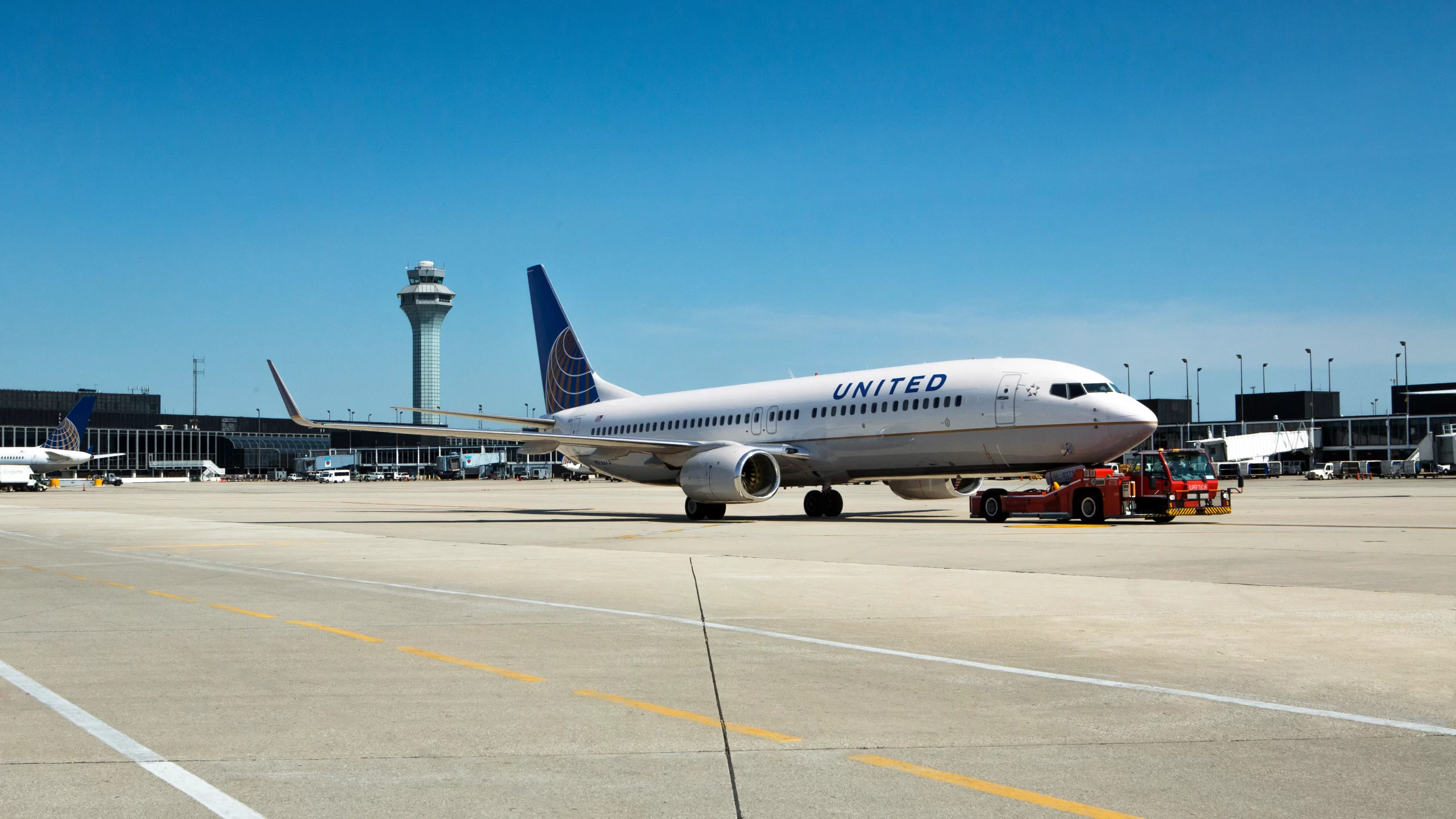
Photo: United Airlines

United has also published cancellation and schedule-change information about the flights on the three days. Data suggests that Chicago O’hare sees the highest number of cancellations from November 7-9. Let’s break down the cancellation by airports:
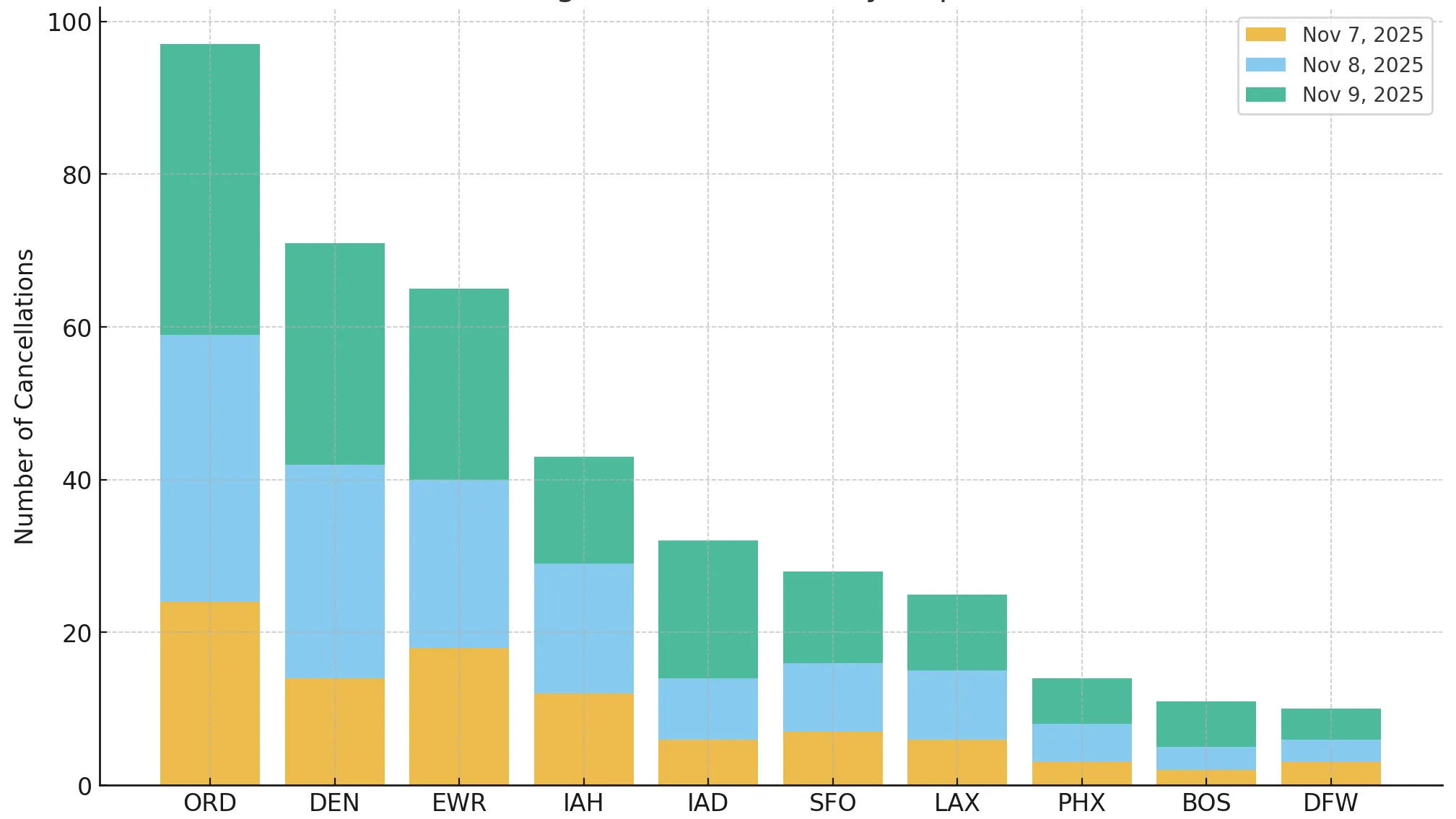
Airport Nov 7 Nov 8 Nov 9 Total
Chicago O’Hare (ORD) 24 35 38 97
Denver (DEN) 14 28 29 71
Newark (EWR) 18 22 25 65
Houston (IAH) 12 17 14 43
Dulles (IAD) 6 8 18 32
San Francisco (SFO) 7 9 12 28
Los Angeles (LAX) 6 9 10 25
Phoenix (PHX) 3 5 6 14
Boston (BOS) 2 3 6 11
Dallas/Fort Worth (DFW) 3 3 4 10
Other airports 12 15 20 47

Of all the cancellations of United Airlines, morning cancellations are consistently the heaviest, tapering off by evening. Total cancellations hover around 190–200 per day. The following chart gives us some cues:
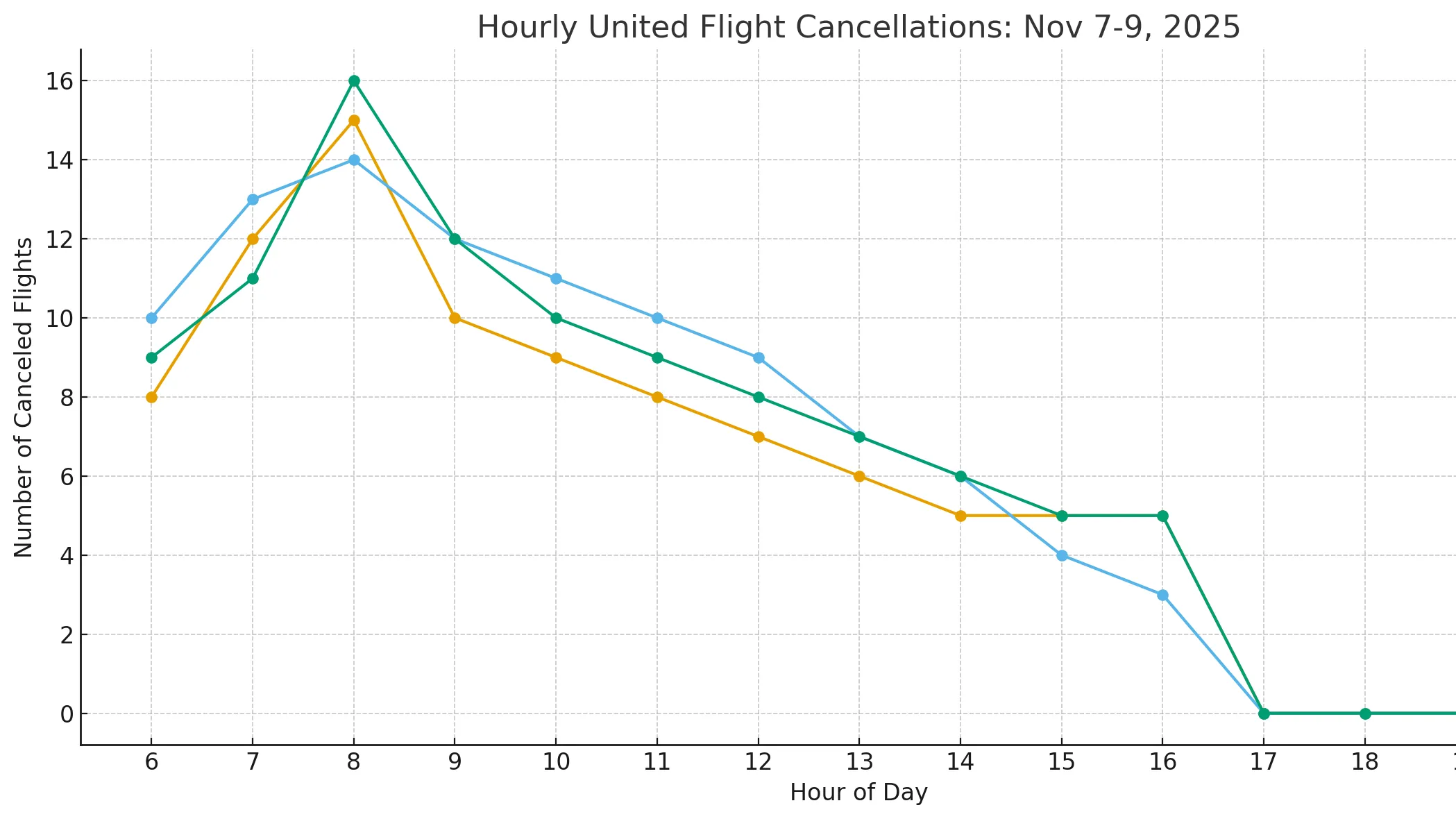
Photo: aviospace.org

Reasons behind the reductions and impact on air travel operations

The U.S. government shutdown, which began on October 1, 2025, has left many air-traffic controllers and Transportation Security Administration (TSA) agents working without pay, prompting mounting fatigue and absences. The FAA says the reduction in capacity is necessary to maintain safe airspace operations in the face of an unprecedented staffing crisis.
Photo: United Airlines

The complete list of the 40 airports that will be affected by FAA’s mandate on flight reduction

The Federal Aviation Administration (FAA) has not come up with an exhaustive list of all 40 airports that are going to be affected, though the airports mentioned in the following table are the most likely.

# Airport Code City / State Major hub or base airlines
1 Anchorage International ANC Anchorage, Alaska Alaska Airlines (hub)
2 Hartsfield‑Jackson Atlanta International ATL Atlanta, Georgia Delta Air Lines (major hub)
3 Boston Logan International BOS Boston, Massachusetts Delta Air Lines, JetBlue Airways (hub/focus)
4 Baltimore/Washington International BWI Baltimore, Maryland Southwest Airlines (hub/focus)
5 Charlotte Douglas International CLT Charlotte, North Carolina American Airlines (hub)
6 Cincinnati/Northern Kentucky International CVG Cincinnati, Ohio / NKY United Airlines (focus hub)
7 Dallas Love Field DAL Dallas, Texas Southwest Airlines (hub)
8 Ronald Reagan Washington National DCA Washington, D.C. American Airlines (hub)
9 Denver International DEN Denver, Colorado United Airlines, Southwest Airlines, Frontier Airlines (hubs/focus)
10 Dallas/Fort Worth International DFW Dallas‑Fort Worth, Texas American Airlines (largest hub)
11 Detroit Metropolitan Wayne County DTW Detroit, Michigan Delta Air Lines (hub)
12 Newark Liberty International EWR Newark, New Jersey United Airlines (hub)
13 Fort Lauderdale/Hollywood International FLL Fort Lauderdale, Florida Primarily low‑cost carriers; focus city for some; not a major legacy hub
14 Honolulu International HNL Honolulu, Hawaii Hawaiian Airlines (hub) — though not in the main legacy US list
15 Houston Hobby HOU Houston, Texas Southwest Airlines (hub/focus)
16 Washington Dulles International IAD Washington, D.C. (metro) United Airlines (hub)
17 George Bush Houston Intercontinental IAH Houston, Texas United Airlines (hub)
18 Indianapolis International IND Indianapolis, Indiana Focus city for several carriers; not a major legacy hub by themselves
19 New York John F. Kennedy International JFK New York, New York American Airlines (secondary transatlantic hub), Delta Air Lines, JetBlue Airways (major base)
20 Las Vegas Harry Reid International LAS Las Vegas, Nevada Southwest Airlines (major base), Allegiant Air (focus)
21 Los Angeles International LAX Los Angeles, California American Airlines, Delta Air Lines, United Airlines, Alaska Airlines (hubs)
22 New York LaGuardia LGA New York, New York American Airlines, Delta Air Lines (hubs/focus)
23 Orlando International MCO Orlando, Florida Southwest Airlines (major focus city)
24 Chicago Midway MDW Chicago, Illinois Southwest Airlines (hub)
25 Memphis International MEM Memphis, Tennessee FedEx Express major cargo hub; passenger airline hub less prominent
26 Miami International MIA Miami, Florida American Airlines (hub for Latin America/Caribbean)
27 Minneapolis/St. Paul International MSP Minneapolis, Minnesota Delta Air Lines (hub)
28 Oakland International OAK Oakland, California Southwest Airlines (focus city)
29 Ontario International ONT Ontario, California Focus city for low‑cost carriers; not major legacy hub
30 Chicago O’Hare International ORD Chicago, Illinois American Airlines, United Airlines (hubs)
31 Portland International PDX Portland, Oregon Alaska Airlines (hub)
32 Philadelphia International PHL Philadelphia, Pennsylvania American Airlines (hub)
33 Phoenix Sky Harbor International PHX Phoenix, Arizona American Airlines, Southwest Airlines (hubs/focus)
34 San Diego International SAN San Diego, California Alaska Airlines (focus/hub)
35 Louisville International SDF Louisville, Kentucky Major cargo hub (e.g., UPS Airlines) rather than major passenger airline hub
36 Seattle/Tacoma International SEA Seattle, Washington Alaska Airlines, Delta Air Lines (hubs)
37 San Francisco International SFO San Francisco, California United Airlines, Alaska Airlines (hubs)
38 Salt Lake City International SLC Salt Lake City, Utah Delta Air Lines (hub)
39 Teterboro TEB Teterboro, New Jersey Major general aviation / business aircraft airport rather than large‑scale airline hub
40 Tampa International TPA Tampa, Florida Focus city for low‑cost carriers; not major legacy airline hub

Data: USA Today

Delta, United, and JetBlue Offer Free Meals to Air Traffic Controllers Working Without Pay

Earlier this week, Secretary of Transportation, Sean Duffy, had warned that the airspace of US might need to be closed if the government shutdown is not cancelled. A report published in The Guardian highlighted the scope of the disruptions we are going to face:

Reuters reported that the cuts would begin at 4% on Friday, escalate to 5% on Saturday and 6% at Sunday, before reaching 10% next week, and that international flights were to be exempted from the initial cuts. Aviaion analytics firm Cirium estimated that the cuts would reduce as many as 1,800 flights and over 268,000 airline seats.

Photo: United Airlines

United Airlines and two of its biggest rivals (that form the trio of The Big Three US Airlines) have stressed that its long-haul international and hub-to-hub routes will continue, but regional operations are the most at risk because they often use smaller aircraft on thinner routes. Despite these reductions, United is offering 4000 flights every day (taking into flights offered by United Express partners).

United’s CEO Scott Kirby had told employees that the customers with flights booked to travel during the shutdown will be eligible for a refund, whilst also iterating that its “hub-to-hub flying will not be impacted by this schedule reduction direction from the FAA“. He was quoted in Fox Business as having expressed:

“Any customer traveling during this period is eligible for a refund if they do not wish to fly – even if their flight isn’t impacted. That includes non-refundable tickets and those customers with basic economy tickets….we will focus our schedule reductions on regional flying and domestic mainline flights that do not travel between our hubs”
Photo: United Airlines

What must you do if you are travelling on United Airlines during this period?

The first thing to do is to check United’s mobile app or website frequently for “rolling updates” to schedule changes. If rebooking is imperative, please note that priority may be given to hub-to-hub or long-haul flights, with regional services more vulnerable to cuts.

ABC News also quoted Frontier Airlines CEO Barry Biffle’s LinkedIn post where he “advised travelers to book a backup ticket on another carrier to avoid being stranded at an airport“.

“Don’t book a basic ticket. For example, book Economy on Frontier so you can reuse the ticket value as changes are free or you can get a credit. If your flight is cancelled your chances of being stranded are high so I would simply have a backup ticket on another airline,”

Please note that this post has since been deleted.

It is also felt that the airlines might use larger planes such as the Boeing 777s on the regional routes to accommodate passengers. Here’s a look at the planes United Express operates:

Aircraft Type Current In Service Future 2 Parked Avg. Age
Bombardier CRJ-100 Series 56 22 22.6 Years
Bombardier CRJ-700 75 11 19.9 Years
Embraer ERJ-145 54 10 21.3 Years
Embraer ERJ-170 238 9 8.1 Years
Total 423 52 17.0 Years*

Data: planespotters.net

Photo: United Airlines

Let’s see how United’s Boeing 777s compare with the Embraer 175 to get a sense of how many more passengers the carrier can accommodate, and look at other details as well:

Feature / Cabin Class United 777-300ER Embraer 175
Business / First Class United Polaris Domestic First
Seats 60 12
Configuration 1-2-1 (4 seat pairs across cabin) 1-2
Seat width 20″ 20″
Seat pitch / bed length Fully flat 6′-6″ bed Row pitch 37″
Recline Fully flat 5″
Aisle access All seats direct aisle access
Armrest Moveable for even row aisle seats
Bulkhead seats Rows 1 & 9 have wider footwells
Screen 16″ HD touchscreen
Power Universal AC + USB Universal AC
Feature / Cabin Class United 777-300ER Embraer 175
Premium / Premium Plus United Premium Plus Economy Plus
Seats 24 16
Configuration 2-4-2 2-2 (rows 7–10)
Seat width 18.7″ 18.3″
Seat pitch 38″ 34″
Recline Up to 6″ 3″
Armrest Moveable aisle armrests
Leg & foot rest Adjustable
Screen 13″ HD touchscreen
Power Universal AC + USB Universal AC
Photo: United Airlines
Feature / Cabin Class United 777-300ER Embraer 175
Economy / Economy Plus United Economy Plus Economy
Seats 62 48
Configuration 3-4-3 2-2
Seat width 17.1″ 18.3″
Seat pitch 34″ 30″
Recline Up to 4″ 2″
Armrest Moveable aisle armrests (except bulkhead)
Screen 9″ HD touchscreen
Power Universal AC + USB Universal AC
Feature / Cabin Class United 777-300ER Embraer 175
Economy / Main Cabin United Economy Economy
Seats 204 48
Configuration 3-4-3 2-2
Seat width 17.1″ 18.3″
Seat pitch 31″ 30″
Recline Up to 3″ 2″
Armrest Moveable aisle armrests
Screen 9″ HD touchscreen
Power Universal AC + USB Universal AC

Leave a Comment

Your email address will not be published. Required fields are marked *

Scroll to Top