
Air travel is one of the most convenient and popular modes of transportation, but sometimes conveniences also generate a significant amount of waste. Such is the case for paper cups that are used by various airlines. To help reduce such waste and protect our environment, some airlines are using reusable cups while flying. This small step might or might not be in line with Armstrong’s words while heading for the moon: “one small step for man one giant leap for mankind” but it sure has a huge implications on the avaition industry’s goals of sustainability. Here are the top five airlines that areusing reusable cups.
Alaska airlines
Saving 55 million+ plastic cups annually
Alaska Airlines was the first American carrier that stopped using single-use plastic cups and start using FSC-certified paper cups in the main cabin and reusable glassware in first class. This initiative saves over 55 million plastic cups annually. In addition, they removed the use of plastic bottles in the year 2021, opting for boxed water cartons instead.
On National Reuse Day in 2024, Alaska Airlines partnered with r.World and used reusable r.Cups in the air. According to a report, the Alaska Airlines’ managing director of sustainability, Mr. Ryan Spies, also stated the feasibility study (of using reusable cups) would:
”help us better understand additional ways we can cut onboard waste. While we are only running a limited test at this point, we hope to gain valuable lessons and learnings that we can bring forward.”

Photo: Alaska Airlines
Here are some other ways in which Alaska Airlines has reduced single-use plastics and waste:
- In 2018, they became the first U.S airlines to ditch plastic straws and stir sticks on board.
- In 2021, they replaced plastic water bottles with boxed water.
- Through a national partnership with the Surfrider Foundation, they conducted a series of West Coast beach Cleanups and worked to raise awareness about the impact of plastic waste.
Lufthansa Group
Saving 7.5 Million Disposable cups
The Lufthansa Group has participated in the UN Global Compact since 2002 and reports annually on its progress in the area of sustainable corporate governance along the ten principles of the UN Global Compact. The group aims to eliminate all single-use plastic and aluminium items across passenger airlines. This includes cups, lids, trays, and packaging, too. Their strategy falls in line with the EU’s circular economy action plan.
Lufthansa and its sister brands have tried and started rolling out reusable cups on short flights, replacing single-use plastic cups in economy class. According to a report, Lufthansa partnered with UBITE to launch the “zero-based dishwasher-safe reusable cup”, signed for circular use, which supplies over 30,000 crew members and is projected to save 7.5 million disposable cups.

Photo: Lufthansa Group
Lufthansa reports to have taken broader circular waste initiatives such as:
- Replacing more than 200 of 600+ onboard single-use items, which includes switching packaging for headphones, utensils, and trays to sustainable materials.
- Working with the tech partners to upcycle plastic items post-flight and develop further circular systems.
easyJet
71 tons of waste saved every year
Easyjet, one of the largest airlines in the world [with 355 aircraft, which operates through 1,207 routes across 38 countries and 164 airports], has issued reusable travel mugs and cutlery to approximately 14000 pilots and cabin crew across the EU, UK, and Switzerland. Their initiative will help them to cut over 10 million single-use items per year, which will save up to 71 tons of waste.

Photo: MarcelX42 | Wikimedia commons
.jpg)
According to reports, this initiative is a part of easyJet’s broader net-zero roadmap, which also targets a 78% reduction in CO2 emissions per passenger per km by 2050. easyJet signed up to the UN-backed Race to Zero in November 2021 and is pioneering developments to deliver industry-leading emission reductions. They intend to concentrate on an early zero-carbon emission fleet at a single airport, likely starting with domestic services.
Delta Air Lines
Cutting 4.9 million pounds of single-use plastics annually
Delta Air Lines aims to connect people to a more sustainable future of travel, achieving net-zero carbon emissions by 2050. In December 2023, Delta began final testing of custom-designed paper cups on transcontinental U.S flights, which aimed to replace plastic cup systems-wide by 2025. These paper cups are designed to handle hot, cold, and alcoholic beverages. Once they fully implement this, they estimate the shift will eliminate 7 million pounds of single-use plastic annually, which weighs 3200 tons.

They have already eliminated 4.9 million pounds of single-use plastics since 2022. They intend to minimize or eliminate single-use plastics onboard by 2025, as part of a long-term plan aimed at 100% waste diversion by 2050. Delta has participated in SkyTeam’s sustainable flight Challenge, testing both reusable cups and new paper cups, achieving an 81% reduction in single-use plastics on those flights.
Touching upon the airlines’ milestones on sustainability, Jess Miers, the Delta Carbon Council director, said that 65 percent of Delta people were:
“ .. in a position daily to directly contribute to our operational KPIs for reducing fuel usage, improving fuel efficiency, and driving millions of dollars in cost savings each year that, in turn, contribute to profit sharing.”
Southwest Airlines
Creative thinking helps innovate cups made of bamboo.
Southwest Airlines is an American low-cost carrier that operates the biggest fleet of the Boeing 737 Next Generation family. Southwestern Airlines has recently replaced single-use plastic cups with a new bamboo paper blend cup, which is made of 75% bamboo and 25% paper. They replaced plastic stirrers with 100% FSC-certified birch wood sticks, which featured Southwest’s signature heart branding.
Such changes support their net zero initiative, which aims for a more than 50% reduction in single-use plastic by weight from a 2022 baseline by 2025, as well as a full elimination of single-use plastics where feasible by 203,0. The budget carrier aspires to reduce over 1.5 million pounds of plastic waste per year.
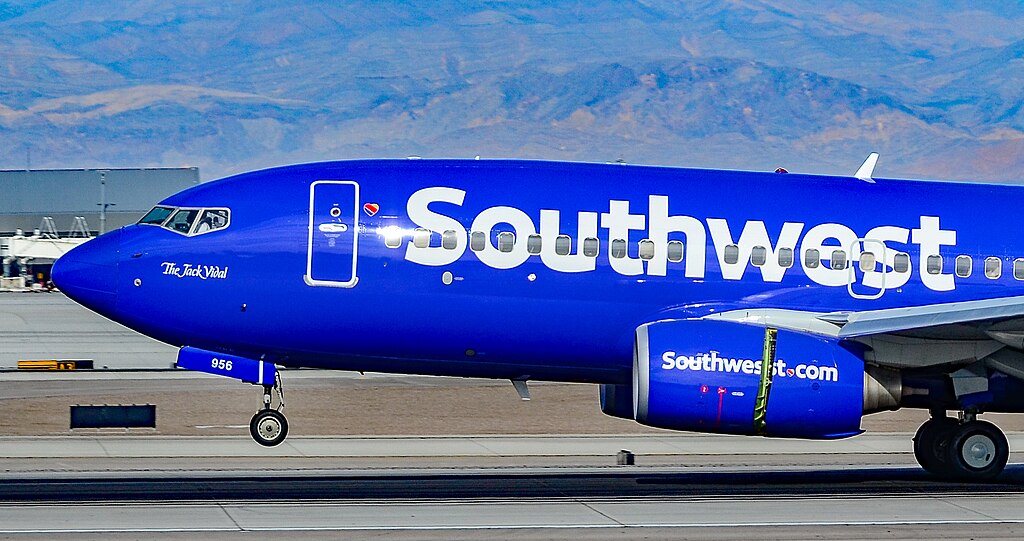
Photo: Tomás Del Coro | Wikimedia Commons

Here is the list of plans that Southwest intends to carry out to achieve their sustainability goals:
- Remove the PE lining to achieve full recyclability or compostability.
- Further reducing single-use plastics across in-flight service items.