This is How Faster B-21 Raider Manufacturing Could Push US Bomber Fleet Beyond 100 Aircraft

Northrop Grumman is aggressively expanding production capacity for the B-21 Raider, the world’s first sixth-generation stealth bomber, and the company’s chief executive says the accelerated tempo could persuade the U.S. Air Force to commit to a substantially larger fleet than its current minimum of 100 aircraft. CEO Kathy Warden made the remarks at the Bernstein Strategic Decisions Conference on May 28, 2026, asserting that Northrop is taking steps — including self-funded investments — to prove that it can absorb a higher order volume without straining its industrial base, Air and Space Forces reported.

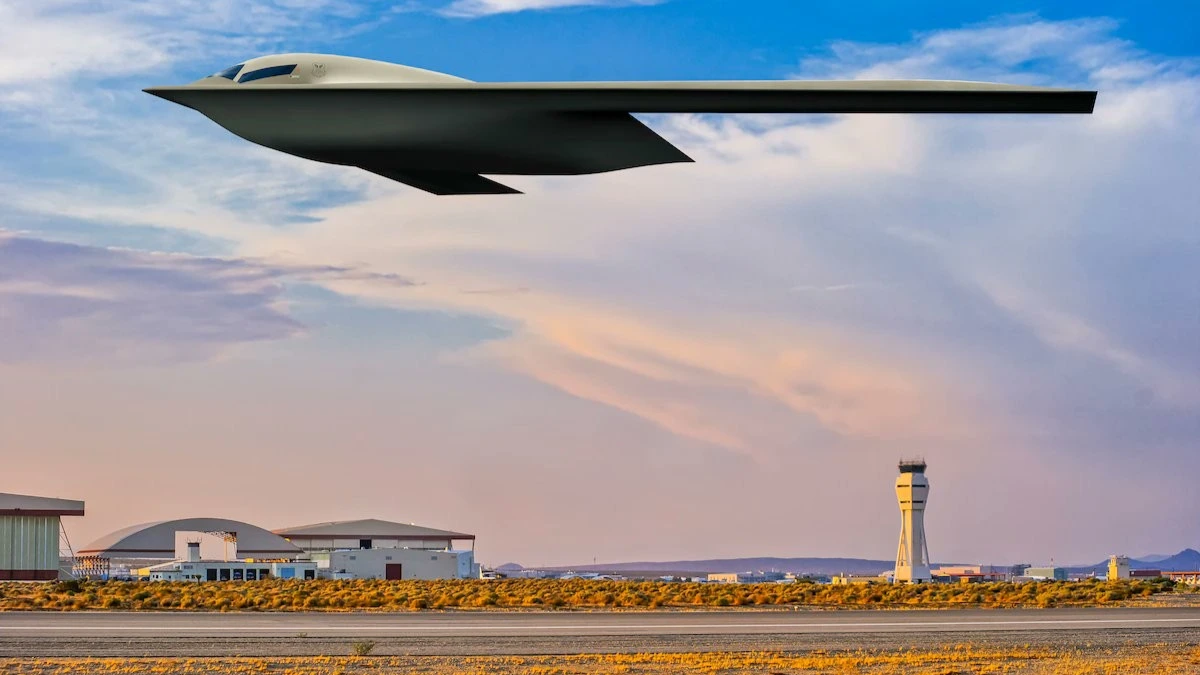
The Air Force is currently flight-testing two B-21s at Edwards Air Force Base (EDW), California, and the first operational Raider remains on schedule for delivery to Ellsworth Air Force Base (ELL) in South Dakota in 2027. This disclosure comes against a backdrop of growing political and military pressure to expand the Raider fleet beyond its current program of record. Defense Secretary Pete Hegseth told lawmakers on April 30 that the U.S. will need “a lot more” than 100 B-21s — the most unambiguous signal yet that Pentagon leadership intends to push procurement upward. In parallel, the last two commanders of U.S. Strategic Command have publicly endorsed a fleet of 145 Raiders, while the head of U.S. Indo-Pacific Command, Admiral Samuel Paparo, has gone further, expressing support for an acquisition of as many as 200 aircraft.
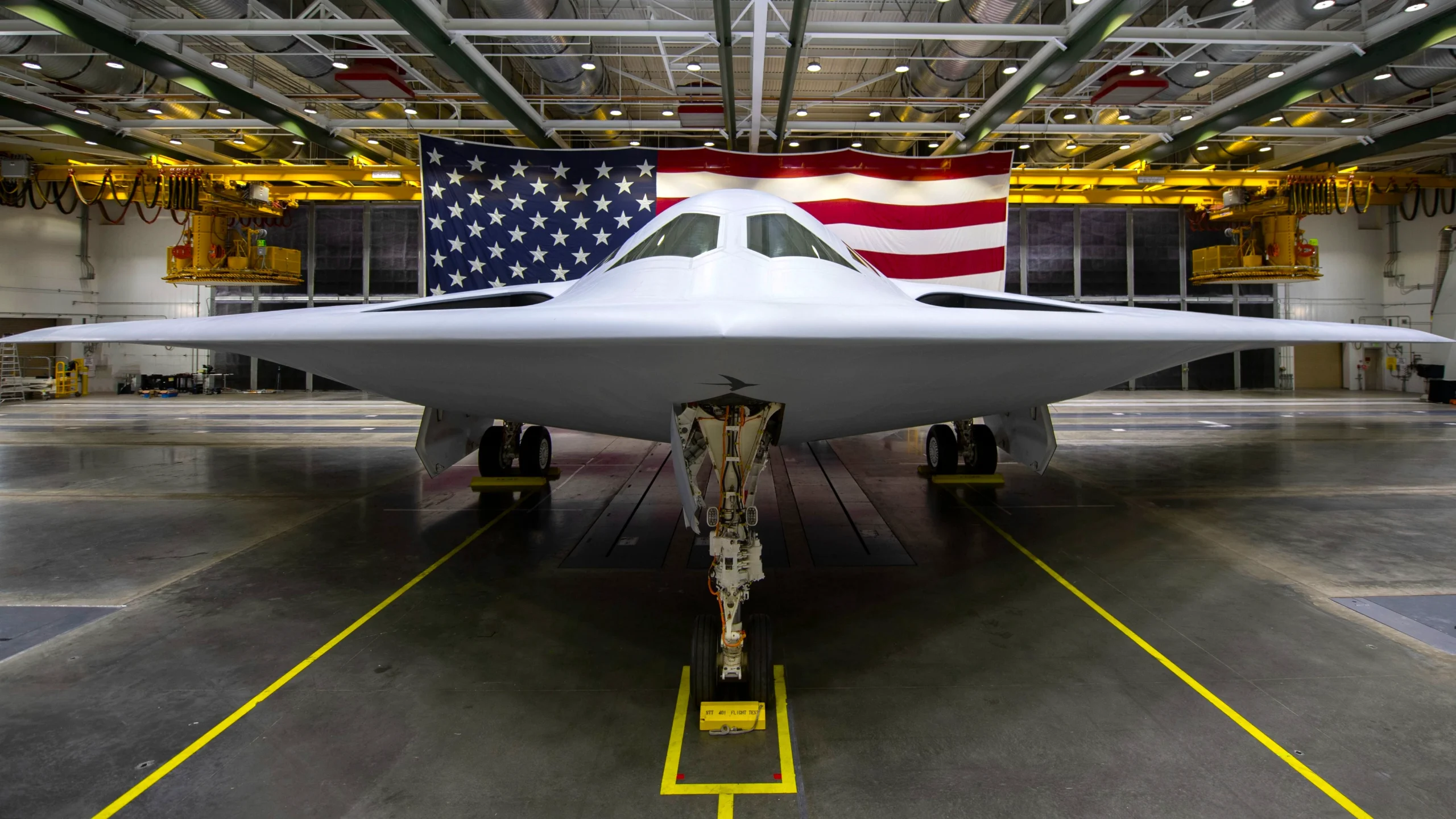
Photo: USAF

Warden’s Conference Remarks And What They Signal For Procurement

Speaking before investors and analysts at the Bernstein conference, Warden was explicit about the connection between production velocity and procurement ambition. Warden said:

“As we move through the completion of the test program and into production, we look forward to the opportunity to build these faster — and that’s the agreement that we have now come to with the Air Force — which also opens up the opportunity for [the Air Force] to potentially buy even more”

She added that industrial capacity was now a positive factor in the Air Force’s ongoing fleet-size deliberations.

“That increased rate allows [the Air Force] to consider how they meet mission requirements, and how many aircraft they would want to build to do that,”

adding

“They are undertaking that analysis now, and certainly our ability to build faster is a positive factor in those evaluations.”

The Air Force’s top planner, Lieutenant General David H. Tabor, told lawmakers on May 13 that revised B-21 fleet numbers are likely to be published in spring 2027 as part of the fiscal year 2028 budget proposal. Congress, however, has indicated it may demand an answer sooner: a draft of the National Defense Authorization Act for fiscal 2027, released by the House Armed Services Committee on May 26, would require the Pentagon to submit a report by December 2026 detailing how many B-21s are needed to execute both nuclear and conventional missions.
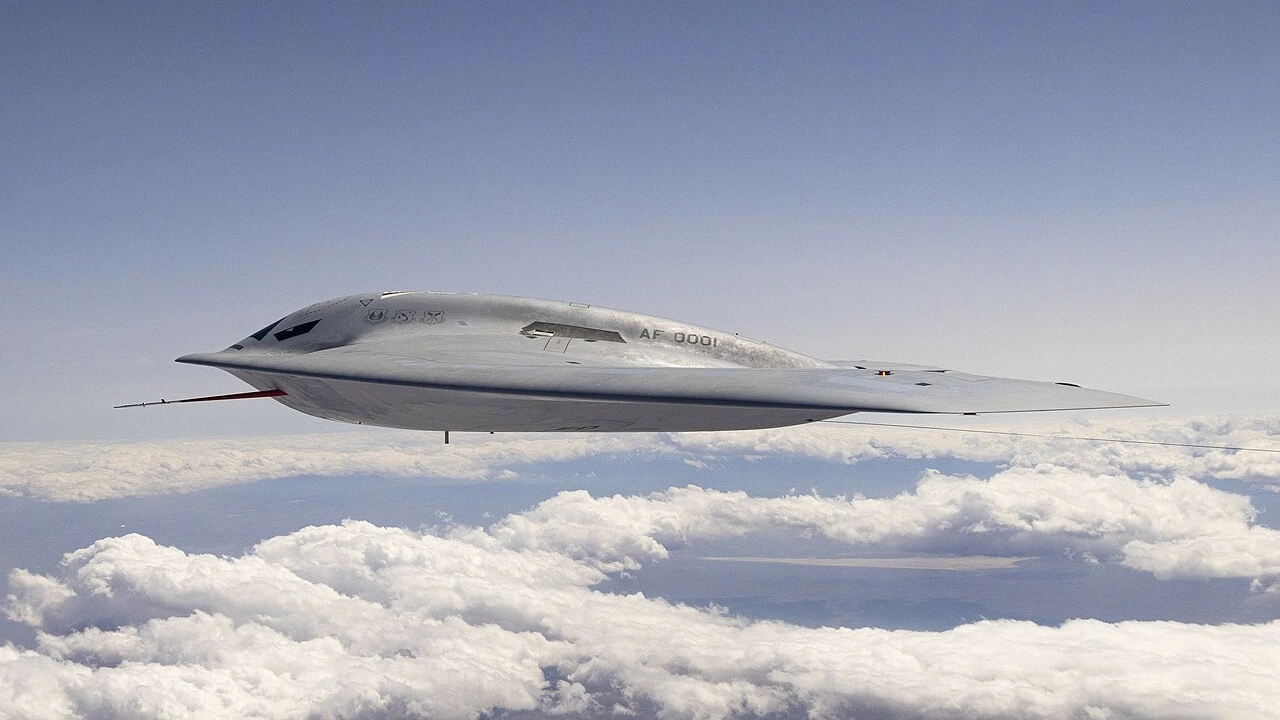
Photo: USAF

The $7 Billion Investment Driving Faster Output

The industrial acceleration rests on a two-track funding structure that combines government appropriations with significant private capital. In February 2026, the Air Force and Northrop formalized a $4.5 billion agreement to increase annual B-21 production capacity by 25 percent, using money appropriated under the fiscal year 2025 reconciliation legislation colloquially known as the “One Big Beautiful Bill.” The deal was announced at the Air & Space Forces Association Warfare Symposium on February 23, 2026, and officials stated it would compress delivery timelines without altering approved budgets or performance requirements.

On top of that government funding, Northrop itself is committing $2.5 billion of its own capital to the effort, with $200 million allocated specifically for execution in 2026. Warden disclosed the figure during the company’s April earnings call, noting that the bulk of the spending targets new facilities and will be phased in over the 2027–2029 timeframe. The program already accounts for close to 10 percent of Northrop Grumman’s total company revenue, a share that is expected to rise as output accelerates.

In 2025, Northrop also executed a $477 million production adjustment to optimize workflow and cover material costs, a charge that depressed first-quarter 2025 earnings but which management characterized as a deliberate investment in manufacturing scalability. Warden acknowledged the stumble candidly: “No program is going to be perfect, and so we had that ‘learning,'” she said.
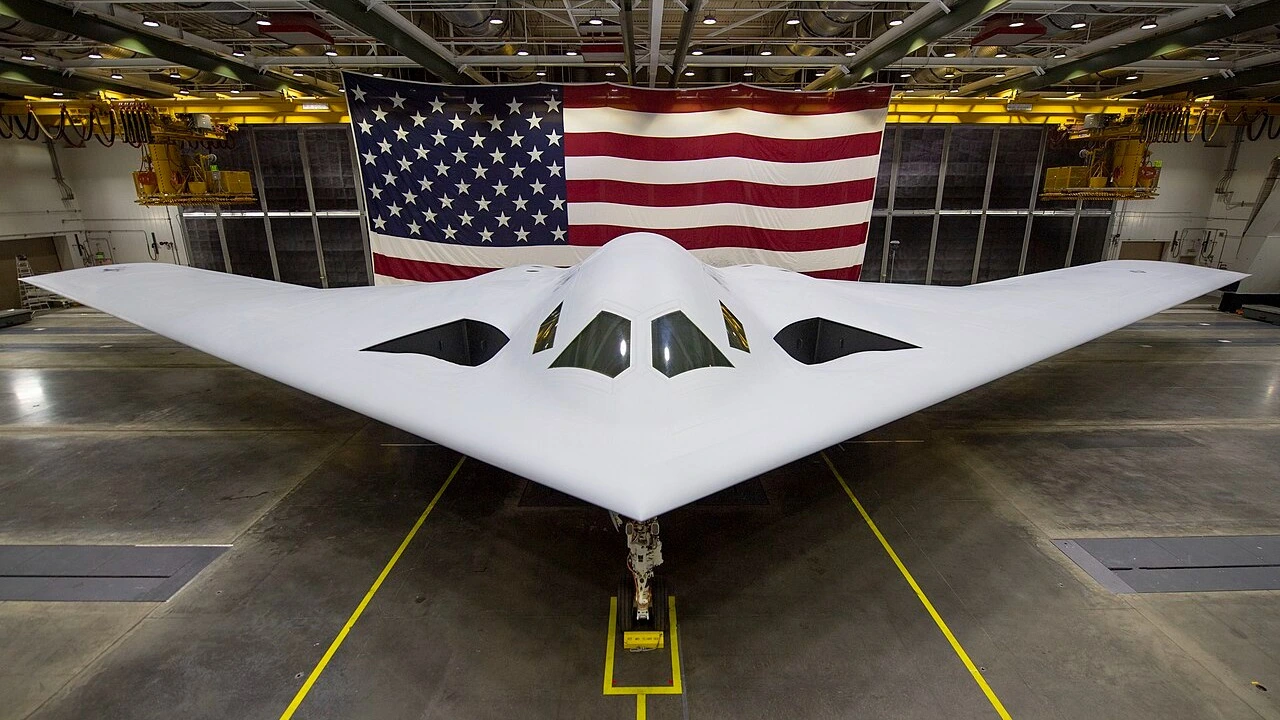
Photo: USAF

Key Capabilities of the B-21 Raider

The B-21 is the world’s first sixth-generation aircraft to reach the skies, and a significant generational departure from the fifth-generation B-2A Spirit it is designed to replace. Northrop’s official program description characterizes it as forming “the backbone of future U.S. air power, leading a powerful family of systems that deliver a new era of capability and flexibility by seamlessly integrating data, sensors, and weapons.”

Many of its detailed specifications remain classified, but the following characteristics have been confirmed or credibly reported:

Air Force Secretary Troy Meink summarized the platform’s centrality to national strategy  in the following way:

“The B-21 is foundational to our long-range strike capability and to credible deterrence. Accelerating production capacity now ensures we deliver operational capability to combatant commanders faster — strengthening our ability to outpace, deter, and, if necessary, defeat emerging threats.”

Photo: USAF

Test Program Progress and the Road to Ellsworth

The flight test campaign has proceeded ahead of its originally projected schedule. A second test aircraft joined evaluation at Edwards AFB on September 11, 2025, providing maintainers with hands-on experience with tools, data, and processes that will support operational squadrons.

In an indicative measure of the program’s maturity, a critical phase of the flight test campaign was compressed from a planned 180-day window to just 73 days, primarily reflecting fewer software rewrites, lower regression-testing requirements, and stable telemetry collection.
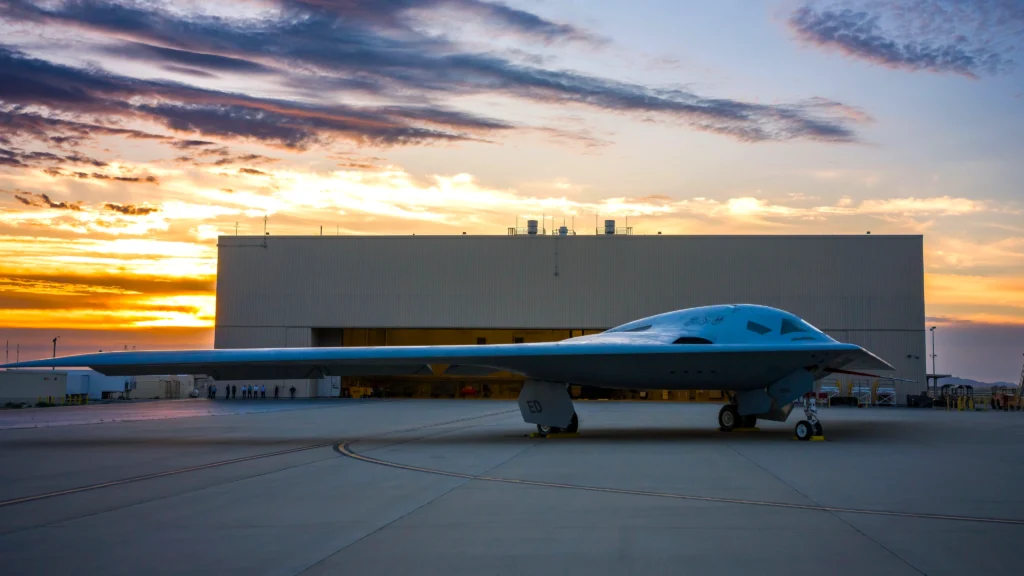
On March 10, 2026, a B-21 Raider was photographed conducting its first aerial refueling from a KC-135 Stratotanker over eastern California, a session lasting 5 hours and 33 minutes — evidence that the program had progressed well beyond basic airworthiness evaluation into long-range mission validation. Tom Jones, corporate vice president and president of Northrop Grumman Aeronautics Systems, stated in an official press release:

“Getting the B-21 Raider into the hands of our Air Force operators and maintainers is the mission of thousands of dedicated Northrop Grumman team members. The aircraft continue to outperform digital model expectations, reaffirming confidence in our design and production quality.”

Production lots are advancing in parallel with the flight test regime. With LRIP Lot 3 awarded in the fourth quarter of 2025 and Lot 4 secured in the first quarter of 2026, five lots collectively encompassing at least 21 aircraft are now under contract. Comments from President Donald Trump have suggested at least 28 aircraft have already been ordered. All assembly takes place at Air Force Plant 42 in Palmdale, California, the same facility where the B-2 Spirit was built.
Parallel Developments: STRATCOM, Congress, And the Push For 145+

The debate over fleet size has accelerated on multiple fronts simultaneously, and Northrop’s production commitments cannot be fully understood in isolation from the strategic pressures driving demand. STRATCOM Commander Admiral Richard Correll told lawmakers in March 2026 that the Air Force needs 145 B-21s and that opening a second production line is under active consideration. This aligns with the position of his predecessor: both of the last two STRATCOM commanders have publicly endorsed the 145-aircraft figure as the minimum credible deterrent.

The comparison with the B-2 program casts a long shadow over these discussions. The Air Force originally planned to acquire 132 B-2 Spirits; successive budget cuts reduced that figure first to 75, then to 20 following the Cold War’s end, with one additional aircraft added back later.

The result was that program costs were amortized over an extraordinarily small fleet, driving the individual unit price to more than $2 billion per aircraft. Former Deputy Assistant Secretary of Defense and B-52 pilot Mark Gunzinger put the stakes plainly in a statement reported by Air & Space Forces Magazine:

“One hundred is a floor; it’s absolutely not a ceiling. Demand for bombers in peacetime and in conflict has been in one direction: up. And today’s bomber force is about one-third the size of the force we had at the end of the Cold War.”

The current U.S. Air Force bomber inventory stands at 19 operational B-2 Spirits, 45 B-1B Lancers, and 76 B-52 Stratofortresses — an aggregate of 140 airframes that analysts frequently cite as a yardstick for the minimum number of B-21s required to fulfill a comparable strategic role. The B-21 is expected to replace the B-1B and B-2 fleets by the early 2030s and may eventually assume missions currently performed by the modernized B-52J.

Photo: USAF

Operation Midnight Hammer and the Operational Case for More Raiders

No development did more to crystallize the urgency of expanding the stealth bomber fleet than Operation Midnight Hammer in June 2025. The operation involved more than 125 aircraft and saw seven B-2 Spirits fly continuously for approximately 37 hours, supported by multiple aerial refueling rendezvous, to strike Iran’s underground nuclear enrichment infrastructure.

The mission succeeded: no B-2s were lost, and the aircraft penetrated Iranian airspace without triggering a defensive response. But the operational demands of the sortie exposed the fragility of a fleet that numbers just 19 aircraft.

Preparing nine B-2s for combat readiness required months of advance planning and weeks of intensive maintenance work, subtracting nuclear triad commitments, training rotations, and scheduled intermediate maintenance from an already small pool. The B-2 fleet’s mission-capable rate stood at roughly 55 percent during fiscal year 2024, meaning barely half the fleet was ready for tasking on any given day. Defense analysts note that committing nine B-2s to Midnight Hammer effectively left the shelf bare for any concurrent contingency.

Operational commanders are already projecting how the B-21 would have changed the calculus. Senior Air Force officers stated, as reported by Aerospace Global News, that operations like Midnight Hammer would look “very different and easier to execute” once the B-21 enters service — citing the Raider’s advanced data-sharing architecture and resilience against electronic warfare as force multipliers.

The B-21 is specifically designed to operate as part of a networked strike ecosystem, integrating directly with ground and airborne command-and-control nodes rather than as a standalone penetrator.

Production Economics, Costs, And the Long-Range Financial Picture

The cost per B-21 airframe currently hovers around $700 million per copy, and neither the Air Force nor Northrop has confirmed whether the new production acceleration agreement will drive that figure down. Warden indicated obliquely that it would improve program economics for both parties: “The deal improves the economics for the program for the government and Northrop Grumman,” she said during the April earnings call.

Even at the current per-unit cost, the B-21 represents a steep reduction from the B-2’s roughly $2.1 billion per-aircraft price — a product of both superior materials and the economies of a larger planned production run.

The administration’s fiscal year 2026 budget request includes $6 billion for continued B-21 program work, though that figure does not yet reflect a formal commitment to expand total procurement beyond 100. Program contributions extend across a broad industrial base: in addition to Northrop as prime contractor, key suppliers include Pratt & Whitney, Collins Aerospace, BAE Systems, GKN Aerospace, Janicki Industries, and Spirit AeroSystems, with manufacturing work distributed across multiple U.S. states. The Long Range Strike Bomber contract that initiated the program was originally awarded to Northrop Grumman on October 27, 2015.

Photo: USAF

Budget Timelines and Congressional Oversight for the B-21 Program

The formal revision of the B-21 program of record will not happen immediately. Lieutenant General Tabor indicated the Air Force intends to publish a revised fleet objective in spring 2027 as part of the FY2028 budget submission — a timeline that Congress appears unwilling to accept passively.

The draft FY2027 National Defense Authorization Act would compel the Pentagon to report by December 2026 on the total B-21 quantity required for both nuclear and conventional mission sets, and — if that number exceeds 100 — how quickly those additional aircraft could be procured.

Chairman of the Joint Chiefs of Staff General Dan Caine has taken a measured posture, stating that any fleet expansion would hinge on a formal review of operational plans and future threat assessments. A think tank report published in early 2026 called for as many as 200 B-21 Raiders, arguing that only a substantially enlarged bomber and fighter force can deter or prevail in a high-end conflict with near-peer adversaries.
Leave a Comment

Your email address will not be published. Required fields are marked *

Scroll to Top