Are Award Search Tools Like Seats.aero at Risk After Air Canada’s Lawsuit?

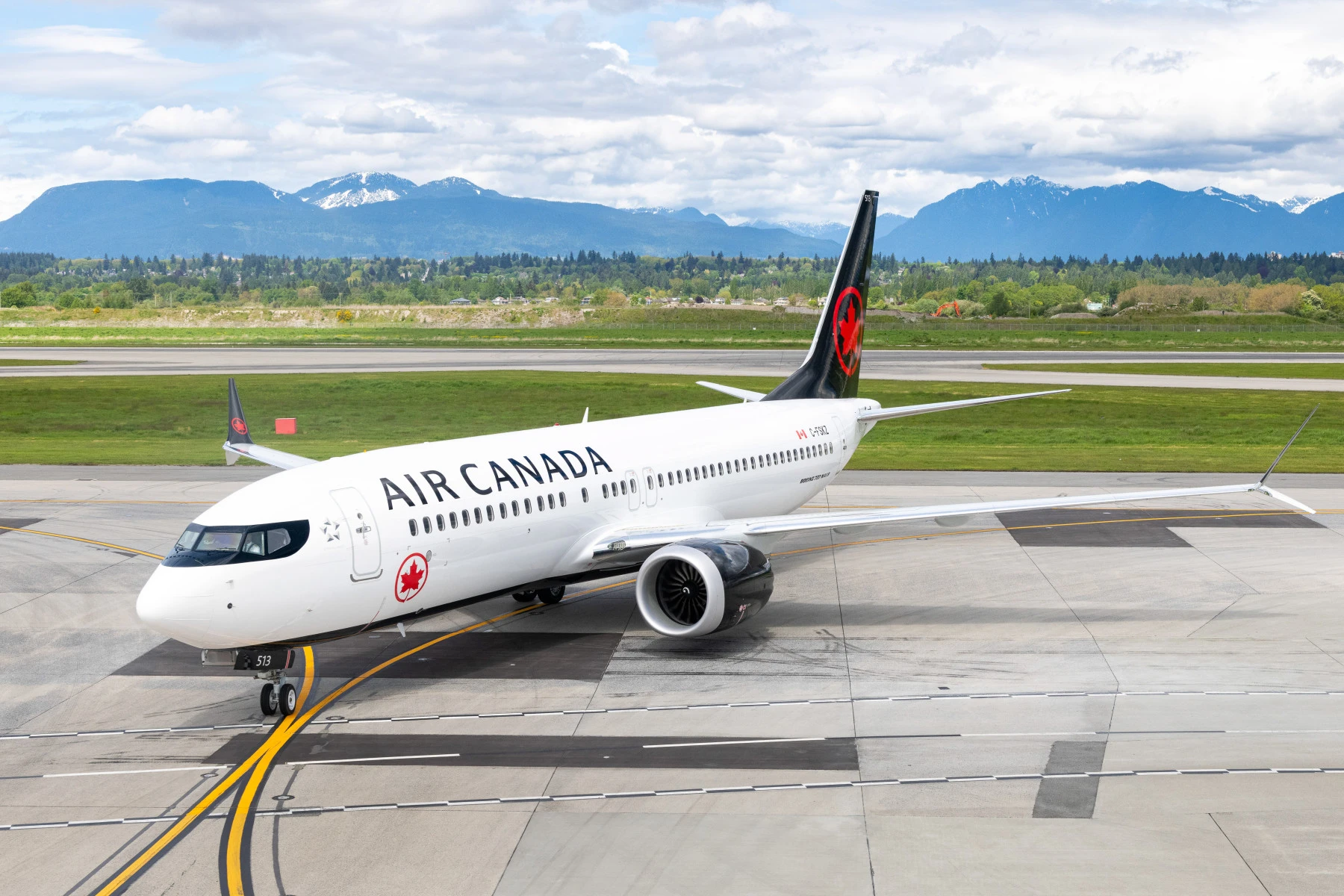
Air Canada (AC) and its Aeroplan loyalty program are locked in an active federal lawsuit against Seats.aero, the popular award flight search platform, after the airline filed suit in the United States District Court for the District of Delaware on October 19, 2023, alleging that the tool’s automated scraping of Aeroplan award availability data constitutes computer fraud, trademark infringement, and false advertising, View From the Wing Flagged.
The case, filed against Localhost LLC — the corporate entity behind Seats.aero — originally named Ian Carroll, the site’s founder, as the primary defendant. The airline’s core position is that large-scale automated harvesting of its award inventory data violates both Aeroplan’s terms of service and the Computer Fraud and Abuse Act (CFAA), burdens its server infrastructure, and misappropriates its trademarks. Seats.aero denies those claims and has since escalated the dispute, filing counterclaims alleging antitrust violations, tortious interference, and unfair competition.

As of May 2026, nearly three years into litigation, settlement talks that reached an impasse on February 17, 2026, have not resumed, the site has brought in new legal counsel, and Air Canada is now fighting to prevent the newly filed counterclaims from proceeding at all — arguing they arrive too late in the litigation timeline. Seats.aero is now being run by Chris Lopinto, who founded ExpertFlyer, a veteran of travel search technology whose earlier platform removed Air Canada and Star Alliance award data in response to a separate legal pressure campaign in October 2023.

Photo: Air Canada

Why Air Canada Is Suing Seats.aero — And What It Alleges

Air Canada’s lawsuit rests on three distinct legal theories, each addressing a different dimension of Seats.aero’s data collection and display practices. The airline alleges both screen scraping and API scraping — two technically distinct methods of extracting award availability data from its systems — with the harvested data used to populate Seats.aero’s website, including its paid commercial subscription tier.

Air Canada’s specific allegations against Seats.aero include:

  • CFAA violations: Automated bots continuously searched for and harvested award data from Air Canada’s website and systems in direct violation of Aeroplan’s Terms of Use, which explicitly prohibit automated scripts, robots, crawlers, screen scrapers, data mining, derivative works, and circumvention of blocking measures.
  • Server burden and outages: The scraping activity allegedly placed a disproportionate load on Air Canada’s infrastructure, causing website outages and straining Air Canada’s downstream relationships with Star Alliance and partner airline systems.
  • Trademark infringement and false advertising: Seats.aero displayed the Aeroplan logo and Air Canada branding alongside search results without authorization. Air Canada is seeking statutory damages of up to $2 million for each type of service sold, offered, or distributed by Seats.aero under the Air Canada and Aeroplan trademarks, in addition to actual damages exceeding $75,000, disgorgement of profits, and attorney’s fees.

According to Air Canada’s court filings, Seats.aero sometimes displayed up to 265,552 Aeroplan-available routes, implying that many API shopping requests were being made over any two-day period. The complaint described Carroll’s operations as “frequent and rapacious, causing multiple levels of harm” and characterized his methods as purposely circumventing the company’s security mechanisms.
Photo: Air Canada

Seats.aero’s Defense and its Legal Traction

Seats.aero contests each of Air Canada’s allegations on both factual and legal grounds, and the site has received at least one early procedural validation: a U.S. federal judge denied Air Canada’s motion for a preliminary injunction in March 2024, ruling that the airline had failed to demonstrate a clear breach of Aeroplan’s terms or imminent irreparable harm. That decision allowed the site to continue operating through the duration of litigation — a significant early win for the defense.

The site’s key counter-arguments are as follows:
  • Data is publicly accessible: The award availability information Seats.aero retrieves is not locked behind authentication walls in the legally relevant sense — it is data that any member of the public with an internet connection could access manually.
  • The API is not the “website”: Air Canada’s Terms of Use govern its website, and Seats.aero argues that the Amadeus reservation system, which operates the API in question, is a distinct and separate technical system not clearly covered by those terms.
  • Amadeus complicates ownership: The involvement of Amadeus as the reservation system operator raises questions about who actually owns the degraded server resources at issue in Air Canada’s infrastructure claims.
  • Rate-limiting protects the airline: Seats.aero imposes rate limits on its requests and contends it did not cause the outages Air Canada attributes to it. The volume cited by Air Canada — roughly 265,552 route checks over two days — amounts to approximately one API call per second, a load that should not burden a modern commercial-scale system.
  • Users reduce direct load: When Aeroplan members check availability via Seats.aero, they do not separately query Aeroplan.com, which may actually reduce total demand on Air Canada’s systems.
  • No consumer confusion: Displaying an Aeroplan logo next to Air Canada search results within an independent search platform does not constitute trademark infringement because no reasonable consumer would mistake Seats.aero for Air Canada or Aeroplan itself.

In a statement issued at the time the suit was filed, Ian Carroll said he was “disappointed” with Air Canada’s decision and noted that he had worked with Air Canada in the past to resolve serious cybersecurity issues in their own systems and was compensated through Air Canada’s bug bounty program. Air Canada did not confirm this claim. Carroll also stated that he had repeatedly offered to modify how scraping worked and that Air Canada had ignored those offers before filing suit without attempting mediation.
Photo: Air Canada

The Evolving Scope of Computer Fraud Law

The Computer Fraud and Abuse Act, enacted in 1986 as a federal anti-hacking statute, has become one of the most contested instruments in American technology law — and the Air Canada v. Seats.aero case sits squarely at the center of its most contentious interpretive questions.

The CFAA creates civil and criminal liability for accessing a computer “without authorization” or in a manner that “exceeds authorized access.” The airline’s case against Seats.aero hinges on persuading the Delaware court that Seats.aero’s automated querying fell into one of these prohibited categories.

The Supreme Court significantly narrowed the CFAA’s reach in Van Buren v. United States in June 2021, in a 6-3 ruling that held the statute does not cover situations where someone accesses information they are permitted to access for an improper purpose or in violation of a use policy. Under Van Buren, a violation requires accessing areas of a computer system to which one has no authorization at all — not merely misusing access that was legitimately granted.

This gates-up-or-down framework substantially complicates Air Canada’s position: the airline must demonstrate that Seats.aero accessed something genuinely off-limits, not simply that its bots violated Aeroplan’s terms of service.

The Ninth Circuit’s ruling in hiQ Labs v. LinkedIn, which the court reaffirmed in April 2022 in light of Van Buren, goes further still. The circuit court held that scraping publicly accessible websites does not constitute unauthorized access under the CFAA, because sites that permit public access do not constitute “protected computers” whose gates are “down”. That precedent is not binding on the Delaware court, which sits in the Third Circuit — but it represents the most persuasive existing reading of the law on this precise fact pattern, and it has informed expert commentary across the legal community.

The Electronic Frontier Foundation has argued that the CFAA was designed to address genuine hacking and intrusions, not the collection of publicly available information, and that transforming terms-of-service violations into federal crimes creates a dangerous precedent — one that has already been tested in cases involving mass downloading of academic articles and the violation of MySpace’s user agreement.

Photo: Air Canada

Air Canada Has a Stronger Ground on the “Trademark Claim”

While the CFAA claim faces significant legal headwinds, Air Canada’s trademark argument is more legally viable — and precedent exists in aviation for its success. American Airlines’ trademark suit against Skiplagged, which the airline pursued over the hidden-city ticketing search tool’s use of its branding in results pages, demonstrated that displaying a carrier’s marks without authorization in a commercial context can constitute actionable infringement, regardless of whether consumer confusion exists in the common-sense understanding of that phrase.

Seats.aero displayed the Air Canada and Aeroplan logos when presenting search results, and while the site included a disclaimer stating it was not affiliated with any airline, Air Canada characterizes the display as infringement, dilution, and false advertising. The strength of this claim — and its potential exposure of up to $2 million per service type — likely constitutes the most immediate financial risk facing Seats.aero in the litigation.
Seats.aero’s Counterclaims Include Antitrust, Tortious Interference, And Unfair Competition

In a move that substantially broadens the litigation’s scope, Seats.aero has filed counterclaims against Air Canada and Aeroplan alleging antitrust violations, tortious interference with business relationships, and unfair competition. The theory underlying these claims is that Air Canada is not genuinely seeking to protect its infrastructure or intellectual property, but rather using the legal system to eliminate a third-party tool that makes its loyalty program’s award availability transparent — and, by extension, harder to manage for maximum breakage.

Air Canada is now attempting to have these counterclaims excluded from the case on procedural grounds, arguing that the original pleading amendment deadline has passed, that discovery was largely complete by last summer, and that allowing new claims would require extending depositions and discovery in a way that would substantially delay proceedings. From Air Canada’s perspective, the counterclaims arrive too late and would expand litigation indefinitely.

The antitrust theory faces a fundamental legal obstacle: whether Seats.aero’s underlying conduct is itself lawful. As Gary Leff of View from the Wing noted, the counterclaims’ viability ultimately depends on whether Seats.aero’s scraping activity is determined to be legal in the first place — if Air Canada is within its rights to demand it stop, the anticompetitive framing falls away. That circular dependency does not make the counterclaims worthless, but it does mean they cannot succeed unless Seats.aero also succeeds on its core CFAA defense.

Photo: Air Canada

Why Airlines Want Award Availability Kept Opaque — The Real Stakes Of This Case

A reader comment on View from the Wing summarized the case’s underlying economic logic with precision: Air Canada runs sophisticated price discrimination across its Aeroplan award inventory — charging different effective prices to different customers depending on their awareness of available options.

Seats.aero functions as an arbitrage-correcting mechanism, surfacing low-availability saver awards that Air Canada markets as available but has no particular interest in having redeemed at scale. The commenter argued that Air Canada could stop Seats.aero immediately by dynamically pricing Aeroplan points as a cash proxy — but that doing so would sacrifice the profitable opacity the current system provides.

This interpretation aligns with a broader industry trend. As Aeroplan moved to a fully revenue-based earning model effective January 1, 2026, the program’s reward structure has become increasingly aligned with maximizing revenue rather than distance-based travel. Tools like Seats.aero — which allow members to compare award availability across multiple carriers on identical routes — constrain an airline’s ability to devalue its program quietly, because the comparison is immediately visible to informed consumers.

The comparison with the rise of online travel agencies in the 2000s is not entirely inapt. When OTAs made cash fare comparisons trivially easy, airlines were compelled to compete more transparently on price. Award search tools impose a structurally similar discipline on loyalty program pricing — which is precisely why Air Canada, uniquely among major carriers at this stage, has chosen to litigate rather than accommodate.

Photo: Adam Moreira | Wikimedia Commons

Where The Case Stands Now and What Comes Next

As of May 2026, the procedural posture of the case is as follows. Document production and depositions were completed by the summer of 2025. Settlement negotiations reached a formal impasse on February 17, 2026, with no indication of resumed talks. Seats.aero subsequently engaged new counsel and filed its antitrust, tortious interference, and unfair competition counterclaims. Air Canada moved to strike or exclude those counterclaims on timeliness grounds. Seats.aero has not yet filed its formal answer to that motion.

The case is being decided in the United States District Court for the District of Delaware — the Third Circuit’s jurisdiction — which means neither the Ninth Circuit’s hiQ ruling nor the Supreme Court’s Van Buren decision operates as binding precedent, though both will be cited extensively by the defense as persuasive authority. The court’s ruling on whether to permit the counterclaims will be a significant procedural milestone, as it will determine whether the case expands into a full antitrust proceeding or remains focused on the narrower CFAA and trademark questions.

Seats.aero, meanwhile, continues to operate normally and still supports Aeroplan award searches, as it has throughout the litigation. The service was launched in June 2022 by Ian Carroll and surpassed one million monthly page views within its first year, a growth rate that underscores the genuine market demand for the kind of transparency it provides. The platform’s current leadership under Chris Lopinto — a figure with deep roots in travel technology through his founding of ExpertFlyer — suggests it is not prepared to quietly capitulate regardless of how the procedural skirmishing resolves.


Leave a Comment

Your email address will not be published. Required fields are marked *

Scroll to Top