Singapore Airlines (SQ) passengers aboard flight SQ661 from New Chitose Airport (CTS), Sapporo, Japan, to Singapore Changi Airport (SIN), Singapore experienced significant distress on Jan. 10, 2026, when their Airbus A350-900 aircraft returned to the departure airport shortly after departure, reported Mothership. The aircraft was scheduled to depart CTS at 09:30 JST and arrive at SIN at 17:05 SGT, but a delayed departure and subsequent technical issue resulted in passengers being held in the aircraft cabin for more than seven hours, with some not disembarking until after 17:30 local time.
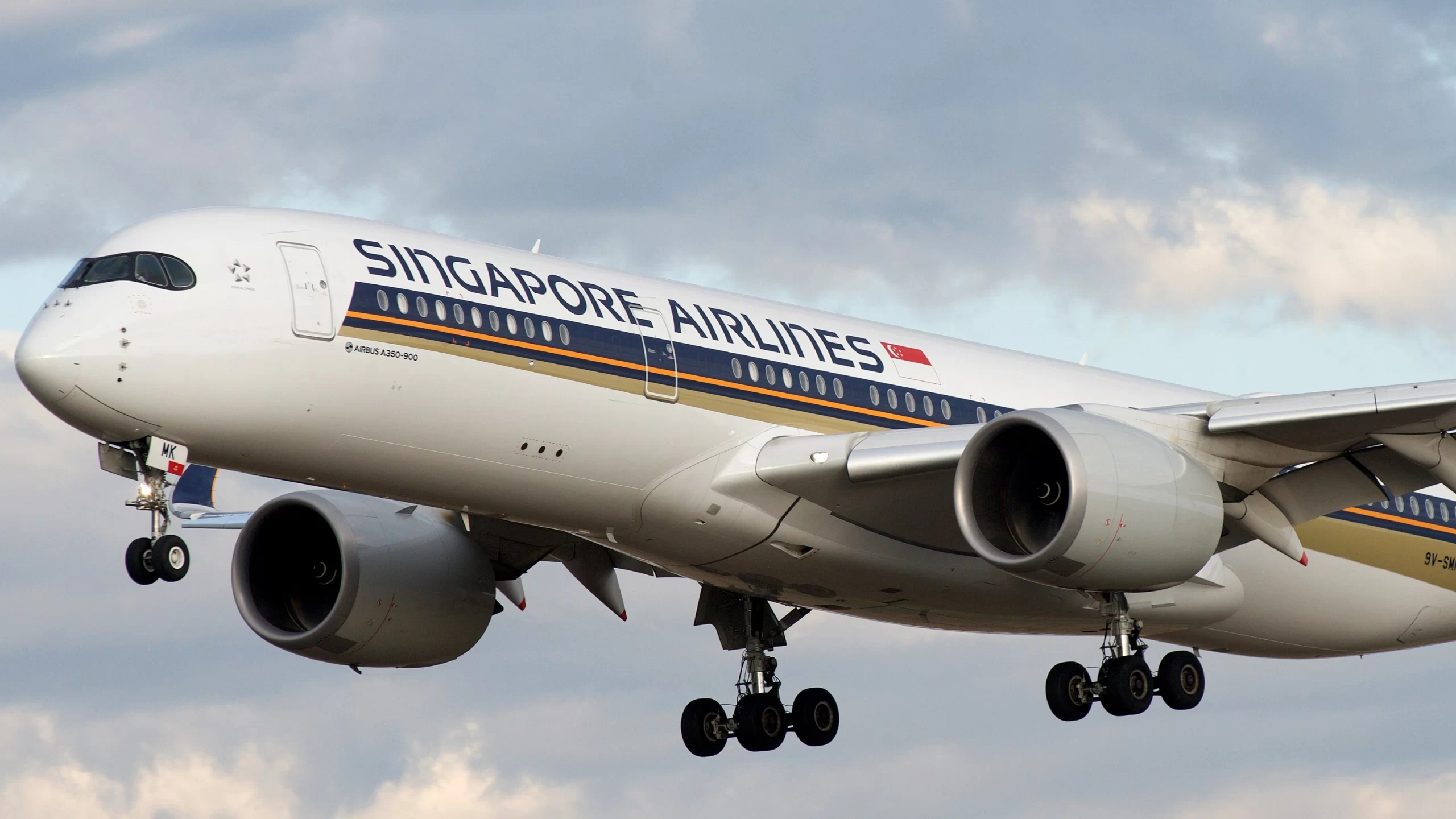
The prolonged containment — attributed by passengers to communications lapses, limited ground support, and intermittent cabin air-conditioning — prompted emotional responses from those affected, some describing the experience as “truly upsetting” and questioning the airline’s handling of information and logistics during the extended wait.
Singapore Airlines Overview
| Attribute | Detail |
|---|---|
| Airline name | Singapore Airlines |
| IATA code | SQ |
| ICAO code | SIA |
| Founded | 1 May 1947 (as Malayan Airways); became Singapore Airlines on 1 Oct 1972) |
| Headquarters | Airline House, Changi, Singapore |
| Primary hub | Changi Airport (SIN), Singapore |
| Fleet size | 158 |
| Frequent flyer program | KrisFlyer, PPS Club |
| Alliance | Star Alliance |

Flight Details & Technical Disruption aboard SQ661
Flight SQ661, an Airbus A350-900, was operating CTS-SIN on 10 January 2026, during the peak winter travel period when the Sapporo region experiences heavy seasonal traffic.
-
SQ661 pushback was delayed from 09:30 to ~10:30 due to pre-departure timing adjustments.
-
Approximately 55 minutes after take-off, passengers were informed that the aircraft would return to CTS due to a technical issue detected by the flight crew.
-
Initial communications suggested a possible correction and re-departure by 13:15, which did not materialize.
-
By 14:15, passengers were informed that the flight would not operate that day.
During the extended wait, reports emerged that cabin air-conditioning was turned off for periods, exacerbating discomfort in a tightly packed fuselage.

Passenger Experience: Logistics & Communications
Passengers described lengthy waits both onboard and on the ground after final disembarkation, highlighting multiple logistical challenges.
Issues Reported by Passengers
-
Only one ramp bus available initially, each carrying ~20 passengers at a time, delaying terminal transfer operations.
-
On reaching CTS terminal, passengers faced multiple queues for accommodation and flight rebooking, with little staff guidance.
-
Passengers had to wait over three hours at the airport terminal to sort hotel arrangements and onward travel plans.
-
Reimbursement guidelines communicated later included: two meals up to 8,000 yen (approx. S$65) and hotel reimbursement up to 30,000 yen per room per night, plus transport costs with receipts.
A female passenger, who requested anonymity to Lianhe Zaobao, explained that upon returning to the terminal building, passengers encountered unclear instructions regarding baggage reclaim, with the process not completed until close to 8 p.m. She noted that she, her mother, and their friends were fortunate to have pre-arranged accommodation near the airport, sparing them an additional journey of at least an hour into central Sapporo.
“The airline informed us that accommodation would be arranged for us, and we also received a 20,000 yen (about S$163) taxi voucher to and from the hotel and the airport.”

SQ661: Aircraft Type & Fleet Context
The aircraft involved in the incident was Singapore Airlines’ Airbus A350-900s – the aircraft type that the carrier deploys on the 9,357 mile route between Singapore Changi Airport (SIN) and John F. Kennedy International Airport (JFK) – the longest non-stop flight in the world.
Regional two-class A350-900 configuration (40J / 263Y)
The regional two-class A350-900 is designed for high-density operations and is divided into four physical cabins. It features only Business and Economy Class seating, prioritizing capacity while retaining a full flat-bed premium product.
Business Class (regional)
Business Class in this configuration comprises 40 Stelia Aerospace Symphony seats arranged in a staggered 1-2-1 layout, ensuring direct aisle access for every passenger.
Key features include:
-
Seat width of 20 inches
-
Converts into a fully flat bed measuring 6 ft 4 in
-
Pneumatic privacy divider between center seats
-
18-inch HD touchscreen in-flight entertainment system
-
Dedicated personal storage areas
-
Power options:
-
Universal AC outlet
-
Two USB-A ports
-

Economy Class (regional)
Economy Class seating is distributed across two cabins and consists of 263 Recaro CL3710 seats in a 3-3-3 layout.
Notable attributes:
-
Seat width: 18 inches
-
Seat pitch: 32 inches (with minor row-to-row variations)
-
Recline: 5 inches
-
Six-way adjustable headrests
-
Bi-fold tray table with integrated cup holder
-
11.6-inch HD touchscreen IFE display
-
Power availability:
-
Shared universal AC socket per seat pair
-
Individual USB-A port at each seat
-
Regional two-class layout summary
| Cabin class | Seat model | Layout | Seat width | Pitch | Recline | IFE screen |
|---|---|---|---|---|---|---|
| Business | Stelia Symphony | 1-2-1 | 20″ | — | Flat bed (6’4″) | 18″ HD |
| Economy | Recaro CL3710 | 3-3-3 | 18″ | 32″ | 5″ | 11.6″ HD |

long-haul three-class A350-900 configuration (42J / 24W / 187Y)
The long-haul A350-900 features a more diversified cabin offering, split across five cabins and including Business Class, Premium Economy, and Economy Class. This layout balances comfort and density for extended intercontinental routes.
Business Class (long-haul)
Business Class consists of 42 bespoke JAMCO seats arranged in a 1-2-1 configuration.
Seat characteristics:
-
Seat width: 28 inches
-
Seat pitch: 60 inches
-
Fully flat bed length: 78 inches
-
Full-width footrest
-
Storage cubby beneath the footwell
-
Cushion flips manually to form the bed
-
18-inch HD touchscreen IFE
-
Universal AC and USB-A power outlets
Premium Economy Class
The Premium Economy cabin includes 24 Safran Z535 recliner seats, offering enhanced comfort over standard Economy.
Premium Economy features:
-
Seat width: 19 inches
-
Seat pitch: 38 inches
-
Recline: 8 inches
-
Calf rest and footrest
-
13.3-inch touchscreen IFE display
-
Power supply:
-
Universal AC outlet
-
Two USB-A ports per seat
-
Economy Class (long-haul)
Economy Class comprises 187 Safran Z300 seats arranged in a 3-3-3 layout.
Key specifications:
-
Seat width: 18 inches
-
Seat pitch: 32 inches
-
Recline: 6 inches
-
Four-way adjustable headrest
-
Dedicated cup holder separate from tray table
-
11.1-inch touchscreen IFE display
-
Universal AC and USB power at every seat
Long-haul three-class layout summary
| Cabin class | Seat model | Layout | Seat width | Pitch | Recline | IFE screen |
|---|---|---|---|---|---|---|
| Business | JAMCO | 1-2-1 | 28″ | 60″ | Flat (78″) | 18″ HD |
| Premium Economy | Safran Z535 | 2-4-2 | 19″ | 38″ | 8″ | 13.3″ |
| Economy | Safran Z300 | 3-3-3 | 18″ | 32″ | 6″ | 11.1″ |
Ultra-long-haul A350-900 configuration (premium-only)
Singapore Airlines’ ultra-long-haul A350-900 is configured exclusively with premium seating, reflecting its deployment on the airline’s longest nonstop routes.
In this layout:
-
Business Class occupies more than half of the cabin
-
Premium Economy is positioned aft of the wing
-
No Economy Class seats are installed
ultra-long-haul seating breakdown
-
67 Business Class seats
-
JAMCO design
-
1-2-1 configuration
-
Identical seat width, pitch, and bed length to the long-haul Business Class product
-
-
94 Premium Economy seats
-
Safran recliner seats
-
Same specifications as long-haul Premium Economy
-
38-inch pitch with calf and footrests
-
Ultra-long-haul configuration summary
| Cabin class | Seat count | Seat model | Layout | Pitch |
|---|---|---|---|---|
| Business | 67 | JAMCO | 1-2-1 | 60″ |
| Premium Economy | 94 | Safran | 2-4-2 | 38″ |

Legal & Passenger Rights, and Compensation in SQ661
According to Lexicology, there is “no dedicated legislation governing compensation for delay or cancellation of flights or carriage of disabled passengers”, and the carriers from Japan carriers are required to cover compensation for delay or cancellation of flights or carriage of disabled passengers. Japanese carriers, however, generally, provide a compensation. [A few months ago, the US cancelled Biden-era proposal for airline delay compensation].
According to sources, the carrier provided accommodation reimbursement of 30,000 yen (about S$244):
“………..will reimburse the cost of two meals per person, including dinner and breakfast, up to a total of 8,000 yen (about 65 S$65); passengers who arrange hotel accommodation in Hokkaido on their own can also receive reimbursement of up to 30,000 yen per room per night with the receipt. At the same time, the round-trip transportation expenses between New Chitose Airport and the hotel can also be reimbursed upon presentation of the receipt.”

All in All
The SQ661 incident at CTS on 10 January 2026 stands as a stark reminder of the complexities inherent in airline operations when technical issues arise, particularly in remote stations or seasonal hubs, and this is one of the reasons why a spokesperson of the airline apologized to all customers on flight SQ661.
After clearing the departure area, several passengers reportedly encountered difficulties obtaining taxi services, while one reported that that instructions surrounding baggage retrieval were unclear, with the process only being finalized close to 8:00 p.m.
The disrupted service was subsequently rebooked as flight SQ9661, with a revised departure scheduled for 10:30 a.m. on Jan. 11, 2026. Singapore Airlines stated that the replacement flight ultimately departed New Chitose Airport at 10:57 a.m. and arrived in Singapore at 6:24 p.m.