
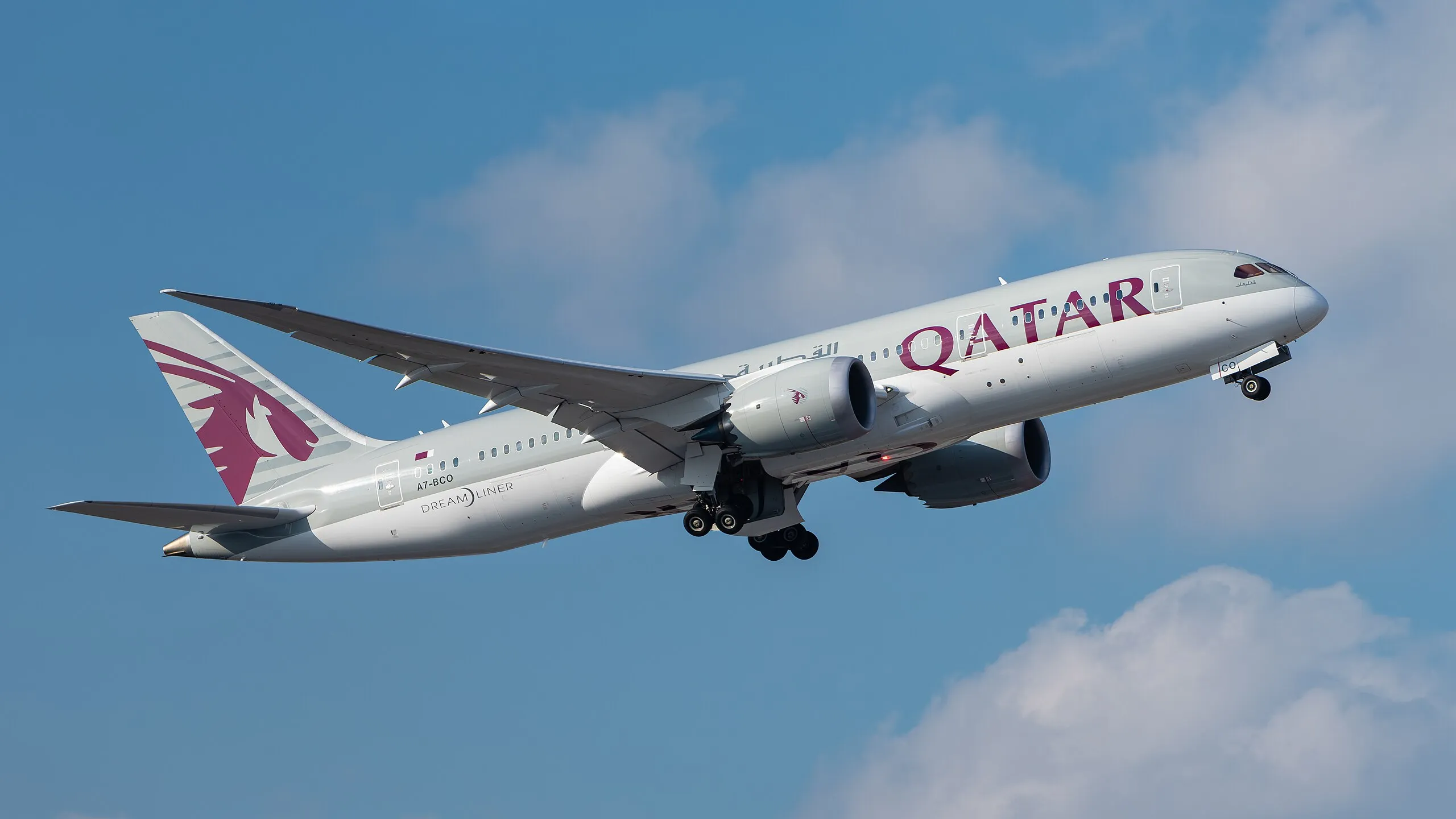
Qatar Airways (QR) , which is one of the busiest Middle East carriers, has selected Collins Aerospace, a business unit of RTX Corporation, to deploy its Ascentia™ analytics solution across its entire fleet of 52 Boeing 787s. The deal, announced at the Dubai Air Show (the very sho where Lufthansa is set to unveil its interactive fold up tray) on November 17, 2025, positions the airline to leverage real-time sensor data and predictive health management to improve reliability, reduce unscheduled maintenance, and lower operating costs.


Qatar Airways (QR) airline profile
| Category | Details |
|---|---|
| ICAO Code | QTR |
| Country | State of Qatar |
| Headquarters | Doha, Qatar |
| Main Hub | Hamad International Airport (DOH), Doha |
| Founded | 1993 (relaunched in 1997 under state ownership) |
| Ownership | Government of Qatar |
| Fleet Size (Total Active) | ~254 aircraft (passenger + cargo) |
| Fleet Composition | Airbus A320 family, A330F, A350-900/1000, A380, Boeing 737 MAX, 777-200LR/300ER, 777F, 787-8/787-9 |
| Long-Haul Workhorse Types | Airbus A350, Boeing 777, Boeing 787 |
| Number of Destinations | Over 170 worldwide |
| Alliance | oneworld (member since 2013) |
| Subsidiaries | Qatar Airways Cargo, Qatar Executive, Qatar Aviation Services |
| Key Strengths | Extensive long-haul network, premium service, strong Gulf connectivity, large widebody fleet |
| Recognitions | Multiple Skytrax “World’s Best Airline” awards (2011, 2012, 2015, 2017, 2019, 2021) |
What is Ascentia and why did Qatar Choose it for its 787s?
Ascentia works by analyzing live systems data against historical fleet records and advanced statistical models, offering “generate predictive insights” into component health of aircraft such as Qatar’s 787s. According to RTX, Qatar Airways expects the analytics-driven maintenance program will:
- Curtail aircraft downtime
- Improve on-time performance
- Streamline spare-parts provisioning
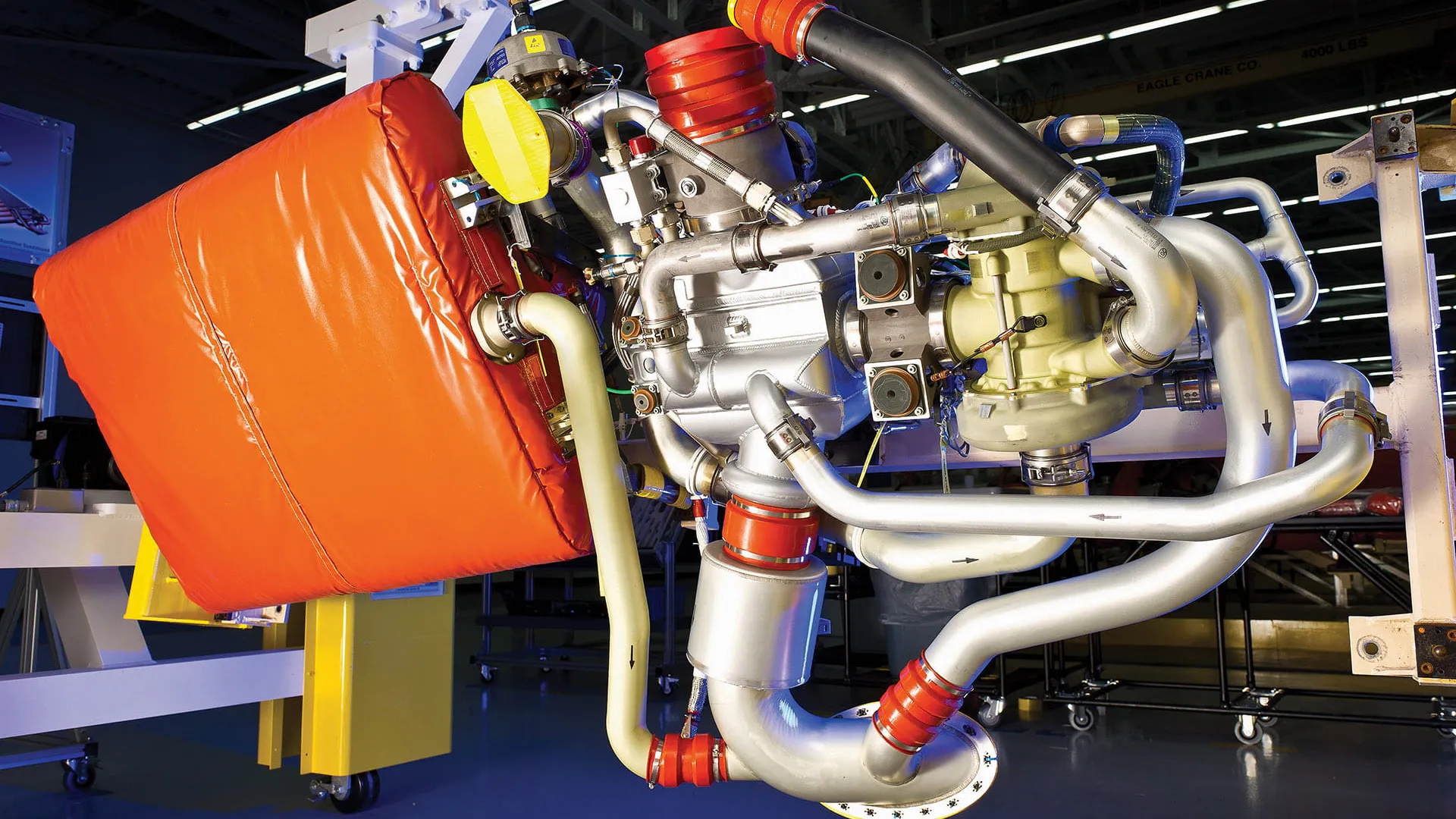
By continuously sensing and analyzing subsystem data, Ascentia helps the airline forecast when components may begin degrading — enabling maintenance to be scheduled before failures occur, thereby reducing unplanned AOG (“Aircraft on Ground”) events. According to Collins Aerospace, the platform is designed to “usher in a new era of game-changing aircraft maintenance efficiency”.
According to the same source, the platform will “make cost-saving decisions faster than ever before and even prevent future failures before they happen”:
“The Ascentia platform’s three applications – Repeaters, AOG Management and Prognostic Health Monitoring (PHM) – together provide a single, holistic view of the entire past, present and future maintenance environment of an aircraft. “
Ascential’s modules have three phases, which you can learn in brief from the table below:
| Ascentia Module | Key Capabilities (Paraphrased) |
|---|---|
| Learn from the past | • Aggregates inputs from technicians, pilots, and onboard systems into a unified dashboard. • Merges varied data types so maintenance teams can analyse issues without switching platforms. • Enhances the accuracy of corrective actions by drawing on historical trends and operational experience. |
| Action the present | • Integrates AOG oversight with real-time Aircraft Health Monitoring to support immediate decision-making. • Helps evaluate how effective previous fixes have been across the entire fleet. • Provides a shared workspace that keeps engineering, operations, and maintenance teams aligned. |
| Predict the future | • Uses advanced Prognostic Health Monitoring to identify developing issues before they become operational problems. • Converts continuous aircraft data into forward-looking insights that support maintenance planning. • Enables maintenance teams to make proactive, predictive interventions rather than reacting to failures. |
Nicole White, vice-president and general manager of Connected Aviation at Collins Aerospace, said that Ascentia analytics supported nearly 40 percent of the 787s in operation today. She also highlighted that Collins Aerospace provided:
- seamless system integration
- robust technical support
- unique insights
whilst also claiming that it empowered “airlines to effortlessly monitor, analyze, and act on critical operational data to drive efficiency and performance“.
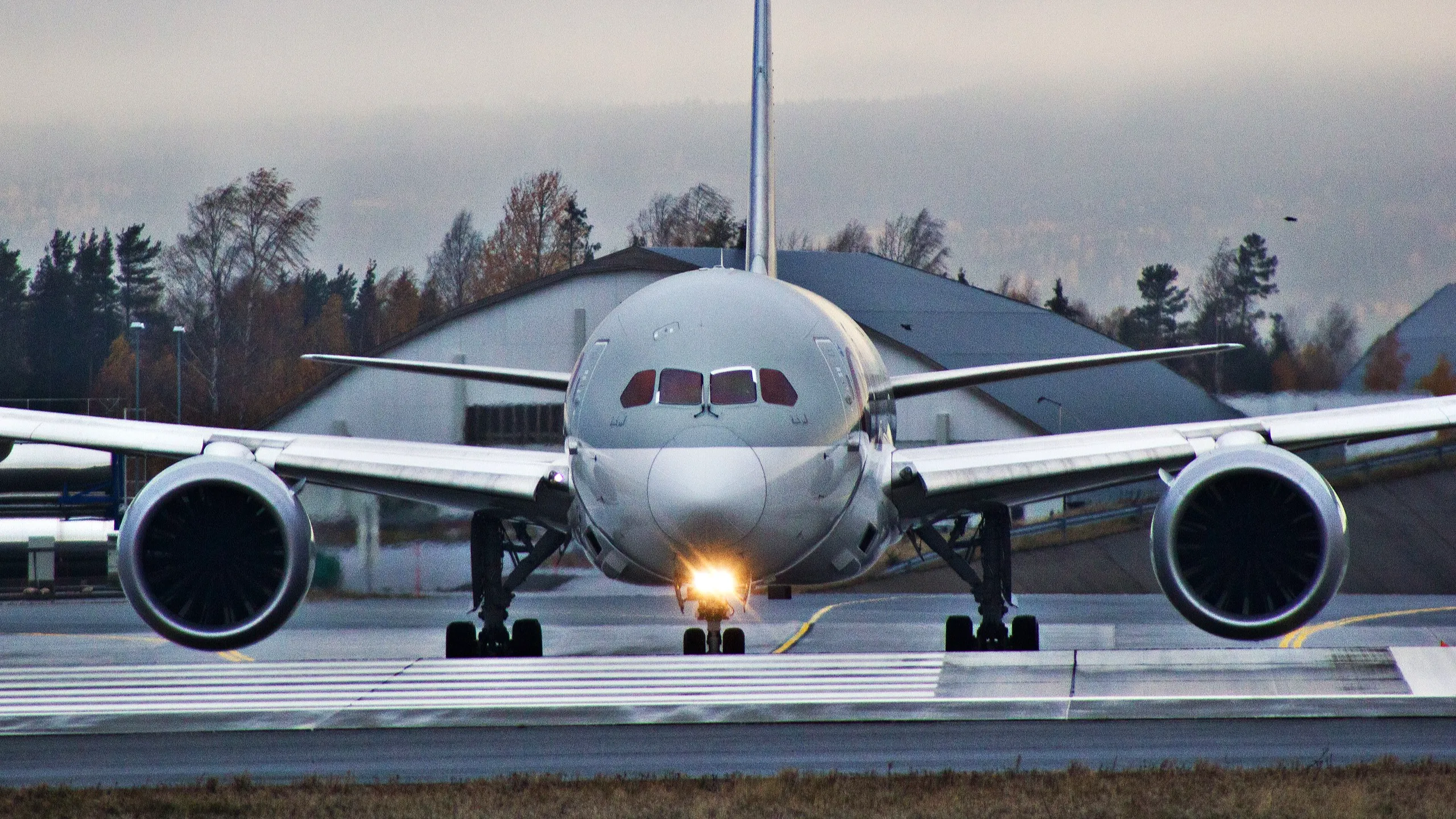

What Are The Oldest Active Aircraft In Qatar Airways’ Fleet?
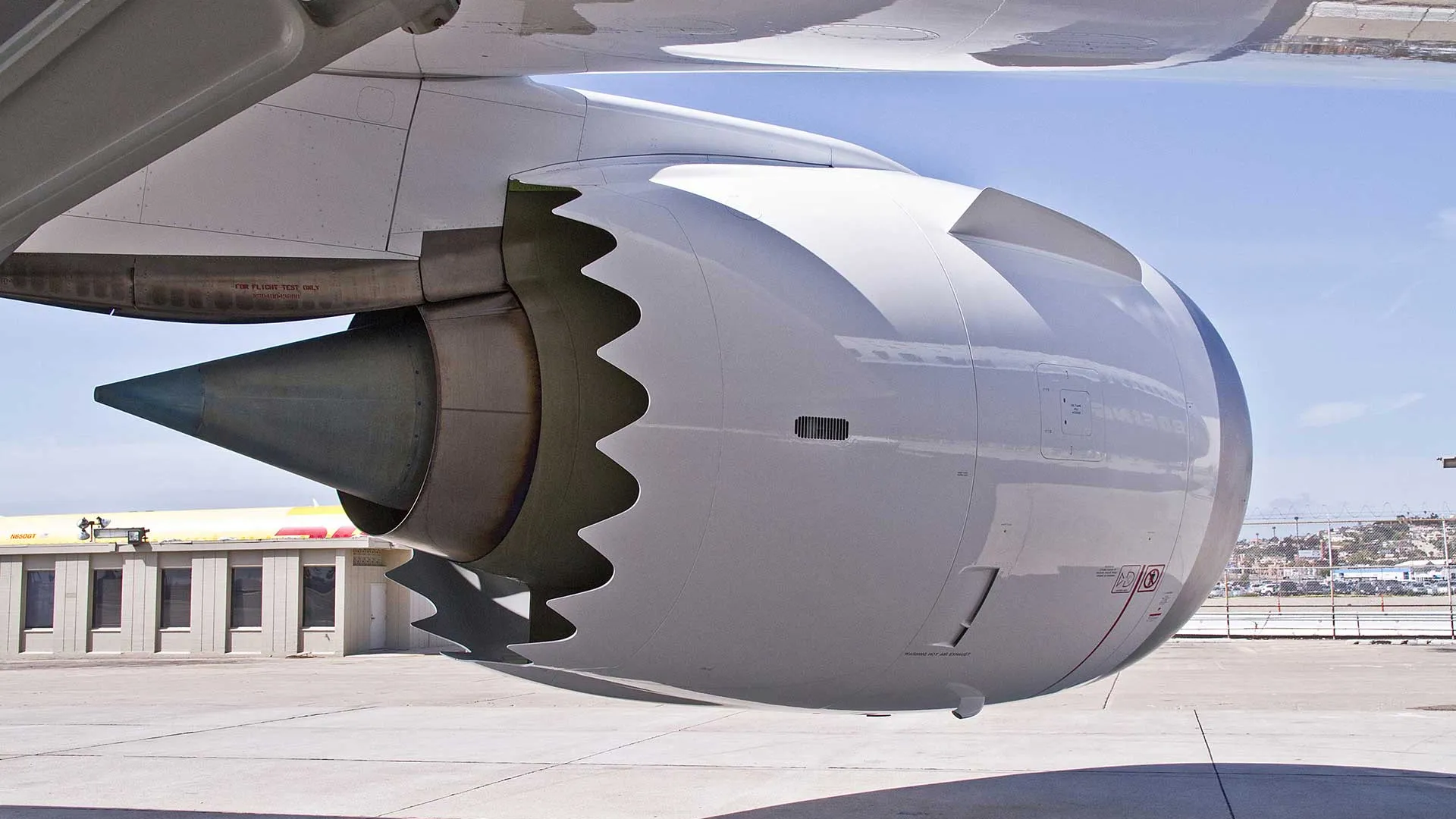
The Background: Qatar’s Boeing 787s
According to the announcement, Ascentia will be used for Qatar Airways’ 52 Boeing 787 aircraft. However, data from planespotters.net suggests that the carrier has 56 aircraft of this type. These have an average age of 8.1 years and one of the 56 is currently parked. Qatar’s youngest 787 Dreamliner is registered A7-BHX and was delivered to the carrier in September 2025. Qatar’s oldest aircraft of the Dreamliner family is registered A7-BCB and is 13.4 years old.
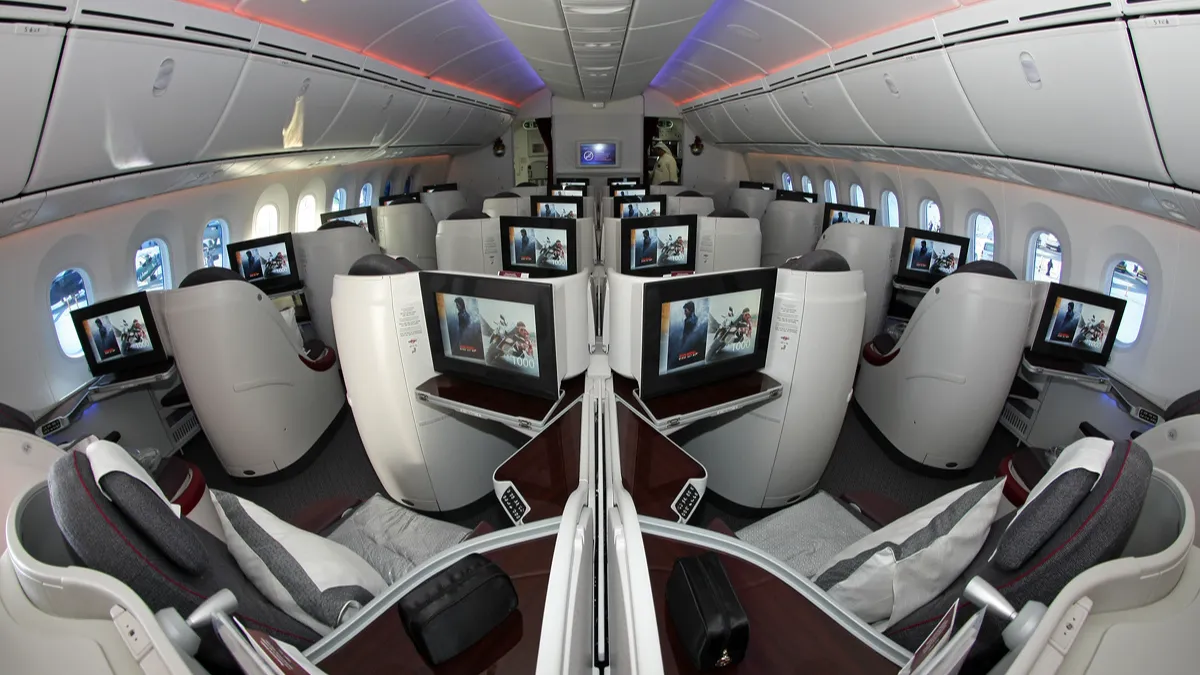
Here’s how Qatar configures its 787-8s and 787-9s:
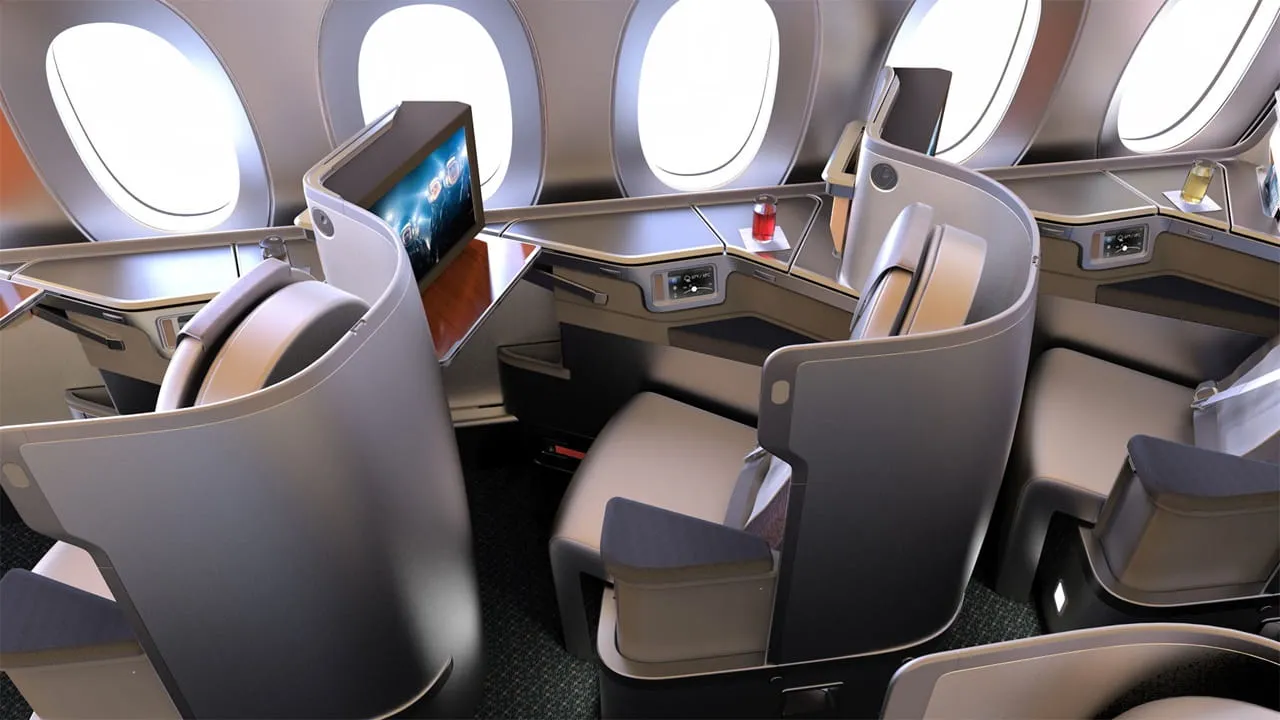
Qatar Airways 787-8 vs 787-9 — Business Class Comparison
| Feature | Boeing 787-8 | Boeing 787-9 |
|---|---|---|
| Total Seats | 30 | 30 |
| Seat Type | Adient Aerospace Ascent | Adient Aerospace Ascent |
| Privacy Door | 48″ high | 48″ high |
| Bed Length | 77″ fully flat | 77″ fully flat |
| Seat Width | 21″ | 21″ |
| Centre Divider | Retractable screen | Retractable screen |
| IFE Screen | 18″ static HD touchscreen | 18″ static HD touchscreen |
| Bluetooth Pairing | Yes | Yes |
| Power | Universal AC, USB-A, USB-C | Universal AC, USB-A, USB-C |
| Wireless Charging | Yes | Yes |
Data: aerolopa

Qatar Airways 787-8 vs 787-9 — Economy Class Comparison
| Feature | Boeing 787-8 | Boeing 787-9 |
|---|---|---|
| Total Seats | 281 | 281 |
| Seat Model | Recaro CL3710 | Recaro CL3710 |
| Headrest | Adjustable | Adjustable |
| Device Holder | Yes | Yes |
| Seat Pitch | 31″ | 31″ |
| Seat Width | 17.1″ | 17.1″ |
| Recline | Yes | Yes |
| IFE Screen | 13″ HD touchscreen | 13″ HD touchscreen |
| Bluetooth Pairing | Yes | Yes |
| Power | USB-A, USB-C | USB-A, USB-C |
Examples of Other Airlines that Have Used Ascentia
The Ascentia product family has multiple components such as PHM/prognostics, AHM, Repeaters for maintenance-log NLP, and FlightSense integration. Let’s have a look at each of these components in a bit of depth.
Repeaters
Ascentia’s Repeaters tool identifies recurring aircraft faults by using Natural Language Processing (NLP) to “understand both freehand text and logged discrepancies, enabling it to cluster issues accordingly—and proactively manage repeaters.” . This reduces soft errors, speeds troubleshooting, and helps engineers resolve long-standing defects.
Some of its other features include
-
Shows historical corrective actions linked to each repeating issue.
-
Reduces reliance on manual searches through fault histories.
-
Will soon support detection of problems that repeatedly require system resets but never receive a permanent fix.
AOG Management Featuring AHM
Ascentia unifies aircraft health data and AOG tracking into a single interface, allowing maintenance teams to oversee every step that leads to an aircraft returning to service. By drawing from historical fleet performance, the system improves the accuracy of estimating repair timelines and minimizes operational disruption.
Some of the other features of the AOG Management featuring AHM include:
-
Consolidating information previously accessed across multiple dashboards.
-
Helping teams track return-to-service tasks in chronological order.
It is expected AOG Management featuring AHM will will integrate FlightAware data and ARINC Hermes messaging for smoother coordination.
Prognostic Health Monitoring (PHM)
PHM allows airlines to build customized predictive analytics using Ascentia’s low-code tools. By identifying statistical patterns in flight and sensor data, maintenance teams can forecast failures and plan component replacements before issues escalate into downtime.
In addition to including an analytic studio that highlights anomalies linked to specific component removals, PHM also:
-
Supports creation of airline-specific alerts that can be validated across the fleet.
-
Reduces troubleshooting time by providing full-flight visualizations and integrated maintenance records.
FlightSense managed services
FlightSense, which operates through a global 24/7 expert support network, complements Ascentia by offering scalable maintenance support that ranges from targeted component repair assistance to full life-cycle management. The program uses Ascentia’s analytics to prevent disruptions and ensure operators can maintain reliability across their fleets.
Here’s an overview of the data types used by Ascentia:
Ascentia Data Sources Overview
| Data Type / Source | Aircraft Data | Operational Data |
|---|---|---|
| Full flight recording (e.g., QAR, SAR, CPL) | ✓ | |
| Snapshot reports (ACMS, ACMF) | ✓ | |
| Fault messages (e.g., FDE, MM, PFR) | ✓ | |
| LRU removal records | ✓ | |
| Aircraft event data (e.g., delays, cancellations, substitutions, RTG, ATB, diversion, AOG) | ✓ | |
| Aircraft utilization data (e.g., aircraft hours and landing reports) | ✓ | |
| Aircraft logbook data (e.g., PIREPs, technical, maintenance, or cabin logs) | ✓ | ✓ |
| LRUs and aircraft configuration changes (e.g., P/N, S/N, SB, STC) | ✓ | |
| Aircraft maintenance schedule (e.g., A-checks, B-checks, C-checks) | ✓ | |
| Shop/MRO maintenance records | ✓ |
Source: Ascentia
Comparison Table of Airlines using Ascentia for different fleet type and scope:
| Airline | Fleet / Aircraft Scope | Scope / Notes |
|---|---|---|
| Korean Air | Boeing 787 fleet | Implemented Ascentia PHM in 2023 to strengthen predictive maintenance capabilities on its 787 fleet. |
| Japan Airlines (JAL) | Boeing 787 fleet (plus broader FlightSense integration) | Renewed its FlightSense support agreement in 2025, continuing the airline’s prior adoption of Ascentia analytics for 787 predictive maintenance. |
| Republic Airways | Embraer E170/175 fleet (200+ aircraft) | Became the first operator of Ascentia “Repeaters” in 2025, deploying the platform across its E-Jet fleet for maintenance log NLP and harmonized data insights. |
| Air Europa | Boeing 787 fleet | Entered a long-term MRO and analytics support contract in 2024, incorporating Ascentia to improve turnaround times and maintenance cost efficiency. |
| Freebird Airlines | Mixed narrowbody fleet | Announced adoption of Ascentia in 2024, aiming to reduce AOG events and modernize predictive health monitoring. |
| China Airlines | Airline-wide analytics and MRO support | Signed a major multi-year support agreement in 2025, integrating Ascentia to enhance predictive maintenance and operational reliability. |

Qatar Airways: 5 Special Liveries Used By The Middle Eastern Airline
All in All
Qatar Airways’ decision to deploy Collins Aerospace’s Ascentia across its 52-strong Boeing 787 fleet marks a decisive move into predictive-health management for airlines in the Middle East. Further, the carrier might also want to deploy the same system for its other aircraft type as well – after all, Ascentia is also deployed by carriers using the Boeing 777, Airbus A320, Boeing 737, among others.