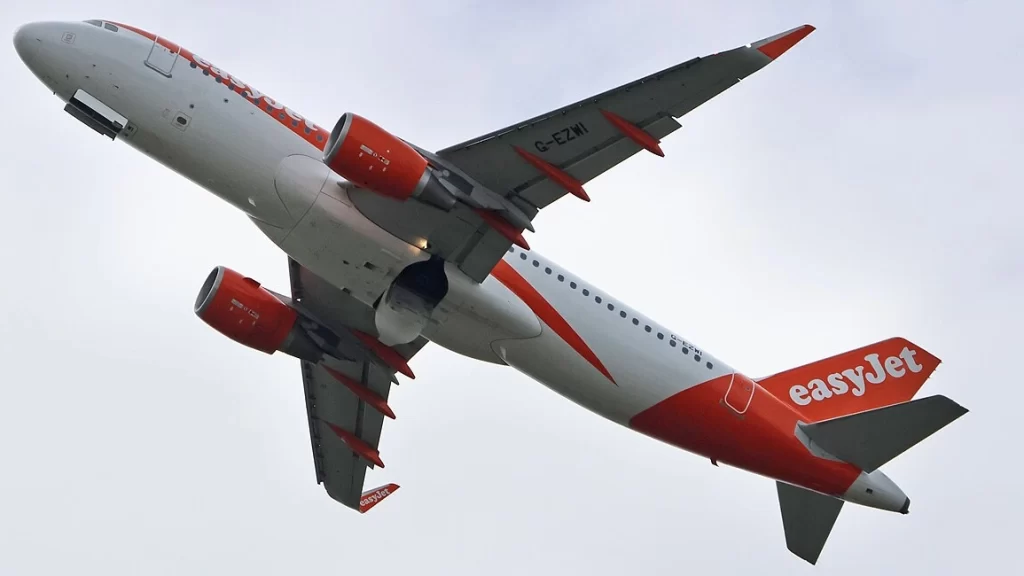
A routine EasyJet (U2) departure from Milan Linate Airport (LIN) to Manchester Airport (MAN) descended into widespread disruption after long immigration queues linked to the EU’s new biometric Entry-Exit System (EES) caused more than 100 passengers to miss their flight, the BBC reported.
The disruption unfolded as the EES—rolled out across the Schengen Zone—became fully operational, introducing mandatory biometric registration for third-country nationals, including UK citizens, and exposed early operational strains in Europe’s upgraded border control framework, which now requires fingerprint and facial recognition checks for non-EU travelers.
European Entry/Exit System (EES) Overview
| Category | Details |
|---|---|
| Rollout timeline | Phased rollout began on 12 October and is now active across 29 European countries |
| Core change | Replaces traditional passport stamping with digital recording of entries, exits, and refusals of entry |
| Data collected | Facial images, fingerprints, and personal data from travel documents |
| Main purpose | To modernise EU border management and improve security, fraud detection, and crime prevention |
| Enforcement data (early results) | Over 24,000 refusals of entry recorded (expired/fraudulent documents or insufficient travel justification) |
| Security alerts | More than 600 individuals flagged as potential security risks |
Biometric Checks Created Hours-Long Bottleneck at Milan
Under the new EES system, travellers entering or exiting the Schengen Zone must now undergo facial recognition scans and fingerprint registration, replacing faster manual passport stamping processes in many cases. The two countries exempt from this system are Ireland and Cyprus – both of which use manual passport checks.
According to aviation industry groups including ACI Europe and Airlines for Europe, early implementation has resulted in processing delays of two to three hours during peak travel periods, significantly increasing congestion at border checkpoints.
At Milan Linate, the situation escalated to the point where no passengers reportedly reached the boarding gate by the scheduled closing time, with only a small number arriving roughly 90 minutes later.
According to a report published in EuroNews, “border control authorities were able to suspend the EES processes in full or partially during travel peak times” previously – something that will longer be possible from now on.
This means that travellers will most likely need to reach the airport around one and a half hours to two hours earlier than they usually would, to account for EES-specific delays after 10 April…. these delays are likely to ease in the medium-term, once the EES processes are more baked in.
The report also said that airport and airline industry groups are urging the European Commission to grant border authorities the power to fully or partially suspend the EES whenever needed throughout the entire 2026 summer travel season. There are a few exemptions, though:
- EU and Schengen citizens
- Long-term visa holders / residence permit holders
- Non-EU family members with valid residence cards
- Local Border Traffic Permit holders
- Transport crew (airline, train, etc.)
- Military personnel (NATO / Partnership for Peace) and their families
- Certain cruise passengers (limited cases) (may be exempt, e.g., day trips outside the Schengen area)
easyJet Passenger Experience was Rife with “Chaos,” Distress, and Medical Incidents
Travellers described the scene as overcrowded and distressing, with queues becoming so long that some passengers fainted or became physically unwell while waiting for processing.
One passenger, Carol Boon, 59, from Staffordshire, said the situation was “just horrible” and highly stressful, adding that some individuals collapsed in the queues during the prolonged wait. She was quoted in the BBC ashaving said:
Even if we were there five hours before, we weren’t told the gate number until about 90 mins before, so there was nothing we could have done. When they were told their flight had left, she said EasyJet representatives then “left us to fend for ourselves”….It was just disgusting the way they spoke to us.
Another traveller, Max Hume, 56, from Leeds, described the experience as “awful,” later spending around £1,800 rerouting his journey back to the UK via Luxembourg after missing the flight. He further said that the carrier offered passengers £19 and a flight on Thursday, despite the fact that “we would have had to pay £300.”
Passengers also reported limited communication from airline staff, with some claiming they were not informed of gate details until late in the departure window, leaving insufficient time to reach boarding gates once border processing was completed.
Missed Flights and Rising Financial Losses for easyJet’s Passengers
In total, over 100 passengers missed the EasyJet flight, many of whom had arrived at the airport several hours in advance but were still unable to clear border controls in time. Affected travellers reported significant financial consequences, with losses ranging from approximately £1,000 to £1,800 due to rebooked flights, alternative transport routes, and accommodation costs. In our previous post we had touched upon the fact that airline delays cost passengers nearly $500.
Some passengers were forced to re-route through alternative European hubs such as Luxembourg, while others booked replacement flights to UK airports including Edinburgh and London Gatwick, creating additional onward travel complications.
EasyJet’s Said Factors Were Out of Control
EasyJet stated that it had warned passengers to allow extra time for travel due to expected delays and confirmed that flights were held where operationally feasible.
The airline also offered free flight transfers to affected customers, while acknowledging the disruption but attributing it to factors outside its operational control:
We continue to urge border authorities to ensure they make full and effective use of the permitted flexibilities for as long as needed while EES is implemented, to avoid these unacceptable border delays for our customers.”
However, airline operations are constrained by fixed airport slots, crew duty time regulations, and scheduling restrictions, limiting flexibility when border processing delays occur.

The rollout of the EES has also introduced procedural limitations for border authorities. Unlike earlier systems, full suspension during congestion is no longer broadly permitted, with only partial suspension options available under current rules.
This restriction has raised concerns among aviation stakeholders, particularly ahead of peak travel periods when passenger volumes are significantly higher. Travel experts note that the system requires biometric data collection alongside security questions, with data retained for up to three years and verified again on exit from the Schengen Zone.
Here are a few additional details:
| Category | Details |
|---|---|
| Is a biometric passport required for EES? | Not strictly required |
| Use of biometric passport | Allows access to self-service kiosks for faster registration and entry |
| Standard passport holders | Must use manned border control booths and provide a photo + fingerprints during initial registration |
| Data storage period | Biometric and travel data stored for 3 years, making future border checks faster |
| Refusal rule | Travellers who refuse biometric data collection are automatically denied entry |
| Children under 12 | Do not provide fingerprints but must still have a photograph taken |
All in All
Despite early disruption, the EU’s Entry-Exit System represents a long-term transformation of border management across the Schengen Zone. Travellers are now expected to allocate significantly more time for immigration processing and arrive well ahead of departure schedules.
While operational efficiency may improve as systems stabilize, biometric verification is now a permanent requirement for non-EU travellers entering and exiting Schengen countries.


_@_LGW,_April_2014.jpg)


