Nepal’s Cabinet has approved the Government of Nepal (Allocation of Business) Regulations, 2083, formally reducing the number of federal ministries from 22 to 18 in the most sweeping administrative restructuring the country has undertaken in years.
The decision, taken at a Cabinet meeting on May 13, 2026, and gazetted the following day, fulfils a central promise of Prime Minister Balendra Shah’s Rastriya Swatantra Party (RSP) — though it stops one ministry short of the 17-ministry ceiling the party’s own manifesto had committed to, and two short of the even more ambitious 16-ministry floor cited in some RSP campaign documents.
The restructuring formally abolishes the Ministry of Youth and Sports, the Ministry of Water Supply and Sanitation, the Ministry of Urban Development, and the Ministry of Federal Affairs and General Administration as standalone entities, folding their portfolios into newly named or expanded ministries.
Deepa Dahal, Press and Research Adviser to Prime Minister Shah, confirmed that the ministries of Finance, Home Affairs, Foreign Affairs, Defence, Law, Justice and Parliamentary Affairs, Industry Commerce and Supplies, Culture Tourism and Civil Aviation, and Energy Water Resources and Irrigation all remain unchanged under the new framework. The restructuring takes effect upon Gazette publication and will be administered under the supervision of Secretary Govinda Bahadur Karki’s Restructuring Management Secretariat, whose committee had itself recommended capping ministries at 17 — a target the Cabinet ultimately declined to meet.
Photo: Karan Bhatta | aviospace.org
Full List of Mergers, Renames, and New Ministry Creations
The Cabinet approved several distinct categories of change simultaneously. HimalPress confirmed that the Ministry of Science, Technology and Innovation was created by separating science and technology functions from the former Ministry of Education, Science and Technology — a move that Radio Nepal characterised as the government “prioritising technology and innovation” by elevating it to a dedicated ministry rather than treating it as a secondary portfolio within education. The Ministry of Agriculture, Forests and Environment was formed by merging the previously separate Ministry of Agriculture and Livestock Development with the Ministry of Forest and Environment.
Several ministries were also renamed without wholesale merger: Nepal News English reported that the Ministry of Health and Population becomes the Ministry of Health and Food Security, the Ministry of Labour Employment and Social Security becomes the Ministry of Youth Labour and Employment, the Ministry of Communications and Information Technology becomes the Ministry of Information and Communication, and the Ministry of Women Children and Social Welfare becomes the Ministry of Women, Children, Gender and Sexual Minorities and Social Security.
The most structurally significant merger, per Finance Minister Swarnim Wagle’s direct statement to The Kathmandu Post, fuses the Ministry of Physical Infrastructure and Transport with the Ministry of Urban Development into a single Ministry of Infrastructure Development — a consolidation Wagle defended as “linking infrastructure and urban development with the construction sector.” The information technology functions previously handled by the Ministry of Communications and Information Technology are absorbed into the Office of the Prime Minister and Council of Ministers.

RSP Promised 18 Ministries Instead of 17
The final count of 18 ministries is not the number the RSP government publicly committed to. Nepal News English’s detailed explainer of the RSP manifesto confirmed the party’s election commitment was reduction to 17, or even 16, through mergers. The Kathmandu Post reported that the Restructuring Management Secretariat led by Karki had itself recommended 17 ministries — the same figure in the RSP’s 100-point governance reform roadmap endorsed at Shah’s first Cabinet meeting on March 29.
The Cabinet’s decision to settle at 18 reflects what Communications and Information Technology Minister Bikram Timalsina described as a practical outcome of negotiations over portfolio assignments, rather than a principled departure from the reform agenda.
New Spotlight Magazine noted that the information technology functions of the scrapped Ministry of Communications and Information Technology were absorbed into the Prime Minister’s Office — a move that critics may interpret as centralising digital governance authority closer to Shah’s office rather than distributing it across a rationally structured ministry.
The one-ministry gap between promise and delivery is unlikely to draw sustained political fire given the RSP’s near-two-thirds parliamentary majority, but it adds an early data point to a pattern of modest slippage from the 100-point agenda that New Spotlight’s own analytical piece had already flagged by April.
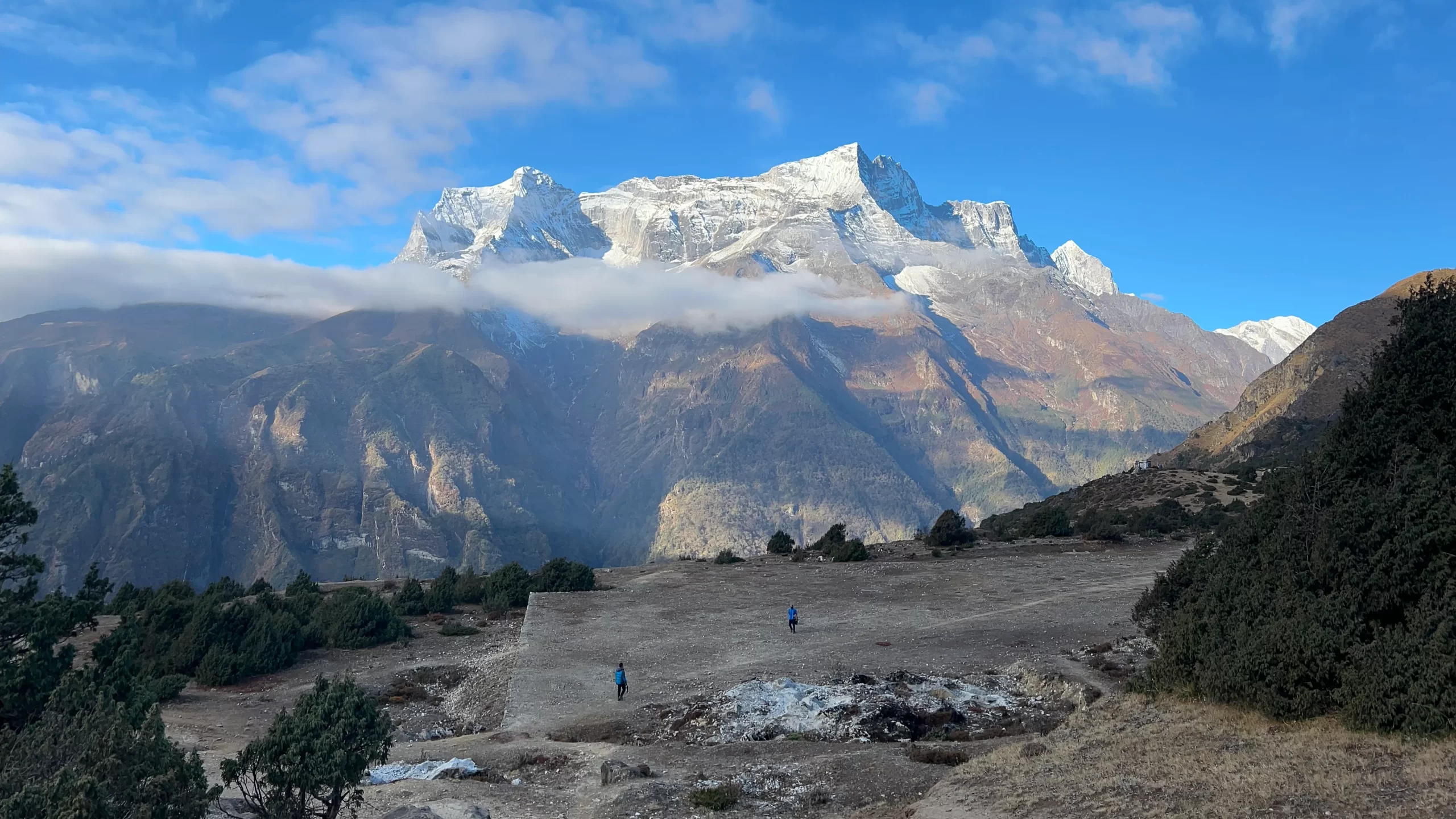
Pedestrians in Syangboche Airport’s runway
Why Recurrent Expenditure, Fiscal Discipline, and the Finance Minister’s Case Matter
Finance Minister Dr. Swarnim Wagle’s white paper, released in late April 2026, laid bare the fiscal rationale for the restructuring: Nepal’s average economic growth over the past ten years has been 4.2 percent, against a target of 6 percent in the last budget, with the white paper estimating current-year growth at only 3.5 percent.
Rising Nepal Daily reported Wagle’s framing of the restructuring as rooted in cutting recurrent expenditure. Clickmandu’s profile of Wagle noted that he has “consistently argued that poor governance is the biggest constraint to Nepal’s economic growth,” and that his vision prioritises digital transformation, clean energy, and agricultural modernisation — precisely the sectors now reorganised under the new ministry framework.
The Kathmandu Post’s analysis of the 100-point roadmap quoted former secretary Krishna Gyawali as observing that the Shah administration appears “more serious, with a clearer and more detailed work plan” than predecessors, even as he cautioned that implementation historically falters due to “weak monitoring, a lack of ownership within the civil service, and poor coordination.”
The RSP manifesto’s economic targets 7 percent average annual growth, per capita income above USD 3,000, and an economy of close to USD 100 billion within five years. These require substantial reductions in unproductive recurrent spending, making the ministry consolidation a fiscal prerequisite, not merely an organizational preference.
Unchanged Areas and Signals for Policy Continuity
Peoples’ Review confirmed this retention explicitly, identifying the eight ministries in Dahal’s official briefing. The preservation of the Ministry of Culture, Tourism and Civil Aviation as an intact entity is particularly notable given the ongoing Nepal–ASEAN Tourism Year 2026 campaign and Nepal’s record 107,934 international arrivals in April 2026.
The retention of the Ministry of Energy, Water Resources and Irrigation unchanged also reflects the RSP government’s strategic prioritization of hydropower as an export revenue driver. Finance Minister Wagle’s white paper specifically cited the target of reaching 15,000 megawatts of installed electricity capacity within five years as a cornerstone of the growth strategy, and disrupting the regulatory ministry overseeing that expansion would have been counterproductive.
Both the Ministry of Finance and the Ministry of Foreign Affairs retain their positions intact, reinforcing to multilateral creditors. These include the World Bank and Asian Development Bank, which are Nepal’s two largest development finance partners.
Reactions and What Comes Next: The Real Test Is Implementation
Former administrative reform implementation monitor Kashi Raj Dahal, quoted in The Kathmandu Post’s roadmap analysis, noted that “improved service delivery can largely be achieved within the country’s existing budget“. Open Magazine’s one-month review of the Shah government described him as a “super PM” operating with near-two-thirds authority but noted that ministerial exits and legal controversies have already tempered early optimism. The gazette publication of the Work Division Regulations triggers a 90-day window during which civil service assignments, budget allocations, and inter-ministry coordination frameworks must all be realigned to match the new structure.
The Cabinet decision also confirms that IT-related tasks previously housed in a standalone ministry now report directly to the Office of the Prime Minister and Council of Ministers — a centralisation that concentrates digital governance authority in Shah’s own office and will be watched closely for whether it accelerates or complicates Nepal’s e-governance rollout, another core 100-point commitment.