Independent German salary platforms put Lufthansa Technik’s aircraft mechanics/technicians at roughly €37,000–€42,000 gross per year on average, with a realistic range from around €28,000 at entry level to €67,000 for senior specialists, kununu, via Karrieresprung and Glassdoor.de report. Licensed Certifying Staff / Aircraft Maintenance Engineers with an EASA Part-66 licence earn more broadly across the German market — reported medians range from about €42,000 to €55,000 per year, climbing toward €57,000+ for those with 9+ years of experience (StepStone; gehalt.de). On top of that, a new 2026 collective bargaining agreement gives Lufthansa Technik’s technical staff a targeted pay boost beyond the general raise — details below.
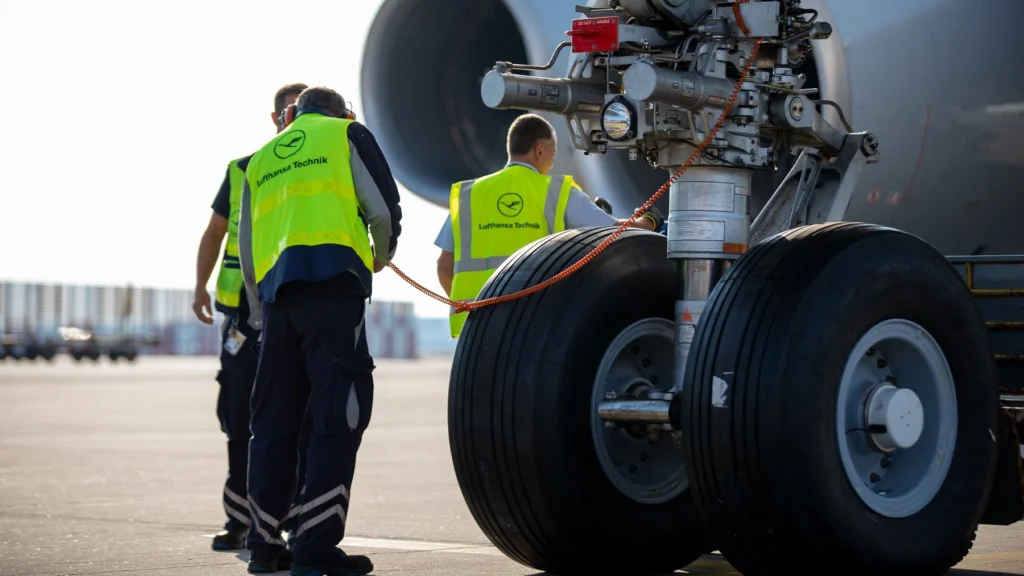
Training and Licensing to Become Lufthansa’s AME
Germany’s standard entry route is the Fluggerätmechaniker/in apprenticeship — a state-recognized, dual vocational training program combining on-the-job work with vocational school, regulated by the German Federal Institute for Vocational Education and Training (BIBB) and administered through the regional Chambers of Industry and Commerce (IHK) . Key facts, confirmed directly by official training bodies:
- Duration: 3.5 years (42 months), split between employer and vocational school
- Three specializations: Fertigungstechnik (manufacturing), Instandhaltungstechnik (maintenance), and Triebwerkstechnik (engines)
- Assessment: A two-part final examination (Gestreckte Abschlussprüfung), administered by the IHK
From there, moving into a licensed, signing-authority role requires meeting EASA Part-66’s separate experience and examination requirements — generally 1 year of hands-on maintenance experience for Category A after an approved Part-147 training course, and up to 2 years for Category B, with longer requirements for those without formal training. In Germany, licences are issued by the Luftfahrt-Bundesamt (LBA), the federal aviation authority.
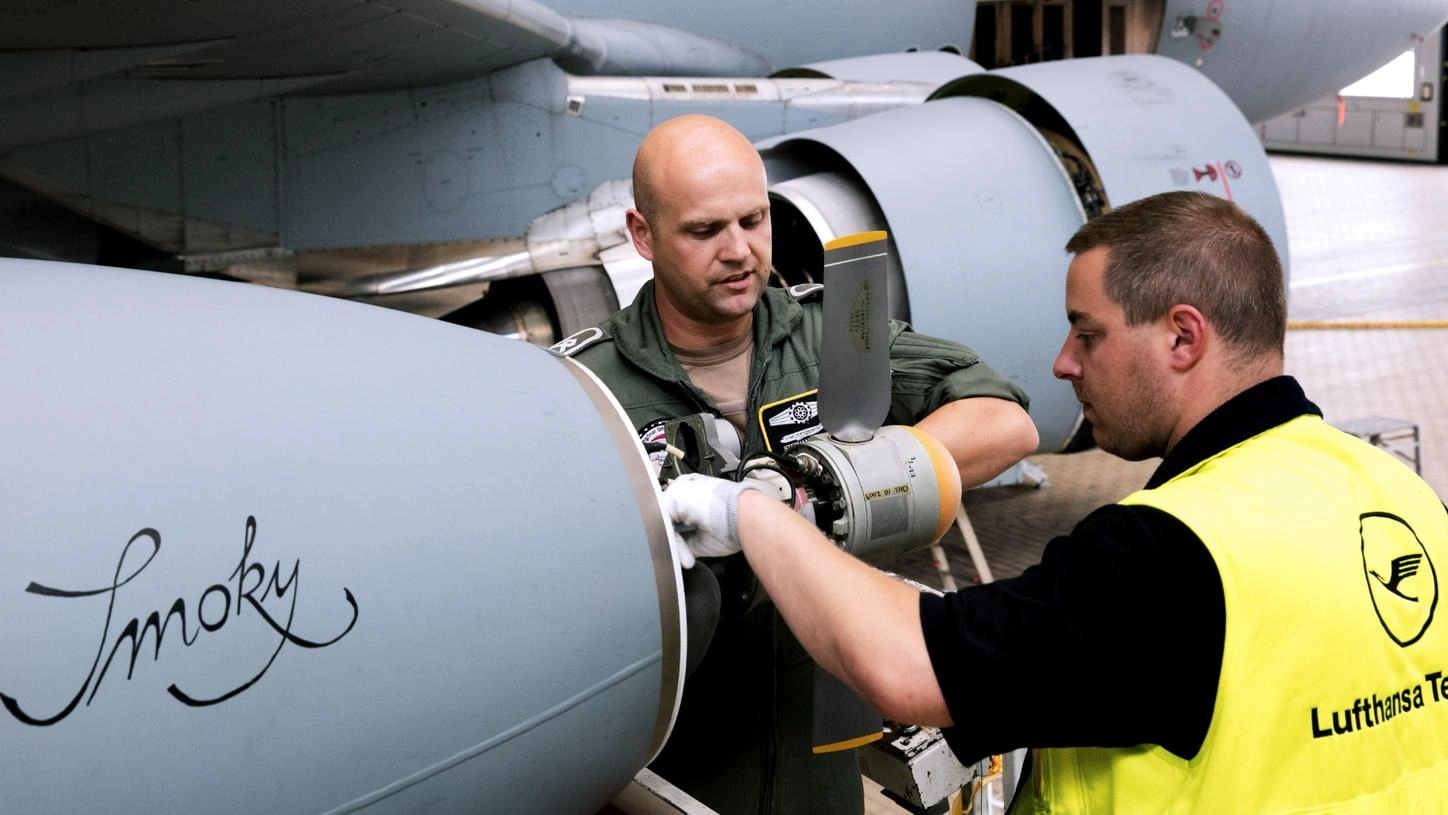
Salary Data for Lufthansa’s AME’sn 2026
Public salary claims for this field vary widely depending on job title, licence category, seniority, and which data source is used. Rather than presenting a single confident number, here is what independent, verifiable sources actually report:
Technicians / Fluggerätmechaniker at Lufthansa Technik specifically
| Source | Average | Range |
|---|---|---|
| Kununu employee-reported data (via Karrieresprung) | €41,700/year gross | €27,800–€66,700, with most between €35,580–€43,360 |
| Glassdoor.de (Lufthansa Technik-specific) | ~€37,200/year (€3,100/month base) | €30,168–€44,700/year (€2,514–€3,725/month) |
| Glassdoor.com (aggregate, all Lufthansa Technik roles, mechanic-to-manager range) | — | $64,467–$126,722/year across job types, not technician-specific |
For comparison, the German-wide average for this apprenticeship-trained occupation runs from roughly €2,700 to €3,700 gross per month (about €32,400–€44,400/year) depending on experience, specialization, and location.
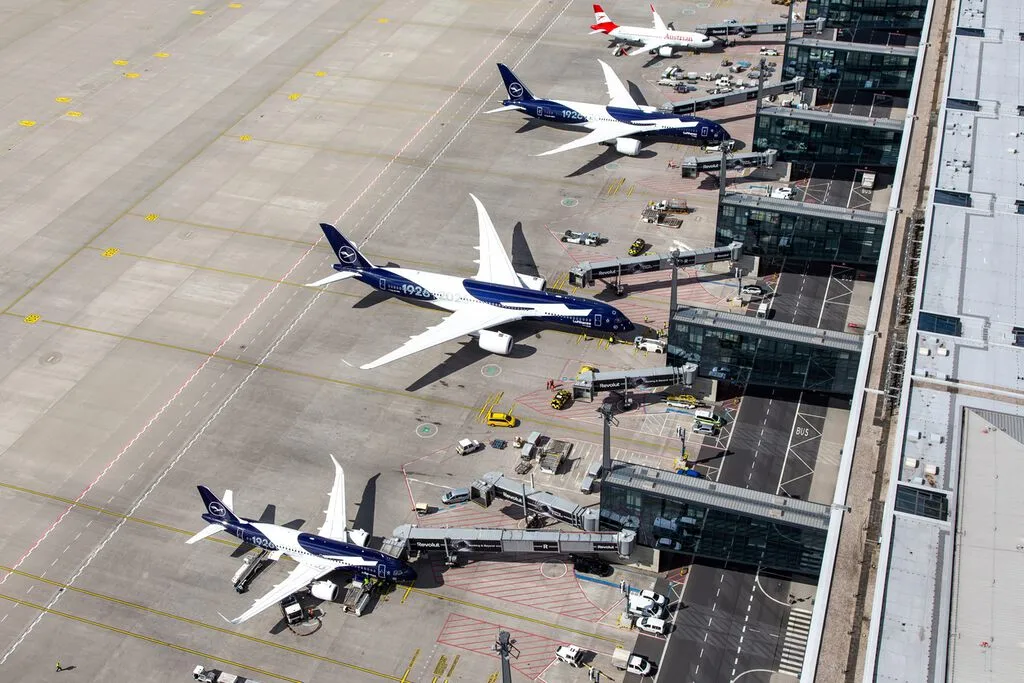
Licensed Certifying Staff / Aircraft Maintenance Engineers (Germany-wide, not Lufthansa-specific)
Lufthansa Technik doesn’t publicly break out pay for licensed Certifying Staff separately from the wider German market, so the closest verifiable benchmarks are national salary-comparison platforms:
| Source | Average | Range |
|---|---|---|
| gehalt.de | €55,308/year median (€4,460/month) | €48,552–€63,003/year (25th–75th percentile); rises to €57,104/year for 9+ years’ experience |
| StepStone | €41,800/year average (€3,483/month) | €33,900–€50,100/year |
| Industry recruiter commentary (Unique Aviation) | — | Entry-level roughly €3,500–4,500/month; experienced staff with a B1 licence up to €6,000/month or more |
The spread between these figures is real and reflects how differently “Certifying Staff,” “AME,” and “Prüfer von Luftfahrtgerät” get classified across platforms — as well as the fact that pay varies significantly by licence category (B1 vs. B2), aircraft type ratings held, and employer. For contrast, Certifying Staff at Airbus specifically — a large OEM rather than an MRO — average around €86,272/year in Germany, illustrating how much employer and role definition can move this number.
Apprentice pay
Under the Metal and Electrical Industry collective agreement that typically governs these apprenticeships, trainees earn approximately €1,070–€1,200/month in year one, rising to €1,280–€1,400/month in the final year.
The 2026 Pay Rise: What Actually Changed
Rather than a vague reference to “recent collective agreements,” here is the specific, verifiable 2026 development: on January 19, 2026, the ver.di trade union opened bargaining with Lufthansa Group over pay for more than 20,000 ground staff — including aircraft maintenance and technical personnel — across roughly 20 group companies, among them Lufthansa Technik AG and Lufthansa Cargo AG. Ver.di’s opening demand was a 6% raise, with a minimum of €250/month.
After four negotiating rounds, ver.di and Lufthansa Group reached an agreement on March 27, 2026 (later confirmed by a member vote), consisting of:
- A base salary increase of 4.65% in total, split into two steps: 2.2%, backdated to January 1, 2026, for Lufthansa Technik and Lufthansa Cargo staff (the increase applies from January 1, 2027 for Deutsche Lufthansa AG employees specifically), followed by a further 2.4% from March 1, 2027
- A separate, additional upgrade of technical job profiles worth up to 5% — specifically targeting maintenance and technical roles, on top of the general increase
- Apprentice pay rising by a combined €100/month across two steps
- An eight-year job-security guarantee against outsourcing of ground and technical roles
According to ver.di, employees covered by the deal will see an average of roughly €220 more per month once fully phased in, and the agreement runs for 26 months through the end of February 2028. This is the concrete basis for salary increases affecting Lufthansa Technik’s maintenance workforce in 2026 — not a general, unspecified claim.
Requirements to Join Lufthansa Technik
Based on Lufthansa Technik’s own careers information and standard EASA/German licensing requirements:
For entry-level technicians:
- Completion of the Fluggerätmechaniker apprenticeship (or equivalent technical/vocational training)
- Strong mechanical aptitude and understanding of aircraft systems
- German language proficiency for most operational roles, alongside working English
- Willingness to work shifts
For licensed Certifying Staff / engineers:
- An EASA Part-66 licence (Category A, B1, B2, B3, or C) issued or validated by the Luftfahrt-Bundesamt
- The relevant aircraft type rating(s) for the fleet being certified
- Documented hands-on maintenance experience meeting EASA’s minimum thresholds
Lufthansa Technik describes itself as the world’s leading independent provider of aircraft maintenance, repair, and overhaul (MRO) services, with more than 20,000 employees across over 30 international subsidiaries serving roughly 800 customers worldwide.
FAQs
Does Lufthansa Technik require German language skills for maintenance roles?
Yes, for most operational and regulatory purposes, alongside working proficiency in English, which is the standard technical-documentation language in aviation maintenance.
What’s the difference between a “technician” and “Certifying Staff / AME” at Lufthansa Technik?
A technician performs maintenance, inspection, and repair tasks. Certifying Staff hold an EASA Part-66 licence (Category A, B1, B2, B3, or C) and have the legal authority to sign off on an aircraft’s airworthiness after maintenance — a distinction defined by EASA regulation, not by internal job titles.
How much more do licensed engineers earn than technicians?
Based on independent German salary data, licensed Certifying Staff roles report median pay in the roughly €42,000–€55,000/year range, compared to roughly €37,000–€42,000/year for technician-level roles at Lufthansa Technik specifically — though individual pay varies significantly by licence category, aircraft type ratings, and experience.
Is there a confirmed pay raise for 2026?
Yes. Lufthansa Technik and Lufthansa Cargo staff received a base salary increase of 2.2%, backdated to January 1, 2026, plus a separate technical-role upgrade worth up to an additional 5%, under the March 2026 agreement between ver.di and Lufthansa Group.