A Jet2 (LS) flight operating as flight LS11DF from Birmingham Airport (BHX) executed a go-around manoeuvre upon approach to César Manrique-Lanzarote Airport (ACE) on Sunday, 1 June 2026, with footage circulating widely on social media thereafter. The incident was captured by the cameras of Lanzarote Webcam and subsequently shared on its social networks, drawing immediate attention from both aviation observers, travelling public, and news media such as Mirror alike. The manoeuvre, a standard avionic procedure known formally as a missed approach or balked landing, was notable for its proximity to the runway surface at the point of abort.
According to the platform, the incident occurred during the arrival of flight LS11DF from Birmingham. Lanzarote Webcam highlighted that during the manoeuvre “the tail of the plane almost touched the ground,” a circumstance noticeable in the images shared. No injuries were reported, and the aircraft subsequently completed a successful landing. Jet2 has not issued a formal statement specifying the precise trigger for the aborted approach.
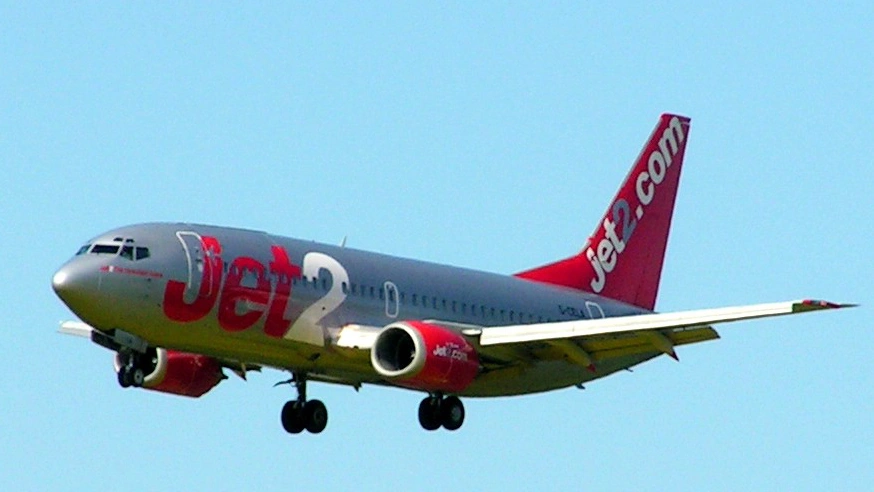
Why did Jet2’s Pilots Execute a Go-Around?
The incident occurred on Sunday, May 31, at César Manrique-Lanzarote Airport during the arrival of flight LS11DF from Birmingham. The route connects Birmingham Airport (BHX) to ACE, a corridor that Jet2 operates regularly and with high frequency, particularly during peak leisure travel seasons.
Public accounts have not revealed which aircraft type was involved in the incident.
A go-around is a crucial safety procedure in which an arriving aircraft aborts its landing and returns to the landing queue. Far from being a signal of pilot error or mechanical failure, the manoeuvre represents a disciplined exercise of situational judgment.
The decision to initiate a go-around can occur at any phase, from the final approach to the moment before the aircraft touches the ground, provided that the landing gear has not begun to bear the aircraft’s weight and deceleration devices like brakes or thrust reversers have not been deployed.
Go-arounds may also be directed by Air Traffic Control (ATC) due to runway conflicts or a variety of other reasons. They can happen at any point from the final approach fix to wheels on the runway, but prior to any deceleration device being activated such as brakes, spoilers, or thrust reversers. In the case of flight LS11DF, no official confirmation has emerged as to whether the crew initiated the procedure autonomously or acted on ATC instruction.
When a go-around is initiated, the flight deck immediately transitions to the missed-approach procedure. In modern jets such as Airbus and Boeing, pushing the TOGA button or advancing the thrust levers to maximum directs the autothrottle or manual engines to climb power. The pilot flying adds about 10° to 15° pitch to arrest the descent and begin climbing.

Footage And Eyewitness Accounts of Jet2’s Incredible Go-Around
Lanzarote Webcam’s images show the aircraft attempting to land unsuccessfully, ultimately executing a manoeuvre known in Spanish aviation parlance as “engine and to the air” or go-around. The platform’s footage, which spread rapidly across social networks, drew comparisons to a separate go-around event at the same airport involving a different Jet2 flight just months earlier.
According to air traffic controllers who commented via their social network X, this procedure is completely habitual and forms part of established air safety protocols. Although for passengers it can be a stressful experience due to the sudden increase in power and the abrupt elevation of the plane, it is the safety manoeuvre par excellence when the landing does not meet optimal conditions.
The footage showing the aircraft’s tail descending close to the runway surface during the power application phase drew understandable alarm from online viewers unfamiliar with the dynamics of a go-around. Aviation experts, however, note that a pronounced nose-up pitch attitude during a go-around is mechanically expected and not indicative of a structural or control failure.
How Lanzarote’s Environment Presents Operational Challenges
César Manrique-Lanzarote Airport (ACE), formally named after the celebrated Canarian artist and architect César Manrique, is situated approximately five kilometres southwest of Arrecife, the island’s capital. The airport is the main and only gateway for domestic and international flights to the island and is the third busiest airport in the Canary Islands.
Lanzarote’s geographical and meteorological character makes it inherently more demanding for arriving aircraft than many comparable European leisure destinations. The island sits in the Atlantic, exposed to prevailing north-easterly trade winds that can intensify unpredictably, often generating significant crosswind components across ACE’s single runway.
Storm Therese earlier in 2026, for instance, brought persistent strong winds that directly disrupted airport operations, leading to a separate Jet2 Birmingham flight aborting its landing at ACE under those conditions.
Go-arounds are used to prevent runway incursions as well as to counter hazards such as sudden wind shifts and less-than-ideal approaches. While they can feel jarring to passengers, they are routine, happening more than three times per day on average across the United States alone.



.jpg)