
After the former Syrian leader was ousted from the government, he chose to fly to Russia on the Ilyushin Il-76. In addition to aiding a flailing ex-president, the this versatile Soviet strategic transport aircraft has c6.5 tons of supplies for constructing a new winter complex at the Vostok station near Russia’s Novolazarevskaya outpost in Antarctica, and some reports even claim that at the heigh of the Soviet-Afghan war, the Ilyushin Il 76 transported almost nin-tenths of all Soviet troops and three-fourths of all of freight airlifting.
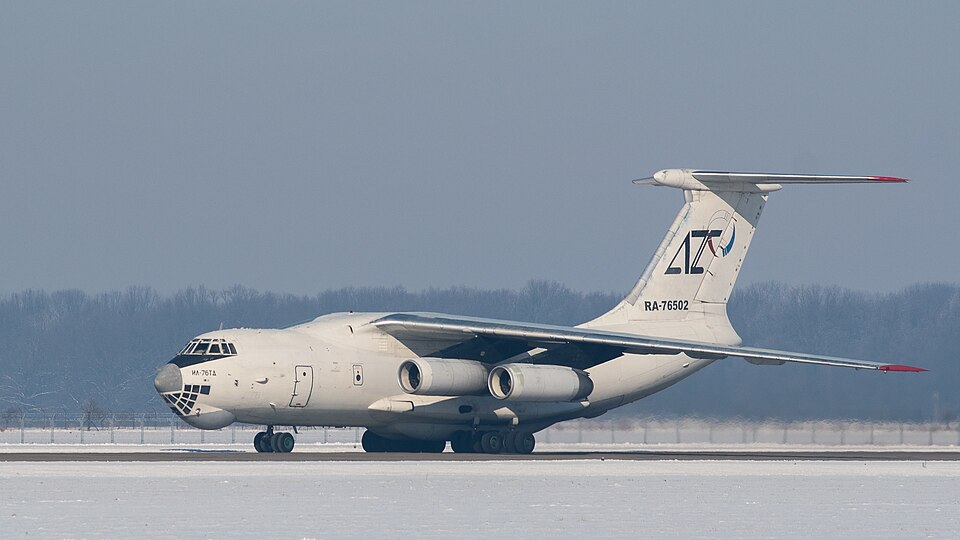

The Soviet Union has had many iconic aircraft in its past. Some of these include:
- The Tupolev Tu-104
- The Caspian Sea Monster, which was a ground-effect vehicle that suffered almost the same fate as the Avro Canada VZ-9AV.
- The Kalinin K-7, a metal monster
- The Tupolev Tu-144, the first supersonic airliner in the world.
Tupolev Tu-144 – The Soviet Concorde: Why the Supersonic Jet Failed?
However, the Ilyushin Il-76 beats any of these aircraft we’ve mentioned. It is not simply its sheer longevity that has played its part (the Il-76 wsa first manufactured in 1971), nor is it simply the production number of 975 units, but a whole host of other factors such as the fact that it can be operated in very demanding conditions, such as the ones merited by unpaved runways and underdeveloped areas, or that they have been deployed heavily in search and rescue missions. Let’s take a look at this versatile Soviet bird in all its documented versatility.
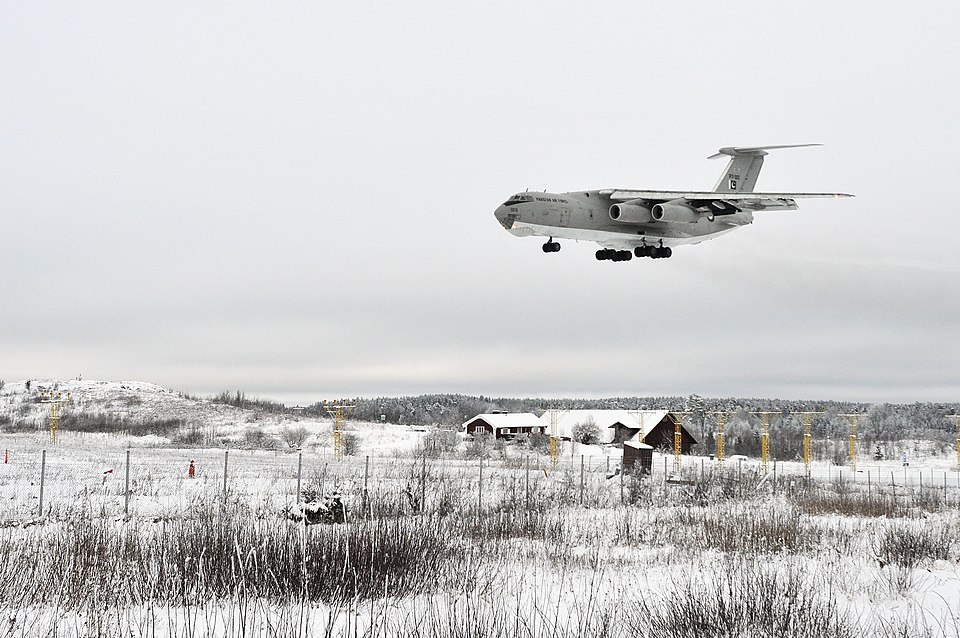

The Origins of the Il-76: The Soviet need for a freighter aircraft
In the same way that many aircraft of the Tupolev series resulted from the Tupolev Design Bureau, ‘Ilyushin Design Bureau’ conceived the Ilyushin Il-76. It has a special place in the history of Russia (as well as the USSR) because it was USSR’s first jet transport that was designed from scratch, in addition to being the first to enter production. Ilyushin design bureau also came up with the Ilyushin Il-2, one of the most produced planes ever.
The story of IL-76’s inception is inextricably tied to the need for replacing the Antonov An-12. The Soviet Forces (known as Voenno-Vozdushnye Sily Soyuza Sovetskih Sotsialisticheskih Respublik, or quite simply VVS) needed a jet transport with a field performance that was in par with the aircraft they were looking to replace. They wanted an aircraft with rough-field capability that could be operated independently from ground support equipment. They were, in fact, looking for something better: higher speed and a bigger payload. Aeroflot, the Russian state carrier also wanted better capabilities as they “had to haul heavy equipment to oil and gas fields in Siberia and goods coming in via seaports in the Far East”. This is where the Ilyushin IL-76 came to the picture.
Here are a few events that highlight the development of this plane:
| 28th June 1966 | Specific operational requirement (SOR) for an aircraft with the demans stated above was drawn |
| 27th November 1967 | The Council of Ministers (in the USSR)issued a directive to develop a four-jet freighter designated IL-76 |
| 1975. | Radiy Petrovich Papkovskiy was appointed IL-76 project chief (after Sergey V. Ilyushin’s retired in 1970, post a bout of illness. * |
*Ghenrikh V. Novozhilov, was the IL-76’s chief project engineer.
.jpg)
In their history of the Ilyushin OKB, authors Yefim Gordon, E. Gordon, Dmitriy Komissarov, Dmitriĭ Komissarov, and Sergey Komissarov state that “the freighter’s design specifications were perhaps the most stringent of the time”, with the demands placed upon the Ilyushin IL-76 being:
-
” a 40-ton (88,18-lb) payload over 5,000 km (3,100 miles) [ this was twice the payload and range of the An-12 – in less than six hours with lower operating costs].
-
It had to be capable of using dirt or snow strips with a bearing strength of no more than 6 kg/cm2 (85.35 Ib/sq in)
-
operating away from maintenance bases for up to 90 days at ambient temperatures ranging from -70°C to +45°C (-94/+ 113°F)
-
Take-off and landing run at normal take-off and landing weight was not to exceed 900 m (2,952 ft) and 500 m (1,640 ft) respectively.”
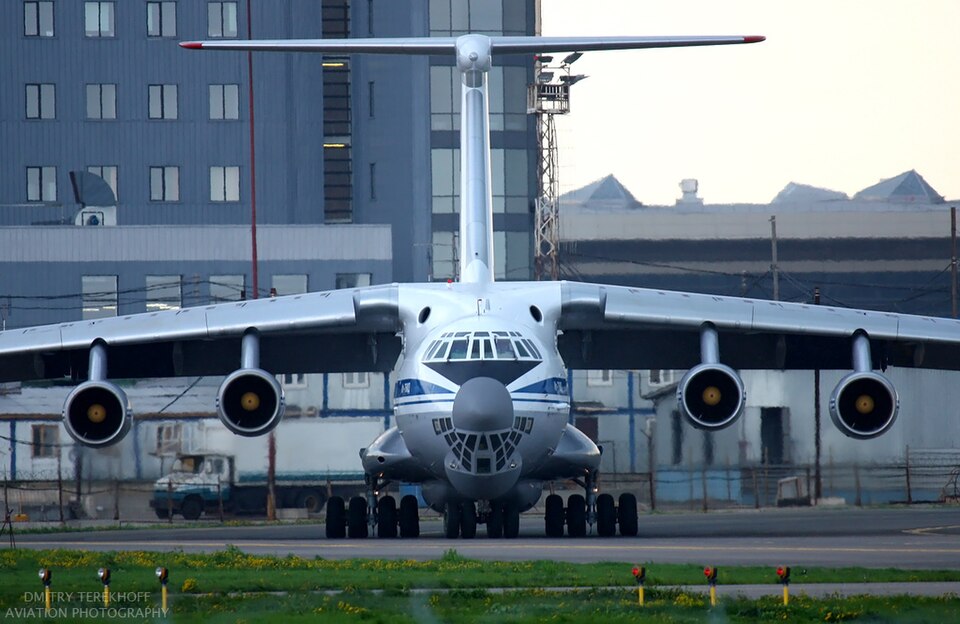
Ilyushin Il-76’s general arrangement comprised:
- circular-section fuselage
- Four turbofans in separate underwing nacelles
- a T-tail
- shoulder-mounted anhedral wings with moderate sweepback
The aircraft bore similarities to the C-141, and this resulted in the accusation, like the one seen with the Tupolev Tu-144 and the Concorde that the Il-76 was a Western ripoff. While the Tu-144 was called a Soviet Concorde or Concordski, such labels were not applied to the Il-76. The authors quote above claim: “Such accusations were often unfounded, since the similarity in many cases was purely superficial (the IL-62 vs VC-10 is a case in point). As for the apparent similarity between the C-141 and the IL-76, engineers in different countries facing the same problem will often come to similar solutions”.
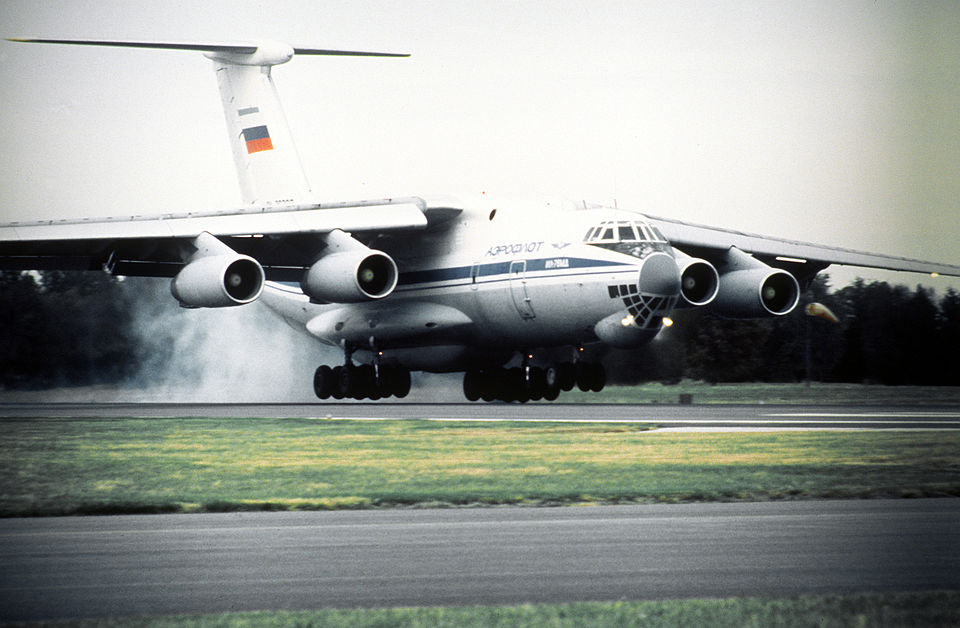

| Ilyushin’s point of difference with the Il-76 | The difference itself |
| cargo door design | The Il-76 had three cargo door segments, viz:
|
| Cabin floor | Was raised as the Il-76 was designed to operate in rougher runways*** |
** C-141 had clamshell cargo doors which protruded far beyond the fuselage contour when opened, causing considerable drag.
*** C-141 was designed for paved runways and therefore had a short undercarriage and smaller ground clearance.
The authors also note that by January 1967, the original project of the Il-76 had already evolved into a 250-seat airliner with features such as:
-
high-wing airliners to have a double-deck fuselage (the only other known aircraft of the kind is a 720-seat monster based on the An-22 which likewise never got off the drawing board)
-
The top floor seated 184 in six- or seven-abreast economy-class seating and the lower floor 66 three-abreast
-
The lower floor was divided lengthwise into a port-side baggage compartment and a starboard-side passenger cabin
.jpg)
The aircraft then underwent quite a number of revisions, the first of which was made in February. The specifications were to be pinned at:
- Overall length: 46.85 m (153 ft 8~ in)
- Fuselage length: 42.5 m (139 ft 514 in)
- Fuselage diameter: 4.8 m (15 ft 9 in)
- Wingspan:f 43.8 m (143 ft 8~ in)
- Height on ground: 13.7 m (44 ft 11 in)
Two years later, major changes beckoned. These included a redesign of nose, changing of flap settings to 15° or 30° for take-off and 43° for landing, reshaping of the vertical tail, and a complete reworking of the landing gear. Coming up with the final product took two more years, and the Il-76 took to the skies on 25th March 1971. Eduard I. Kuznetsov, Hero of the Soviet Union took the aircraft to the skies as the prototype became airborne after a take-off run of 685 m (2,250 ft).
Variations of the Il-76 in the years gone by
Since its introduction, the Il-76 has undergone several modifications, the most notable of which is its development after 2004, when it was modernized to the Il-76TD-90VD version. This variant, which was equipped with the newly developed PS-90 engines, was to be operated commercially.
Specifications of the Ilyushin Il-76
The turbofan airlifter that is the Ilyushin Il-76 was intended to be used as a military aircraft that would have the following features:
- Two guns in a rear turret
- Hard troop benches
- Two cranes traveling on overhead tracks,
- Four engines, each having a thrust of 26,455 pounds
- Maximum speed of 528 miles per hour
- Service Ceiling: 50,850ft
The unarmed civil cargo transport version IL 76-T was introduced in 1978 while the civil equivalent of military transport version, IL 76-TD, was introduced four years later. Some of the features of the IL 76-T, which could carry carry a payload of 48000kg in a medium-haul flight at a maximum range of 4600km, include the following:
- Four engines on underwing pylons
- A high-mounted swept wing
- A high-swept T-tail
- Full pressurization on the crew cabin, cargo hold, and rear compartment
- Freight-handling equipment inside the hold. It can.
Specifications of the Il-76MD’s include:
- 4 x 117 kN Soloviev D-30KP turbofans.
- Length: 46.60 meters
- Height: 14.80 meters
- Wingspan: 50.50 meters
- maximum speed of 900 km/hr
- Accommodation: 5 crew
- Maximum takeoff mass: 190000 kg
- Number of passengers: 140
- Design service objective: 30000 flight hours; 10,000 flights; 20 years

Il-76TD has an increased fuel capacity, could perform better at higher ambient temperatures, and also has higher takeoff weights.
Civil Variants
| Variant | Features |
| Il-76MGA | A commercial freighter |
| Il-76P / Il-76TP / Il-76TDP / Il-76MDP | A Water bomber firefighter. |
| Il-76T | A civilian cargo transport. |
| Il-76TD | Equipped with Soloviev D-30 Turbofan engines |
| Il-76TD-90 | An Il-76TD with Aviadvigatel PS-90 engines and a partial glass cockpit. |
| Il-76TD-90VD | Same as the Il-76TD-90 but developed especially for Volga-Dnepr. |
| Il-76TD-S | mobile disaster relief |
United Aircraft Corporation – the Russian state-controlled enterprise – rolled out its first Il-76-MD-90A, the latest variant of the Il-76 variant, at Aviastar’s Ulyanovsk plant in 2014. Some of the upgrades in the aircraft include:
- 20% more payload capacity (up to 60 tons)
- 25% greater range
- Advanced avionics that feature upgraded control and multifunction cockpit screens,
- Digital automatic aircraft control system
| Variant | Notes |
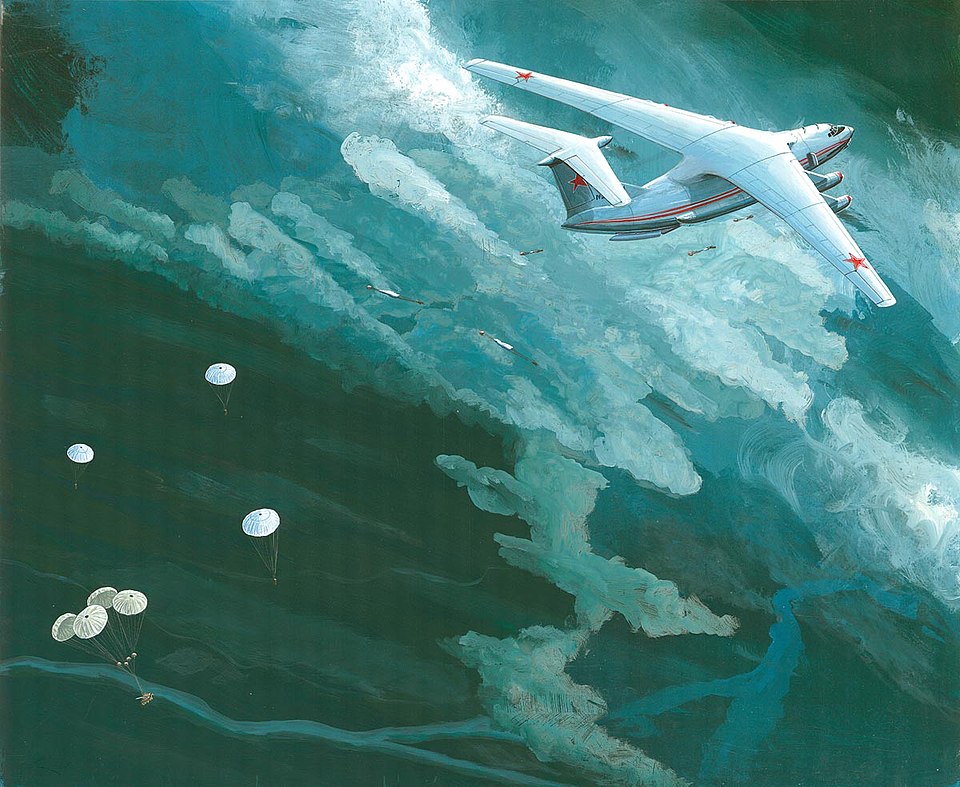
| Il-76D | A paratroop transport aircraft with a tail gun turret |
| Il-76K/Il-76MDK/Il-76MDK-II |
|
| Il-76LL | An aircraft used for testing engines |
| Il-76M | A military troop transport |
| Il-76MD | An improved longer-range military transport. |
| Il-76MD Skal’pel-MT | A mobile military hospital |
| Il-76MD-90 | A version fitted with quieter, more fuel-efficient high-bypass turbofan engines |
| Il-76MF | A stretched military version with a higher payload capacity. |
| Il-76MD-M: | A modernized version of the plane built especially for the Russian Air Force |
| Il-76MD-90A | Featuring glass cockpit, new avionics, and carbon fiber wings |
| Ilyushin Il-78/Il-78M/Il-78MD-90A | An aerial refueling tanker |
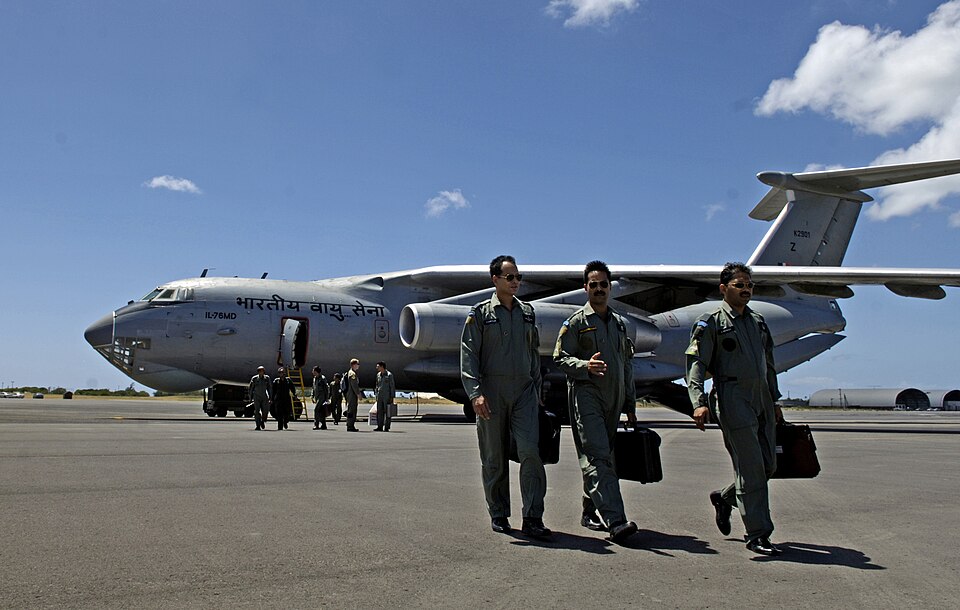
| Il-78 MKI | A customized version specifically designed for the Indian Air Force (IAF) |
| Il-82 | An airborne command and control aircraft |
| Il-84 | A maritime search and rescue (SAR) plane |
| Beriev A-50/Beriev A-50M/Beriev A-50I/Beriev A-50E | Airborne Early Warning & Control aircraft |


Versatile ways in which the Ilyushin Il-76 is being used around the world
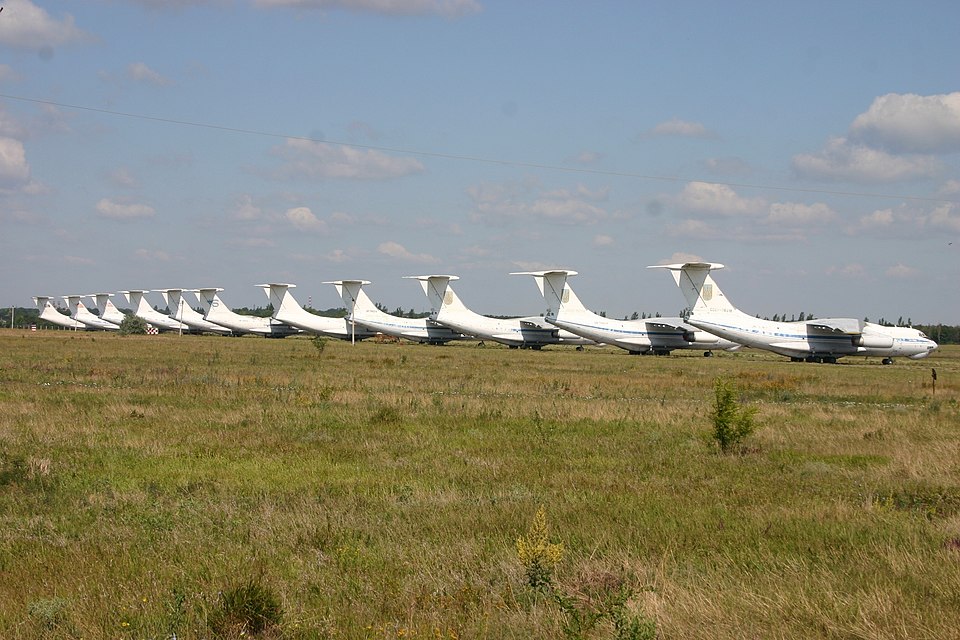
One Ilyushin Il-76 (registration N20NS) is being used in the United States (by Meridican, Inc). Besides, the North Korean carrier Air Koryo also operates the Il-76. Primarily, though, the aircraft is operated by many nations around the world, including China, India, Uzbekistan, among others.
In October 2024, an Ilyushin Il-76, which was on its way to deliver equipment and medicine to el-Fasher, a city then held by the Army, was shot down in Darfur. The attacks were amidst the tussle between the Suadnese army and Rapid Support Forces (RSF). The latter of these two opposing forces seized the plane’s black box (reported BBC), along with the documents related to the plane and its mission. Earlier that year, Sudan had used the Il-76s to attack RSF, with news being reported that bombing from the aircraft could be “performed automatically from the Kupol system or in manual mode using the NKBP-7 collimator bombing sight”.

In March 2020, the Russian military practiced such bombing from their aircraft during an exercise in the Moscow region. The crews dropped two P-50T dumb bombs from an altitude of 4,000 meters, based on data from an onboard navigation system.
Earlier that year, Russia was using the military version of the Il-76 to transport Ukranian military hostages (prisoners of war). However, Ukraine chose to shoot the aircraft, jeopardizing the possibility of swap, which was to take place a few days later. Il-76 was also planned to be used for evacuation during in Syria, around the end of 2024.
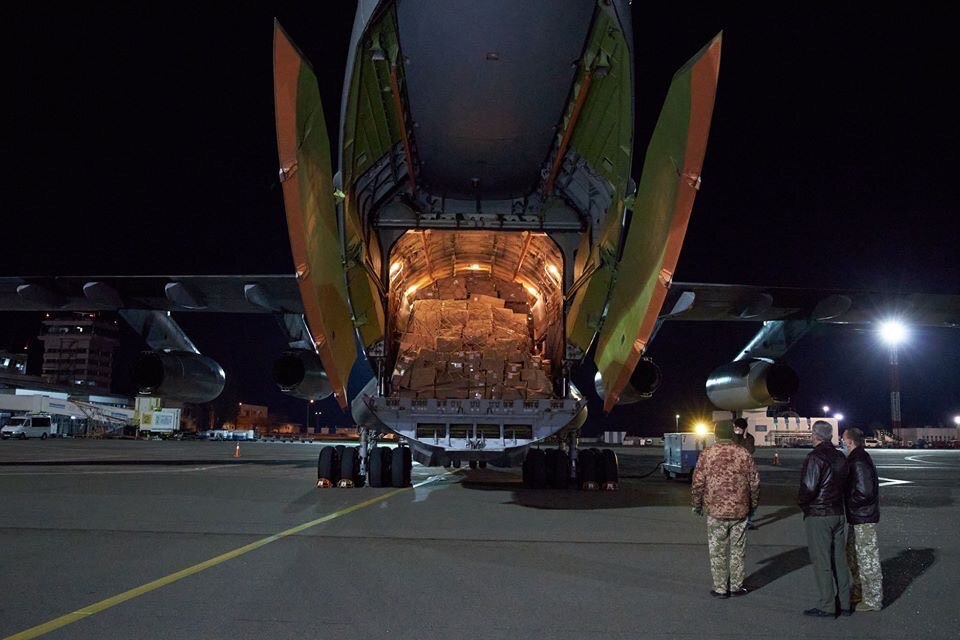

If one runs through the history of Il-76, one finds that the first ‘really production‘ (to quote the authors above, again) was delivered to the Soviet Air Force in late 1973. Approximately fifty of the first Il-76s were military types. A commercial one was rolled out only on December 1976. Some of the ways the Il-76s around the world are being used include:
- A satellite image obtained from North Korea in February 2025 hinted at the possibility that early-warning radar dish was being installed on the aircraft. China had deployed the Airborne Warning and Control System (AWACS)platform in its Il-76s in 1997.
- Russia established an air bridge with Libya using Ilyushin-76TD aircraft registered RA-76841 & RA-76845. The two aircraft, which alternated between Russia and Eastern Libya, belonged to the Ministry for Emergency Situations.
- India also plans to use Il-76 to develop the nation’s indigenous Kaveri engines. It was also used by the Indian Air Force to deliver medical essentials during the lockdown.
All in all
Estimates have it that the Il-76 cost $50 million. A forty-year-old aircraft (built in 1984) of the same type, registered 4L-SKN, one that has not flown for the last quarter of its lifespan, was being auctioned by the Turkish General Directorate of State Airports Authority, with bids starting at 400,000 Turkish lira (US$ 21,500). But an aircraft that was manufactured in the year that resembled George Orwell’s novel 1984 and that critiqued Soviet Russia in its own way, and one that has not taken to the skies for so long, would negate the very property that makes a new Il-76 worth so much: its versatility.

.jpg)
The Il-76 was made to traverse the vast stretches of the frigid nation that is Russia, whose winters have been encapsulated by Julia Nemirovskaya in the following way:
Here it is, my dearest winter,
dearer than the fall or spring.
Here it is, my native country,
where I’m always wintering.
Maybe the Il-76 being auctioned at around $21,000 won’t let you traverse the continent of a country that is Russia. And it wouldn’t contain any smattering of versatility either, unless you want to paint it with nose art that was a part of military aircraft in the past.