
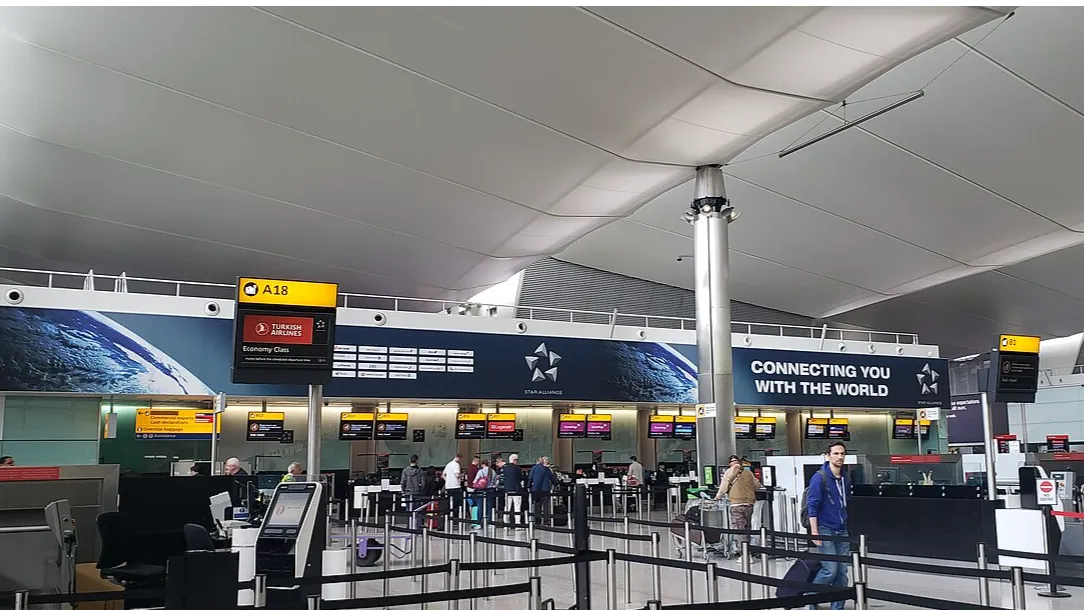
Over 80 cleaners employed by facilities services firm OCS to clean British Airways (BA) offices and buildings at London Heathrow Airport (LHR) are set to strike over low pay throughout the Christmas travel period, the union Unite (which is “the largest trade union in the UK and Ireland with members across the private, public and voluntary sectors”) confirmed. The industrial action, running from 18 December to 29 December 2025, stems from a long-running dispute over wages that cleaners say are insufficient for one of the world’s most expensive cities.
According to Radio Jackie, the workers are currently paid the UK national minimum wage of £12.21 per hour and have campaigned for the London living wage of £13.85 per hour, arguing that their present earnings fail to cover basic living costs in London.
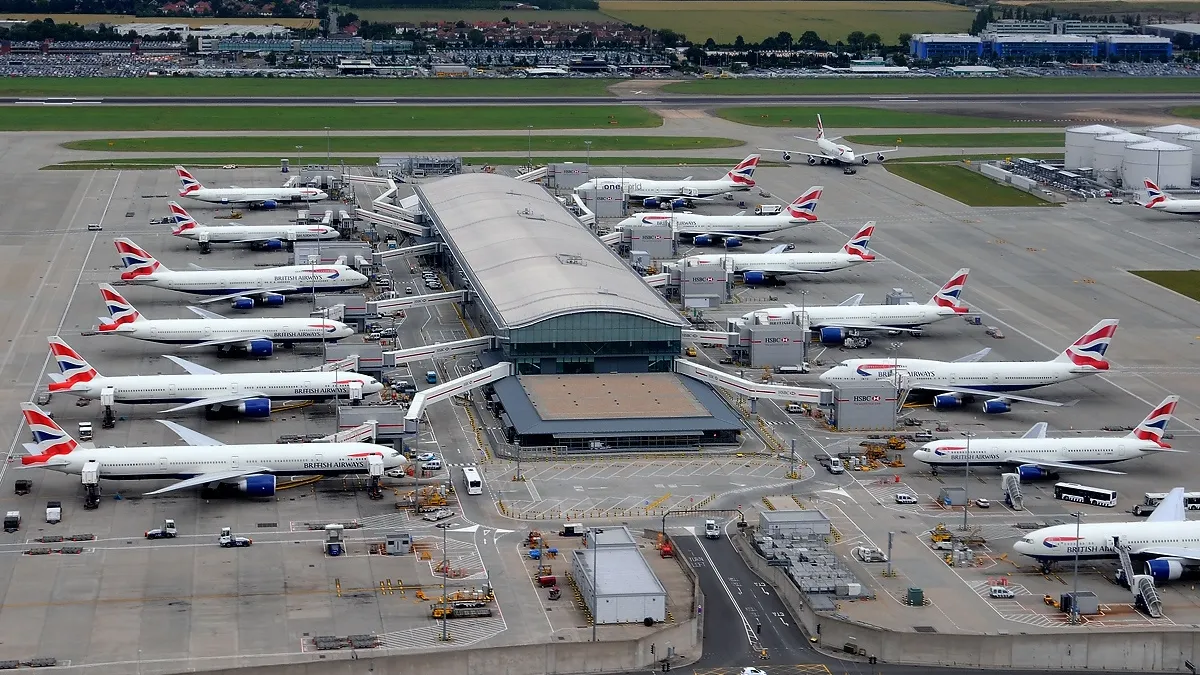

London Heathrow Overview
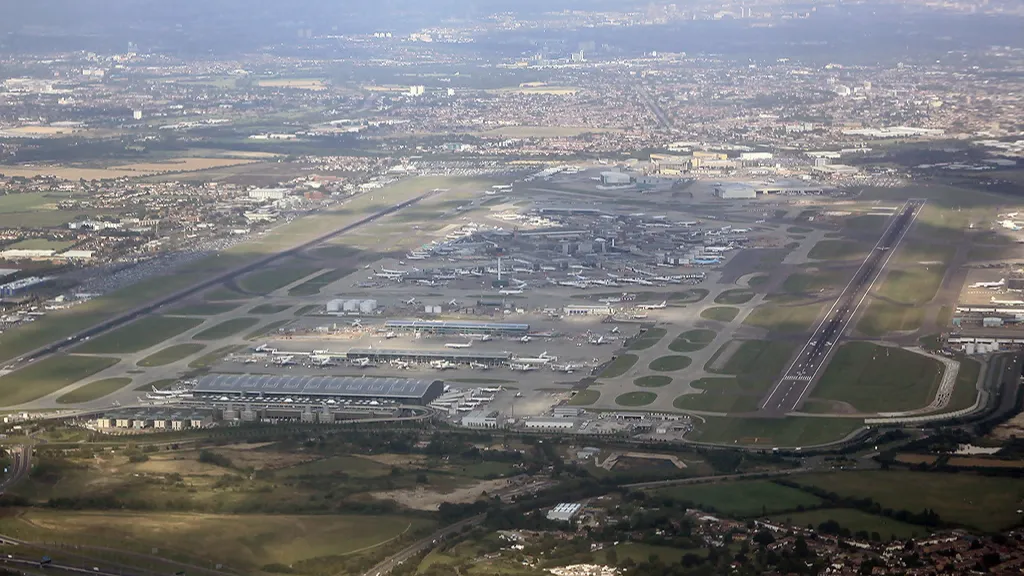
London Heathrow Airport, which recently saw a flicker of a hope for constructing its third runway, is the UK’s busiest airport and one of the busiest in and a key international hub, with high passenger volumes that peak over the Christmas period.
| Category | Details |
|---|---|
| Airport name | London Heathrow Airport |
| IATA code | LHR |
| ICAO code | EGLL |
| Location | Hillingdon, Greater London, United Kingdom |
| Owner/operator | Heathrow Airport Holdings |
| Opened | 31 May 1946 |
| Number of terminals | 4 (Terminals 2, 3, 4, and 5) |
| Runways | 2 parallel runways (09L/27R and 09R/27L) |
| Annual passengers | ~79 million (pre-pandemic benchmark) |
| Largest airline hub | British Airways |
| Main alliances | oneworld (primary), Star Alliance, SkyTeam |
| Cargo operations | Major European cargo hub |
| Peak travel periods | Summer holiday season, Christmas and New Year |
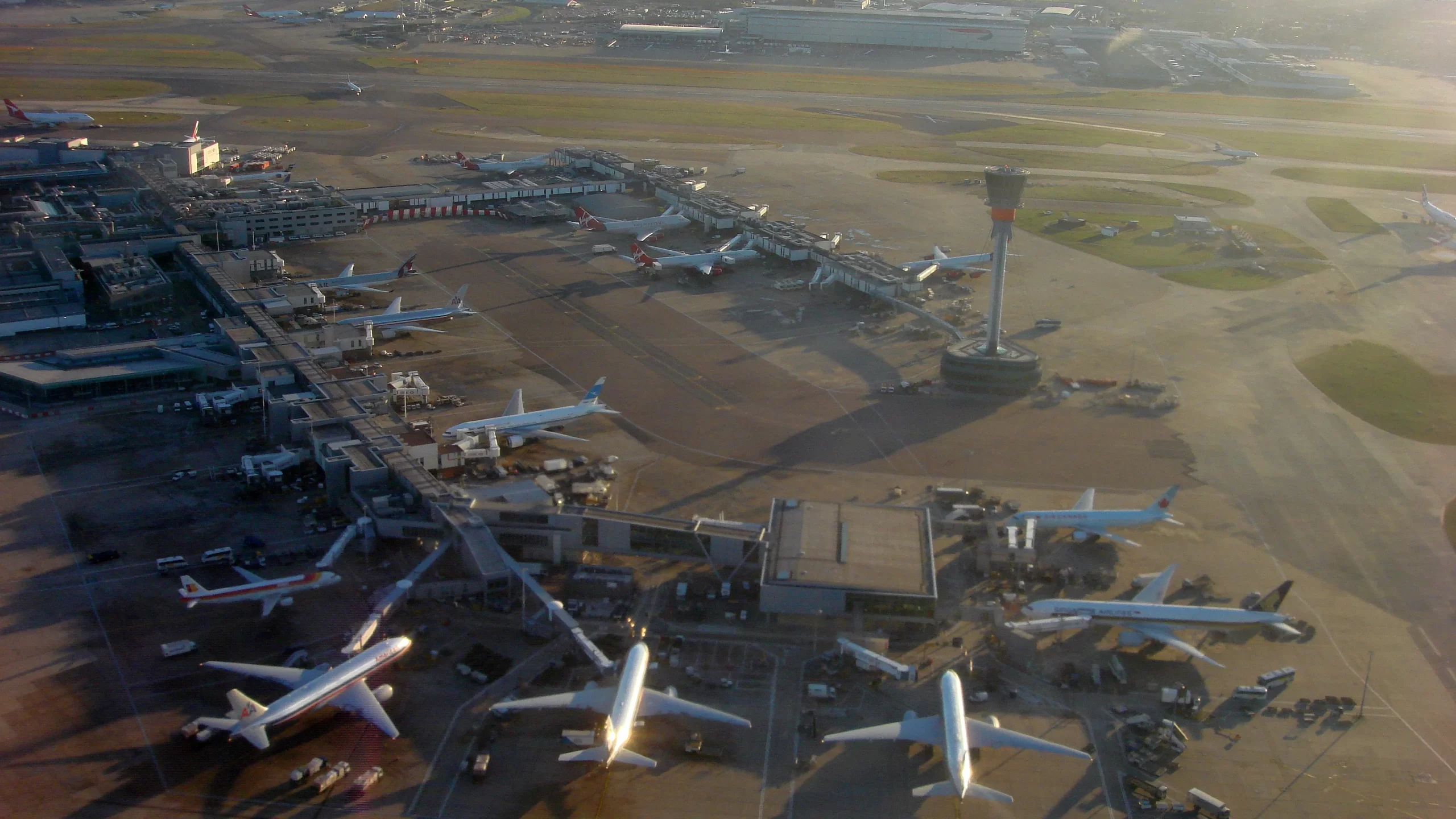

London Heathrow Pay Dispute Background
Workers involved in the strike are employed by OCS, a facilities services firm (which has an annual revenue of about £1.7 billion in the UK and Ireland) that has an outsourcing contract with British Airways to clean offices, cargo areas, and other buildings at Heathrow.
Unite says OCS cleaners have been seeking the London living wage since early 2024, but negotiations have yet to produce a satisfactory outcome. Many of the workers involved in the strike reportedly are “on food banks or charity support to cover essentials“.
The union contends that similar roles at Heathrow carried out by cleaners under different contracts, notably Mitie, already receive the London living wage, which intensifies perceptions of inequity. Unite’s general secretary, Sharon Graham, stated that both OCS and British Airways are “highly profitable companies that can easily afford to pay these hardworking members of staff the London living wage”:
“It is an utter disgrace that while their employers are raking in huge profits, our members have been left struggling financially in one of the world’s most expensive cities. This shameful situation must end and our members have Unite’s unyielding support in their fight for fair pay.”

Workers have also raised issues beyond pay, including the absence of sick pay, forcing some to work while ill, and the enduring nature of outsourcing contracts that prevent long-serving staff from achieving job security or retirement stability.
Unite regional officer Martin West summarised the workers’ position, saying they “want a wage they can live on” and that paying the London living wage “would be a small cost to their profitable employers” while helping avoid strikes:
“….however OCS and BA are choosing to act like Scrooge. It is time OCS and BA take this issue seriously and they must come to the table and negotiate a fairer pay deal with Unite if they wish to avoid strikes.”

Economic Pressures on Aviation Personnel (in Heathrow and Beyond)
In addition to the economic problems discussed above, we should also note that some of the workers that are a part of the protests “are sharing bedrooms in houses of multiple occupancy“. 2025 has seen quite a few protests around the world from people working in the field of aviation about the lack of proper pay. The following table highlights this.
Recent aviation strikes linked to low pay
| Airline / Worker Group | Location | Dates | Core Issue |
|---|---|---|---|
| Air Canada flight attendants | Canada | 16–19 August 2025 | Cabin crew struck over low effective pay and unpaid duties such as boarding, safety checks, and pre-flight work. |
| EasyJet cabin crew | Spain | 25–27 June 2025 | Spain-based cabin crew walked out demanding wage parity with EasyJet crews at other European bases. |
| Air New Zealand cabin crew | New Zealand | December 2025 (planned) | Cabin crew voted for strike action citing low base pay and concerns over workload and rostering. |
| Aer Lingus cabin crew | United Kingdom (Manchester) | 30 October–2 November 2025 | Manchester-based crew rejected pay offers they said failed to match inflation and internal pay benchmarks. |
UNI Global Union notes that the dispute is “a wider movement of airport workers across Europe challenging the race to the bottom in public procurement“. Mark Bergfeld, Director Property Services at UNI Europa,
“Cleaners at Heathrow Airport show that governments, public authorities and private clients need to change their procurement practices. It is unacceptable that lowest price procurement results in in-work poverty. We are calling on Heathrow, British Airways and OCS to sit down with the workers and come to an equitable solution in which workers’ wages meet the very commitment to the Living Wage that all clients and contractors are making..”


This is not the First Time Unite Has Stood Up for Heathrow’s Workers
The timing of the strike is significant because it coincides with one of the busiest travel windows of the year at Heathrow. And this is not the first time that Unite is seeking for a strike. Something similar happened in Dececmber of 2020, at a time when the passengers traveling to Heathrow plummeted by 80% and the carrier recorded losses of more than £1.5bn.
Then, the airport released an official statement saying that it had been “negotiating with unions to protect the business and the jobs of our colleagues“:
“We believe we are the only business in the UK’s aviation sector to commit to offering a role to all our frontline colleagues, thus avoiding compulsory redundancies. Our final proposal meets this commitment – providing a job for every one of our frontline colleagues that wants one, at market rates and above the London Living Wage. That’s no small feat. That’s a permanent job in the middle of an economic crisis in which Heathrow continues to lose £5 million a day due to travel and quarantine restrictions.”

Back then, the legalities and the intricacies of the dispute were:
| Category | Details |
|---|---|
| Legacy pay disparity | Some colleagues paid up to 30% above market value under legacy contracts |
| Basis for change | Pay differences existed for identical roles due to historical contracts |
| Proposed pay framework | Market-rate pay applied uniformly across the same roles |
| Pay impact on workforce | Majority see a pay increase, no change, or a small reduction |
| Salary protection period | Current salary protected for 2 years under buy-down scheme |
| Threshold for severance option | More than 10% pay impact |
| Colleagues accepting new terms | Over 4,500 |
| Colleagues opting for voluntary severance | 364 |

_17.jpg)
Passengers using Heathrow over the December peak may thus encounter service variances related to cleaning and facilities management, which could tangibly affect terminal comfort, sanitation intervals, and turnaround times for areas such as offices and back-of-house spaces used by airline operations teams.
UNI Global Union reports about research work that “that public contracts awarded to the lowest bidder in cleaning and private security lead to low pay, discrimination, irregular hours and health and safety risks, with migrant and women workers most affected.” A survey titled Working Against the Clock, found that half of cleaners in Europe work atypical shifts, often without alternatives. Some of the other notable characteristics include:
-
Anger over unmet Living Wage commitments has fuelled union organising, with Terminal 5 cleaners joining Unite in 2024 after months of ignored requests.
-
By spring 2025, strikes outside British Airways’ headquarters demanded fair pay and dignity, even as employers shifted responsibility through subcontracting chains.
After the workers of Heathrow opted for a strike, the President of UNI Europa Property Services, Zeynep Bicici, welcomed “the bravery and courage of our colleagues at Heathrow Airport to take such determinate action“.
“Unions should never accept that workers are paid below a living wage. This strike could have been avoided if dialogue and decent pay had been ensured. Airport cleaners from across Europe salute you”
_AN1572653.jpg)
All in All
The British Airways cleaners’ campaign reflects how low-paid airport cleaners often lack protective benefits and face precarious employment conditions even as airports and airlines report strong revenues. Such dynamics are not unique to the UK; airport ground and support workers globally have mobilised in recent years to secure improved pay, contractual stability, and recognition commensurate with the critical nature of their roles in aviation operations.
The following table gives us a cue of such simialr problem that Europe, in general. is witnessing:
| Country / Region | Disruption Type | Reason | Timeline | Affected Airports |
|---|---|---|---|---|
| Spain | Ground handling strikes | Azul Handling staff protesting pay, bonuses, job security, and conditions | Until 31 December; Wed, Fri, Sat, Sun (05:00–09:00, 12:00–15:00, 21:00–00:00) | Alicante, Barcelona-El Prat, Girona, Ibiza, Lanzarote, Madrid-Barajas, Malaga, Palma de Mallorca, Santiago de Compostela, Seville, Tenerife South, Valencia |
| Italy | Ground staff strike | Industrial action by CUB Transporti | 9 January; 13:00–17:00 | Airports nationwide |
| Italy | Ground handling strike | Swissport Italia walkout | 9 January; 24 hours | Milan Linate |
| Italy | Air traffic control strike | ENAV staff action | 31 January | Verona |
Data: Euronews