
On 7 November 2025, the European Consumer Organisation (BEUC) announced that 21 major European airlines have formally pledged to cease making misleading environmental claims, notably regarding flight emissions offsetting and sustainable aviation fuels (SAFs).
Fuel Dumping: What Is It and How Bad is it for the Environment?
Among the carriers involved are are Air Baltic, Air Dolomiti, Air France, Austrian Airlines, Brussels Airlines, Eurowings, EasyJet, Finnair, KLM, Lufthansa, Luxair, Norwegian, Ryanair, SAS, SWISS, TAP, Transavia France, Transavia CV, Volotea, Vueling and Wizz Air. The move follows mounting regulatory scrutiny from the European Commission and national consumer‑protection authorities over claims that flights can be “carbon‑neutral” or “fully compensated”.

Airlines’ Specific Commitments
BEUC (with 23 of its member organizations) launched the action against several airlines in June 2023 and since then has been monitoring the market since then. In a press release by the European Union in 2024, European Commission and the CPC network, identified the carriers above involved in the following ‘potentially’ misleading practices:
| Misleading Practice | Description |
|---|---|
| Overstating SAF benefits | Suggesting that paying extra for sustainable aviation fuels (SAF) or climate projects fully offsets CO2 emissions, without scientific proof. |
| Absolute environmental claims | Using terms like “green,” “sustainable,” or “responsible” without qualifiers, implying full environmental benefit. |
| Unverified net-zero promises | Claiming progress toward net-zero emissions or future environmental performance without clear targets, independent monitoring, or verifiable commitments. |
| Inaccurate CO2 flight comparisons | Comparing CO2 emissions across flights without providing accurate or sufficient information on how the calculations were made. |
| Unreliable CO2 calculators | Providing flight-specific CO2 calculators without transparency on methodology or scientific validation of results. |
| Unsupported SAF impact statements | Mentioning sustainable aviation fuels (SAF) without clearly explaining their actual environmental effects. |
in June 2025, evaluation found out that despite some improvements, airlines’ greenwashing was still rife. Now, airlines will refrain from misleading statements suggesting that a passenger’s flight emissions can be neutralised or offset entirely through SAFs or climate‑projects. They are also required to provide transparent emission calculations, ensure any “green” claims are backed by robust scientific evidence, and remove vague language implying environmental benefit.

For example, Lufthansa’s “Green Fares” product – which promised a 20 % emission reduction by choosing an “Economy Green” ticket – has been flagged as part of the misleading claims issue, reported politico.eu:
Lufthansa’s “Green Fares” promises consumers — simply by “selecting one of the Economy Green and Business Green fares” — to slash 20 percent of individual flight-related CO2 emissions through the use of SAFs and to offset the remaining emissions “to an equivalent extent by contributing to high-quality climate protection projects” — a reference to offset credits. KLM told consumers that they could reduce their carbon footprint thanks to SAF and a “reforestation program.”
Meanwhile, KLM’s previous campaigns suggesting that flying could be “more sustainable” via SAFs and tree‑planting programs are also drawn into question. In 2022, the airline faced a lawsuit over their “Fly Responsibly” campaign, which described KLM’s “commitment to taking a leading role in creating a more sustainable future for aviation”. But Johnny White, lawyer at ClientEarth, said in a press release that was quoted in CNBC that KLM’s claims were not entirely true:
“While climate experts warn we need to reduce air traffic to keep a just and liveable world within reach, KLM and the airline industry are continuing to focus on growth at any cost and lobbying intensively against climate regulation….It’s now or never for climate action. Airlines cannot be allowed to compete for business on claims that they are tackling the climate crisis, when the reality is they are fuelling it.”

Regulatory Framework and Consumer Law Surrounding Aviation’s Green Initiatives
The Consumer Protection Cooperation (CPC) is a network of national authorities tasked with enforcing consumer protection legislation across the European Union. Coordinated by the European Commission, the CPC has the authority to address issues that span multiple EU countries, ensuring consistent protection for consumers throughout the bloc.
Under the Consumer Protection Cooperation Regulation, the CPC can:
-
Investigate cross-border consumer concerns.
-
Take coordinated action against unfair or misleading commercial practices.
-
Facilitate information sharing between enforcement authorities in different EU member states.

In addition to national regulators, consumer associations such as BEUC (The European Consumer Organisation) play a key role. Under the European Green Deal, the European Union stated out its goal was “to better equip consumers with clear and reliable
information on the environmental impact of a product or a service”., whilst also stating that consumers need to be protected against misleading climate-related claims – that are collectively dubbed “greenwashing”.
| Legal/Regulatory Instrument | Key Provisions | Relevant Notes |
|---|---|---|
| Articles 5, 6, 7 of the UCPD (Unfair Commercial Practices Directive) | Forbids unfair or deceptive practices toward consumers, including misleading statements or omissions in business-to-consumer interactions. | Applies broadly across the EU internal market to ensure fair commercial behavior. |
| European Commission Guidance on UCPD | Provides detailed instructions on identifying and interpreting misleading environmental claims. | Helps enforcement authorities determine which “green” claims may be considered deceptive. |
| Directive on empowering consumers for the green transition | Prohibits claims that a product is carbon-neutral, has reduced impact, or positively affects the environment through offsetting, and sets rules for claims about future environmental performance. | Strengthens protection against misleading sustainability and climate-related marketing. |
| Proposed Green Claims Directive (March 2023) | Requires businesses to provide evidence supporting environmental claims and to clearly indicate which portion of the claim is based on their operations versus purchased offsets. | Ensures transparency and accountability in explicit environmental claims; currently under proposal. |

23 of its member organizations of BEUC that launched action against European Airlines in June 2023
The following table gives us a cue about the 23 member organizations with whom the BEUC worked to take the decisive action to show that European airlines were misleading their customers. Agustín Reyna, Director General of BEUC, was buoyed with the decision of making airlines responsible for their misleading words:
“It is excellent news airlines have agreed to stop luring consumers with green promises following our complaint to the European Commission. It was high time airlines stopped painting flying as a sustainable option. Paying ‘green fares’ to plant trees can never guarantee to suck aircraft emissions out of the air. This money-making business does not help consumers nor the environment.”

Let’s take a look at the brief of the member organizations:
| Organisation | Country | Type of Work |
|---|---|---|
| Altroconsumo | Italy | Consumer rights advocacy, product testing, legal actions, education, publications. (euroconsumers.org) |
| DECO | Portugal | Consumer info, dispute resolution, advocacy, education, product testing. (wca.org.my) |
| Active Consumers / Асоциация Активни потребители | Bulgaria | Consumer advice, advocacy, product testing, legal support. (beuc.eu) |
| Forbrugerrådet Tænk | Denmark | Product testing, consumer guidance, advocacy, education, dispute handling. (taenk.dk) |
| EKPIZO | Greece | Consumer information, complaint handling, advocacy, education. (ekpizo.gr) |
| CLCV | France | Consumer advocacy, product testing, legal support, education. (clcv.org) |
| UFC‑Que Choisir | France | Consumer protection, testing, legal actions, publications. (quechoisir.org) |
| OCU | Spain | Consumer advice, product testing, advocacy, legal support. (ocu.org) |
| CECU | Spain | Consumer guidance, advocacy, legal representation. (cecu.es) |
| ASUFIN | Spain | Financial consumer protection, legal support, education. (asufin.com) |
| Tudatos Vásárlók Egyesülete | Hungary | Consumer advocacy, education, complaint handling, product info. (tudatosvasarlok.hu) |
| Fundacja Konsumentów | Poland | Consumer rights advocacy, education, complaint support. (federacja-konsumentow.org.pl) |
| Federacja Konsumentów | Poland | Consumer education, advocacy, dispute resolution. (federacja-konsumentow.org.pl) |
| Testachats / Testaankoop | Belgium | Product testing, consumer info, advocacy, dispute resolution. (test-achats.be) |
| Spoločnosť ochrany spotrebiteľov (S.O.S.) | Slovakia | Consumer advocacy, complaint handling, education. (sosr.sk) |
| Kuluttajaliitto – Konsumentförbundet ry | Finland | Consumer guidance, advocacy, product testing, publications. (kuluttajaliitto.fi) |
| Forbrukerrådet | Norway | Consumer advice, advocacy, dispute resolution, publications. (forbrukerradet.no) |
| Verbraucherzentrale Bundesverband | Germany | Consumer advice, advocacy, legal support, education. (vzbv.de) |
| Sveriges Konsumenter | Sweden | Consumer info, advocacy, education, publications. (konsumentverket.se) |
| Arbeiterkammer | Austria | Consumer protection, legal aid, advocacy, education. (arbeiterkammer.at) |
| Fédération romande des consommateurs | Switzerland | Consumer guidance, advocacy, education, publications. (frc.ch) |
| Zveza potrošnikov Slovenije | Slovenia | Consumer rights advocacy, education, complaint support. (zps.si) |
| Consumentenbond | Netherlands | Consumer testing, advocacy, education, dispute handling. (consumentenbond.nl) |

Previous incidents of European Airlines making misleading claims
Europe has taken several measures to curb the harmful effects of aviation. One of the pioneering movements across Europe was “Flygskam”- a movement that started to “flight-shame” people. In parallel, a movement called “Tagskryt” started too which was aimed at encouraging people to take trains when an alternative to flights was available.
Tågskryt: Was it Just A Social Media Trend Against Aviation?
According to GreenPeace.org, which is collaborating with over 30 organizations to push for a legal ban on fossil fuel advertising and sponsorships in the EU, the seven largest European airlines produced 170 million tons of GHG emissions in 2019. This was greater than the combined annual emissions of Norway, Sweden, Denmark, and Finland.
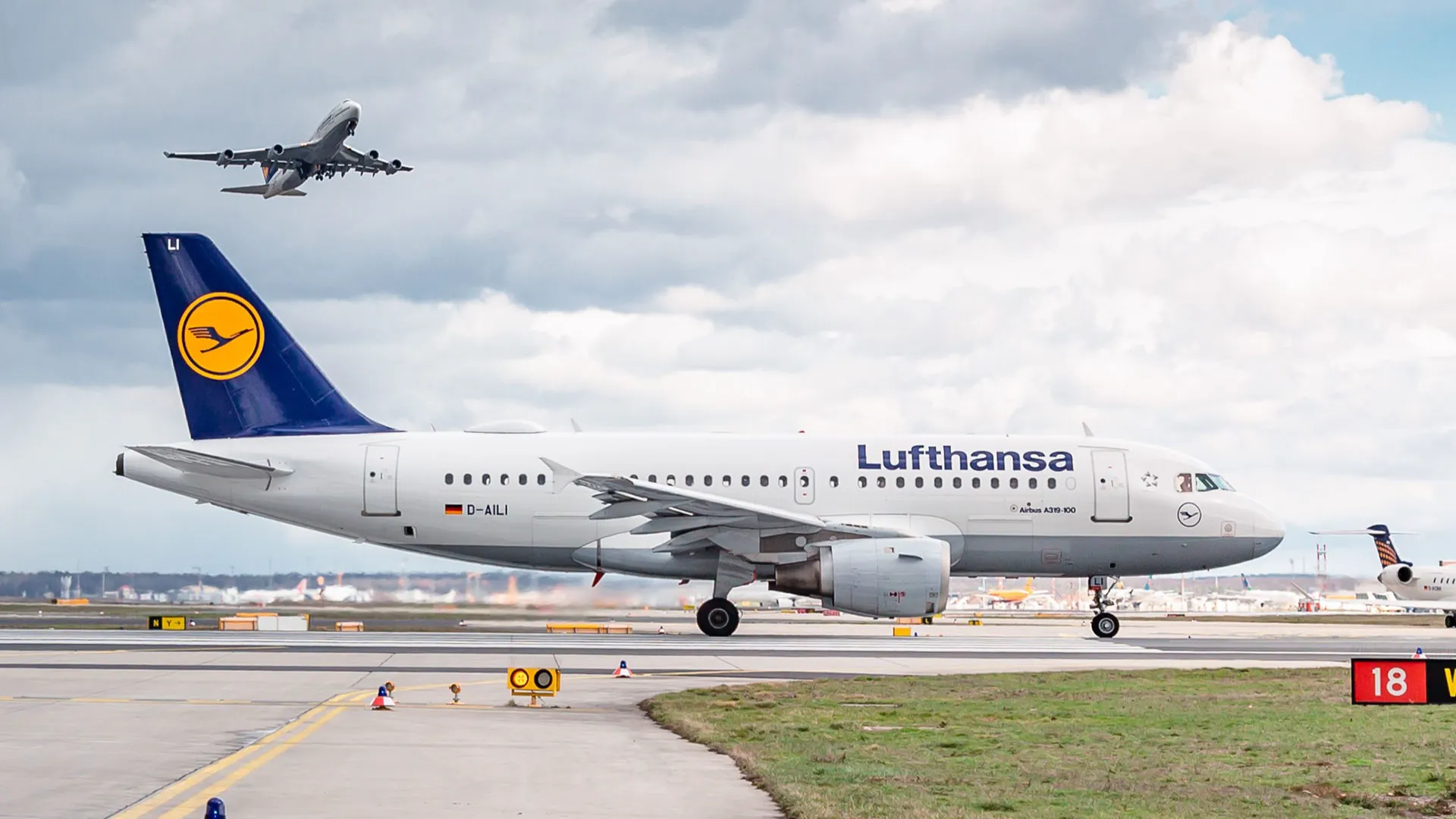
The same organization also claimed that only three major European airlines have committed to short-term greenhouse gas reductions over the next five years, with only one of them committing to a 25% reduction in emissions by 2025, compared with 2005 levels.
Bird Strike Prevention: Technologies and Prevention Strategies
Some of the other staggering numbers related to aviation including the fact that by 2050, aviation could use up to 25% of the global carbon budget needed to limit warming to 1.5°C, include the following:
-
Sustainable Aviation Fuel (SAF) represented only around 0.1% or less of the total jet fuel consumption for any airline analyzed that year.
-
Global aviation emissions increased by 3.4% per year between 2010 and 2019, despite urgent climate targets.
-
The aviation sector would need to cut at least 2% of flights each year until 2040 to stay aligned with the 1.5°C climate goal.

Aviation is also rife with talks about carbon neutrality, carbon offsets, and Sustainable Aviation Fuel- all of which have some inherent problems, as you can know about from this table
| Concept | Description | Issues and Criticism | Numerical Details |
|---|---|---|---|
| Carbon Neutrality (Net-Zero) | “when a polluter that has emitted greenhouse gases exchanges or ‘offsets’ their pollution with a ‘credit’ for carbon captured by someone else“ | Critics argue that it gives polluters a way to delay real emission cuts. | Six out of seven major European airline groups have pledged to reach carbon neutrality by 2050. |
| Carbon Offsets | A system where emitters purchase carbon credits from other entities that promise to capture or avoid emissions through projects like tree planting or conservation. | Some studies hint that many of these offset projects fail to deliver measurable results. | In 2017, the Öko-Institut reviewed 5,000 carbon offset projects for the EU and found that only about 2 percent achieved actual emission reductions. |
| Sustainable Aviation Fuel (SAF) | A newer category of jet fuel mostly produced from plant or waste-based sources, intended to substitute conventional kerosene. | Production relies heavily on agrofuels, which can lead to:
|
Before the pandemic, global production of SAF was under 200,000 tonnes, compared with around 300 million tonnes of jet fuel consumed by airlines annually. The IEA estimates SAF could supply 19 percent of aviation fuel by 2040, leaving 81 percent still fossil-based. |
| e-Fuel (Electrofuels) | A synthetic form of aviation fuel made using renewable electricity, often involving e-kerosene or green hydrogen. |
|
At present, e-fuel accounts for only 0.00004 percent of total jet fuel used in the EU each year, but it is expected to grow significantly if production is accelerated. |
Airlines might be guilty of touting wrongly about these practices, as can be evidenced from the table below:

Misleading Green Claims by Major European Airlines
| Airline | Claim Made | Why the Claim Was Misleading | Action / Outcome |
|---|---|---|---|
| KLM (KL) | Promoted tree-planting and Sustainable Aviation Fuel (SAF) as making flights “green.” | A Dutch court found 15 of 19 campaign statements too vague and misleading, giving the false impression that KLM’s flights were sustainable. | The Amsterdam District Court ruled the ads misled consumers, stating that KLM presented an “overly rosy picture” of its environmental efforts. (Source: The Guardian) |
| Lufthansa (LH) | Advertised “Fly more sustainably” and “Green fares: reduce and offset” across Europe. | The ads implied that individual flights could be carbon-neutral or significantly greener, but these claims were not backed by sufficient evidence. | Lufthansa later admitted the Google ad in question lacked explanation for the “fly more sustainable” message. |
| Air France (AF) | Used slogans such as “Committed to protecting the environment.” | The message suggested Air France’s flights were environmentally responsible, but regulators found no solid proof to support this claim. | The UK Advertising Standards Authority banned certain ads for lacking adequate substantiation under the UK ad code. (Source: TThe Guardian) |
| Ryanair (FR) | Claimed to be “Europe’s lowest emissions airline.” | The statement relied on outdated data from around 2011 and failed to represent the airline’s current emissions accurately. | Ryanair was later listed by the EU’s Transport & Environment group among Europe’s top 10 polluters. (Source: BBC) |