A couple of days before Emirates’ A380 had to wait for hours before landing on Toronto Pearson International Airport, an Ethiopian Airlines (ET) Boeing 777 Freighter skidded off an icy taxiway at Budapest Ferenc Liszt International Airport (BUD), Budapest, during ground operations amid severe winter weather, temporarily disrupting airport operations and prompting safety checks by local aviation authorities.
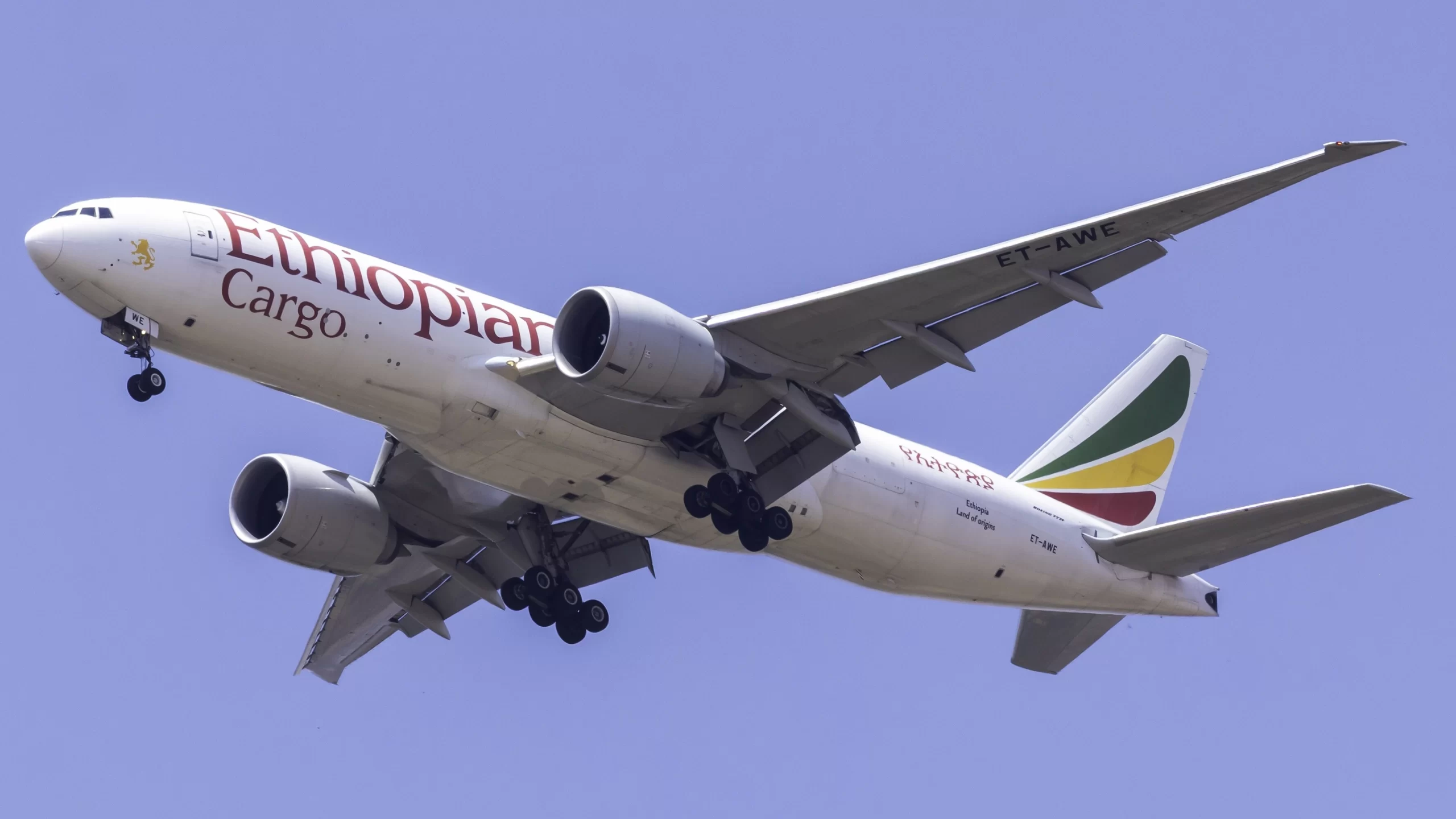
The cargo aircraft was not carrying passengers, and no injuries were reported among the crew or ground personnel. Airport officials and the airline confirmed that the event took place during taxiing rather than takeoff or landing, with operations partially suspended as de-icing and recovery efforts were initiated.
Incident Details at Budapest Airport
The Ethiopian Airlines Boeing 777F encountered reduced surface friction while taxiing to its designated parking stand after arrival at Budapest. According to airport and media reports, freezing rain created a layer of black ice on parts of the taxiway network despite ongoing winter operations.
Airport authorities temporarily halted arrivals and departures earlier that day as weather conditions deteriorated, deploying snow-clearing and de-icing vehicles across movement areas. The aircraft eventually came to rest off the paved surface, without structural damage being immediately reported.

Here is the chronology of the Ethiopian Airlines Boeing 777F Flight to Budapest:
| Phase | Time (Local) | Event Description |
|---|---|---|
| Scheduled departure | 04:15 | The aircraft was scheduled to depart Hong Kong on a non-stop cargo service to Budapest. |
| Actual departure | 05:03 | The Boeing 777F departed Hong Kong, 48 minutes behind its scheduled departure time, according to Flightradar24. |
| Cruise phase | — | The flight cruised at approximately 32,000 feet for most of the journey. |
| En-route segment | — | The aircraft transited airspace over China, Kazakhstan, Russia, Lithuania, Poland, and Slovakia en route to Hungary. |
| Landing at destination | 09:54 | The aircraft landed at Budapest Ferenc Liszt International Airport, 41 minutes ahead of its scheduled arrival time of 10:35. |
| Taxiing phase | Shortly after landing | While taxiing to its assigned parking stand, the aircraft encountered icy conditions on the taxiway. |
| Subsequent operation | Evening | The aircraft later operated a cargo service from Budapest to Oslo as flight ET3707. |
At the day the airport saw the incident, several airports in Central Europe saw such snowy conditions, and that the airport had been closed “due to the increased safety risks caused by black ice and extreme icing“, and that the arrivals and departures of the airport had been temporarily suspended since 10:25.
Budapest Airport said the nose landing gear of Ethiopian Airlines cargo flight ET3707 left the paved surface of a taxiway and became stuck on the grass while the aircraft was taxiing. The airport operator said an investigation into the incident was underway and that it was working with the relevant authorities to remove the aircraft and restore normal operations.
The incident also disrupted other flights at Budapest Airport. Hungary Today reported that five Wizz Air flights bound for the Hungarian capital were diverted to alternative airports, while other flights that had not yet departed remained at their origin airports until conditions allowed them to operate safely.
Photo: GeXeS | Wikimedia Commons
Ethiopian’s Boeing 777F Fleet Involved in the Incident
Ethiopian Airlines operates one of Africa’s largest and most diversified cargo fleets, with the Boeing 777F serving as a cornerstone of its long-haul freight operations linking Africa, Europe, Asia, and North America. According to data from planespotters.net, the 12 Boeing 777Fs it operates is 7.6 years old.
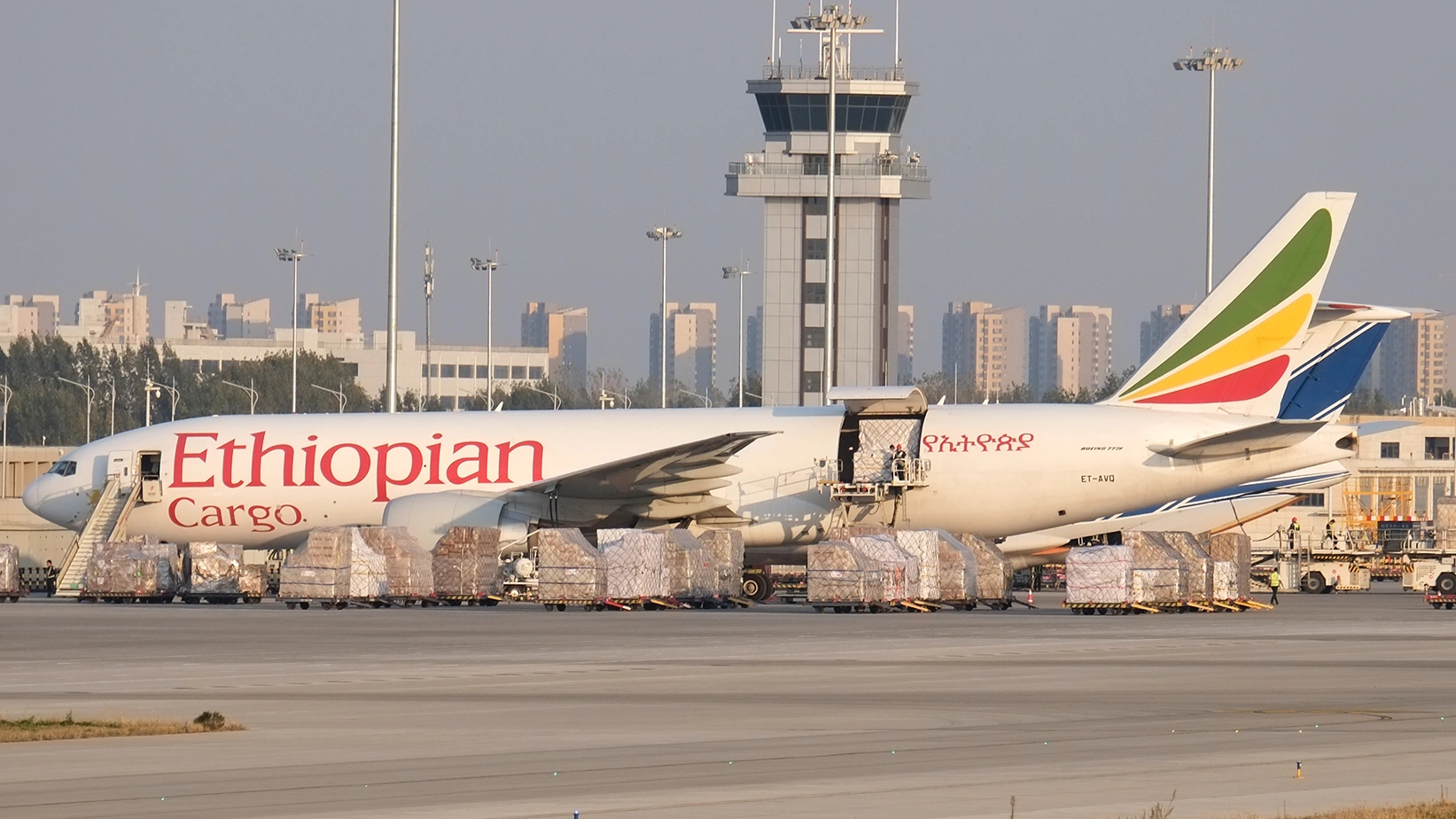
According to data cited by Simple Flying, the aircraft involved was an Ethiopian Airlines Boeing 777F registered ET-BAA. Flight-tracking and aviation databases indicate that the freighter was approximately 2.2 years old at the time of the incident, having completed its first test flight on October 28, 2023, before being delivered to Ethiopian Airlines on November 6, 2023.
The aircraft, manufacturer serial number (MSN) 68139, is part of Ethiopian Airlines’ 12-aircraft Boeing 777F fleet and is powered by two General Electric GE90-115B engines. Its flight-tracking hex code is 04022A. Ethiopian Airlines’ wider cargo fleet also includes Boeing 737-800F and Boeing 767-300BDSF freighters.



_Boeing_777-F60_VGHS.jpg)
.jpg)
