Baby rats were found inside a service cart on board an Arkia Israeli Airlines (IZ) flight operating between Israel and Greece in June 2026. The discovery was made after the aircraft had already landed and was parked on the ground in Greece, triggering a public exchange of accusations between the airline and its catering contractor, Tamam Aircraft Food Industries. No passenger came into direct contact with the rodents, and the cart was taken out of service immediately upon discovery.
Arkia, Israel’s second-largest carrier, blamed the incident squarely on Tamam, which operates out of Ben Gurion International Airport (TLV), Tel Aviv [the airport that saw flurry of cancelations since 2024] and provides catering services to all Israeli airlines as well as numerous foreign carriers. Tamam, in turn, denied responsibility and threatened to pursue legal action against any party attempting to damage its reputation.
What Happened on the Arkia Flight?
According to preliminary internal findings cited in Israeli media, sealed bags containing rat pups were discovered inside a closed service cart supplied for the flight. The discovery was only made after the plane landed in Greece while parked on the ground, prompting an investigation into how the incident occurred. A flight attendant also reportedly noticed disposable foam cups with bite marks, suggesting rodent activity inside the equipment.
According to Arkia, the cart in which the baby rats were discovered came from the dry-goods storage facilities of the catering company TMM and did not contain food intended for passenger service. The company emphasized that, upon discovery, the cart was immediately taken out of service and that there was no contact between it and any food served during the flight.
The bite marks on foam cups, in particular, pointed to the rats having been present inside the sealed trolley for some time before or during the flight. That detail shifted the question from whether the infestation had occurred to when and where it had begun.
Arkia’s Responded by Demanding a Full Investigation
Arkia sought to distance itself from the incident, saying the issue was discovered in an equipment cart originating from Tamam’s dry equipment warehouse rather than in food prepared for passengers. The airline said the cart was immediately removed from service once the problem was identified and that the matter was addressed without delay.
The carrier also emphasized that Tamam is responsible for preparing, storing and transporting catering supplies for airlines operating from Ben Gurion Airport. That responsibility includes maintaining the warehouses, equipment, sanitary conditions and quality-control procedures used at its facilities.
Arkia said it was treating the incident seriously and had asked Tamam to conduct a comprehensive investigation into how the issue occurred. The airline is seeking a detailed explanation from the catering provider and expects corrective measures to be introduced to reduce the likelihood of a similar incident happening again.
Photo: Michael Sender | Wikimedia Commons
Tamam Threatened with Legal Action
Tamam rejected Arkia’s account of the incident and strongly disputed any suggestion that the catering company had failed to meet food safety or operational requirements. The company said its facility supplies hundreds of thousands of meals each month under strict food safety procedures and warned that any attempt to question the standards of its operations could result in legal action.
Tamam also provided details of the checks conducted before the aircraft departed. According to the catering company, the trolley involved contained only soft drinks and was inspected by both an Arkia crew member and a representative from the catering facility before it was loaded onto the aircraft.
The company said both parties confirmed that the trolley complied with the required standards at the time of loading. Tamam maintained that the issue was only discovered later, while the aircraft was parked in Greece, rather than during the pre-departure inspection process.
Rather than accepting responsibility, Tamam called on Arkia to conduct its own urgent and detailed investigation into how the incident occurred. The catering company argued that such an investigation was necessary to establish what happened between the completion of the pre-flight checks and the discovery of the problem in Greece.
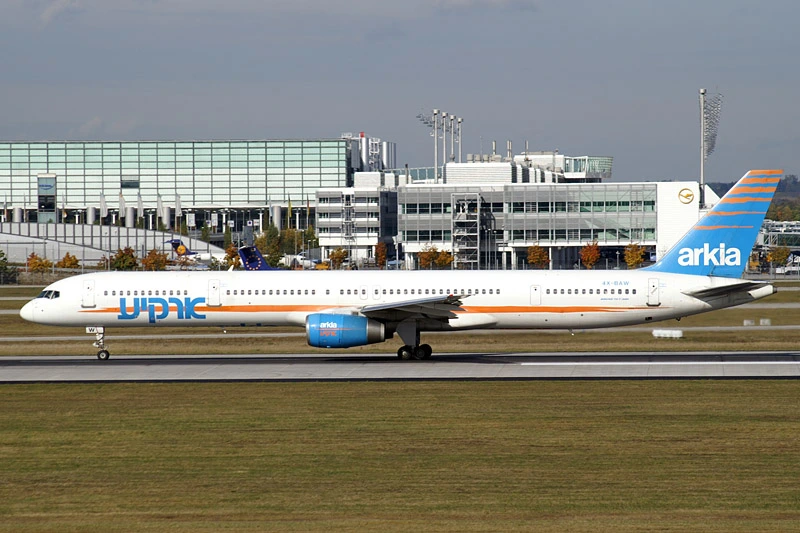
Photo: Juergen Lehle | Wikimedia Commons
Tamam is a Dominant Force in Israeli Aviation Catering
Understanding the scale of Tamam is essential to appreciating the reputational stakes involved. For over 60 years, Tamam has been Israel’s senior most leading kosher food airlines caterer, supplying over five million meals per year from a wide variety of menus. Over 100 different menus are supplied daily to passengers of various airlines, with an emphasis on product quality and visibility.
Tamam, which is owned by national carrier El Al and bills itself as “Israel’s senior most leading kosher food airlines caterer,” produced up to 40,000 meals a day prior to the Covid-19 pandemic, supplying both local and foreign airlines. The company’s factory is located at the airport itself, placing it at the heart of Israel’s aviation supply chain.
The report also indicated that an internal investigation is examining several possible explanations, including a potential link to pest control operations conducted at Ben Gurion Airport and at catering facilities under Ministry of Health supervision. No final conclusions have yet been published.
According to international aviation safety guidelines published by SKYbrary, “aircraft operators should ensure systems are in place both to identify possible infestation and provide suitable destruction methods”:
Galley worktops on which rodents may have walked must be disinfected before use. Food suspected of being contaminated by rodents must be destroyed.”