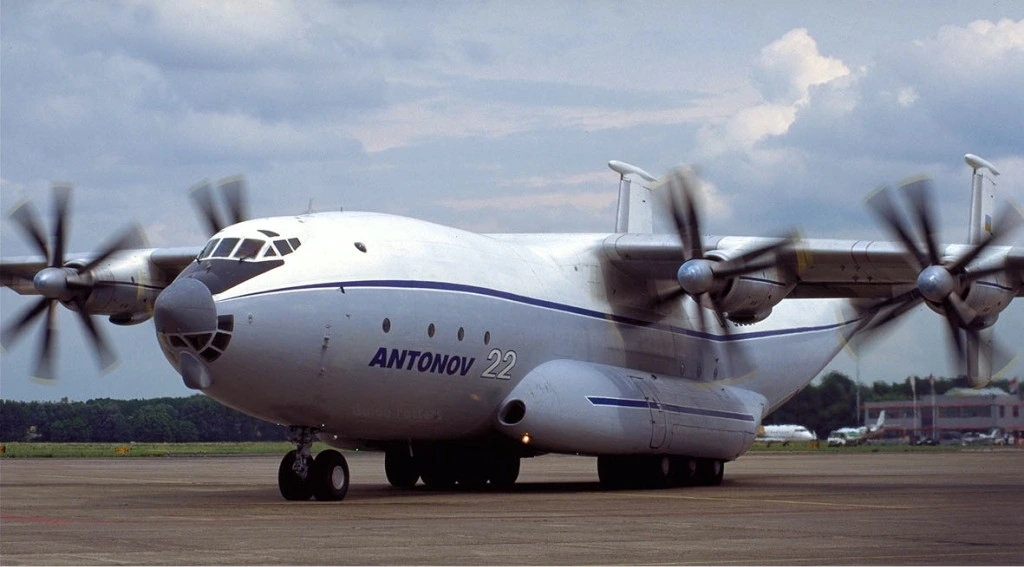
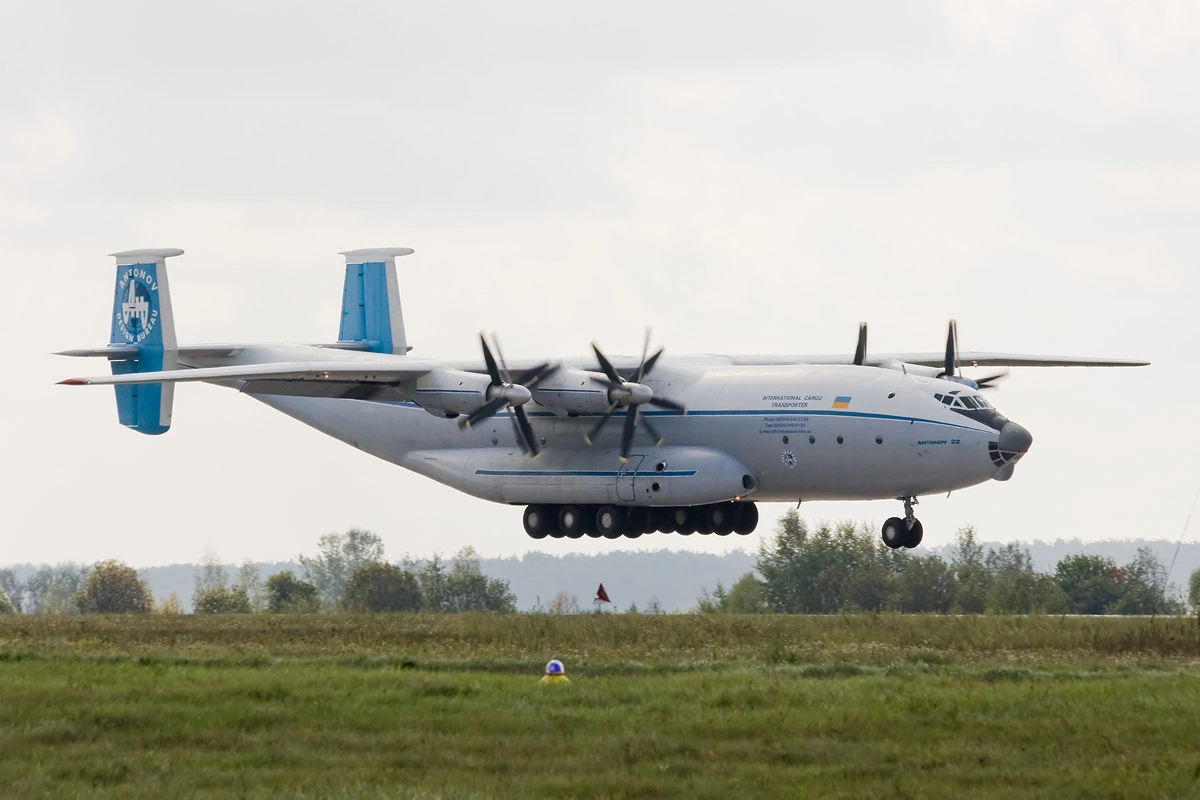
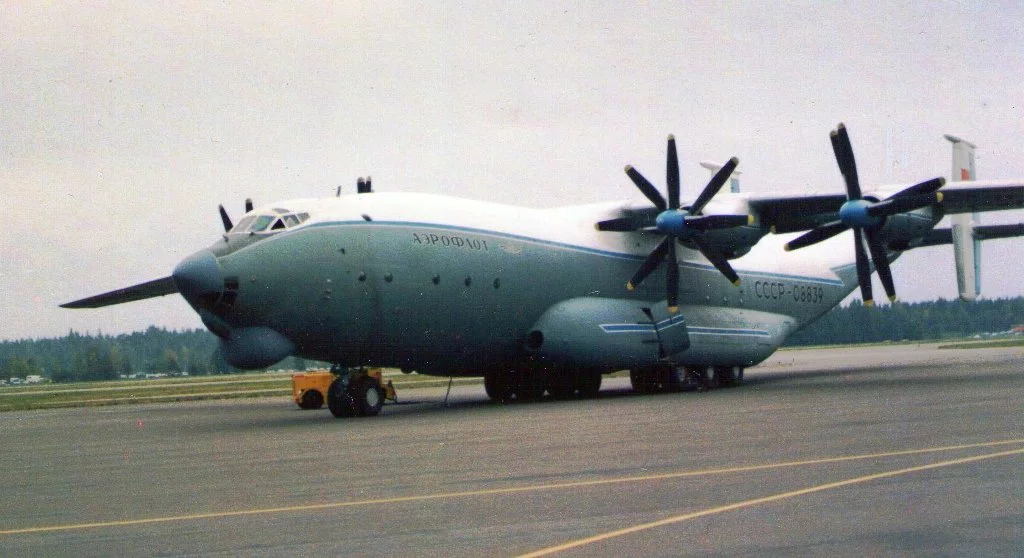
Only 67 units of the world’s largest turboprop aircraft, the Antonov An-22 “Antei” were made. 60 of these are operated by Russia’s Military Transport. Six An-22s have been lost to catastrophes, a handful are in storage, and only three are flying. So when it was announced last year that the aircraft would be retired from the Russian Aerospace Forces (RuAF), no one knew what would be the fate of this marvel. We already lost the Antonov An-225 to the Russia-Ukraine War, and if we were to lose the Antonov An-22, we don’t really know how bigger a dent it would create in the aviation community.
This only wide-body freighter that can land on unpaved runways has 14 payload to height records, one of which involves flying 100 metric tons (220,500 pounds) to an altitude of 7,848 meters (25,748 feet) – a height that is only 1000 meters shy of the top ofMount Everest, where the highest landing has been made.

The person who made the Antonov An-22, the largest turboprop
Antonov An-22 was designed by the Antonov Design Bureau, which was headed by Oleg Konstantinovich Antonov. Oelg was born in Moscow on February 7, 1906. His father: Konstantin Konstantinovich Antonov, a civil engineer, and his mother: Anna Efimovna belonged to a noble family. When Oleg was merely six years old, the family moved to the city of Saratov, (on the banks of Volga river). Following his father’s footsteps, Oleg Antonov graduated in 1930 as an engineer.
Here are a few snippets of his history as he headed to the Antonov Design Bureau:
| Autumn 1945 | Headed the Siberian branch of the Design Bureau of A.S. Yakovlev. The plant was located in Novosibirsk city and was named after V.P. Chkalov. |
| May 31, 1946 | Became the chief designer when the aircraft plant was redesigned* |
| August 31, 1947 | First aircraft of the redesigned bureau, the Antonov An-12 |
| 1952 | Stalin (State) Prize of the second degree for creating the An-12 |
*this aircraft plant was later renamed Antonov Design Bureau
Antonov’s following words give us an idea of his working philosophy:
“The collective is not created by orders, although they are needed. It is not created only by picking and rearranging people. The team does not unite by the building in which it works. The main thing without which the team can not exist, it is the unity of purpose. Creating a friendly, workable team is a special work, work of a higher order”
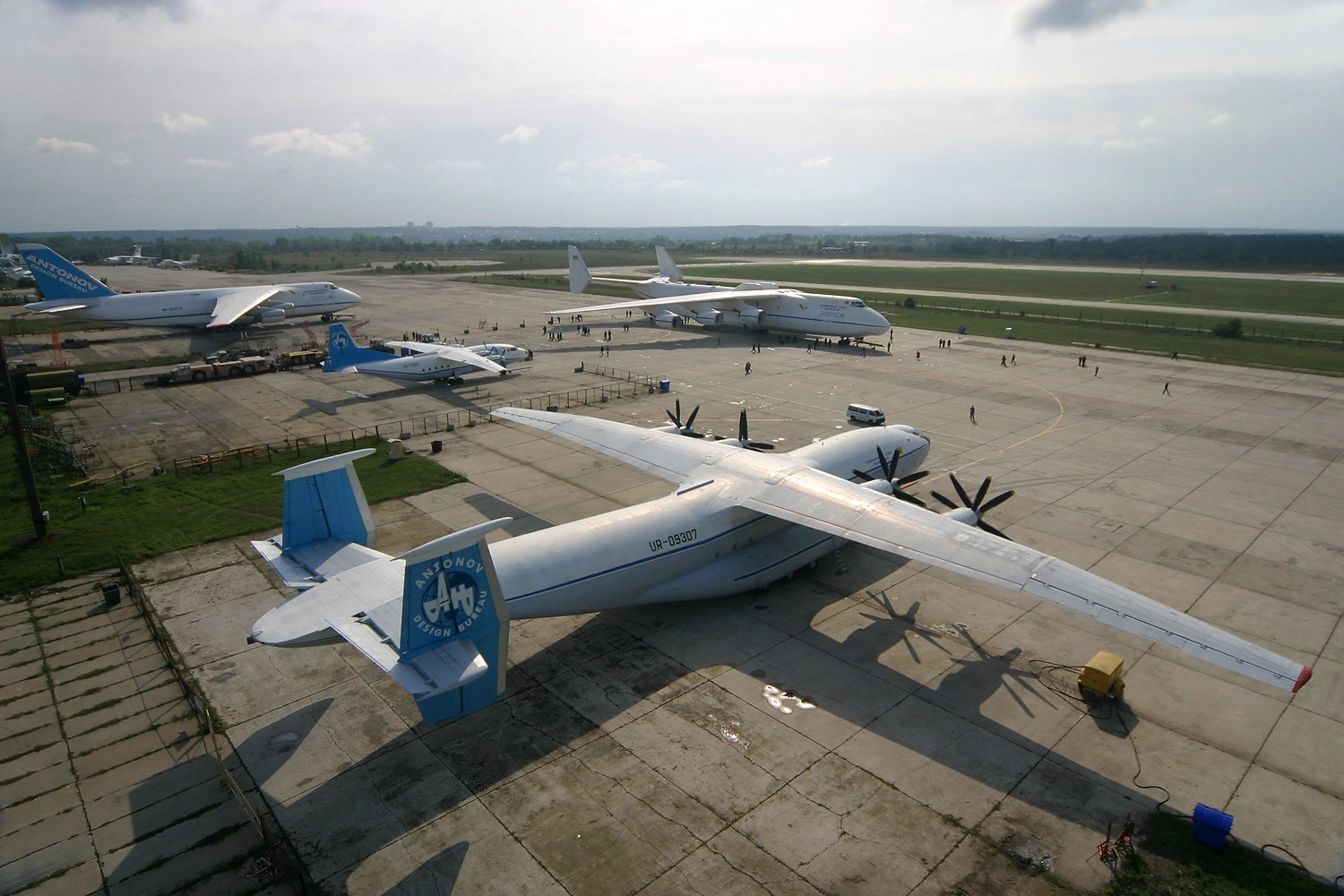

Antonov An-22: the basics
Before the creation of the world’s first wide-body military transport aircraft type that was the Antonov An-22 Antei, the design bureau had already produced aircraft such as:
- An-8, a twin-engine gas turbine aircraft
- Antonov An-10: USSR’s first four-engine turboprop passenger aircraft for medium-range air lines. [ This aircraft transported a million passengers across the USSR].
- A four-engine turboprop military transport aircraft of the An-12 type.
- Antonov An-24: a twin-engine turboprop aircraft [1200 aircraft of this type were produced and transported to 25 countries].
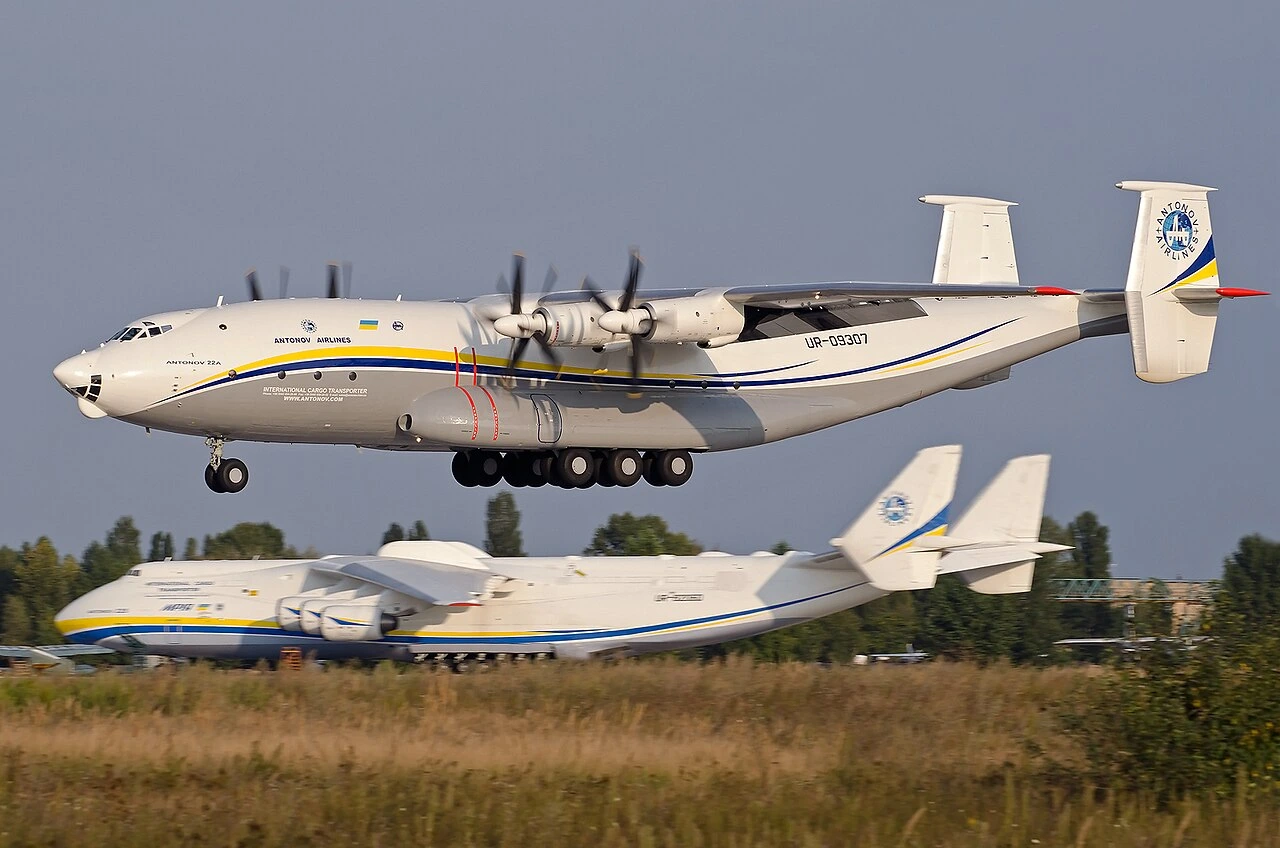

After producing so many marvels, Oleg and his team were assigned the creation of the An-22, the largest turboprop aircraft in the world to date – a machine that was unlike any that the world of aviation had seen. The aircraft would be able to deliver large cargoes (for example, trucks, gas turbine stations, and rotor excavators and trucks) to the frozen, deserted northern parts of the USSR. It has been argued by historians such as Bill Sweetman in his “Concise Guide to Soviet Military Aircraft” that the An-22 was made “to meet civil and military requirements, following the Soviet government’s decision to support the exploitation of natural resources in Siberia by air”. In January 1964, the first prototype was made, and in February the next year, the aircraft first took to the skies.
Amidst all the buzz the aircraft was creating (which was evident at the 26th International Aviation and Space Salon in 1965 at Le Bourget, Paris), it has even been said that the English newspaper The Times wrote “….. Thanks to this plane, the Soviet Union was ahead of all other countries in the aircraft industry”.
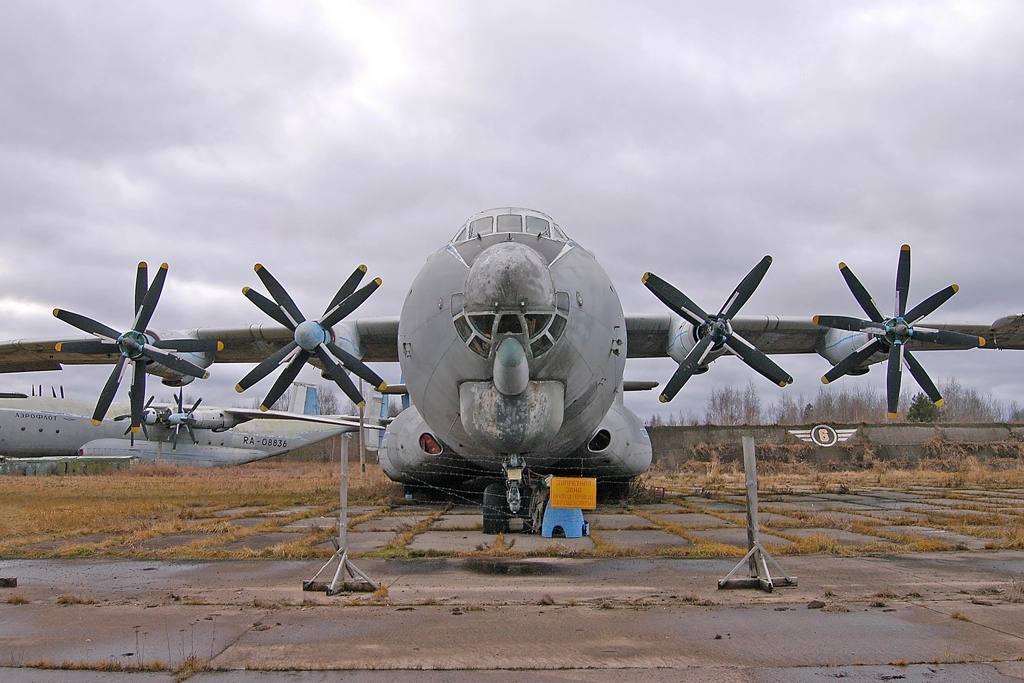
The An-22, which is a high-wing, ‘h-tail’ configuration aircraft, has a capacity of around 80 tons (some sources claim the An-22 has a payload capacity of 60 tons). With a full payload, the aircraft can fly for 5,000 km at 29,000 feet. Other Russian sources say it has a payload capacity of 60 tons.
Specifications of the largest turboprop in the world: the An-22
| NATO Call sign | Cock |
| Engine | Four Kuznetsov NK-12MA turboprops |
| Engine Power | 14,805 horsepower and “driving eight-blade contra-rotating propellers, more than 20 feet in diameter” |
| Bombsight | None |
| Sensors | Gen 0 RWR |
| Ceiling | 10000 meters |
| Int Fuel | 96000 kg |
| Capacity |
|
| Cruise Range | 4360 nmi |
Other notes* on the Antonov An-22:
- Can be fitted with 1st Gen D. Carries 4 illumination flares internally
- Limited to Medium altitude while carrying troops or paratroops due to unpressurized cargo hold. • Deliveries: 38 An-22 [Cock A] 1969-73, 28 An-22A [Cock B] 1973- 76. Strength: 55 (1993), 45 (1996), 26 (2000), 5 An-22A (2016)
- 1985: Five An-22A fitted with 2nd Gen D for Afghanistan ops.
- 2012: Maximum payload to 40000 kg to reduce fatigue.
*Source of the notes: “Russia’s Aircraft Russian Military Aircraft 1955 – Present Day” edited by Larry Bond, Chris Carlson, and Peter Grining
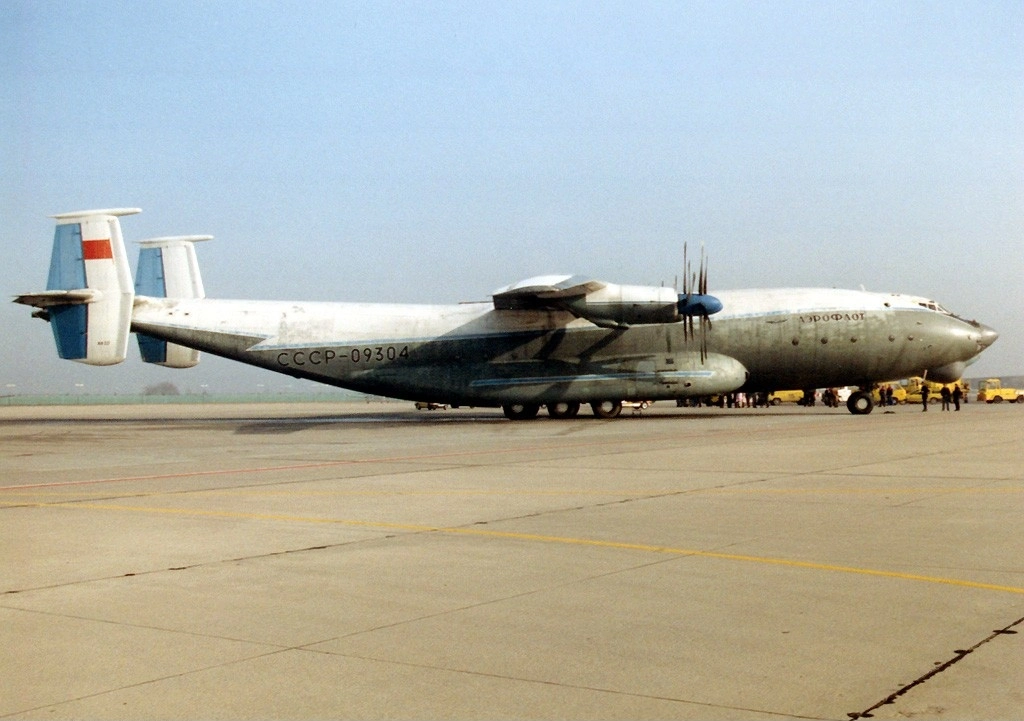

Some of the other properties of the Antonov An-22, which could be turned into a makeshift bomber by carrying a range of bombs under the wing, include:
- Landing gear tailored for rough-field operations
- “Undercarriage doors opened only briefly to allow deployment of the wheels, before closing to protect the internal workings from dust and mud“.
- Four flare bombs
- A glazed nose (the tip of the nose has a forward-looking weather radar)
- An auxiliary power unit (APU) fitted in the front of the right blister.
- A large navigation/mapping set aft of the nose glazing could be fitted with launchers for radar (ahead of the second radar, there is an unidentified avionic housing) and infrared countermeasures.
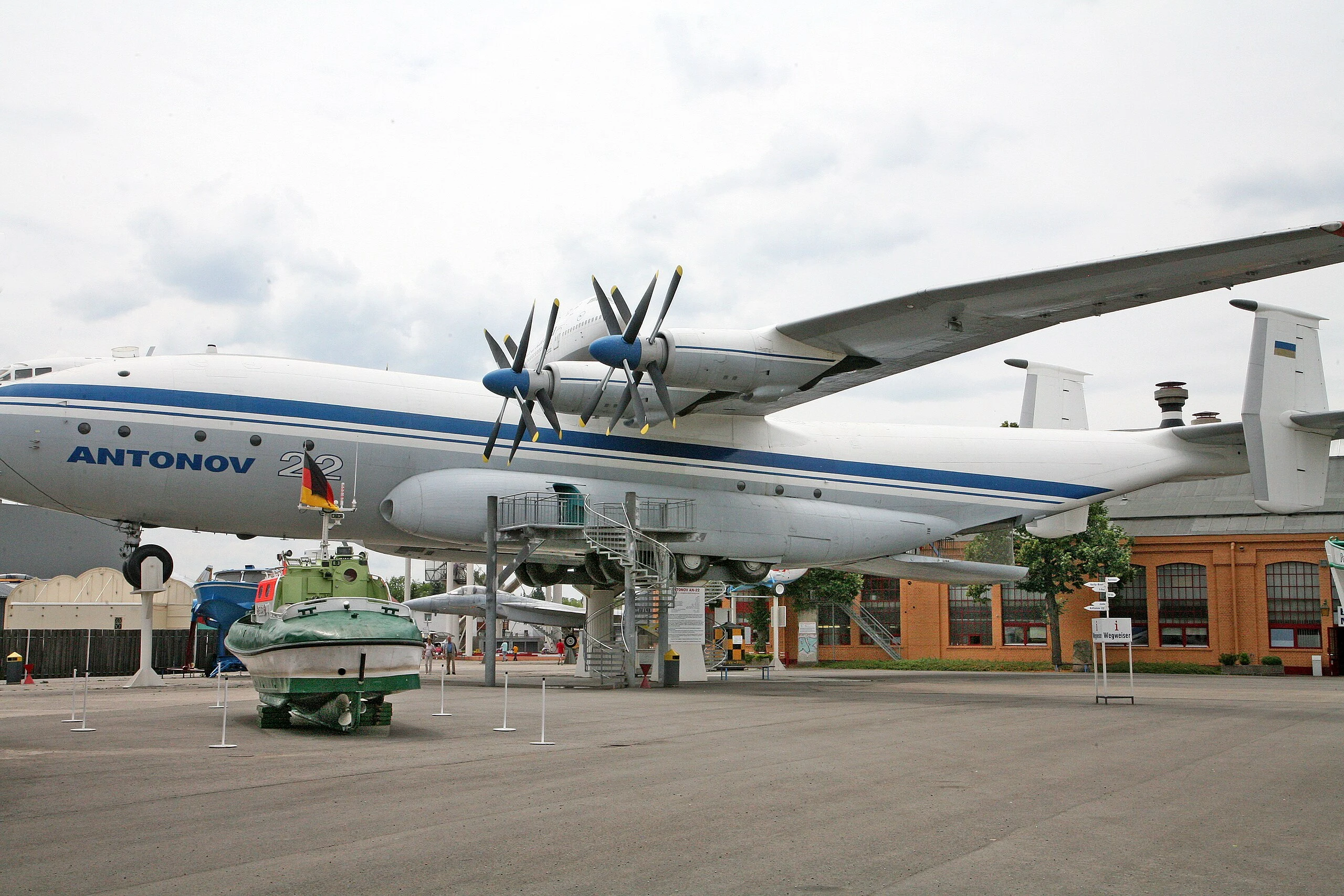
The An-22 is equipped with anhedralled outer wings- a feature that cured instability problems on earlier Antonov aircraft, such as the An-8. The cross-section of the An-22 fuselage is a circle. According to Sweetman, The An-22 bore some resemblance to an earlier Antonov aircraft:
“The wing of the An-22 is an almost exact 1.7:1 linear scale of the An-12 wing, and is typically Antonov with its anhedralled outer panels. The major difference in shape between the two aircraft is in the rear fuselage and tail. Rear fuselage aerodynamics and structure are probably the most demanding area in the design of a large military transport, with the linked problems of drag around a rear ramp and aerodynamic tail loads on an Antonov An-22 ‘Cock’. open-ended fuselage. The An-22’s twin-fin layout was chosen to overcome predicted problems with flexing of the rear fuselage, the original design having included a single fin.”
An-22’s were produced in a factory in Tashkent, in what was then the Uzbek Soviet Socialist Republic. Before the first flight of the Lockheed C-5 in June 1968, Anteus held the distinction as the world’s largest and heaviest aircraft.

How Antonov flirted with danger for the Antonov An-22
Some reports claim that during the construction of Antonov An-22, the Antonov Design bureau had ignored the advise of the chief research institute, the Central Aerohydrodynamic Institute (TSAGI) [which was established in 1918 by Lenin]. An example of this is the fact that the design bureau adopted the twin-fin-and-rudder concept for the An-22 “against the recommendations of the aerodynamics experts“. Antonov also had envisaged a 724 passenger version of the An-22. However, the aircraft never made it past the design study phase and was later dropped, much like the case for the development of a stretched version of the Antonov An-10A.
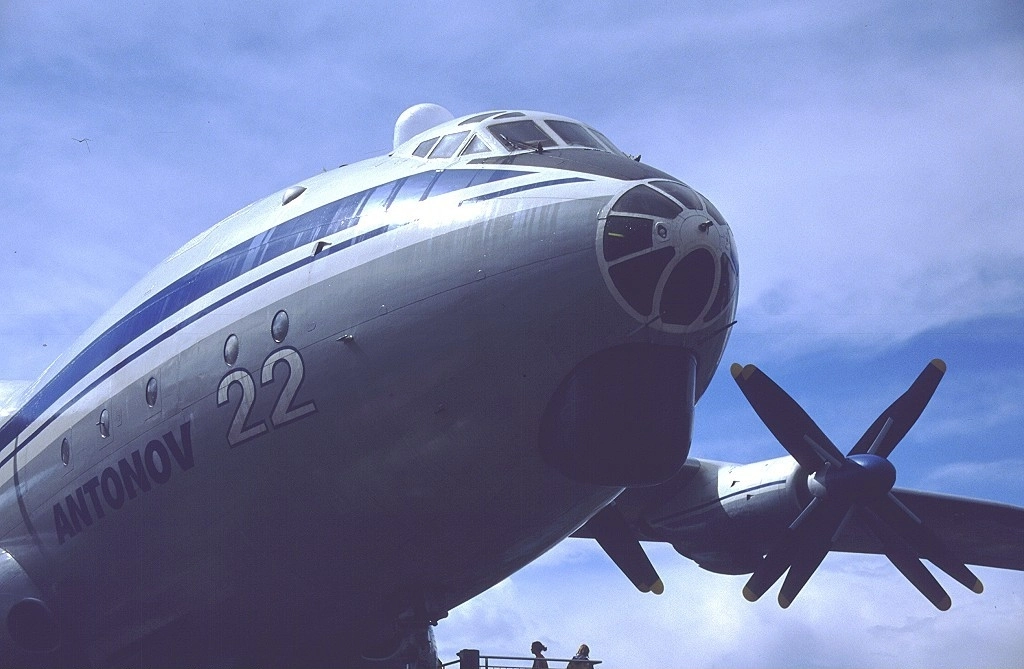

Nevertheless, the An-22 proved to be ranked among USSR’s most successful aircraft, according to author John T. Greenwood:
“ Among Antonov’s most successful designs are the twin-engined An-8, the four-engined An-l0 and its military counterpart the An-12, the An-22 (which held the title of the world’s largest aircraft until the Lockheed C-5A appeared in 1968), and the An-24 and An-26 medium transports. In the 1970s and 1980s, Antonov designed the two largest aircraft in the world – the four-engine An-124 (maximum takeoff weight of 890,000 pounds) and the gigantic (maximum gross takeoff weight of 1.32 million pounds) six-engined jet An-225 that appeared in 1988. “

Accidents involving the An-22
Antonov An-22 was also known as “Antaeus”, a Greek god who was begotten by Poseidon and Gaia. In Greek mythology, Antaeus had the power to be undefeated in wrestling, as long as he was in contact with Gia, his mother (who was also a symbol of the Earth). The essence of Antaeus’ indomitability is captured in Seamus Heaney’s poem:
I cannot be weaned
Off the earth’s long contour, her river-veins.
Down here in my cave,
Girded with root and rock,
I am cradled in the dark that wombed me
And nurtured in every artery
Like a small hillock.
No opponent could beat Antaeus by forcing him to the ground. Heracles defeated Antaeus by holding him off the ground [thus preventing him from making contact with the ground (i.e., the Earth, his mother)] and crashing him with a bear hug. But unlike the god after whom the An-22 was named, the aircraft suffered casualties on the ground, as well as in the air. Aviation Safety Network reports that the An-22 suffered 9 hull losses.
Atlantic Ocean crash and other crashes of the Anteri in 1970
On 18 July 1970, an Antonov An-22 operated by the Soviet Air Forces and registered CCCP-09303, disappeared from the radar 47 minutes after taking off from Keflavík International Airport (KEF). All 22 people on board were killed. Later that year, Soviet Air Force’s another An-22 registered CCCP-09305 met with an accident at the Panagarh Airport in India after the crew “were not able to lower the gear or use flaps and the Antonov overflew the runway for approx. 2000 m at a height of one metere”. All 17 on board were killed.
Recent crashes involving the largest turboprop, ever
In 2012, an Antonov An-22 military cargo plane, which was flying empty from Voronezh to Tver, crashed during training in a rural area of Russia’s central Tula region. This accident with 12 fatalities led to grounding of all An-22s.
_AN1458664.jpg)
What followed the An-22?
A more modern replacement of the An-22 was Ilyushin’s Il-76 transport, the first Soviet turbojetpowered plane capable of carrying up to 40 tonnes, later increased to 60 tonnes. Despite the impressive production numbers of the Il-76, historians say that the AN-22 in many respects “outshines the Il-76 ‘Candid’ by a large margin”, thanks largely to the Anteus’ outstanding combination of range with field performance.
Ilyushin Il 76 – The versatile Soviet strategic transport aircraft
A few variants of the An-22 were made after the three original prototypes:
| An-22A | Modifications included:
|
| An-22PZ | This variant was fitted with third centreline fin “to carry wing centre sections or outer wings of Antonov An-124 or An-225 externally above fuselage”. |
The An-22 was used for Soviet military operations all over the world: the most notable of which were the operations in Afghanistan and Chechnya. It also played a seminal role in delivering arms and materiel to Moscow’s allies. Alongside military missions, the An-22 was also deployed in the Armenian earthquake in 1988, and the one registered CCCP-0930 (which fell to a crash that we mentioned above) was carrying earthquake relief materials to Peru.

What is the future of the An-22?
USSR later developed the Antonov An-124, one of the biggest aircraft in the world. Despite this, Russians held onto the An-22 because it was cheaper to operate than the An-124 (cheaper on a flight-hour basis) – the other reason being that the An-22 had a more commodious cargo hold than the Il-76. Modernization plans of the largest turboprop in the world have failed, and despite the fact that aircraft has had a momentous celebration of more than half a century of operations, it has to fall, like all aircraft eventually do, to posterity.