Airbus A350 And Boeing 787 Battle for New Qantas Widebody Order

Qantas Airways (QF) is currently engaged in confidential discussions with both Airbus and Boeing over a potential order for approximately 20 wide-body aircraft, industry sources told Reuters on June 4, 2026. The sources, who declined to be named given the sensitivity of the talks, indicated that the carrier is weighing additional Boeing 787 Dreamliners or the primary variant of the Airbus A350 as it presses ahead with one of the most ambitious fleet renewal programmes in its 105-year history.

The reported deliberations come at a pivotal moment for the airline. Just two days before Reuters broke the story, Qantas confirmed on June 3, 2026, that its first Project Sunrise Airbus A350-1000 Ultra Long Range (ULR) aircraft had completed its maiden test flight from Toulouse-Blagnac Airport (TLS) in France — a milestone that has brought the carrier’s ambition to operate the world’s longest non-stop commercial flights closer to reality than ever before. Neither Airbus nor Boeing offered any comment on the potential new order; a Qantas spokesperson acknowledged only routine manufacturer engagement, stating no updates or new orders are imminent.

Photo: Qantas

Qantas Confirmed Discussions Without Confirming a Deal

When approached for comment by Reuters, a Qantas spokesperson issued a carefully worded statement that neither confirmed nor denied active negotiations. The spokesperson said to Reuters:

“We’re in regular contact with aircraft manufacturers as part of our ongoing fleet planning and always update the market when we have something to announce. We currently have no updates or orders to announce.”

The measured nature of that response is consistent with Qantas’ well-established practice of maintaining strict confidentiality over fleet decisions until formal agreements are finalised. The airline has disclosed, however, that it holds existing purchase options with both manufacturers, split evenly between Airbus and Boeing. Industry sources cited by Reuters indicate that some of those pre-existing options could be exercised as part of the current study, rather than requiring an entirely new contractual framework.
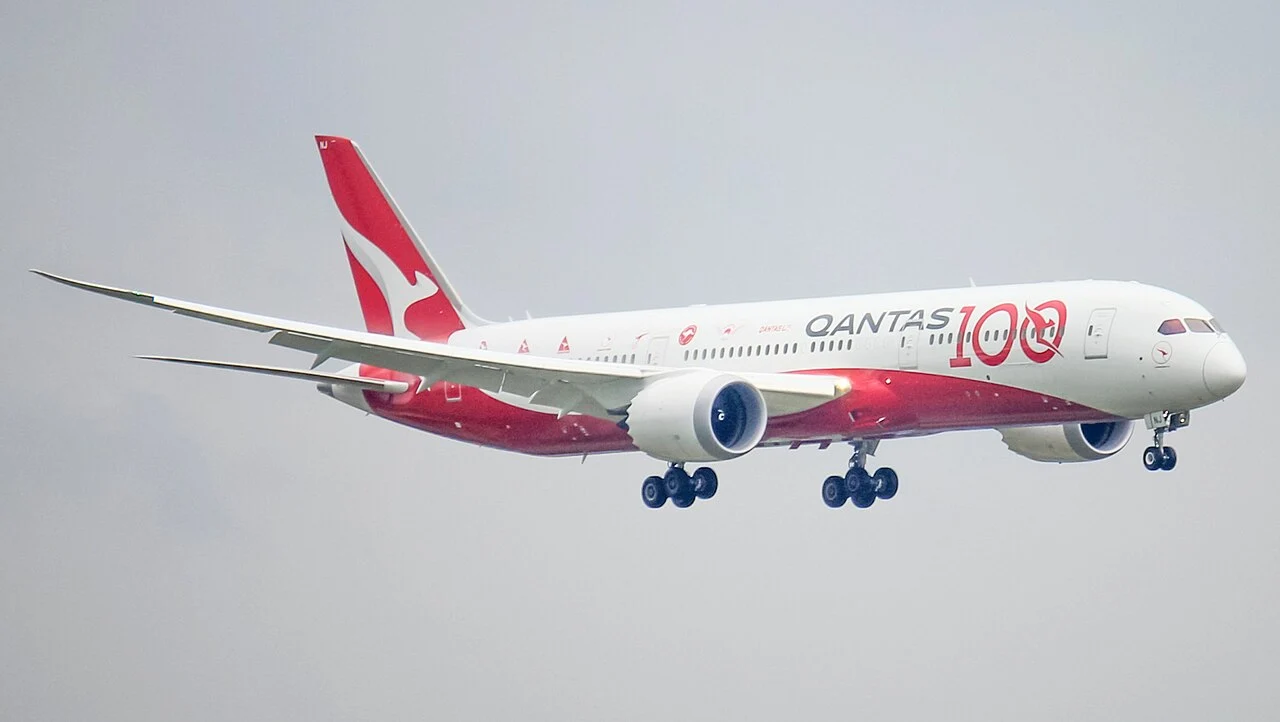
Photo: Md Shaifuzzaman Ayon | Wikimedia Commons

The Aircraft Under Consideration: Boeing 787 Dreamliner Vs. Airbus A350

The two aircraft types under consideration represent the dominant offerings in today’s wide-body market, and both are already part of Qantas’ existing order book in different variants.

Boeing 787 Dreamliner

Qantas has a well-established relationship with the 787 programme. According to Boeing’s official press release from August 2023, the carrier placed a firm order for four 787-9s and eight 787-10s, nearly doubling its then-existing Dreamliner fleet of 14 aircraft. The key specifications of the two variants Qantas currently operates or has on order are as follows:

  • Boeing 787-9: Length of 62.8 metres; range of approximately 14,010 km; powered by General Electric GEnx-1B74/75 engines; configured by Qantas with 42 business class, 28 premium economy, and 166 economy seats
  • Boeing 787-10: Length of 68.3 metres; range of approximately 11,730 km; the largest and most capacious Dreamliner variant, suited to higher-density medium-haul international sectors
  • Both variants offer fuel savings of up to 25% over the previous generation of wide-bodies they replace, according to Boeing
  • Both are capable of operating on blended Sustainable Aviation Fuel (SAF), central to Qantas’ stated goal of net-zero carbon emissions by 2050

Then-Qantas Group CEO Alan Joyce was quoted in Boeing’s press release as saying that the Dreamliners and the GE engines fitted to them, are “thoroughly proven and extremely capable”. Boeing Commercial Airplanes president Stan Deal added:

“With its market-leading environmental performance, the 787 Dreamliner is central to Qantas’ unwavering commitment to operate one of the most sustainable and capable fleets in the airline industry.”

Airbus A350

The aircraft under consideration on the Airbus side is the standard A350-900 variant, which Qantas has notably never ordered. As Reuters reported, while the airline holds 24 A350-1000 orders (including the 12 ultra-long-range units for Project Sunrise), it has yet to commit to the more widely deployed A350-900. Key attributes of the A350 family include:

  • Composite-primary fuselage and wings, enabling substantial weight reduction relative to legacy aluminium-primary designs
  • 25% lower fuel burn and CO₂ emissions compared to previous-generation wide-body aircraft
  • Cabin-width advantage over the 787, contributing to improved passenger comfort on long-haul sectors
  • As of April 2026, the A350 programme had accumulated 1,579 orders from 68 customers, with more than 700 aircraft in service with 41 operators worldwide

For Qantas, selecting the A350-900 would introduce a third distinct A350 subvariant to its fleet alongside the A350-1000ULR and the standard A350-1000LR.

Photo: Anna Zvereva | Wikimedia Commons

Project Fysh And the Broader Fleet Renewal Programme

The potential 20-aircraft order does not exist in isolation. It is one component of a sweeping fleet renewal programme that Qantas operates refers to as “Project Fysh,” named after airline co-founder Hudson Fysh, formally announced in August 2023. Reuters reports that Qantas currently operates approximately 128 jets and is in the middle of a fleet renewal programme involving 200 aircraft in total.

Aircraft Type In Service Parked Current Total Avg. Age
Airbus A321 6 6 0.5 Years
Airbus A330 26 2 28 19.2 Years
Airbus A380 9 1 10 16.7 Years
Boeing 737 75 4 79 17.8 Years
Boeing 787 Dreamliner 13 1 14 7.2 Years
Total 129 8 137 16.2 Years

Data: planespotters.net

The wide-body component of that programme is substantial. Simple Flying’s fleet analysis confirms the airline currently operates 14 Boeing 787-9s, with four additional 787-9s and eight 787-10s on firm order for delivery from 2027 onwards. On the Airbus side, the airline holds firm orders for 24 A350-1000s, comprising 12 A350-1000ULRs for Project Sunrise and 12 standard A350-1000LRs for broader long-haul network expansion.

The primary catalyst for this wide-body expansion is the retirement of the carrier’s Airbus A330 fleet. As Flight Global reported in August 2023, Qantas operates 28 A330s in both the -200 and -300 configurations, primarily deployed on Asian international routes. Simple Flying’s analysis of the A330 fleet confirms the older -300s will exit first, while the refurbished -200s will remain until the 2030s.

Qantas itself confirmed that a multi-million dollar A330 interior refurbishment programme, expected to be completed by end-2026, is designed to sustain those aircraft until new widebodies arrive.

Beyond the A330, Qantas has also set a retirement timeline for its iconic Airbus A380 fleet. Flight Global’s reporting confirms the superjumbo is scheduled to leave the fleet from around 2032, replaced progressively by A350-1000s. In the interim, the airline completed an extensive A380 cabin refurbishment programme in late 2025, with the final aircraft returning to service in January 2026 on the Sydney Kingsford Smith International Airport (SYD) to Dallas/Fort Worth International Airport (DFW) route — currently the world’s longest A380 service by block time at 17 hours and 25 minutes on the return leg.
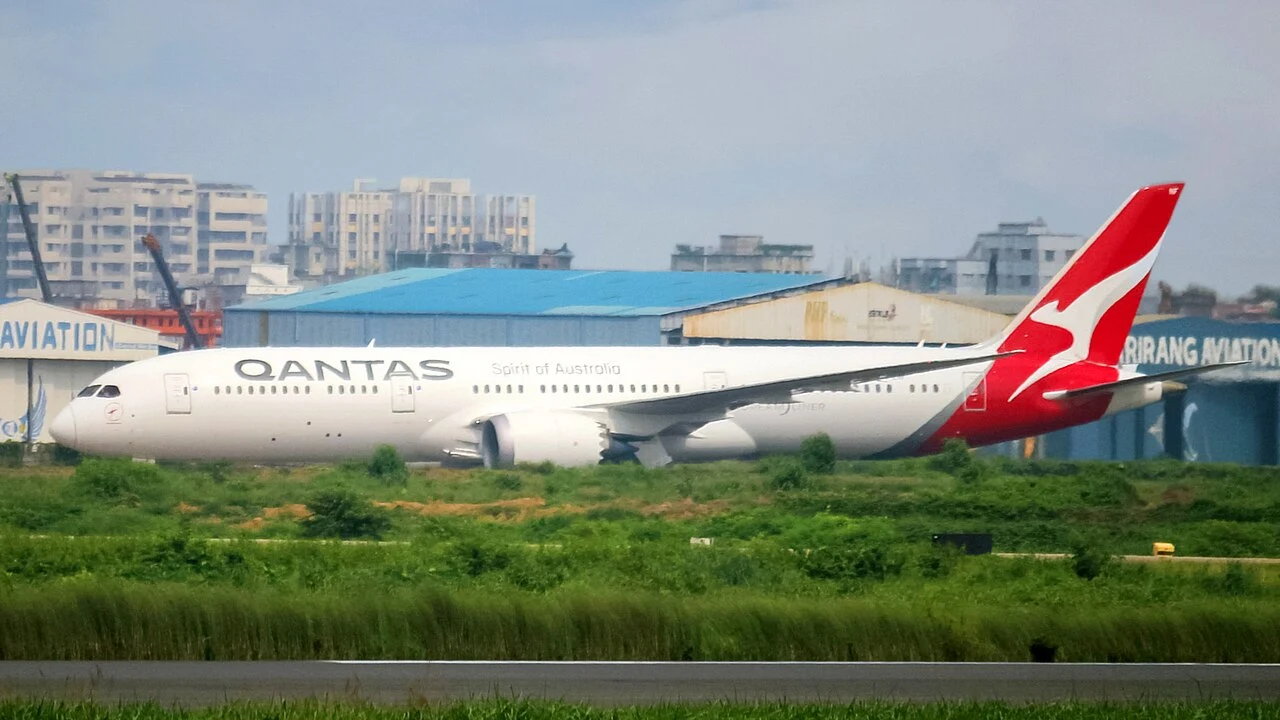
Photo: Md Shaifuzzaman Ayon | Wikimedia Commons

Qantas Wide-Body Decision Might Add up to

Project Sunrise

No discussion of Qantas wide-body procurement is complete without examining Project Sunrise, the airline’s programme to operate the world’s longest non-stop commercial flights. Qantas formally announced the initiative in 2017, setting the objective of connecting Australia’s east coast directly to London and New York.

After evaluating multiple aircraft options, including the Boeing 777-8, the airline selected the Airbus A350-1000ULR and placed an order for 12 aircraft in May 2022. The ULR designation refers to a specially modified version of the standard A350-1000, fitted with an additional 20,000-litre rear centre fuel tank that extends operational range to enable flights of up to 22 hours.

On June 2, 2026, the first of those 12 aircraft — designated MSN 707 — completed its maiden test flight from Toulouse, reaching an altitude exceeding 41,000 feet and flying for three hours and 43 minutes over France and the French Atlantic coast. FlightGlobal confirmed that the flight crew comprised two experimental test pilots and four flight and ground test engineers, and that the sortie included cruise validation over the Bay of Biscay. This flight initiated a two-month certification campaign that will encompass approximately 80 hours of flight testing.

CAPA — Centre for Aviation reported that the first Project Sunrise aircraft will be delivered to Qantas in April 2027, following supply-chain-related delays that pushed the timeline back from the originally planned late 2026. The airline confirmed it will announce its first Project Sunrise route and the timing of inaugural commercial services later in June 2026.

According to Qantas’ own Project Sunrise page, commercial non-stop flights from Sydney to London and New York are expected to begin in 2027, reducing total travel time by up to four hours relative to the fastest one-stop options currently available.

Key specifications of the Project Sunrise A350-1000ULR cabin configuration:

  • Total seat count: 238 — the lowest of any A350-1000 in service globally, according to Qantas
  • First class: Six fully enclosed private suites in a 1-1-1 layout, each with a two-metre flat bed, a separate reclining armchair, and a 32-inch screen
  • Business class: 52 suites, all with direct aisle access and sliding privacy doors
  • Premium economy: 40 seats at 40-inch pitch
  • Economy class: 140 seats at 33-inch pitch
  • Wellbeing Zone: A dedicated area between premium economy and economy, featuring stretch handles, guided on-screen exercise programmes, a hydration station, and refreshments
  • Cabin lighting: 12 scenes calibrated to circadian-rhythm science, including ‘Sunrise’, ‘Sunset’, and ‘Awake’ modes to reduce jet lag
  • Wi-Fi: Fast and complimentary throughout the aircraft

Parallel Wide-Body Procurement Around the Globe

The Reuters report broke alongside a separate story of comparable significance: Singapore Airlines (SQ) has entered early discussions with both Airbus and Boeing to acquire a minimum of 50 wide-body aircraft to underpin its growth strategy into the next decade. Singapore’s Changi Airport (SIN) flag carrier is evaluating the 400-seat Boeing 777X and the Airbus A350-1000, with those talks potentially incorporating options for dozens of additional aircraft beyond the initial tranche.

Air Data News reported that the context for Singapore Airlines’ order is clear: its 22 Boeing 777-300ERs now average more than 16 years of age, and deliveries of its A350-900 fleet concluded several years ago. Singapore Airlines told Reuters it regularly reviews fleet plans but would not comment on “any confidential discussions that we may or may not be having.”

The near-simultaneous emergence of separate wide-body procurement processes at two of the Asia-Pacific region’s most commercially sophisticated carriers is not coincidental. It reflects structural demand dynamics: as Reuters noted in its Qantas story, airlines industry-wide have been expanding wide-body fleets to ease persistent supply shortages, even as geopolitical uncertainties weigh on the broader commercial environment. Boeing shares rose approximately 4% on the day the dual reports published, reflecting the market’s assessment of the commercial significance of both potential deals.

The dynamics also illuminate Qantas’ peculiar leverage in the wide-body market. Reuters itself noted that Qantas has historically served as a battleground between the two manufacturers — and that its decision roughly 20 years ago to select the 787 over Airbus’ original less ambitious A350 concept effectively compelled Airbus to abandon that design and develop the more competitive aircraft that exists today.

Qantas’ Narrow-Body Renewal: A321XLR Programme Context

It is worth situating the wide-body talks within Qantas’ simultaneous narrow-body overhaul, which has already moved from announcement to active service. Qantas has expanded its total Airbus A321XLR order to 48 aircraft, constituting the largest fleet renewal programme in the airline’s history on the narrow-body side. The A321XLR replaces Qantas’ ageing fleet of 76 Boeing 737-800s, which average 17.3 years of age.

Our reporting confirmed in November 2025 that the carrier became the first airline in the Asia-Pacific region to operate the A321XLR commercially, launching the type on Brisbane Airport (BNE) to Sydney Kingsford Smith Airport (SYD) services on November 17, 2025. The A321XLR’s 8,700-kilometre range also opens up new routes to Southeast Asia and the Pacific without a stop, expanding Qantas’ route optionality on sub-wide-body economics.

Additionally, Qantas’ investor release from February 2026 notes that new Boeing 737 retirements are planned to commence in late calendar year 2026, aligned with the progressive A321XLR delivery schedule.

Photo: Md Shaifuzzaman Ayon | Wikimedia Commons

What The 20-Aircraft Order Would Mean for Qantas

According to stocktwits’ market analysis, Qantas’ existing 24 wide-body orders were established to begin phasing out its older A330 and A380 fleets from fiscal year 2027 onward. A further 20 aircraft would substantially advance Qantas’ capacity to retire legacy wide bodies, accelerate the carrier’s fuel efficiency trajectory, and deepen its international network flexibility.

The aircraft type ultimately selected will also signal which manufacturer receives the long-term halo effect of association with Qantas’ premium international product — a reputational prize that both Airbus and Boeing have historically competed hard to win.

The decision has an added dimension given the current global supply environment. Wide-body delivery slots are under sustained pressure across the industry, with both Airbus and Boeing managing production ramp-ups while contending with supply chain constraints.

Qantas has already experienced this firsthand: Project Sunrise deliveries slipped from late 2026 to April 2027 due to wider supply-chain disruptions, as CAPA confirmed. Securing additional delivery positions now, even if delivery years are in the late 2020s or early 2030s, would lock in capacity at a time when slots are genuinely scarce.
Leave a Comment

Your email address will not be published. Required fields are marked *

Scroll to Top