Any person who has watched the movie “Catch Me If You Can” (or read the book of the same title) has been a witness to the most famous fictional pilot with the greatest number of deadheads – Frank Abegnale. What also helped Frank was the fact that he was, in his own admission, “a darkly handsome young airline pilot, smooth-skinned, bull-shouldered and immaculately groomed”. This “most preposterous hoaxter who hoodwinked the world” flew two million air miles as a deadhead pilot of Pan American Airways.

Photo: Wikimedia Commons
The word “deadhead” can have several connotations – as a verb, it can refer to pruning old petals in a flower to keep up its neat appearance; as a noun, it can either refer to a stupid person (and deadhead also rhymes with knucklehead, knobhead, dickhead, egghead etc..) or even a partially submerged log. Sometimes the definition of deadhead can be mired in obscurity.
The avid followers of the band “Grateful Dead” are often referred to as deadheads, too. [ According to the Urban Dictionary, Deadhead is “a person who greatly enjoys the music of the Grateful Dead and particularly the genius of Jerry Garcia.”]
In the past, people who attended public performances without paying for them were also referred to as deadheads. In trucking, for example, the word deadhead refers to “the transportation of an empty trailer, either to pick up a new load or return it to its point of origin, without carrying any cargo”. Deadheads and deadheading can refer to many things, but in aviation deadheading refers to the practice of flying an airline’s staff (a pilot or a flight attendant) on a routine passenger trip to ensure that they can start their duties from a particular place.

Defining a deadhead pilot more precisely
There are occasions when a pilot might not be able to attend their duty (for various reasons such as ill-health, family grievances, flight cancellations etc.,). In such cases, another pilot working for the airline needs to be repositioned/ rescheduled to the place where the flight was about to take off from. The pilots who need to be repositioned might have to fly onboard an aircraft as passengers to start their active duty. Such pilots known as “deadhead pilots”, and though it might seem that a simple word as “commuting” (instead of deadheading) would do, there are quite a few differences.
Deadheading vs Commuting
If a pilot is living in a city different from his/her airline domicile, then (s)he needs to fly into base to start their duties. The pilot also has to return to their city after each trip. This is known as front and back-end commuting, and is neither compensated by the airline nor is it a part of the pilot’s working schedule. Further, front and back-end commuting is not protected by a pilot’s rest requirements. However, this is not the case with pilots that are deadheading because pilots who are deadheading are compensated equally to flying the plane.

Airline pilot Jack Herstam points out another important distinction between deadheading and commuting. A deadheading crew member has a confirmed, space-positive seat because the airline requires them to travel as part of their operational duties. Commuting, by contrast, is generally space-available travel, meaning pilots need to consider several flight options to ensure they reach their reporting location before their assigned sequence begins.
When flights are full, commuting pilots may use flight-deck jumpseats, while flight attendants can sometimes use available cabin jumpseats. Jumpseating is therefore an important way for crew members to travel to and from work, although it is generally separate from deadheading.
Deadheading pilots are also expected to travel in uniform because they may be required to work immediately after reaching their destination. In some circumstances, an airline can even reassign a deadheading pilot before the flight departs.
Interestingly, the term deadhead is not exclusive to aviation. The railway industry also uses it to describe the movement of crew members from one location to another, either by train or by another form of transportation.
Why do pilots (and flight attendants) deadhead? Do deadhead pilots travel in uniform?
In most airlines, deadhead pilots (and flight attendants) are seated in economy class. However, pilots working in American Airlines have been able to deadhead in first class in 2023. This change came about after a new union contract that allowed AA pilots to deadhead in first-class, much like United’s counterparts. Both airlines provide its pilots a “priority at the airport for available for class seats ahead of revenue passengers on the upgrade list”. Deadheading at first-class promotes well-rested pilots as this class generally has larger seats and provides a less stressful flight experience. But regardless of which class pilots are flying in, why is deadheading necessary?

Some of the reasons why pilots deadhead include:
- Replacing sick colleagues.
- When a pilot falls ill (and the illness forces them to not be a part of the flight), they need to deadhead.
- A part of a scheduled trip sequence
- as part of a trip sequence made up as they were flying
Deadheading pilots could be spotted quite easily during the Covid19 pandemic.
Exceeding the maximum duty and minimum rest periods
Aviation is rife with unplanned delays. Such delays often lead to pilots exceeding their maximum duty periods. Sometimes, this also leads to a breach in the minimum rest requirements for pilots (as stipulated in the Federal Aviation Regulations (FARs) under the Title 14 of the Code of Federal Regulations (CFRs)). In such cases, deadheading a pilot is the only viable solution.
It is not only pilots who need to deadhead, though. Flight attendants need to deadhead, too.

Seeing a pilot or cabin crew member sitting among the passengers can sometimes be an unusual experience for those onboard. Passengers may recognize the uniform and become curious, with some even approaching the crew member to ask questions or start a conversation. For pilots, however, the attention can occasionally make an otherwise routine journey uncomfortable.
Plane and Pilot Magazine noted that traveling in the passenger cabin can feel very different for a pilot compared with an ordinary traveler. A uniform can attract considerable attention, with passengers often watching the pilot as they pass or pointing them out to their children.
Deadheading cabin crew can also encounter another common misconception. Some passengers may assume that a crew member traveling in the cabin is still working and expect them to assist with luggage or other requests. However, deadheading crew members are traveling for operational reasons rather than performing their normal cabin duties, so they are generally not required to assist passengers.
What’s the difference between deadheading and jump seating?
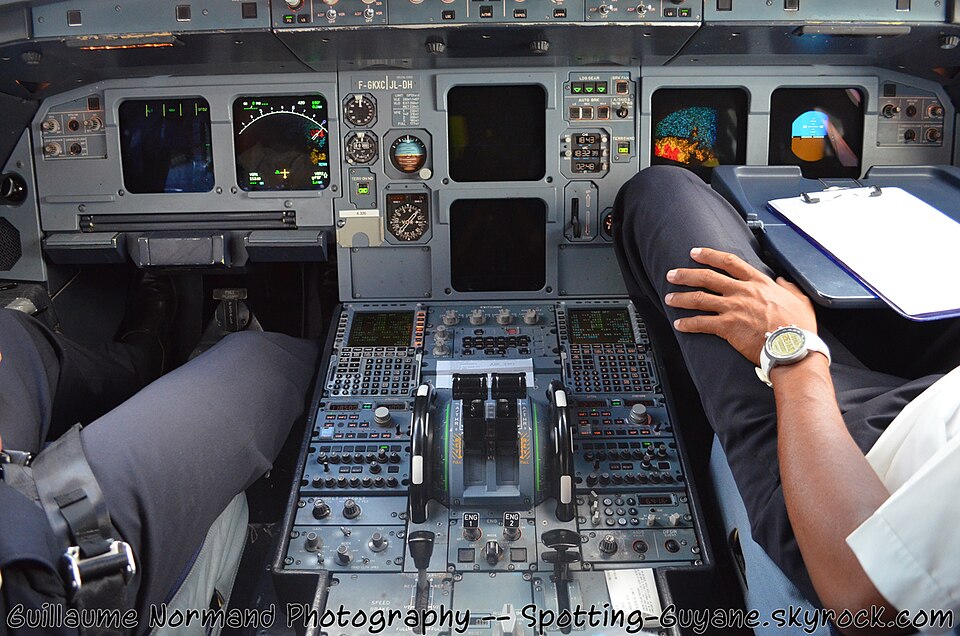
Jumpseats, aka “auxiliary crew stations”, are “auxiliary seats of an aircraft that can be folded or collapsed out of the way when not in use”. These can be in the cockpit or in the passenger cabin. Pilots, flight attendants, and other off-duty airline staff categorized as non-revenue passengers can be traveling in these unbooked seats of the aircraft. So a pilot might as well be jumpseating. However, unlike deadhead pilots, jumpseating pilots aren’t paid.

However, there might be some confusion between how these two words are used and perceived. Let’s take the example of the flight of Alaska Airlines Flight 2059 (Horizon Airlines Embraer ERJ-175 registered N660QX performing flight QX-2059/AS-2059) on 22nd October 2023. An off-duty Alaska Airlines pilot Joseph Emerson, who was on the jumpseat tried to shut off the engines of the aircraft and was charged with the attempted murder of the other 83 people on board.
The Aviation Herald reported receiving information that the jumpseat on the flight was occupied by a deadheading pilot who allegedly attempted to shut down both CF34 engines. However, Alaska Airlines used different wording in its formal statement about the incident and did not refer to the pilot as a “deadhead.”
According to Alaska Airlines, Emerson approached Horizon Air gate agents during the boarding process for Flight 2059 on October 22. The gate agent followed FAA-mandated procedures for approving jumpseat passengers and confirmed that Emerson was an off-duty Alaska Airlines pilot. He was subsequently authorized to travel as a passenger and was assigned to the flight deck jumpseat.
A deadheading pilot does not necessarily need to occupy a regular passenger seat. When passenger seats are unavailable, an off-duty pilot traveling for operational purposes may be accommodated in the jumpseat, a foldable seat located in the cockpit. Time Magazine has noted that jumpseats are generally reserved for FAA inspectors and off-duty flight crew traveling to their home base.
What rules do Deadhead Pilots follow? Do they have any responsibilities?
Ryan Goodwin, a US regional airline pilot, explained that traveling as a passenger is fundamentally different from operating an aircraft as a member of the flight crew. Unless a deadheading pilot is specifically asked to assist by the operating crew, they have no formal responsibilities during the flight and can generally use the journey as an opportunity to relax.
Despite the fact that deadhead pilots don’t need to provide any support to the pilot in command (PIC) and the first-officer of the flight, “the support given by the deadhead pilots comes in handy, especially during the critical flight phases: landing, take-off, final approach, and initial climb“, said Samira Sugoniak, Project Manager at Aeroclass.


_Flyger_skyggelue_pilotlue_uniformslue_(Pilot%27s_peaked_visor_cap_uniform_hat)_2021-10-03_IMG_8751.jpg)


_(8332460962).jpg)