Last month, a passenger traveling from Delhi Airport to Hyderabad in IndiGo Airlines – the largest carrier in India – found his check-in bag in a dilapidated condition, with its locks missing, zippers torn, and the insides tampered with. Delhi Airport, which is one of the busiest airports in the world, saw another incident of a similar kind, though greater and graver in scale, when a traveler reported a theft of cash worth $2,100 from his checked-in baggage on his way to Pune International Airport.
While an aviation expert consulted on the case said that the reponsibility of the theft fell under the remits of the airport administration and the airline in charge, the airport director of Pune claimed that the “responsibility for the safe transit of luggage lies with the airline companies“. At the face of such reports, it is only natural to assume where the bags really go after check-in.

The ABCs of the baggage handling system
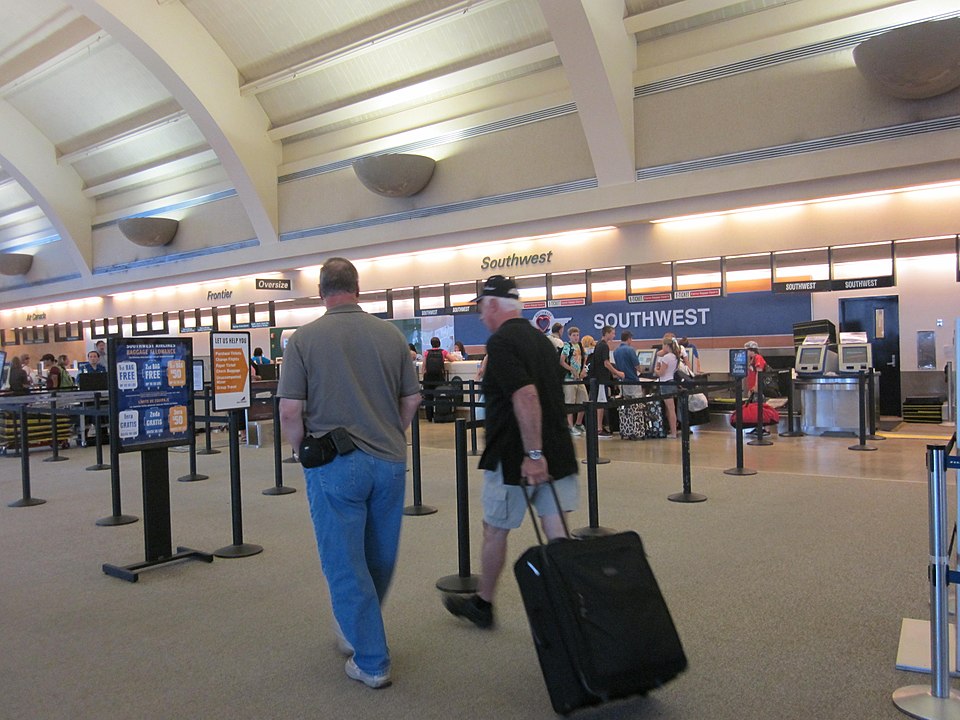
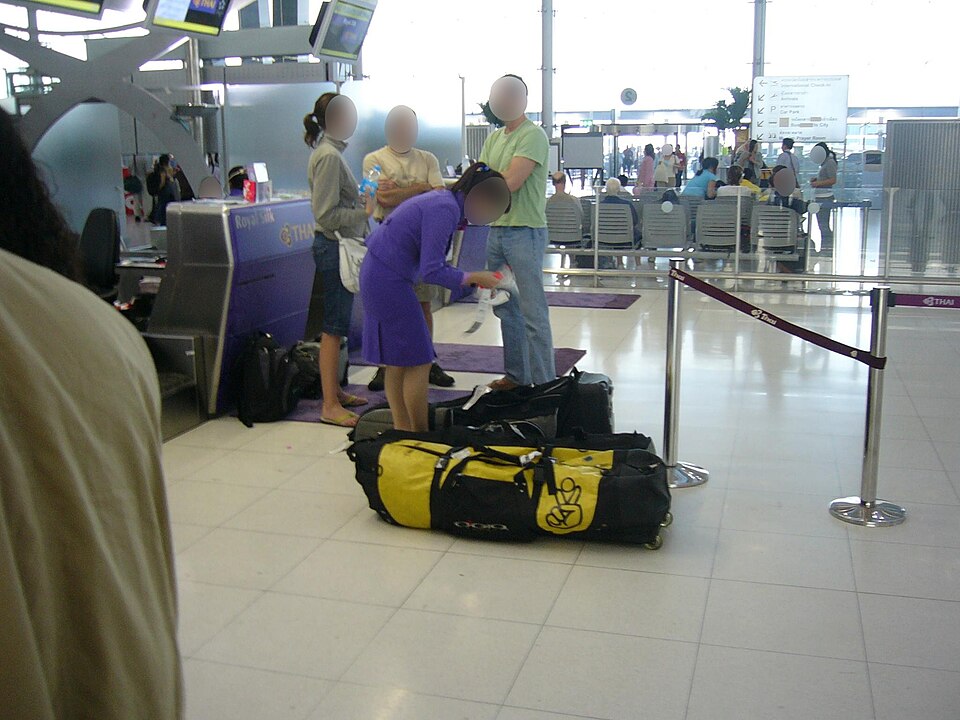
Once you drop your baggage at the check-in counter, you’ll receive them at the baggage carousel at the destination airport. If you’re catching a one-stop (or a more-stop flight) flight, you might have to collect your baggage at the transit airport and drop it to the check-in counter at the connecting airport. [Whether you have to do this depends on the airlines’ policy.] While we’re not cognizant of what happens to these bags after you put them in the check-in counter, you can rest assured that a well-oiled system called the (baggage handling system) comprising employees, machines, and quite possibly dogs, ensures your baggage reaches its destination safely.
The overall process involves two major tasks:
- Moving the checked-in bags from the check-in counter to the departure gate (with a connecting flight requring the movement from one gate to another)
- Moving the checked-in bags from the arrival gate to the baggage carousel at the destination airport.

It all begins with a bag tag
The airline you’re traveling with attaches a bag tag (a small sticker) to your check-in your bag’s handle at the airline counter. The tags include either a barcode or an RFID chip containing information about:
- Your name
- Flight number
- Origin
- Destination
- Layover (if you have one)
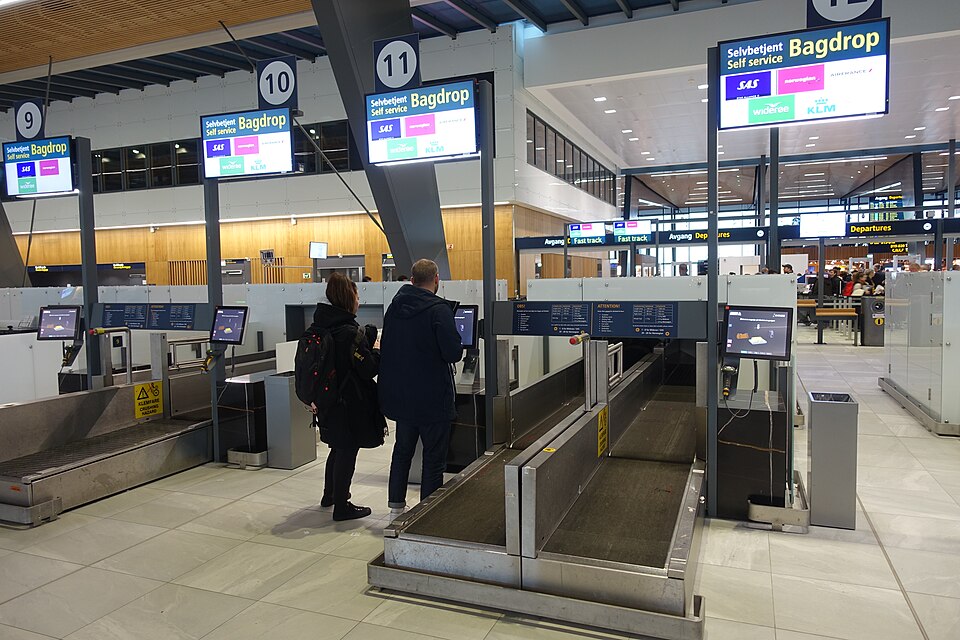
It is almost as if the barcode / RFID chip is your checked-in bag’s boarding pass. Once the tagged bag is dropped into the conveyor belt behind the counter, it has formally become a part of the Baggage Handling System (BHS), which a commentor claimed to be “an intricate maze of conveyor belts, diverters, scanners, and sometimes even robotic arms that work together to get your bag where it needs to be.” And security is one of the biggest parts of the BHS.

How does baggage scanning work in airports?
Each airport has its own security systems. In the USA and other major airports, computer tomography (CT) scanners – the checkpoint X-ray scanning equipment – are used to nullify any threats that someone might have on a carry-on baggage. Doug Laird, a former security chief of Northwest Airlines, talked about the near-perfect efficiency of the system when he commented:
“If you run a bomb through it, it will find it nearly 100 percent of the time.”
Let’s have a look at how computer tomography (CT) works in baggage scanning.
- The X-ray machine moves slowly around the tube. It sends out X-rays, illuminating the bags from various angles with various energies of X-rays. These rays can penetrate through different materials, including clothing, plastics, and even some metals.
- The scanner has two detectors: the first detector only collects regular X-rays, and the second detector collects only high-energy X-rays.
- The CT scanner uses all the data (received after illumination) to make a very detailed image, called a tomogram (or slice), of the bag.
- It helps determine the mass and density of the different objects inside your bag.
- If an object’s mass/density falls within the range of a dangerous material, the CT scanner warns the operator of a potentially hazardous object.
They generate images of the contents within luggage by passing X-rays through them, which then produce color-coded images on a monitor for security personnel to analyze. The colors on these scanners represent different types of materials:
| Colour | Types of materials |
| Orange | Organic substances like food, clothes and plastic etc |
| Blue | Inorganic substances like electronics, metal objects and Ceramics |
| Green | Mixed substances like batteries and composite tools |
The advantage of X-ray scanner technology is that it speeds up bag screening, reducing wait times and enhancing efficiency at various checkpoints. X-ray baggage scanners offer a security solution by enabling accurate detection of weapons, explosives, and potential threats. Checks are also done to determine the efficacy of the X-ray scanners’ ability to detect an anamoly by “threat image projection”, reported the BBC.
“They’ll add an object into the X-ray image that is a threat, like a handgun or something like that, and they’ll test the operator’s ability to find it. That happens on a routine basis. You can manipulate the X-ray image remotely, add in another object that is a threat and see if the operator is picking it up.”
_Avinor_SAS_Norwegian_Wideroe_Bergen_Airport_Flesland,_Norway_2019-11-29_DSC01301.jpg)
How sniffer dogs scan the checked-in bags
Sniffer dogs (aka detector dogs) are also used in airports for security and for scanning . A sniffer dog is naturally sensitive enough to differentiate between various types of smells emanating from different substances. So they are used in airports for scanning suspicious bags and sometimes even the checked-in bags. Trained sniffer dogs at airports can detect individuals who may be suffering from medical conditions or diseases. Additionally, these dogs are highly skilled at identifying illegal drugs.
[Note: While some airports have adopted dogs (such as Canine Crew, Pre-Board Pals, and Wag Brigade) for alleviating anxiety for nervous travelers, they are not a part of the sniffer dog brigade that help identify illegal substances. These are instead a part of catering to travelers with accessibility requirements. For this. you can read our guide below]
Top 5: Ways in which US airports are adapting to cater to travelers with accessibility requirements
Comparison of Sniffer Dogs vs. Technology-Based Detection Systems
Devices that can detect smells have been around since the 1980s but there are areas where sniffers dogs are better:
| Feature | Sniffer Dogs | Technology-Based Systems (X-rays, scanners) |
| Speed | Fast and skilled in detecting scents | It may take some time to analyze images or data. |
| Sensitivity | Extremely sensitive to even tiny quantities. | The detection is limited to visible materials. |
| Detection Range | It can detect wide range of substances including Drugs and explosives | Often restricted to specific types of substances |
| Limitations | Can become distracted or fatigue | May not detect hidden items accurately. |
Not every dog is suited to perform special scanning tasks. Certain breeds are specifically trained and commonly used for these jobs:
- German Shepherds have even assisted Dubai’s airport in detecting COVID-19 cases. Dogs have over 300 million scent receptors, while humans have only six million.
- In India, a Labrador named Jancy detected approximately 3 kg of heroin, valued at Rs 21 crore, hidden in the passenger(arriving from Kenya)’s luggage.
How checked-in bags travel miles can travel miles and miles in security
The barcode on our checked-in bags plays a crucial role in tracking our luggage. This code monitors the suitcase’s location, its destination, and the time it needs to arrive. Scanners at checkpoints along the conveyor belts typically read barcodes on 90% of bags. The checked-in baggage is put on yellow tray that carries the suitcase, along with a unique code. A computer tracks which bag is in which tray and sends your baggage directly to the loading area if the flight is leaving within the hour. However, if a passenger checks in too early, the system keeps the baggage in the early baggage system. After that
- An employee unloads one of the two carts, with the first bag designated for the passenger whose next stop is their final destination. About 45 minutes before takeoff, a driver tows both carts to the gate.
- After that, the gate workers load all the checked bags into the cargo.
Let’s have a look at the largest conveyor in the world
Denver International Airport, Colorado, USA, boasts the largest airport baggage conveyor system in the world. To run this largest conveyor they need 300 486-class computers distributed in eight control rooms. Let’s look at the details of largest conveyor system in an airport:
| Wiring | 4 million meters 14 million ft |
| laser arrays | 56 |
| frequency readers | 400 |
| Track | 35 km 22 miles |
| conveyor belts | 9 km 6 miles |
| standard telecars | 3,100 |
TSA’s manual searches on checked-in bags
The Transportation Security Administration (TSA) performs its own inspection of the check-in bags (approximately 1.3 million check-in bag screenings per day). TSA may ask you to separate foods, powders, or any items that could obstruct X-ray images. Any checked-in baggage inspected physically, will have a notice of baggage inspection (by TSA) inside your bag. You can file a claim if your checked-in baggage is lost or damaged during the TSA screening.
Once TSA’s screening process is complete, the airline (on which you booked your flight) will transport your checked baggage on your respective flight. Here’s what the TSA says about the locks that might be placed on your checked-in bags:
“TSA has been provided universal “master” keys under agreements with Safe Skies Luggage Locks and Travel Sentry so that certain branded locks may not have to be cut to inspect baggage. These locks are commercially available, and packaging on the locks should indicate they may be opened by TSA officers. TSA has no position on the validity or effectiveness of these product as a security measure and will be forced to remove these products if necessary during the inspection.”
TSA agents may conduct swab tests as well to look for evidence of bombs or other hazardous materials. In these examinations, samples are taken from the inside of the bag or from certain objects, and they are analysed using sophisticated chemical detection equipment. Before luggage is carried aboard an aeroplane, possible dangers are recognised and dealt with.

Getting the bags on the right flight: “The Make Up Area”
Every airport has what is known as a “make-up area” where all the bags headed to a particular flight are assembled. The bag tag helps identify which flight the bag is supposed to be headed to. The process of taking a bag to a “make-up area” is completely automated (with robotic systems and diverters) in some airports. In smaller airports, however, it is the baggage handlers who are seminal in manually scanning bags and loading them into bins or carts. Regardless of the method deployed, the checked-in bag is grouped with other bags headed for the flight.
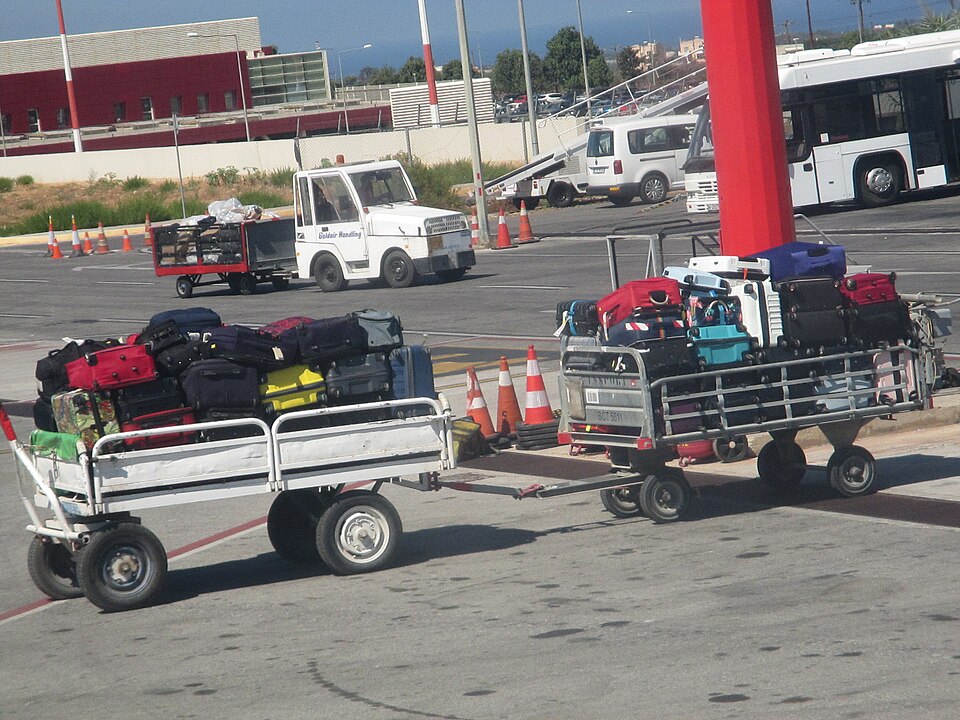
Now is part that is more or less manual. At least for now. Baggage handlers load the checked-in bags onto luggage carts, which are towed out to the respective aircraft. The baggage then has either of the two fates, depending on the size of the planes:
- On smaller aircraft such as the Dornier Do-228 operated in small airports like Lukla, they are loaded by hand into the aircraft’s cargo hold
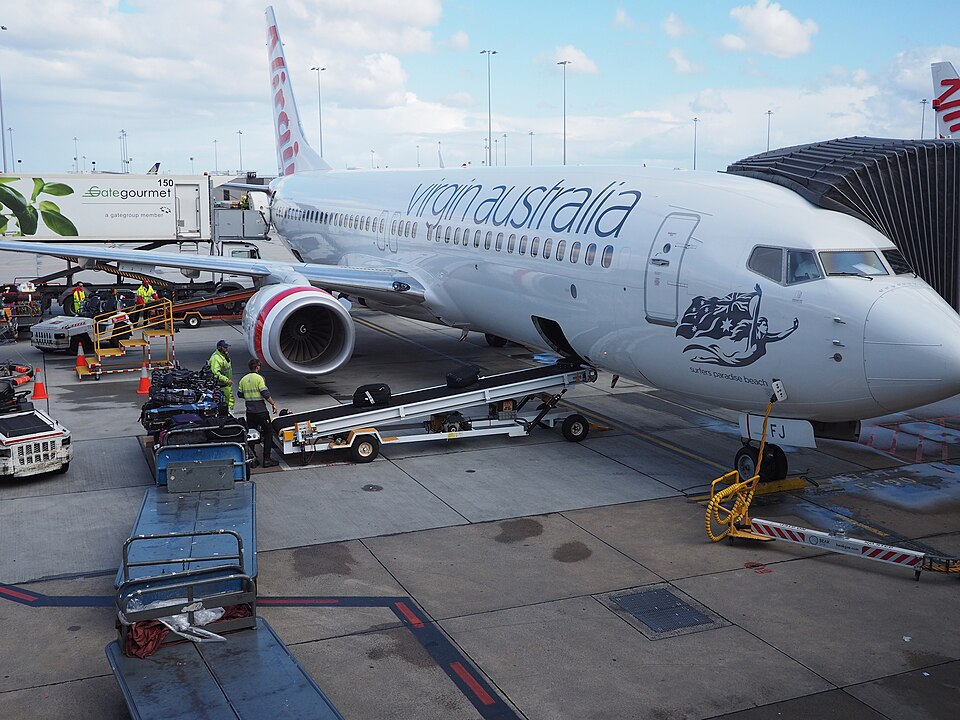
- On wide-body jets, conveyor belt systems and containerized cargo units are used.
Bags are usually loaded in the aircraft’s cargo, which is temperature-controlled (not least because there might be live animals being transported too), in a specific order to ease the unloading process and to ensure that there’s a balanced distribution of weight in the aircraft.
After landing
The bags exit the cargo and start their long journey to the next gate. Staff transport the baggage to the DCV (Destination Coded Vehicle), which can feature over 19 meters of track and 4,000 small crates. Two DCV tracks form a loop, one moving clockwise and the other counterclockwise. Let’s see what happens next.
- Bags are placed on a standard conveyor belt, where they are scanned and directed to the conveyor that will get them to the next gate the fastest.
- At the end of the conveyor belt, a sensor detects when the DCV (Delivery Cart Vehicle) is approaching and times the drop of the bags so that the cart doesn’t have to stop.
- The DCV scans each bag to determine its destination gate and which standard conveyor to use for delivery.
Exceptions to the processes above
These processes are only possible in large airports. In contrast, stolports and altiports find it difficult to implement such systems. For example, Lukla Airport, which has been dubbed as the most dangerous airport in the world, has limited internet access, making it challenging to use conveyor belts. At these airports, staff only check baggage with scanners and manually transport the bags to the aircraft using trolleys.
In addition to this, the time taken by a checked baggage to reach its destination may vary based on factors like airport traffic, staffing, and the size of aircraft. Here’s a table presenting the average time a checked-in bag takes to be processed at different airports:
| Airport | Average Processing time (minutes) |
| Nepal’s Tribhuvan International (KTM) | 40-60 |
| Dubai International (DXB) | 20-30 |
| Singapore Changi (SIN) | 25-35 |
| Hong Kong International (HKG) | 30-45 |
| Istanbul Airport (IST) | 25-40 |
| London Heathrow (LHR) | 30-45 |
| New York JFK | 30-35 |
| Los Angeles LAX | 25-40 |
| Tokyo Narita (NRT) | 30-50 |
| Paris Charles de Gaulle (CDG) | 35-50 |