In 1977, a tragic collision between two Boeing 747 jets (one operated by KLM and the other by Pan Am) in the Spanish Canary Island of Tenerife led to the death of 583 passengers. This accident is dubbed the deadliest accident in aviation. Traffic Collision Avoidance System (TCAS), which is now a standard feature in aircraft (and was installed in aircraft in India after the Chakri Dari Mid Air Collision – the worst crash in India), hadn’t made the cut in the year the Tenerife disaster shook the aviation community.
The fact that the two aircraft collided on the ground at the Tenerife Airport was down to dense fog that cloaked the airport area. The captain of KLM, Captain Jacob Veldhuyzen van Zanten, mistakenly thought he had received clearance for the takeoff from the control tower. In the last seconds of the take-off phase, the pilots of KLM did see their aircraft on a collision course with Pan Am’s Boeing 747.
Here are the details of KLM Royal Dutch Airlines’ Boeing that comprises 248 passengers – all of whom perished in this accident.
| Aircraft Type | Boeing 747 |
| Cycles | 5202 flights |
| Registration | PH-BUF |
We know the basics of the disaster: it remains the deadliest aviation accident to date, and poor visibility at a time when aircraft weren’t equipped with TCAS led to this crash. But what shocking facts have been revealed to the public about this disaster ever since? Let’s find out.
5. The two aircraft weren’t scheduled to be in Tenerife to begin with
Tenerife was shrouded by terrorist threats
During the years prior to the Tenerife Airport Disaster, the Canary Islands has been “a poor stepdaughter of mainland Spain, with high levels of unemployment, illiteracy, infant mortality and, now, political unrest“, reported the New York Times. As a result, there was a strong political movement of insurgents known as Movement for the Self-Determination and Independence of the Canary Archipelago (MPAIAC) who demanded the autonomy of Canary islands.
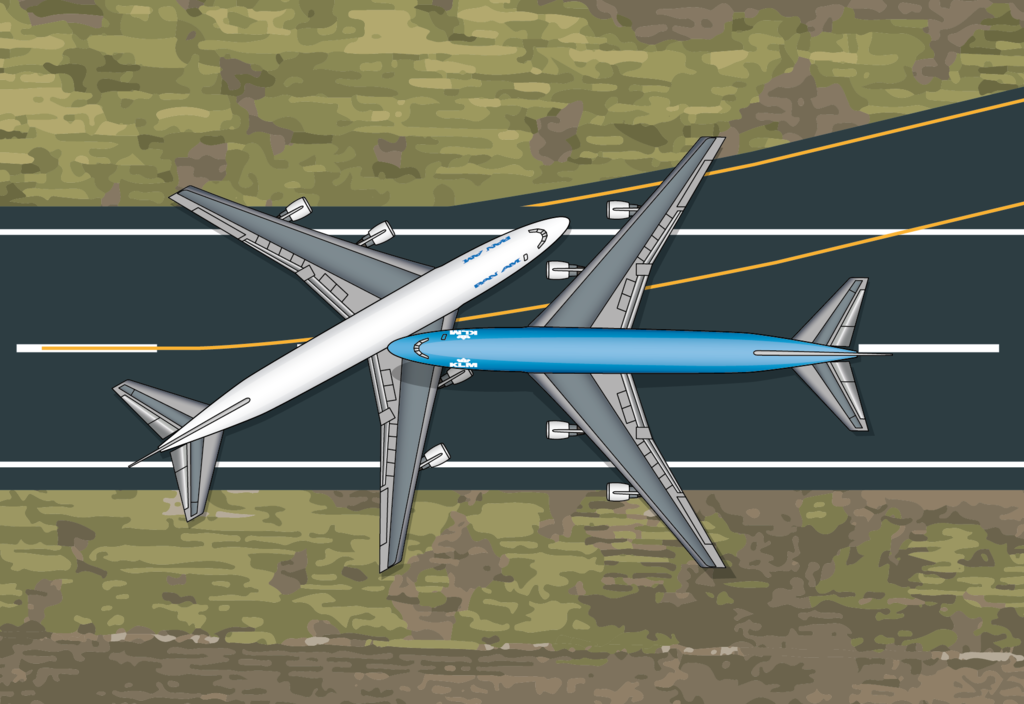
Photo: SafetyCard | Wikimedia Commons
On the day of the Tenerife Airport Disaster, a terrorist bomb (planted by MPAIAC, according to The New York Times report quoted above) had exploded in the terminal building of Las Palmas Airport. There were threats of a second bomb, and this led to the closure of las Palmas airport that day. This led a diversion of the Pan Am aircraft from its intended Las Palmas airport to Tenerife Airport, which was then known as Los Rodeos Airport.
Here are a couple of details about the bomb planted at the Las Palmas Airport that day:
- It was placed in a florist shop at the Las Palmas airport.
- The explosion that ensued wounded eight people.
4. Deadliest Squeal inside an aircraft
One bad decision takes 583 lives in a matter of seconds
The accident investigation revealed the following as probable causes and factors in the accident:
- Failure of the Pilot in Command (PIC) to follow approved procedures and directives.
- PIC’s failure to abort takeoff
- PIC misunderstanding the orders or instructions
- Weather: Low Ceiling and Fog
A research paper published about the disaster reveals a series of communication errors that took place in the moments prior to the accident:
” While the KLM’s first officer was still reading back to the tower regarding the ATC’s clearance the captain released the brakes saying ‘We Gaan ‘ meaning ‘we go’ and the plane started to take a takeoff roll. In response, the first officer after finishing reading back to ATC said ‘’We are now eh taking off’’ or ‘’We are now at takeoff’’ a statement that was claimed by the tower control to have been taken to mean ‘we are at takeoff position’, after which he replied that it was okay, paused and informed the officer that their aircraft to standby for take preceding a confirmation.”
At 17:05:44 pilots of KLM reported to the ATC that they were ready for takeoff. The aircraft was given instructions for a Papa beacon departure, and after uttering “We are now at takeoff“, the brakes on the Boeing 747 in question were released and started the takeoff roll.
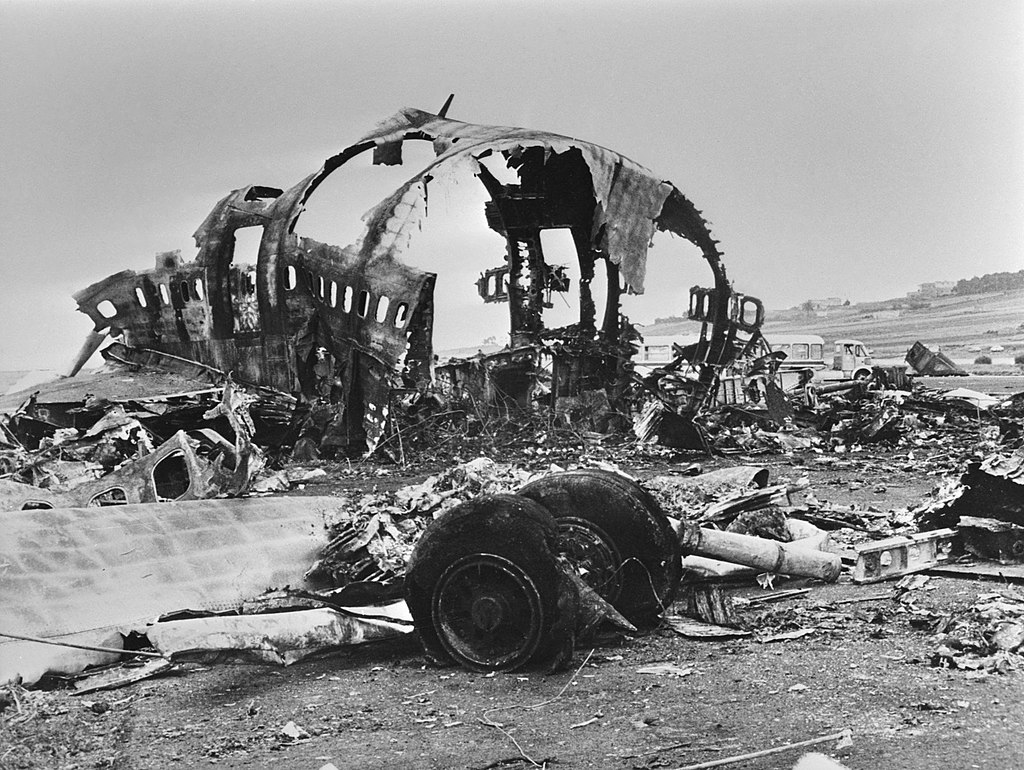
Photo: Mr.Nostalgic | Wikimedia Commons
The strong squeal in the KLM’s cockpit meant that the communication was hardly intelligible. This is one of the biggest reasons why KLM’s Boeing 747 took off in such inhospitable conditions.
3. Survivors Escaped Through a Burning Wreck
61 of 396 had luck on their side
Several passengers who survived the initial impact managed to escape from Pan Am 1736 by jumping from the damaged aircraft. First Officer Robert Bragg, who survived the crash, also helped passengers evacuate by encouraging those who had reached the aircraft’s wing to jump to the ground.
Speaking to the BBC, Bragg recalled seeing the KLM 747 approaching along the runway with its landing lights visible through the fog. He initially struggled to believe that the aircraft was actually taking off, but as it continued toward Pan Am 1736, he began shouting for the aircraft to get off the runway while Captain Victor Grubbs attempted to turn the 747.
Bragg then saw the KLM aircraft lift off the runway and braced himself for the collision. The impact initially seemed less severe than he expected, but when he looked around the cockpit, he realized that the aircraft had suffered catastrophic damage, with the windows gone, the right wing on fire and the upper-deck lounge, which had contained 28 passengers, completely destroyed.
At the behest of the captain, a lady jumped out of the aircraft first. People who followed her jump landed on top of her, beaking her back, both legs, and both arms.
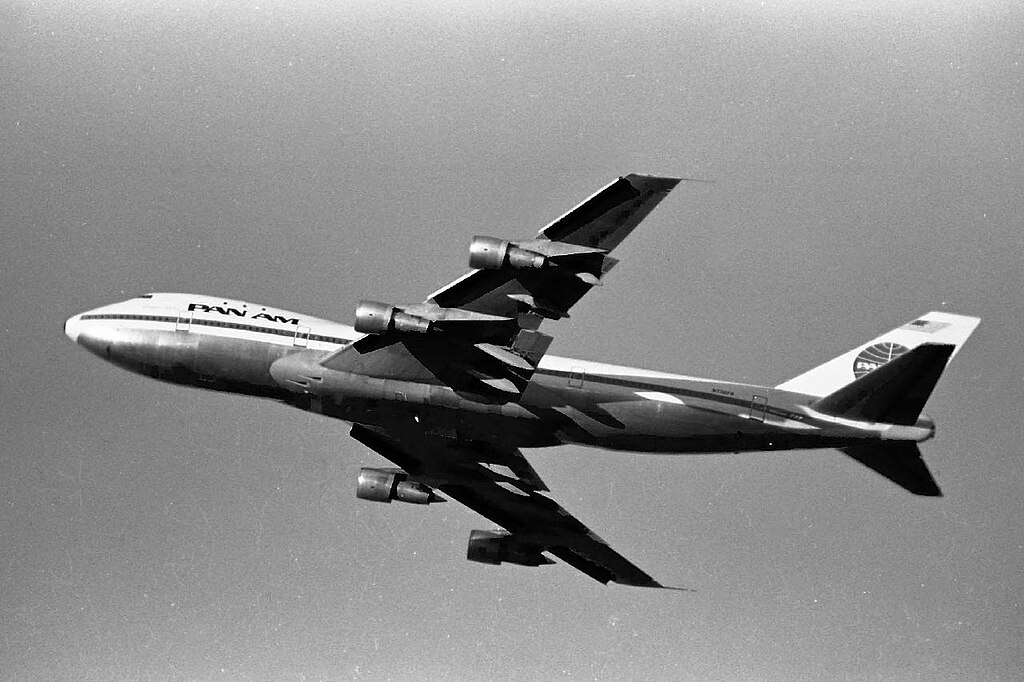
Photo: Rob Russell | Wikimedia Commons
Amidst the thick fog enveloping the airport, some people in the Pam Am aircraft had detected the movement of other aircraft in the background, although they did not know that KLM’s Boeing marched (towards Pam Am) with the intention of taking off. Apprehended by the movement of aircraft, a passenger Joani had confided to her boyfriend (who was on the flight) about feeling iffy regarding the movement of KLM’s Boeing. The boyfriend, who was unware about the gravity of what was to befall, said, albeit rather jocularly, “Don’t worry, if he hits us, you won’t feel a thing.”
Cockpit Voice Recorder on the Pan Am aircraft revealed the fear of the captain of the flight as he said: “Goddamn that son-of-a-bitch is coming!”
2. Aviation’s rule books underwent several revisions
Later, Los Rodeos Airport was equipped with a ground radar
As we look back upon the Tenerife Airport disaster now, we realize that the accident was caused by the coupling of several factors related to communication: the KLM pilots spoke Dutch as their first language, the Pan Am pilots spoke English, and the Spanish controller spoke Spanish, One can now see how cultural and linguistic barriers in English might have played a part in the communication before the accident.
Captain Jacob Veldhuyzen van Zanten instructed his co-pilot to report to the air traffic control that KLM’s Boeing was ready for take-off. The co-pilot also requested clearance. The control tower specified the aircraft’s departure route and gave instructions about what to do after take-off without giving a specific clearance for actual take-off, reported the Tenerife Information Center: .
“The co-pilot’s reply was “We’re now at take-off”, to which the control tower replied “OK”. It appears that the flight crew meant that they were actually beginning their take-off, while the controller took it to mean they were in take-off position, awaiting final clearance. He added, “Stand by for take-off, I will call you”.
Following the accident, aviation authorities opposed the use of colloquilisms such as “OK” in radio responses. Further, the phrase “take-off” was not to be used until the actual take-off was due to take place. The word “departure” would be used in scenarios where take-off was due. A pilot who is waiting to “take-off” would now use the phrase “ready for departure”, while he might receive a response such as “line up and wait” or “hold position“.
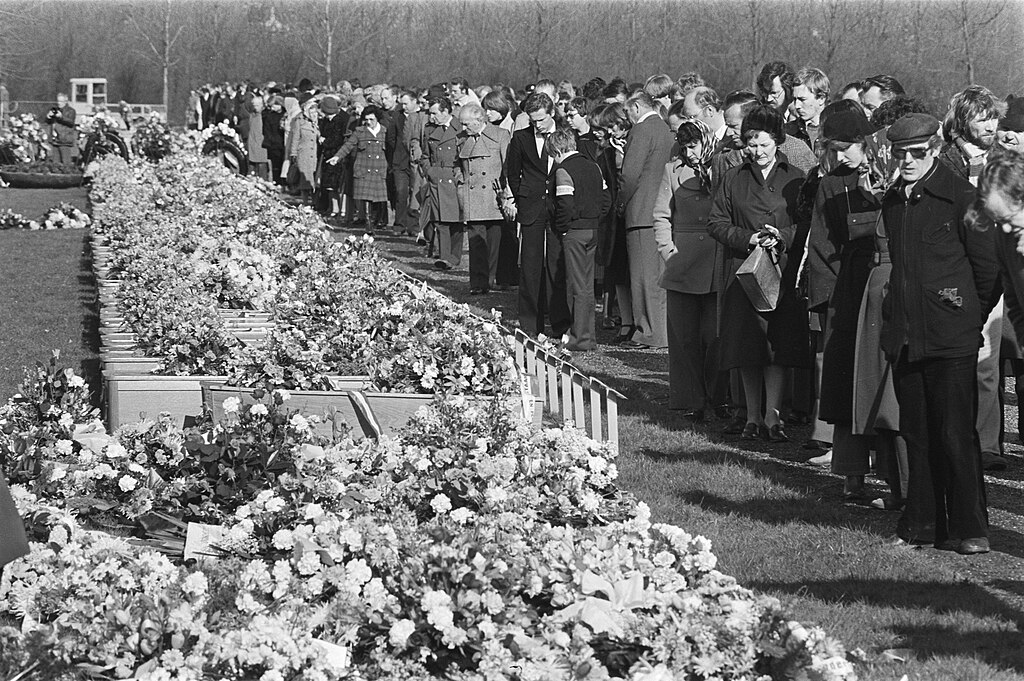
Photo: Fotograaf Onbekend / Anefo | Wikimedia Commons
The fact that the communication between ATC and Pan Am – where the controllers asked Pan Am to report when it was clear off the runway- was heard in the KLM cockpit (before KLM headed for takeoff ) makes this tragic accident all the more lamentable. The first officer at Pan Am, Robert Bragg had acknowledged to ATC tower: “We’ll report when we’re clear”. Captain van Zanten and his first officer had missed this conversation. But the second officer had not, and even asked Zanten “Is he not clear?”That Pan American?” To this message, emphatically replied “Oh, yes,”.
After the accident, junior members in the cockpit (of all operating aircraft around the world) were asked to be more assertive in challenging the decisions of the senior members, in case they felt that the seniors were making an obvious mistake.
1. World Wings International: The philanthropy of surviving flight attendants
Global legacy of 64 years and counting
Dorothy Kelly, a flight attendant of PamAm, was sipping coffee when KLM’s Boeing grazed Clipper Victor (this was the name given to Pan Am’s Boeing 747). The roof might have been chipped away, much like the Aloha Airlines Flight 243.
The calm senerity a moments before had transformed into something life-threatening, Dorothy said.
Dorothy later became a part of World Wings International, an organization of former Pan Am flight attendants that has, for decades, been providing philanthropic works for those less fortunate. Dorothy has also supported the ones affected during the Lockerbie bombings (Pan Am 103) and during the 9/11 attacks. Some of the works carried out by World Wings International include:
- Volunteering with the Dooley Foundation, Gallaudet University, CARE, among others
- Support to Médecins Sans Frontières/Doctors Without Borders.
- distribution of non-perishable foods and articles of clothing among impoverished people