Coastguard helicopters flew into a blinding Alaska snowstorm this spring and pulled four people off an ice floe near Chefornak. The rescue shows why search and rescue (SAR) helicopters remain the fastest way to reach sailors, boaters, and coastal residents in danger. Agencies in the United States, the United Kingdom, and beyond rely on these aircraft every week to save lives at sea.
The U.S. Coast Guard (USCG) and His Majesty’s Coastguard (HM Coastguard) run the two most active maritime helicopter rescue programs in the North Atlantic region. Both services responded to major incidents in the first half of 2026. This article explains how these helicopters work, which aircraft they fly, and what recent missions reveal about the state of maritime search and rescue.
.jpg)
How Coastguard Helicopters Respond to a Distress Call
A rescue mission starts the moment a mariner sends a distress signal. In the UK, callers dial 999 or use marine VHF channel 16, and a Maritime Rescue Coordination Centre (MRCC) answers. A Maritime Operations Officer questions the caller to pinpoint their location using charts built for the task.
The coastguard’s Search and Rescue Mission Coordinator then decides which resources to send, and this could mean a lifeboat, a rescue team, or a helicopter. In the United States, Coast Guard sector watchstanders perform a similar role and can launch an aircrew within minutes of receiving a call. Both systems rely on trained controllers rather than automated dispatch.

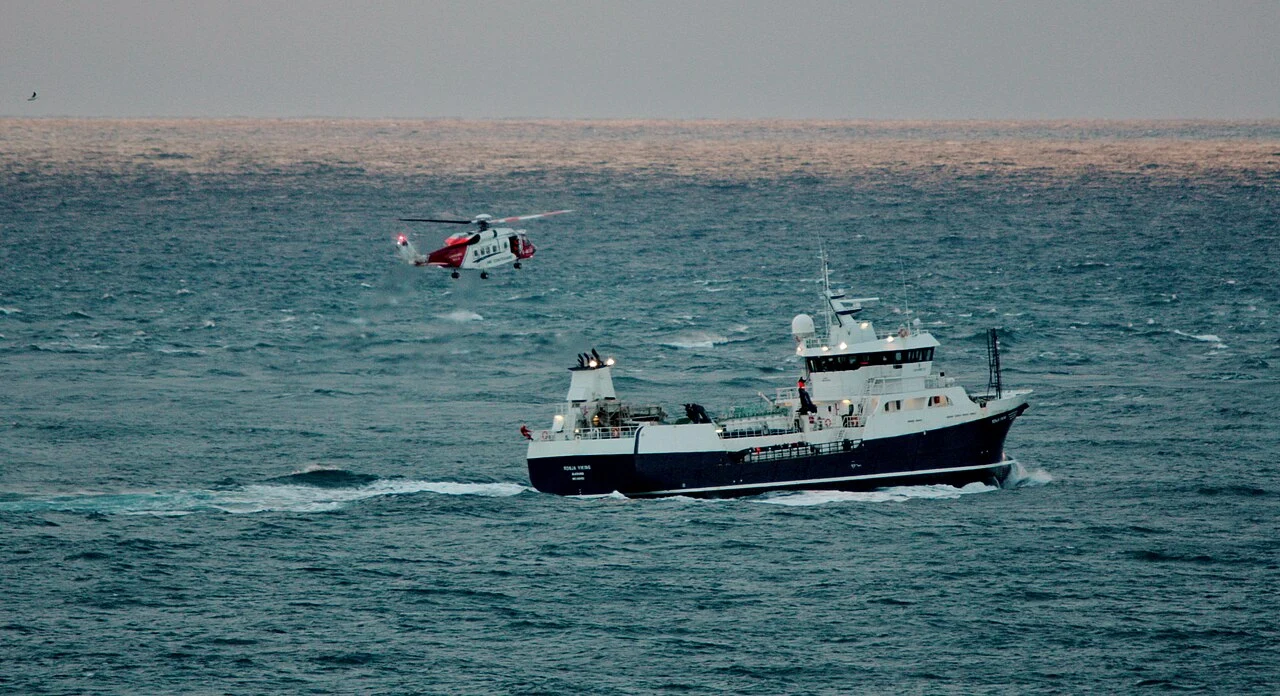
Once airborne, a helicopter crew typically includes a pilot, co-pilot, flight mechanic, and a rescue swimmer. The crew flies to the last known position of the vessel or person and begins a visual or radar-assisted search. If conditions allow, the aircraft hovers over the casualty and lowers a rescue swimmer or a basket on a winch cable.
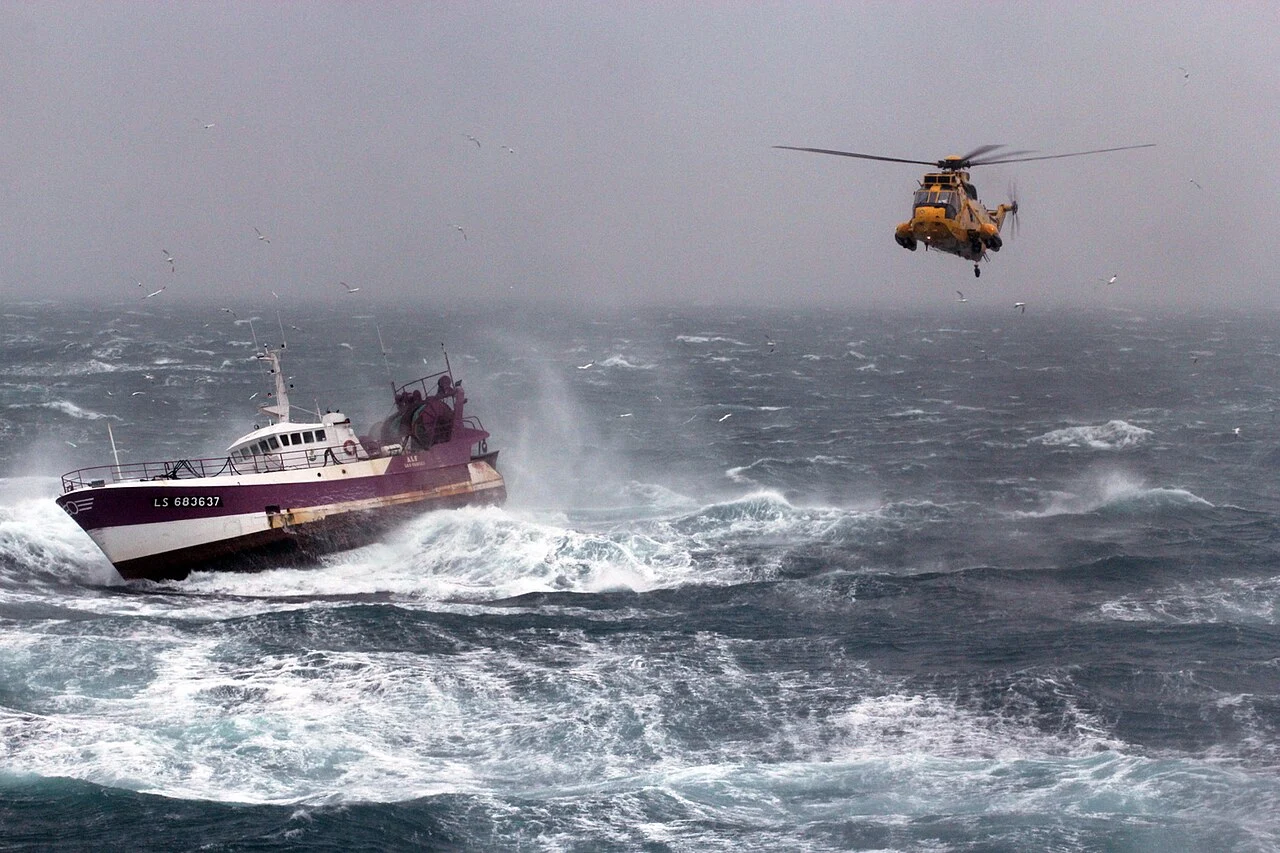
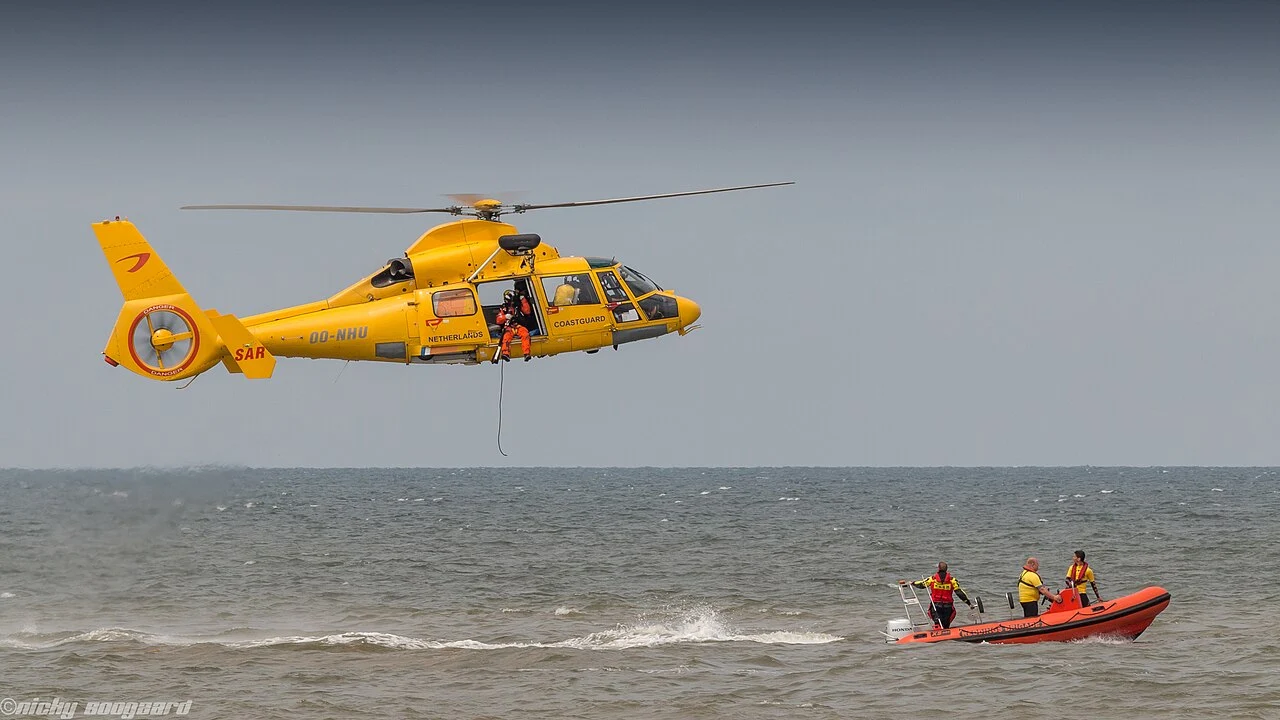
A hoist rescue at sea is one of the most demanding maneuvers in aviation. The pilot must hold a steady hover above a moving vessel, often in high wind and heavy swell, while the flight mechanic controls the winch. The rescue swimmer enters the water separately and swims to the casualty before both are lifted together.
Night missions add another layer of difficulty. Crews rely on night vision goggles and searchlights to spot a person in the water, since waves and darkness can hide a casualty within seconds. Weather radar and forward-looking infrared sensors, fitted to most modern SAR helicopters, help crews locate people even when visual contact is impossible.
.jpg)
Alaska Ice Floe Rescue Shows Extreme-Weather Capability
The Chefornak mission on April 20, 2026 illustrates how far these crews will fly in poor conditions. A Coast Guard helicopter crew flew more than 800 miles in near-zero visibility through mountainous terrain, blowing snow, and icing to reach an 18-foot vessel stranded on an ice floe. Three adults and one child were on board.
Watchstanders launched an MH-60 Jayhawk helicopter and an HC-130 Hercules airplane from Coast Guard Air Station Kodiak, and the helicopter crew stopped twice for fuel in King Salmon and Bethel before reaching the scene at roughly 5 a.m. Acting Assistant Secretary Lauren Bis praised the crew afterward, saying their work was “a testament to the Coast Guard’s motto: Semper Paratus, always ready.” The hunting party’s satellite-based communications equipment helped rescuers locate them quickly.

Aircraft Types Used in Modern Coastguard Fleets
Coastguard agencies choose specific helicopter models for the distances and sea states they cover. The USCG and HM Coastguard both split their fleets between a lighter, close-range aircraft and a heavier, long-range one.
Key rescue helicopters currently in service include:
- Sikorsky MH-60 Jayhawk – a twin-engine helicopter that can fly a crew of four up to 260 nautical miles offshore, hoist six additional people, and remain on scene for 45 minutes before returning to base.
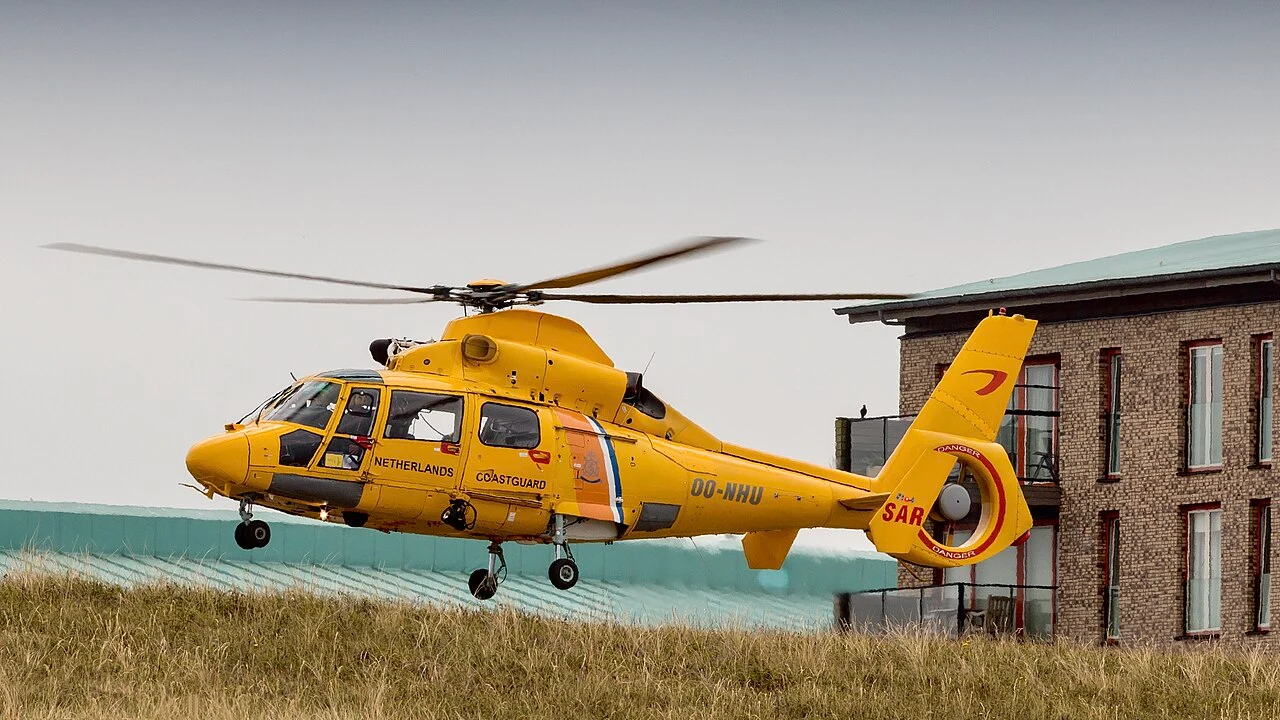
- Eurocopter MH-65 Dolphin – a smaller, twin-engine aircraft used for close-to-shore rescues and shipboard operations.
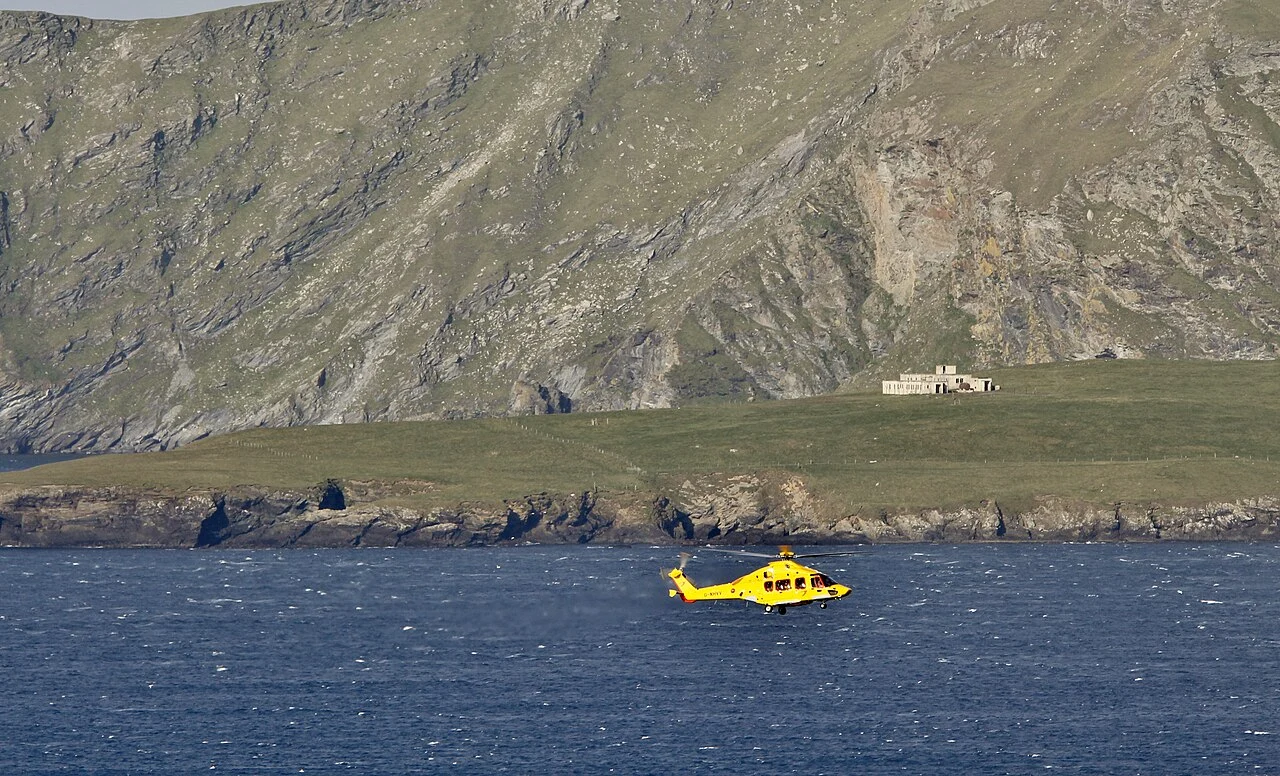
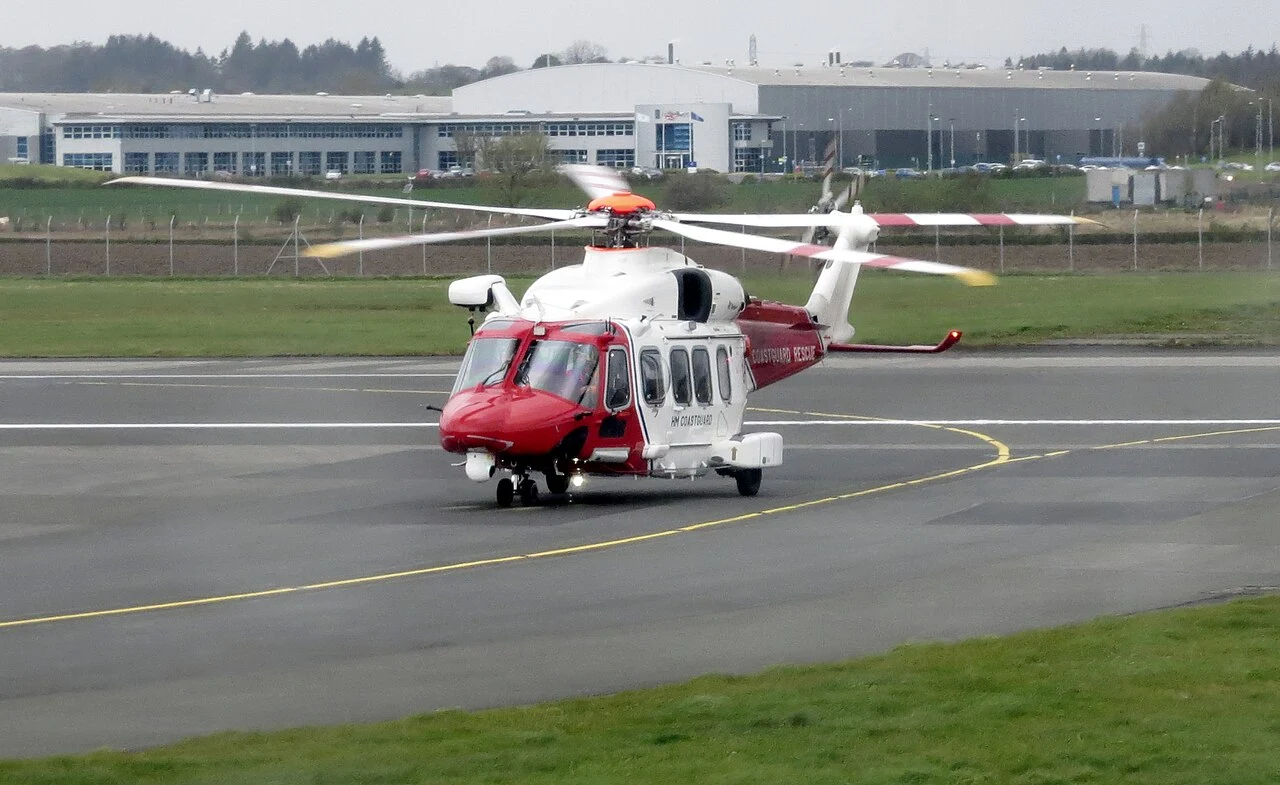
- Leonardo AW189 and AW139 – used by HM Coastguard’s UK contractor for coastal and overland missions, with a 15-minute launch readiness during daylight hours.
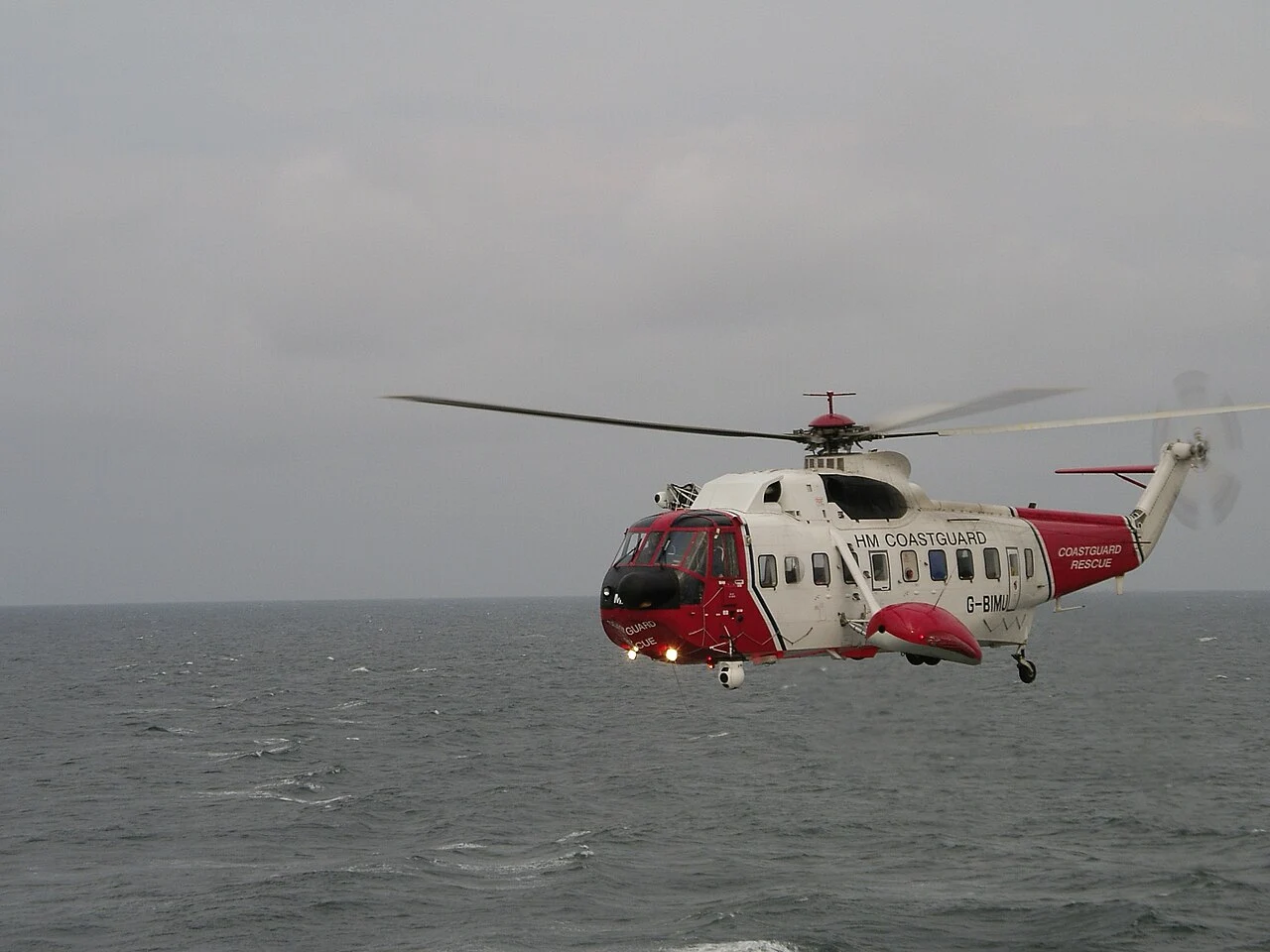
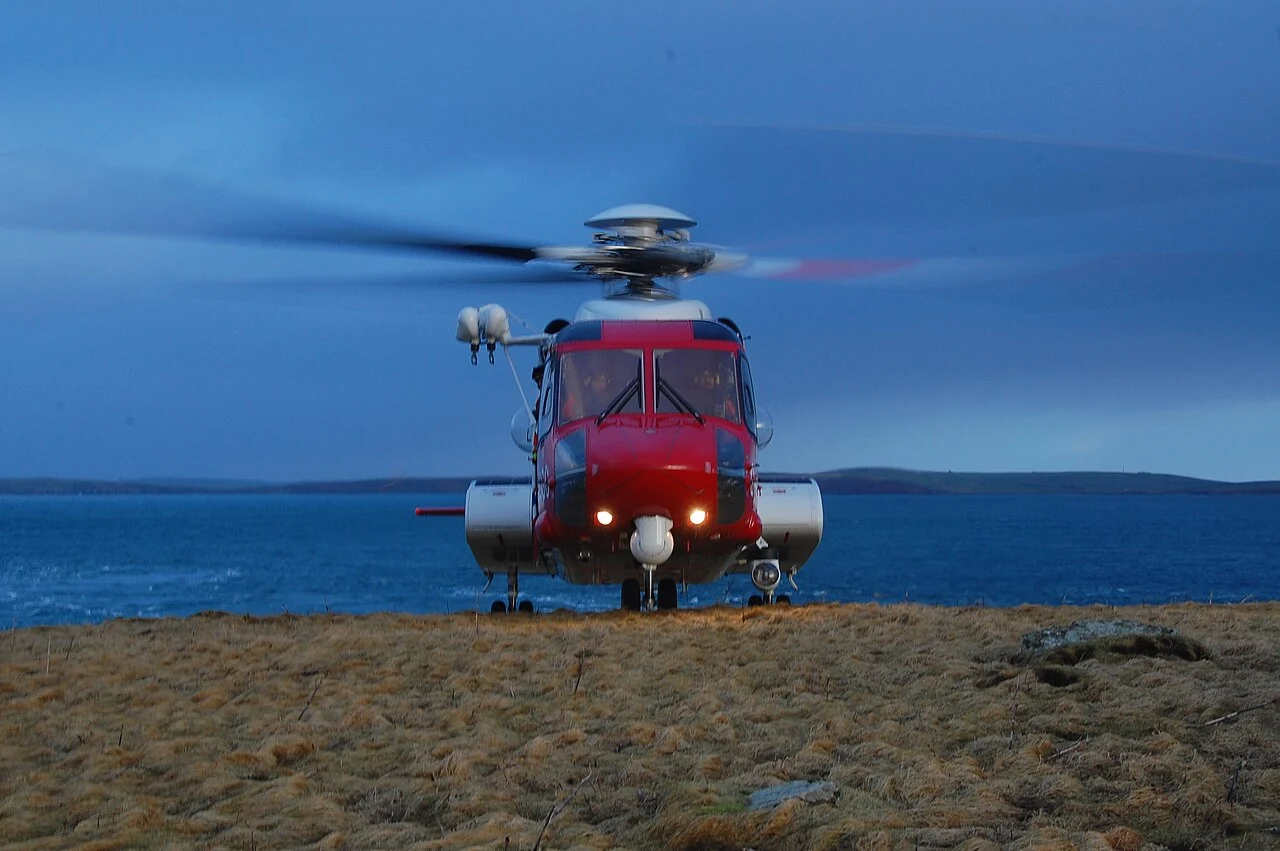
- Sikorsky S-92 – deployed at several HM Coastguard bases for longer-range North Sea and offshore missions.
The Jayhawk’s hoist carries 200 feet of cable and can lift up to 600 pounds, and the aircraft uses GPS navigation to pinpoint search areas even far from shore. These features let crews work over open ocean, far past the range of most lifeboats.
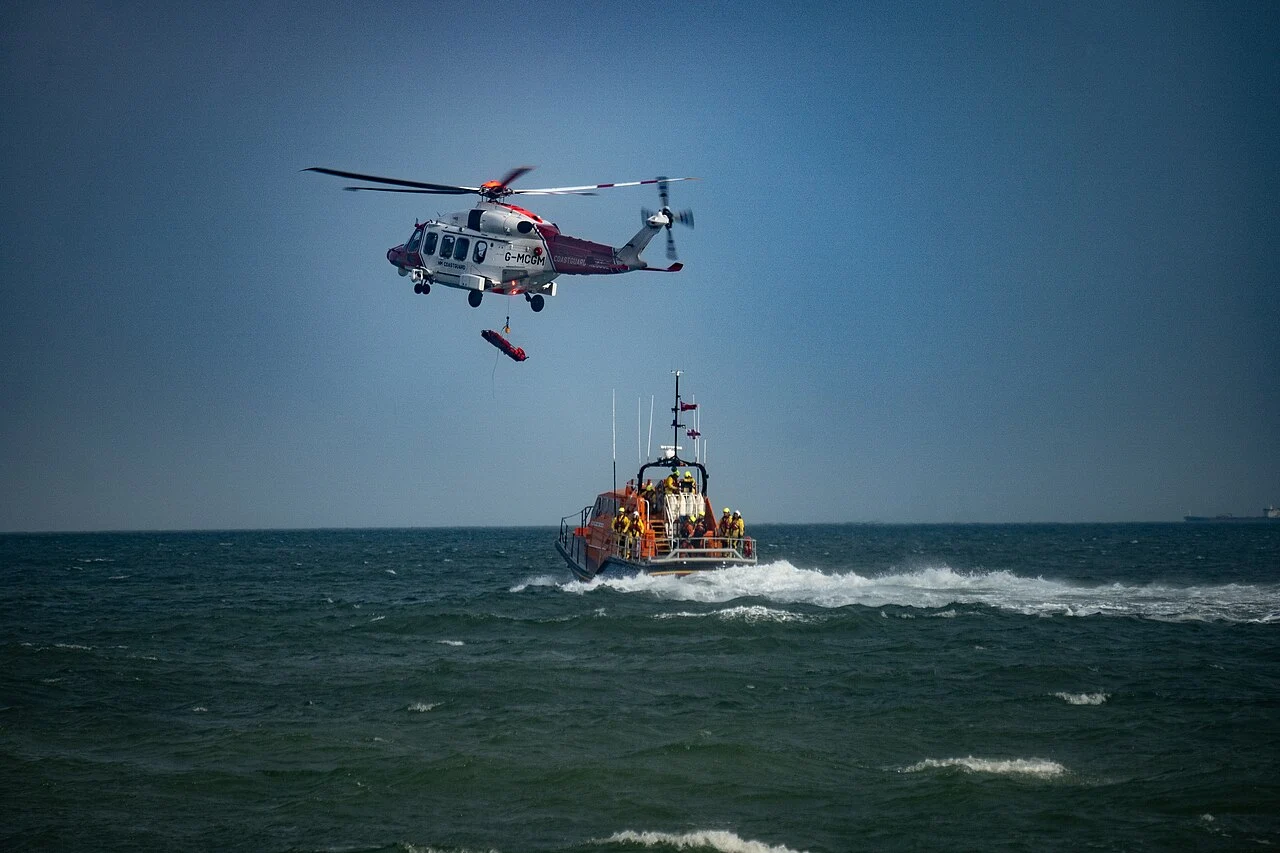

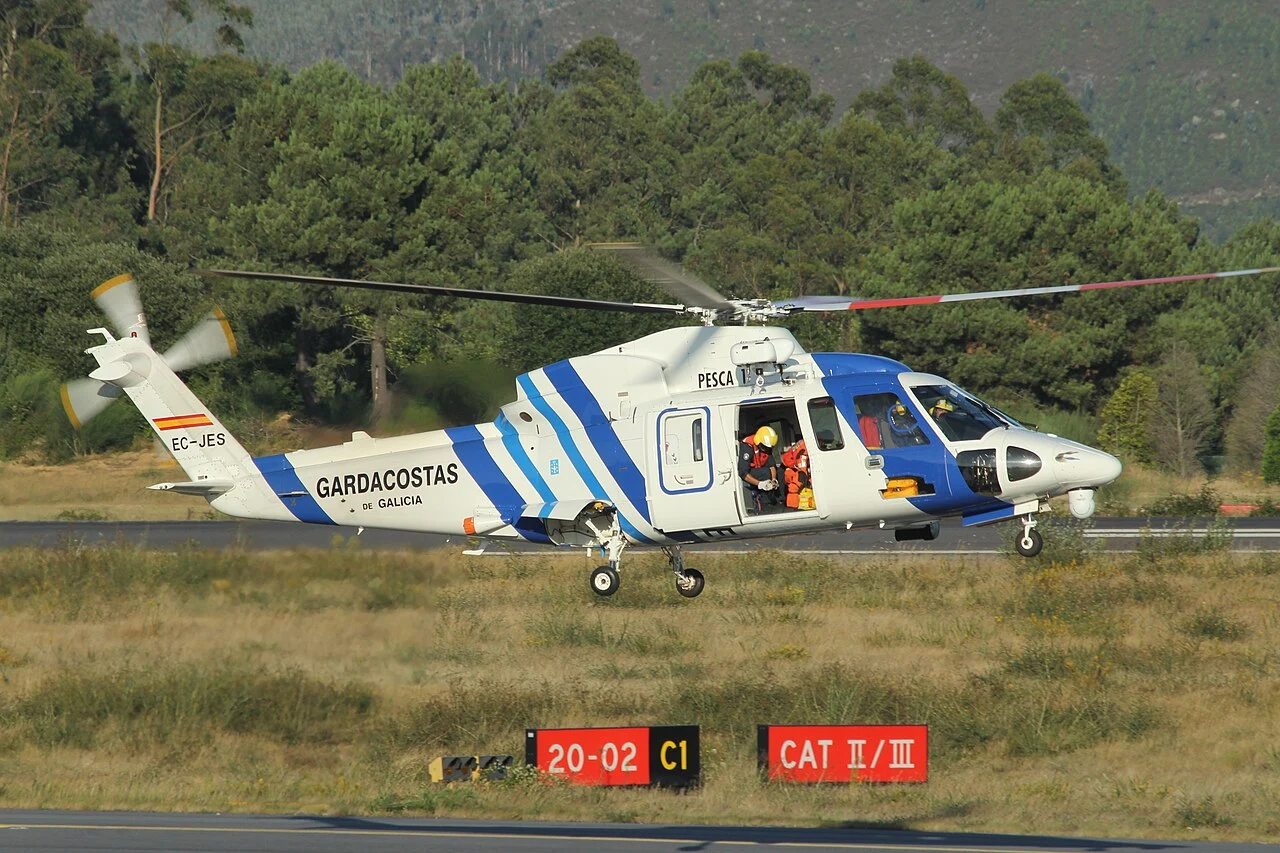
Agencies choose an aircraft based on the mission profile rather than a single preferred model. A close-range rescue near a harbor favors a lighter, more agile helicopter that can maneuver in tight spaces. A rescue 200 miles offshore instead needs long range, extra fuel capacity, and a crew large enough to handle multiple casualties.
Maintenance schedules also shape which aircraft a base keeps on standby. Every SAR base keeps a primary aircraft ready alongside a backup, so a mechanical issue never leaves a coastal region without cover. HM Coastguard’s move to swap older Sikorsky S-92 airframes for newer AgustaWestland AW139 helicopters at some bases reflects this ongoing fleet renewal.
.jpg)
Bristow Helicopters Expands UK Coverage for Summer 2026
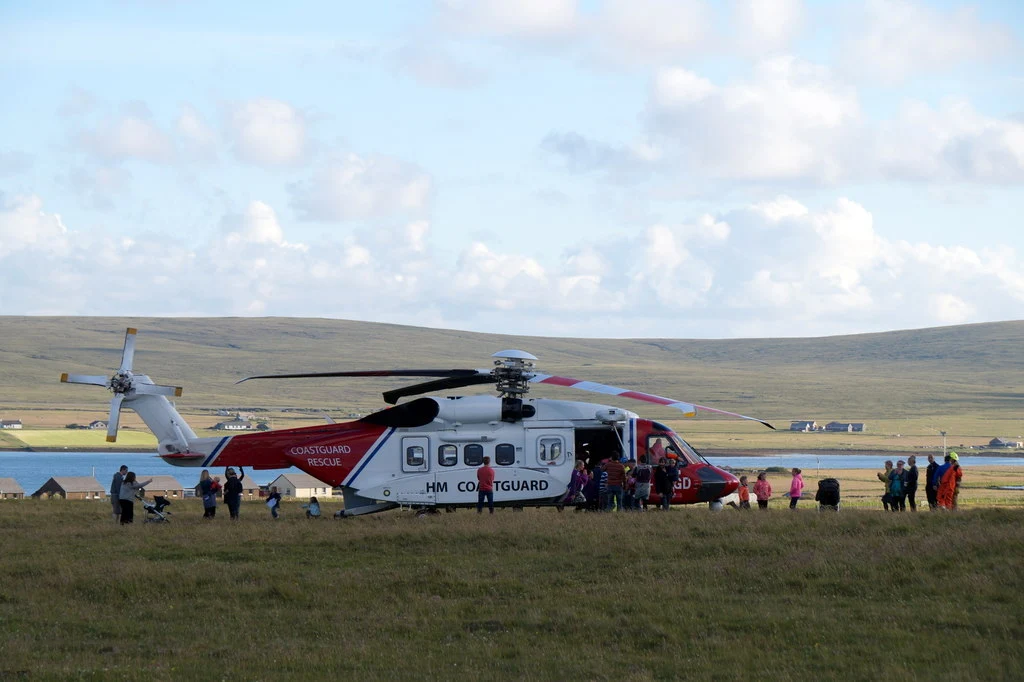
In the UK, Bristow Helicopters holds the government contract to fly HM Coastguard’s rescue missions. The company operates 10 permanent bases around the UK and flies a dual fleet of Sikorsky S-92A and Leonardo AW189 aircraft.
HM Coastguard opened two new seasonal bases this spring to handle the summer rise in coastal incidents. Two AgustaWestland AW189 helicopters now operate from new bases at Oban Airport and Carlisle Lake District Airport, with crews able to be airborne within 15 minutes of tasking between 9 a.m. and 9 p.m. from April through September. Carlisle Lake District Airport carries the IATA code CAX.
The bases form part of the UK’s Second Generation Search and Rescue Aviation Programme, a £1.6 billion modernisation effort that used historical incident data to identify areas of peak seasonal demand. Mark Bradley, the programme’s Senior Responsible Owner, said the changes underline the service’s “longstanding commitment to saving lives.” Separately, HM Coastguard replaced an older Sikorsky S-92 at its Caernarfon base with a new AgustaWestland AW139 helicopter that runs 24 hours a day.
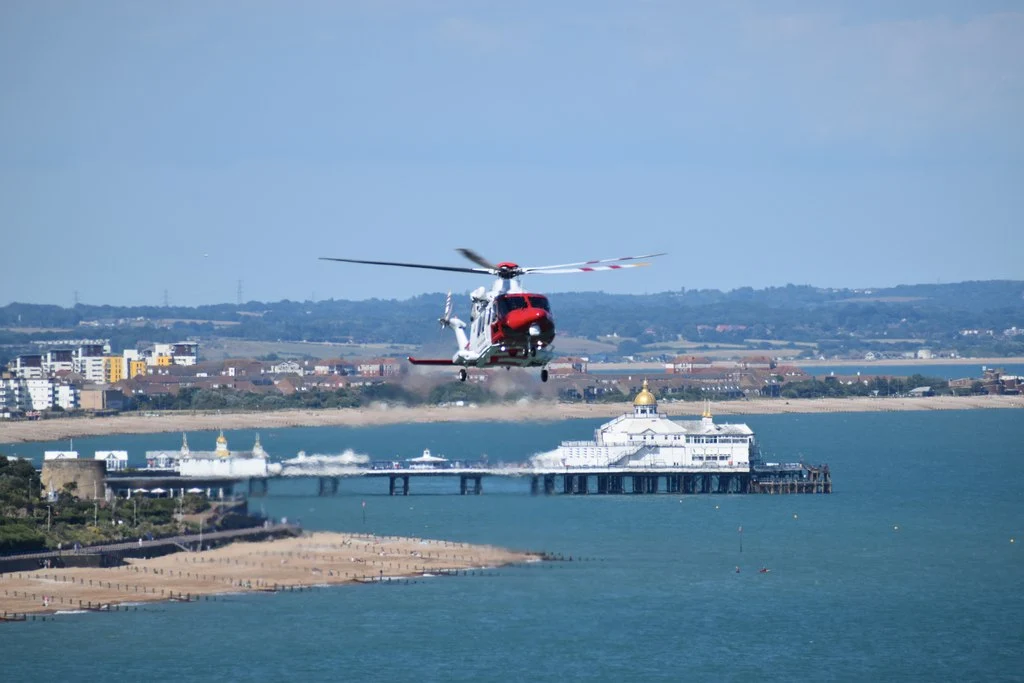
The agency also coordinates with lifeboat charities on complex jobs. In one April incident, an HM Coastguard rescue helicopter lowered a paramedic onto a cargo ship on fire off the English Channel, while the Salcombe lifeboat stood by and a Dutch warship offered support. The crewmember was airlifted to a hospital in Portsmouth after the vessel drifted into French waters and French authorities took over coordination.
.jpg)
Comparing Recent Coastguard Helicopter News Across the Fleet
Not every recent headline about coastguard helicopters involves a successful rescue. Looking at parallel stories about the same aircraft type gives a fuller picture of the risks these crews accept.
An MH-60 Jayhawk, the same model used in the Chefornak rescue, crashed during a routine training flight near Sitka, Alaska in June 2026. Rear Admiral Bob Little, commander of the Coast Guard’s Arctic District, said the crew survived with only minor injuries and thanked local fire and rescue teams for their swift response. A Coast Guard spokesperson quoted by the Anchorage Daily News called the crash “very concerning.”
Separately, a political dispute in Newport, Oregon shows how funding and basing decisions affect coastal communities. Oregon and Lincoln County sued the federal government after officials removed a rescue helicopter from Newport, arguing the move violated transparency laws. Newport’s mayor told a court that the coast is unpredictable and it is “not a matter of if the helicopter will be needed, but when.” A federal judge ordered the aircraft’s return in late November 2025.
These stories, alongside the successful Chefornak and English Channel missions, show that coastguard aviation programs face three separate pressures at once. Crews must fly demanding missions safely, aircraft must stay maintained and available, and agencies must justify basing decisions to the communities they protect.

Cross-Border Coordination Extends a Rescue’s Reach
Maritime emergencies rarely respect national borders, so coastguard agencies hand off cases as vessels drift between jurisdictions. The English Channel cargo ship fire showed this clearly. A Dutch warship stood by to help even though the case began under British coordination, and command shifted to French authorities once the vessel drifted into French waters.
This handoff process follows international rules set by the International Maritime Organization’s SAR Convention, which divides the world’s oceans into search and rescue regions. Each region has a lead agency, but neighboring countries commit to assist regardless of whose waters a casualty is in. Helicopters, being faster than ships, often reach a scene first and then coordinate with whichever nation formally leads the case.
This system depends on shared radio protocols and common distress frequencies. Every coastguard helicopter monitors channel 16, the international VHF distress frequency, so any crew nearby can respond even outside its usual coverage area.

Training Standards for Rescue Swimmers and Aircrews
Rescue swimmers train for years before they deploy on live missions. Candidates must pass swimming, diving, and medical certifications before joining an operational unit. The role traces back to a small group of retired Aviation Survival Technicians who founded a support association in 2010 to help active and retired swimmers and their families.
Pilots also complete airframe-specific courses. USCG pilots attend an airframe course at the Aviation Training Center in Mobile, Alabama, to qualify on the MH-60 Jayhawk, MH-65 Dolphin, HC-130 Hercules, or HC-144 Ocean Sentry, and they return once a year for a proficiency course. UK crews go through comparable recurrent training under Bristow’s contract with the Maritime and Coastguard Agency.
Winyah Bay incident on February 20, 2026 shows why radio training and communication equipment matter as much as flying skill. A Coast Guard Air Facility Charleston MH-65 Dolphin crew rescued a man and his dog after their sailing vessel ran aground near Winyah Bay, South Carolina. Lieutenant Josh Hamilton, a Coast Guard pilot, said afterward that “running aground can quickly become dangerous, especially near rocks and shifting conditions.”

Why Rescue Helicopters Carry Higher Operational Risk
Search and rescue flying differs sharply from scheduled airline service. Helicopters that fly emergency medical and rescue missions post a far higher accident rate than commercial airline flights, largely because they operate in poor weather and difficult terrain that fixed-wing aircraft avoid. Rescue crews accept this risk because no other aircraft can reach a hovering position over open water.
Pilot equipment reflects this risk. Modern rescue helicopter helmets include noise-cancelling technology, integrated radios, and in some cases night vision compatibility, all designed to protect aircrew flying in loud, low-visibility conditions. These features matter most during night hoists over rough seas, when a single miscommunication between pilot and swimmer can be dangerous.
Weather remains the biggest variable for any SAR mission. Fog, high winds, and icing can ground a helicopter entirely, which is why agencies keep lifeboats and rescue teams on standby as alternatives. Coordination between these different rescue assets, rather than any single aircraft, is what keeps response times short.

What Comes Next for Maritime Search and Rescue
HM Coastguard’s helicopter contract faces a transition in the coming years. The UK government’s UKSRAR26 programme plans to combine helicopter, fixed-wing, and drone capability to modernise search and rescue delivery, according to a House of Commons Library briefing published this year. Officials say the goal is to save more lives while controlling costs.
Response times remain a point of public debate. A 2023 internal Bristow document suggested the Sumburgh Airport (LSI) base’s night readiness could shift from 15 minutes to 60 minutes starting in October 2026, though the Maritime and Coastguard Agency said no final decision had been made. Communities near Stornoway Airport (SYY) and other island bases are watching the outcome closely, since remote locations depend heavily on fast helicopter response.
.jpg)
For now, the record shows these aircraft doing what they were built to do. From the Bering Sea to the English Channel, coastguard helicopter crews respond to hundreds of calls each year, often in weather that keeps every other aircraft grounded. Their crews’ willingness to fly into that weather remains the core of modern maritime rescue.