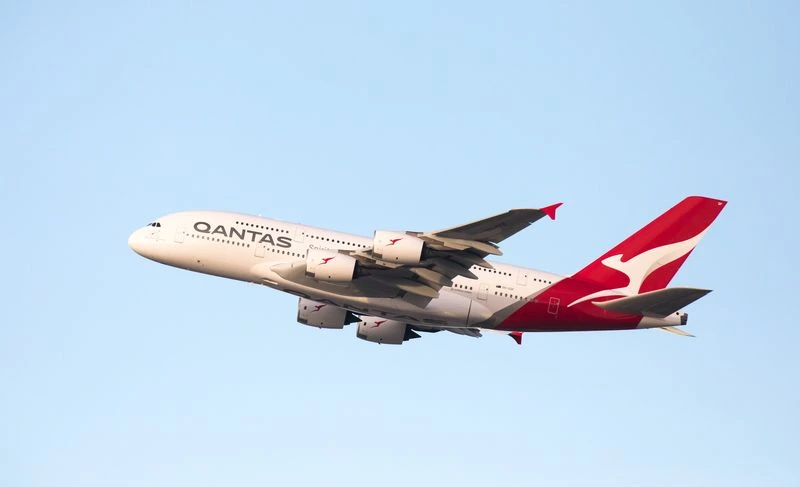
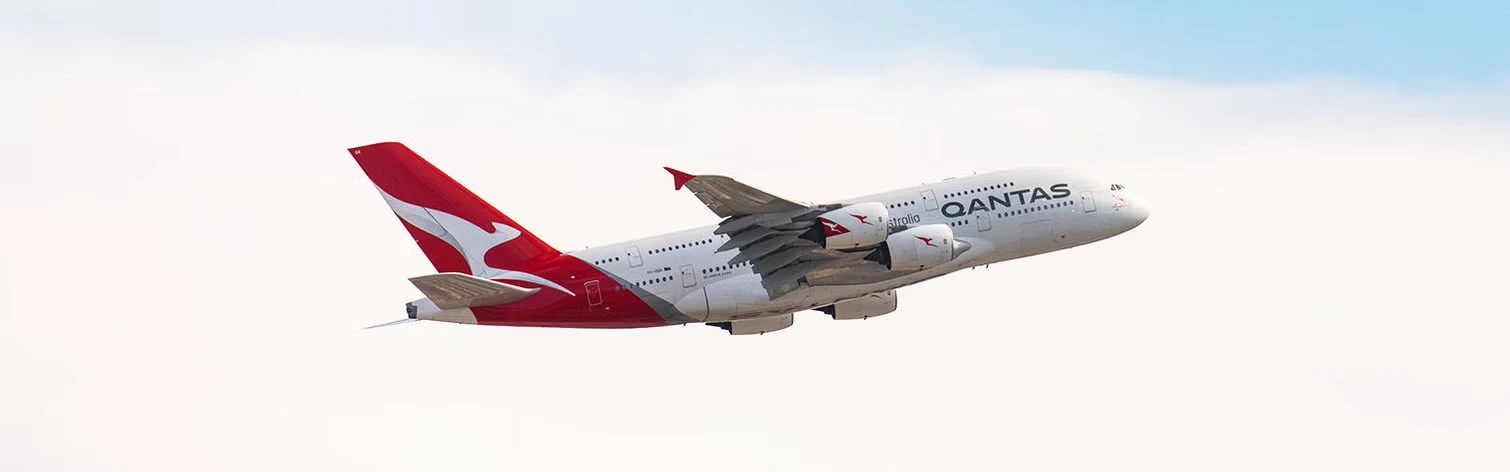
Qantas (QF) has cancelled several Airbus A380 flights between Australia and the United States after one of its superjumbos required an unscheduled engine change in the United Kingdom. The aircraft, registered VH-OQG, has remained on the ground at London Heathrow Airport (LHR) since July 3, according to flight-tracking data from Flightradar24.
A Qantas spokesperson confirmed the cause to Simple Flying on July 10. “One of our A380s required an unscheduled engine change in London after an issue was discovered last Friday.” The airline said a replacement engine was flown in from Los Angeles and was being fitted in London at the time of the statement. Qantas added that the aircraft was expected to return to service by Sunday, July 12, and that affected customers had already been moved onto alternative flights.
Second A380 Also Grounded Briefly Over Air Conditioning
The engine problem was not the only technical issue to hit the fleet in early July. Aviation tracker Analytic Flying reported on social media platform X that a separate Qantas A380, registered VH-OQH, was pulled from service on July 2 because of an air conditioning fault. That aircraft returned to flying the following day, limiting the disruption to a single rotation.
The two issues arrived in close succession and struck at a moment when the fleet already had reduced spare capacity. A third superjumbo, VH-OQI, has been undergoing scheduled maintenance in Dresden, Germany, since March, a period during which the aircraft was also named in a separate European wing-inspection directive covering both Qantas and Emirates A380s. With VH-OQI unavailable, Qantas needed nearly all of its nine remaining aircraft to stay serviceable to cover its published schedule.
Why A Single Grounded Jet Triggers Cancellations
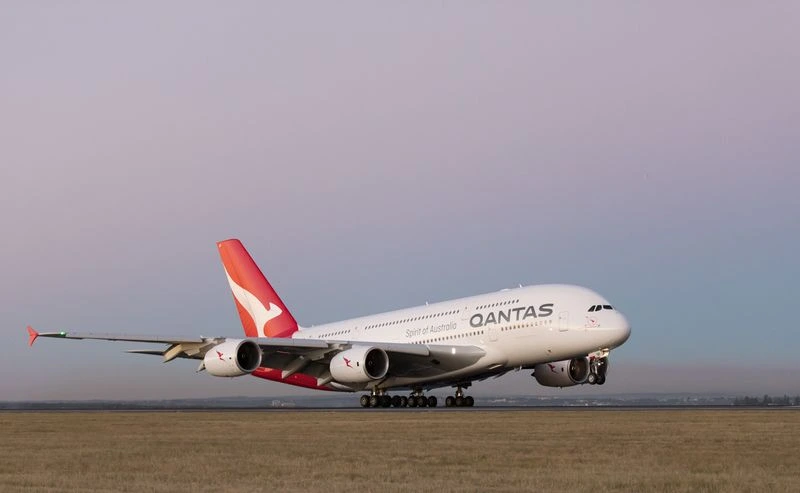
Qantas operates ten Airbus A380s in total. Depending on the day, the airline’s schedule requires either eight or nine of them to be active at once. That leaves little slack. Once VH-OQI’s maintenance absorbed one spare and VH-OQG’s engine fault absorbed another, the airline had almost no buffer left to cover an unexpected fault elsewhere in the fleet.
This tight margin explains why one grounded aircraft in London can ripple across flights departing from the opposite side of the world. Cirium, an aviation analytics firm, expected Qantas to operate 315 A380 flights in July if all aircraft remained serviceable. The cancellations linked to VH-OQG’s engine change represent a small fraction of that total, but they fell on some of the airline’s highest-profile long-haul routes.
Which Qantas A380 Flights Were Cancelled
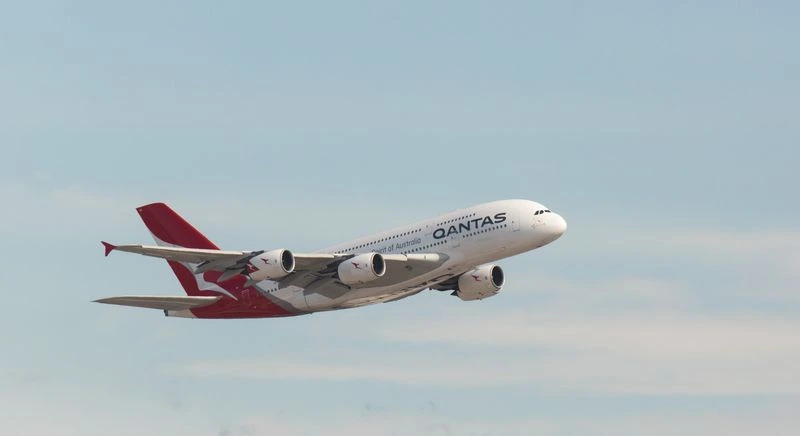
Flightradar24 data cited by Simple Flying shows the cancellations affecting three specific departures:
- Sydney (SYD) to Los Angeles International Airport (LAX) — July 3
- Sydney to LAX — July 8
- Melbourne Airport (MEL) to LAX — July 4
Qantas normally flies its A380 to Los Angeles daily from Sydney Kingsford Smith Airport, its primary long-haul hub. The Melbourne to Los Angeles pairing is thinner by comparison, with the A380 covering the route only twice a week; a Boeing 787-9 Dreamliner handles the remaining departures. Passengers booked on the cancelled services were rebooked onto other flights, the airline said, though it did not specify how many travellers were affected.
Where Else Qantas Deploys The A380
Los Angeles is one of several long-haul destinations that regularly see the Qantas superjumbo. From Sydney, the airline also flies the A380 daily to Dallas/Fort Worth International Airport (DFW), a route that matters commercially because DFW serves as a key hub for fellow oneworld alliance member American Airlines. Qantas additionally operates the A380 four times a week between Sydney and Johannesburg. None of the DFW or Johannesburg rotations were reported as disrupted by the London engine change.
A Fleet Under Growing Scrutiny
The engine change is the latest in a series of technical and regulatory issues to touch the Qantas A380 subfleet this year. In June, the European Union Aviation Safety Agency ordered urgent wing mid-spar inspections on 16 A380s worldwide after cracks were discovered during earlier checks, warning that the defect “could reduce the structural integrity of the wing.” Fifteen of the affected jets belonged to Emirates; the sixteenth was the Qantas aircraft already parked in Dresden, VH-OQI. A Qantas spokesperson said at the time that the aircraft was already in scheduled heavy maintenance and that there was no impact on flights as a result of that directive.
Reliability has otherwise been a point of pride for Qantas this year. The carrier was named the world’s most punctual major airline for June 2026 by aviation data firm OAG, posting an on-time performance score of 87.16% across more than 22,000 flights that month. That result places the July A380 disruption against a backdrop of an airline that has otherwise been improving its operational record, rather than one already struggling with widespread delays.
The A380 fleet’s long-term future is also in view. Qantas has set a retirement timeline that will see the superjumbo progressively leave service from around 2032, replaced by Airbus A350-1000 aircraft built for the airline’s Project Sunrise ultra-long-range flights. In the meantime, the current ten-aircraft subfleet remains central to Qantas’ premium long-haul network, which increases the operational stakes whenever an individual jet goes unserviceable.
Qantas Airbus A380 Fleet: Key Details
- Fleet size: ten Airbus A380-800 aircraft, delivered from 2008 onward
- Typical configuration: four classes, 485 total seats
- First class: 14 suites, arranged three-abreast in a 1-1-1 layout at the front of the lower deck
- Economy: 341 seats on the lower deck, ten across per row
- Business class: 70 flatbed seats on the upper deck, in a staggered 1-2-1 layout
- Premium economy: 60 recliner seats on the rear upper deck, in a 2-3-2 layout
All in All
Qantas said VH-OQG was expected to resume flying on July 12, once the replacement engine sourced from Los Angeles completed fitting and testing in London. If that timeline holds, the airline’s A380 schedule should return to its full nine or ten-aircraft rotation shortly afterward. The episode nonetheless illustrates a structural feature of operating a small, ageing widebody fleet: with limited spare aircraft and heavy maintenance already absorbing one jet in Dresden, a single unscheduled fault thousands of kilometres away in London was enough to cancel services on two continents.