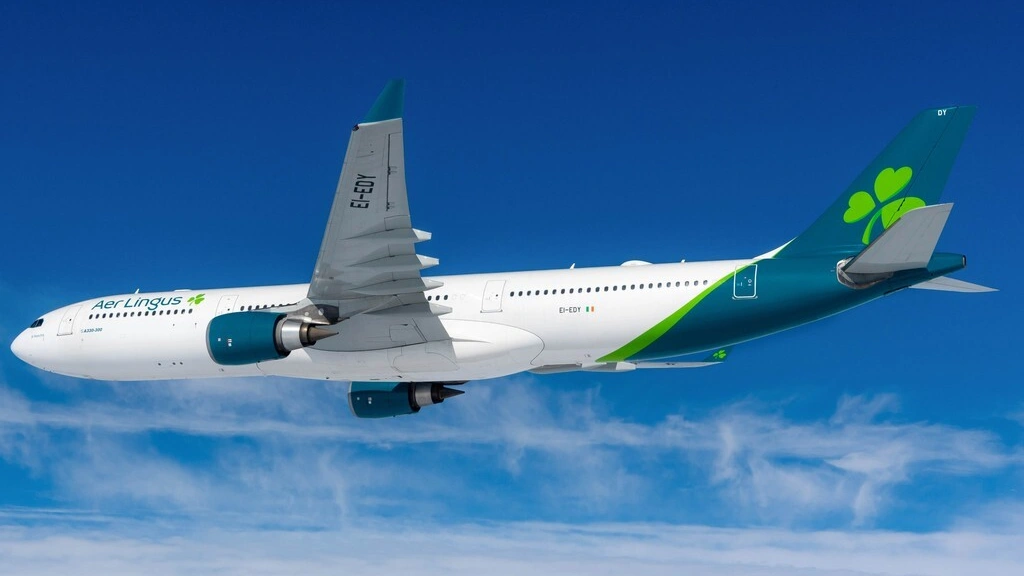
Every single flight attendant on board Aer Lingus (EI) Flight EI-53 had to abandon normal cabin duties to physically restrain one passenger on June 19, 2026. The aircraft — an Airbus A330 operated from Dublin Airport (DUB) to Seattle-Tacoma International Airport (SEA) — was cruising at 36,000 feet over Greenland when the situation turned critical. The restraints used to secure the passenger to his seat were pushed to the point of failure, yet the pilots elected to continue to Seattle rather than divert.
New court records filed by the FBI in a Seattle federal district court now reveal the sequence of events in granular detail. The passenger, identified as James Bradley Noble, 34, sat in seat 14B. He faces a charge of interference with flight crew members and attendants — a federal felony that carries a maximum penalty of 20 years in prison and a fine of up to $250,000. Noble was charged on June 20, one day after landing, and was remanded in custody at prosecutors’ request.
Who Is James Bradley Noble?
According to the FBI affidavit filed in Seattle’s U.S. District Court, Noble boarded the nine-hour transatlantic flight and began drinking alcohol after departure. His behavior escalated in stages. First, he directed harassing behavior toward the female passenger seated beside him. He made physical gestures that simulated forcing pills into her mouth. He also spilled soda on his seatmate. She reported the harassment to the cabin crew, who moved her to a different seat.
Noble was not deterred. Court documents state that he left a full bottle of wine on his neighbor’s seat, stumbled through the aisle, and was described by witnesses as visibly intoxicated. Roughly halfway through the approximately ten-hour flight, Noble walked to the mid-cabin galley and approached a female flight attendant from behind. The FBI complaint states that he aggressively wrapped his arms around her, locking his hands together so she could not escape. A senior crew member intervened and escorted Noble back to his seat.
What followed was the moment the situation escalated from disruptive to dangerous. The female flight attendant held Noble down from the row behind him for approximately twenty minutes. During that period, Noble violently shook the seat in front of him, forcing the crew to move those passengers to other seats as well. He then turned to the crew member restraining him and, according to the complaint, stated: “I’m going to f** you up.”* The pilots were informed of the escalating situation, and the cabin crew retrieved a restraint kit.
The Restraint Took All Seven Crew Members
What the FBI affidavit describes next is extraordinary by any standard of in-flight crew incidents. All seven flight attendants on duty converged on Noble simultaneously to secure him with handcuffs and seat straps. Seven crew members for one passenger — the full complement of cabin staff on the aircraft — abandoning every other responsibility to manage a single threat. The operation placed every passenger on board without active cabin service for a sustained period.
Noble resisted even after he was handcuffed and secured. The FBI complaint states that Noble “began to violently resist his restraints to the point that the restraints began to fail”. The crew held their positions. All seven flight attendants were required to continuously restrain and monitor Noble for nearly two hours. The aircraft was still flying over Greenland or Canada at this point, far from any suitable diversion airport.
After approximately two hours, Noble began to calm down. With approximately 90 minutes remaining before arrival in Seattle, some flight attendants were finally able to return to their regular duties, Paddle Your Own Kanoo reported. The complaint specifically notes that “due to Noble’s behavior, cabin service was ceased and flight attendants were unable to perform their primary duties or take necessary breaks.” Even as the Airbus A330 entered U.S. airspace, the flight deck crew decided to press on to Seattle rather than divert to a closer airport along the route.

The Crew Did Not Divert as the Plane was Flying over Greenland
The decision not to divert is one of the most significant operational details in this incident. When the violence began, Flight EI-53 was cruising over Greenland — one of the most remote stretches of any transatlantic route. At that altitude and location, there were extremely limited opportunities to divert the aircraft even if the crew had chosen to do so.
Greenland hosts only a small number of airports capable of handling large commercial aircraft. Kangerlussuaq Airport (SFJ) is the primary option for transatlantic diversions mid-crossing, but the combination of remote location, limited ground support, and the substantial weight of fuel a transatlantic aircraft would still be carrying at that point in a flight to Seattle all factor into such decisions. By the time Noble’s behavior had escalated fully, the calculus shifted: with the crew managing the situation and Noble physically restrained, pressing on to a properly equipped destination may have been assessed as the safer option for all 200-plus passengers on board.
FOX 13 Seattle reported that the struggle lasted roughly two hours before Noble exhausted himself and stopped fighting. The incident began over Greenland or Canada and ended roughly an hour before landing — meaning the crisis occupied most of the aircraft’s time over North America. The A330 landed safely at Seattle-Tacoma International Airport, where Port of Seattle Police were waiting. The FBI then assumed jurisdiction, as it has authority over crimes committed aboard commercial aircraft traveling to the United States.
Aer Lingus’s Airbus A330 Transatlantic Fleet
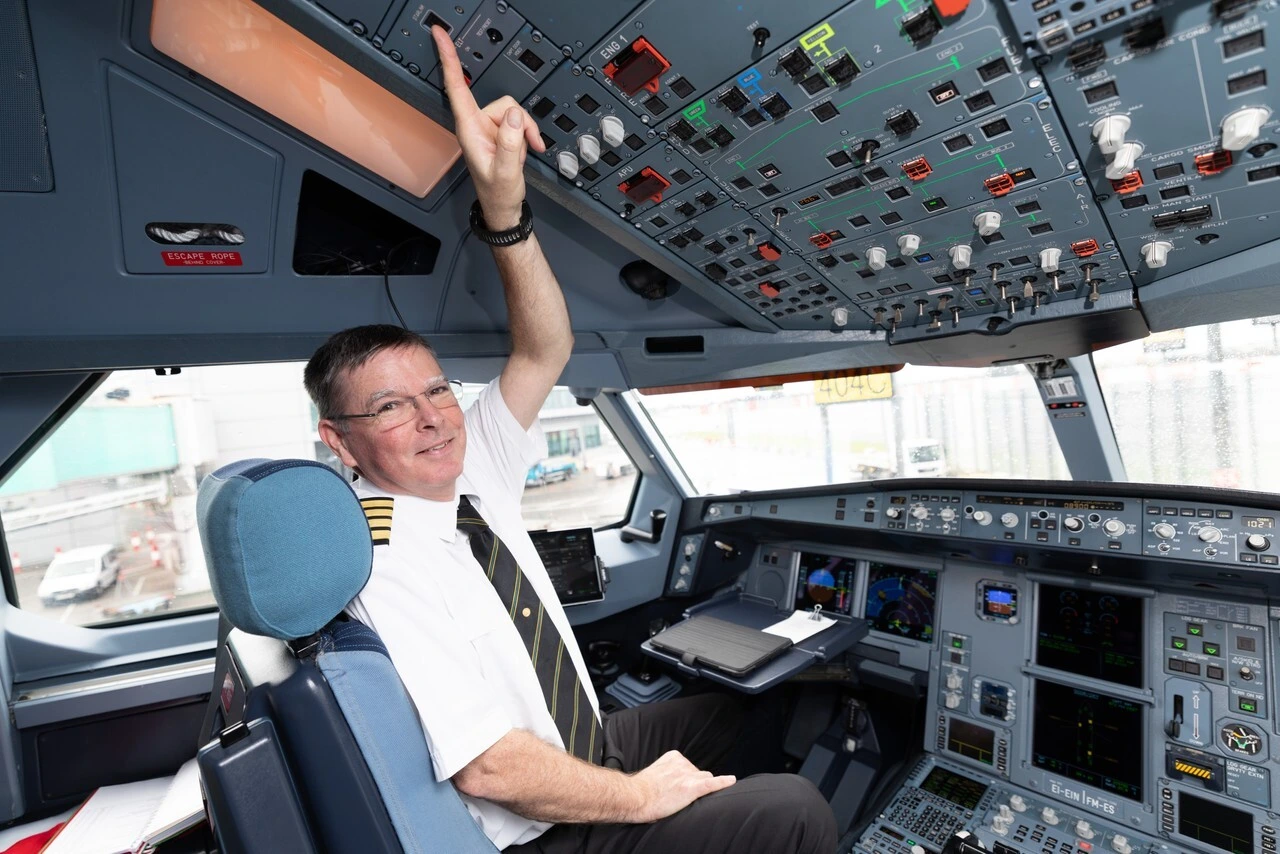
The aircraft involved in Flight EI-53 is an Airbus A330, the twin-engine widebody that forms the backbone of Aer Lingus’s transatlantic operation. Aer Lingus operates both the A330-200 and A330-300 variants on long-haul routes. The airline has used the A330 on transatlantic services since 1994, when it launched direct flights between Dublin and the United States. Below are the key features of the type as operated by Aer Lingus:
- Seating: Configured in a two-class layout with Business and Economy cabins on transatlantic services
- Business class: Lie-flat seats on A330 variants configured for long-haul routes
- In-flight connectivity: Wi-Fi available on the Airbus A330 on select services, part of Aer Lingus’s phased connectivity rollout
- Range: Sufficient to operate Dublin to Seattle non-stop, a route of approximately 4,800 miles (7,725 km)
- Cabin crew complement: Seven flight attendants on EI-53, consistent with a full transatlantic A330 crew
- Pre-clearance: Passengers on Aer Lingus transatlantic flights from Dublin complete U.S. Customs and Border Protection pre-clearance at Dublin Airport before departure, meaning they arrive in the United States as domestic arrivals
The A330’s cabin layout is relevant to understanding the incident. A mid-cabin galley is a standard feature on long-haul A330 configurations. Noble walked to this galley area mid-flight and approached a flight attendant from behind, which is the point at which physical contact was first initiated.
Noble’s is Set for a Preliminary Hearing Next Month
Noble made his initial appearance in U.S. District Court in Seattle on Monday, June 23, 2026. U.S. Magistrate Judge Brian A. Tsuchida ruled that the threshold for a detention hearing had been met and ordered Noble held in custody, following a request from federal prosecutors who argued he represented a flight risk. Noble’s detention hearing was scheduled for June 30, 2026, with a preliminary hearing set for July 6.
Noble is represented by public defender Colleen Fitzharris. Neither Aer Lingus nor Fitzharris immediately responded to media requests for comment following the charges. The charge against Noble — interference with flight crew members and attendants under U.S. federal law — carries a maximum sentence of 20 years imprisonment and a fine of up to $250,000. However, aviation law observers note that individuals convicted of this offense in cases without physical injury to crew typically receive sentences closer to time already served. Noble may also face a financial reparations bill from Aer Lingus covering the operational costs generated by his behavior.
People magazine, citing the criminal complaint, reported the sequence of events with additional detail not present in other coverage. The complaint specifically alleges that Noble made physical gestures toward his seatmate resembling a closed fist, consistent with simulating a strike rather than merely verbal aggression. This detail, alongside the sustained physical resistance after restraint, is what prosecutors are expected to emphasize in establishing the severity of the offense.
The FAA’s Zero-Tolerance Framework
The legal process Noble now faces is the direct result of regulatory and prosecutorial structures built around air rage incidents. The FAA adopted a zero-tolerance policy toward unruly passenger behavior on January 13, 2021, following a surge in reported incidents during the post-pandemic travel restart. Under this policy, the FAA pursues legal enforcement action — rather than warnings or counseling — against any passenger who assaults, threatens, intimidates, or interferes with airline crew members. The FAA can propose civil penalties of up to $43,658 per violation, with a single incident capable of generating multiple violations.
Critically, cases involving physical interference with crew are referred to the FBI for potential criminal prosecution. That is what occurred with Noble: Seattle police arrested him on landing, and the investigation was immediately transferred to federal jurisdiction. The FBI has jurisdiction over crimes committed aboard commercial aircraft traveling to the United States. As of mid-2026, there have been 754 unruly passenger reports referred to the FAA in 2026 alone, though the FAA’s all-time peak was 5,973 reports in 2021, many of which related to face mask disputes.
According to IATA’s June 2026 Unruly Passengers Fact Sheet, the global rate of unruly passenger incidents has been declining. Based on 93,107 incident reports from more than 140 operators worldwide, the rate improved from one incident every 307 flights in 2024 to one incident every 355 flights in 2025. However, IATA specifically flagged that alcohol and passenger intoxication remain among the most frequently reported categories even as total volumes decline. The Noble case sits precisely within that subset. IATA research indicates alcohol is identified as a leading trigger in up to 40% of air rage incidents globally.
The FAA regulation specifically prohibits airlines from knowingly allowing visibly intoxicated passengers to board and prohibits passengers from consuming alcohol on board that has not been served by a flight attendant. How Noble consumed alcohol — whether solely from crew service or from bottles brought on board — is not addressed in the publicly available court documents.
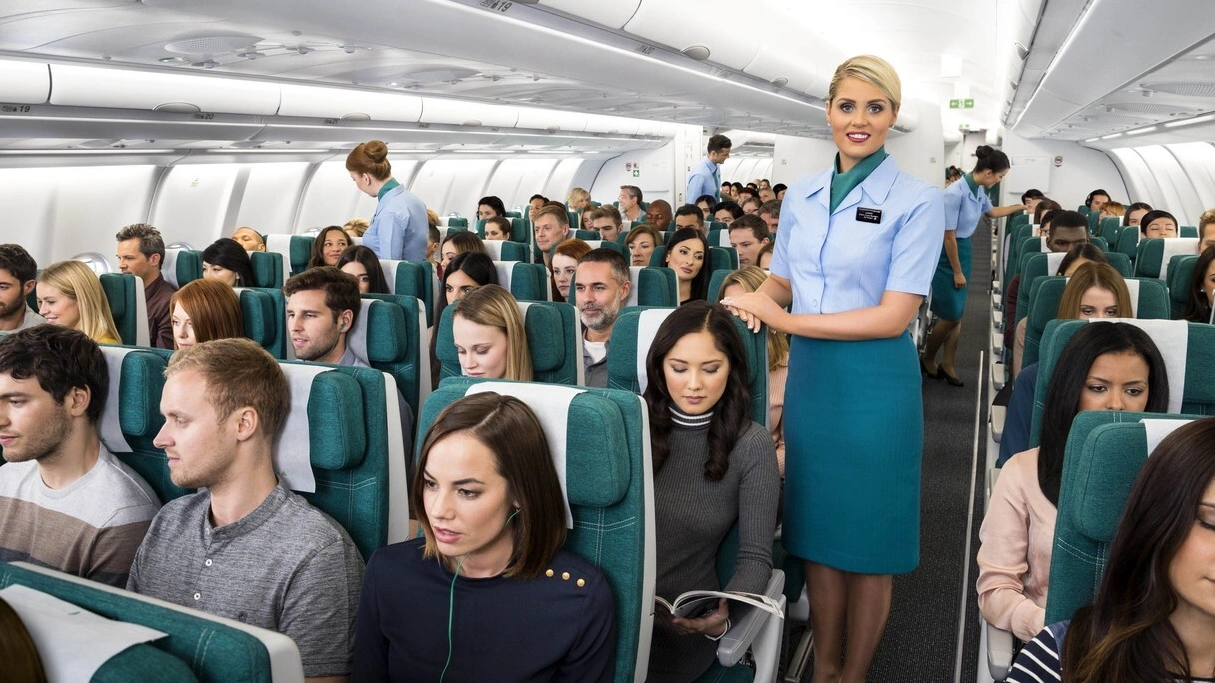
Broader Pattern of Recent Air Rage Incidents on U.S.-Bound Flights
The EI-53 incident is not unique in its severity, though it is unusual in requiring the full cabin crew complement for restraint. Recent months have produced a pattern of serious onboard confrontations on flights to the United States, several of which resulted in federal charges.
An American Airlines flight from Charlotte to Philadelphia devolved into disorder just days before the EI-53 incident when an unidentified passenger allegedly bit another traveler and tried to fight multiple people, prompting a law enforcement response on landing. In May 2026, a woman exhibiting what authorities described as erratic behavior aboard an American flight from Palm Beach to Charlotte was arrested after allegedly attacking an 82-year-old fellow passenger, causing what were described as injuries to his head and brain. These incidents follow a pattern recognized at the regulatory level: serious physical altercations continue to occur despite deterrent frameworks.
In October 2025, a Lufthansa Boeing 747 flight from Chicago O’Hare International Airport to Frankfurt was diverted to Boston Logan International Airport after a passenger attacked two teenage seatmates with a metal fork, according to Aviospace’s earlier reporting. The Lufthansa case, like the Aer Lingus EI-53 case, involved a transatlantic route and a physical attack requiring crew intervention. The difference is that the Lufthansa crew diverted, while the Aer Lingus crew on EI-53 continued to Seattle — a decision that reflects both the geography of the crisis and the crew’s capacity to manage the situation.