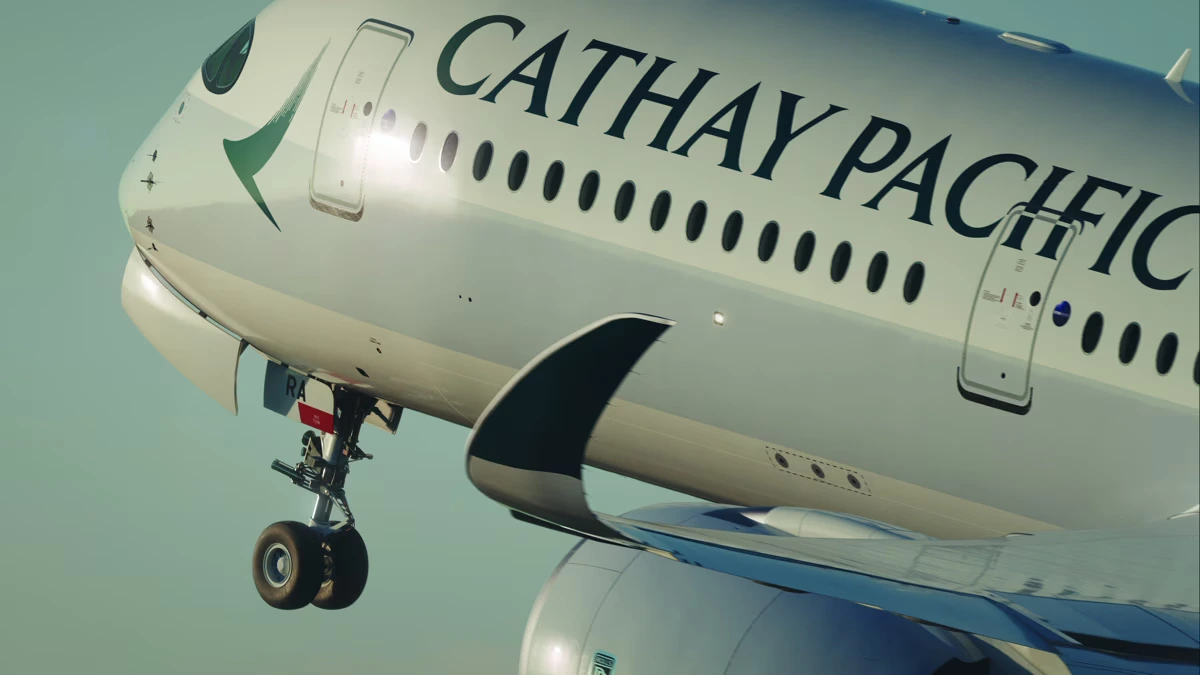
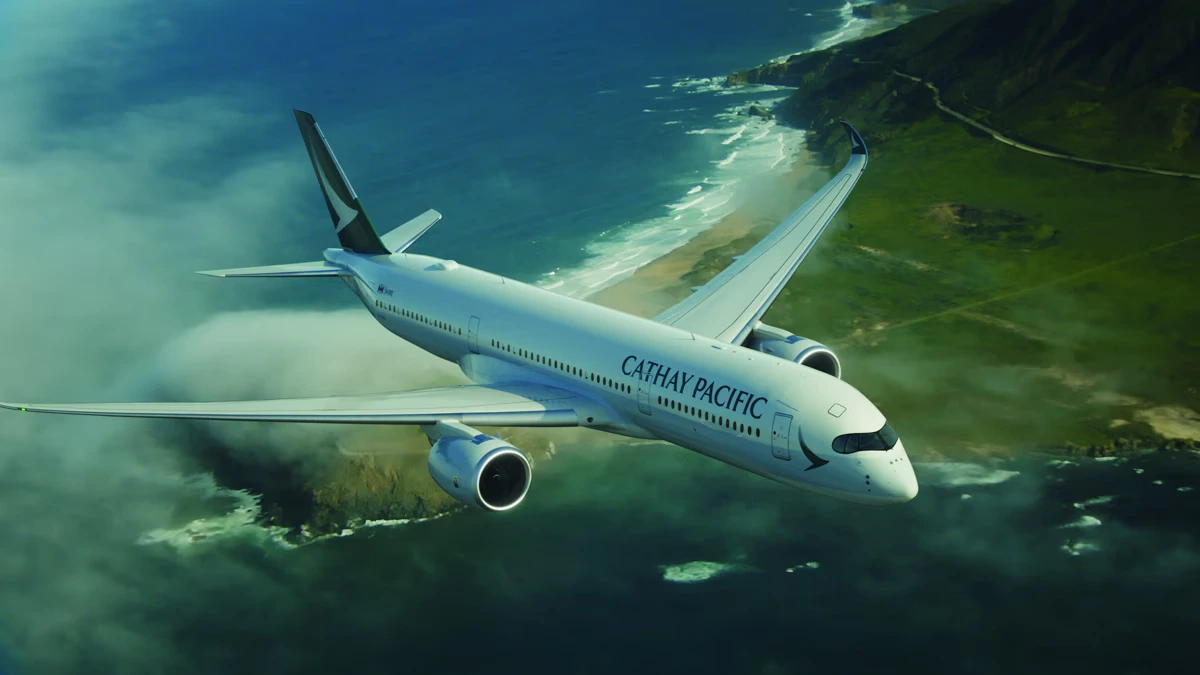
Cathay Pacific (CX) will reduce fuel surcharges by approximately 15 percent on all commercial and award tickets booked from 1 July 2026, the Hong Kong flag carrier announced on 24 June 2026. The reduction, published on the airline’s official fuel surcharge page, is a direct response to easing oil prices following developments in the Middle East conflict that drove Cathay’s surcharges to historic highs in March 2026. The carrier confirmed it will continue its temporary fortnightly review mechanism to stay responsive to jet fuel price movements.
This is the second reduction in surcharges since the onset of the conflict. The first cut, effective 16 May 2026, already trimmed long-haul fees from HK$1,560 to HK$1,362. The July revision takes those same fees further down to HK$1,164. Despite back-to-back reductions, surcharges remain roughly double the levels that prevailed before the conflict began, and Cathay’s flights to Dubai International Airport (DXB) and King Khalid International Airport, Riyadh (RUH) remain suspended through 31 August 2026, citing softened demand and residual safety concerns.
The New Surcharge Rates From 1 July 2026 and What Passengers Will Pay
According to Cathay Pacific’s official surcharge table, the revised per-sector rates effective 1 July 2026 are as follows:
| Route Category | Until 30 June 2026 | From 1 July 2026 | Change |
|---|---|---|---|
| Singapore, North Asia, China | US$43.50 | US$37.20 | -14% |
| India and South Asia | US$81.20 | US$69.40 | -15% |
| Australia, New Zealand, USA, Canada, Europe, Middle East, Africa | US$174.60 | US$149.20 | -15% |
Flights between Hong Kong International Airport (HKG) and mainland China are exempt from the revision and remain unchanged. Mainland-origin departures continue at RMB135, and Hong Kong-origin departures to mainland China remain at HK$165.
Cathay Pacific applies surcharges on a per-sector basis, regardless of cabin class. This means passengers in First, Business, Premium Economy, and Economy all pay the same surcharge amount for the same sector. A round-trip between Singapore Changi Airport (SIN) and HKG, for example, will carry US$74.40 in total fuel surcharges from 1 July (two sectors at US$37.20 each), down from US$87 previously. A round-trip between SIN and San Francisco International Airport (SFO) via Hong Kong will carry US$372.80 in total surcharges (two sectors at US$37.20 and two at US$149.20), compared to US$436.20 previously.
Critically, the booking date determines the surcharge, not the travel date. Passengers who book from 1 July 2026 lock in the new, lower surcharge — even if their travel date is months away. Conversely, those who booked before 1 July pay the older, higher rate and will not receive a refund if rates fall. If the net saving after rebooking fees is positive, passengers with existing bookings may find it worthwhile to cancel and rebook under the new rates.

How The Middle East Conflict Drove Surcharges to Record Levels
To understand the July 2026 reduction, it is necessary to revisit what happened in March 2026. On 28 February 2026, the United States and Israel launched coordinated military strikes on Iran. Cathay Pacific immediately cancelled all flights to Dubai and Riyadh as countries across the Middle East shut their airspace and major airports, including Dubai’s, suspended operations.
The fuel cost impact was immediate and severe. Cathay Pacific CEO Ronald Lam told a press conference on 11 March 2026 that jet fuel costs had doubled since the conflict began. Lam stated, “In March, like ever since the Middle East episode began, the costs of our fuel already doubled.” On 12 March 2026, the airline announced a formal surcharge adjustment. The carrier’s statement read: “The price of jet fuel has approximately doubled since March amid the latest developments in the Middle East.”
Effective 18 March 2026, Cathay doubled fuel surcharges on all routes. Long-haul surcharges surged from HK$569 to HK$1,164 per sector, Mainly Miles reported. Short-haul surcharges went from HK$142 to HK$290. A subsequent 34 percent increase on 27 March 2026 pushed long-haul surcharges to HK$1,560. Cathay’s hedging position, which covers approximately 30 percent of the crude oil component but does not extend to the refinery component, left it significantly exposed to the price spike.
Cathay was not alone. Hong Kong Airlines raised surcharges by 35 percent on long-haul routes. Qantas raised international fares by around 5 percent. Thai Airways increased overall fares by 10–15 percent. Air India phased in fuel surcharges across domestic and international routes from 12 March 2026. The industry-wide response confirmed that the conflict had generated the most acute fuel cost shock in aviation since the 2003 Iraq War period.
The Surcharge Timeline
The sequence of surcharge changes at Cathay Pacific since February 2026 illustrates both the speed and the severity of the fuel cost shock, and the gradual, cautious unwind now underway:
| Date | Long-Haul Surcharge (HK$) | Event |
|---|---|---|
| Pre-conflict (before 18 Mar 2026) | HK$569 | Baseline |
| 18 March 2026 | HK$1,164 | Conflict doubles surcharges |
| 27 March 2026 | HK$1,560 | Second hike: additional 34% increase |
| 16 May 2026 | HK$1,362 | First reduction: tensions ease |
| 1 July 2026 | HK$1,164 | Second reduction: further 14.5% cut |
The July 2026 rate of HK$1,164 technically matches the level set on 18 March 2026 — the first day of elevated surcharges. However, it remains more than double the pre-conflict level of HK$569. As noted by the South China Morning Post, passengers departing from HKG on long-haul routes will pay HK$1,164 (approximately US$148.48) per sector from 1 July — down 14.5 percent from the previous HK$1,362. The Standard confirmed that South Asia and medium-haul surcharges will also fall from HK$633 to HK$541.
What This Means for Asia Miles Award Bookings
Fuel surcharges at Cathay Pacific apply equally to paid and award tickets. Asia Miles members booking Cathay Pacific redemptions pay the prevailing surcharge in full, which means the July reduction directly lowers the cash outlay on award bookings. Cathay Pacific devalued the Asia Miles programme in May 2026, increasing mileage requirements on selected awards by 1,000 to 4,000 Asia Miles.
The current Asia Miles award chart for Cathay Pacific flights is structured by distance band and cabin class:
| Distance (miles) | Economy (Y) | Premium Economy (PY) | Business (J) | First (F) |
|---|---|---|---|---|
| 1–750 | 7,000 | 11,000 | 16,000 | 25,000 |
| 751–2,750 (Type 1) | 9,000 | 18,000 | 27,000 | 43,000 |
| 751–2,750 (Type 2) | 13,000 | 23,000 | 33,000 | 50,000 |
| 2,751–5,000 | 20,000 | 39,000 | 60,000 | 90,000 |
| 5,001–7,500 | 27,000 | 52,000 | 91,000 | 125,000 |
| 7,501+ | 38,000 | 78,000 | 119,000 | 160,000 |
Type 1 applies to routes to/from China, Singapore, Malaysia, and South Korea. Type 2 applies to routes to/from India, Indonesia, and Japan.
Asia Miles still offers lower mileage redemption rates than KrisFlyer on several routes from Singapore. A round-trip Business Class redemption from SIN to Hong Kong costs 54,000 Asia Miles versus 71,000 KrisFlyer miles. Brussels, Frankfurt, Milan, and Zurich cost 182,000 Asia Miles each versus 217,000 KrisFlyer miles for the same routing.
However, passengers should note that Singapore Airlines (SQ) does not impose fuel surcharges on its award tickets, whereas Cathay passes surcharges through in full. The cash-versus-miles comparison must account for this difference.
Additionally, HeyMax users in Singapore can benefit from a 20% Asia Miles transfer bonus until 14 July 2026, capped at 6,000 bonus miles. The promotion delivers 1.2 Asia Miles per Max Mile transferred (up from the standard 1:1 ratio), with a minimum transfer of 1,000 Max Miles required. Registration is required at Cathay’s dedicated portal. Bonus miles from both Cathay and HeyMax will be credited by 30 September 2026.