12 A350-1000ULRs, 22-Hour Flights, 238 Seats: Qantas Unveils Project Sunrise Launch Timeline

Qantas Airways (QF) will launch the world’s first non-stop commercial flights between Sydney Kingsford Smith Airport (SYD) and London Heathrow Airport (LHR) in October 2027. The announcement, made on June 17, 2026, positions the Sydney–London route as the longest scheduled commercial flight in aviation history, with a flight time of up to 22 hours covering approximately 17,015 kilometres. The service forms the centrepiece of the airline’s “Project Sunrise” programme, which aims to connect Australia’s east coast directly with major global cities.

The Australian flag carrier unveiled its first Airbus A350-1000ULR (Ultra Long Range) aircraft in full Qantas livery at Airbus’ manufacturing facility in Toulouse-Blagnac Airport (TLS), France. The aircraft — the only type capable of sustaining ultra-long-haul flights of this range — was purpose-built for Qantas and features a specially modified fuel system. Tickets for the Sydney–London service will go on sale in February 2027, with Sydney–New York John F. Kennedy International Airport (JFK) confirmed as the next destination to follow later in the same year.
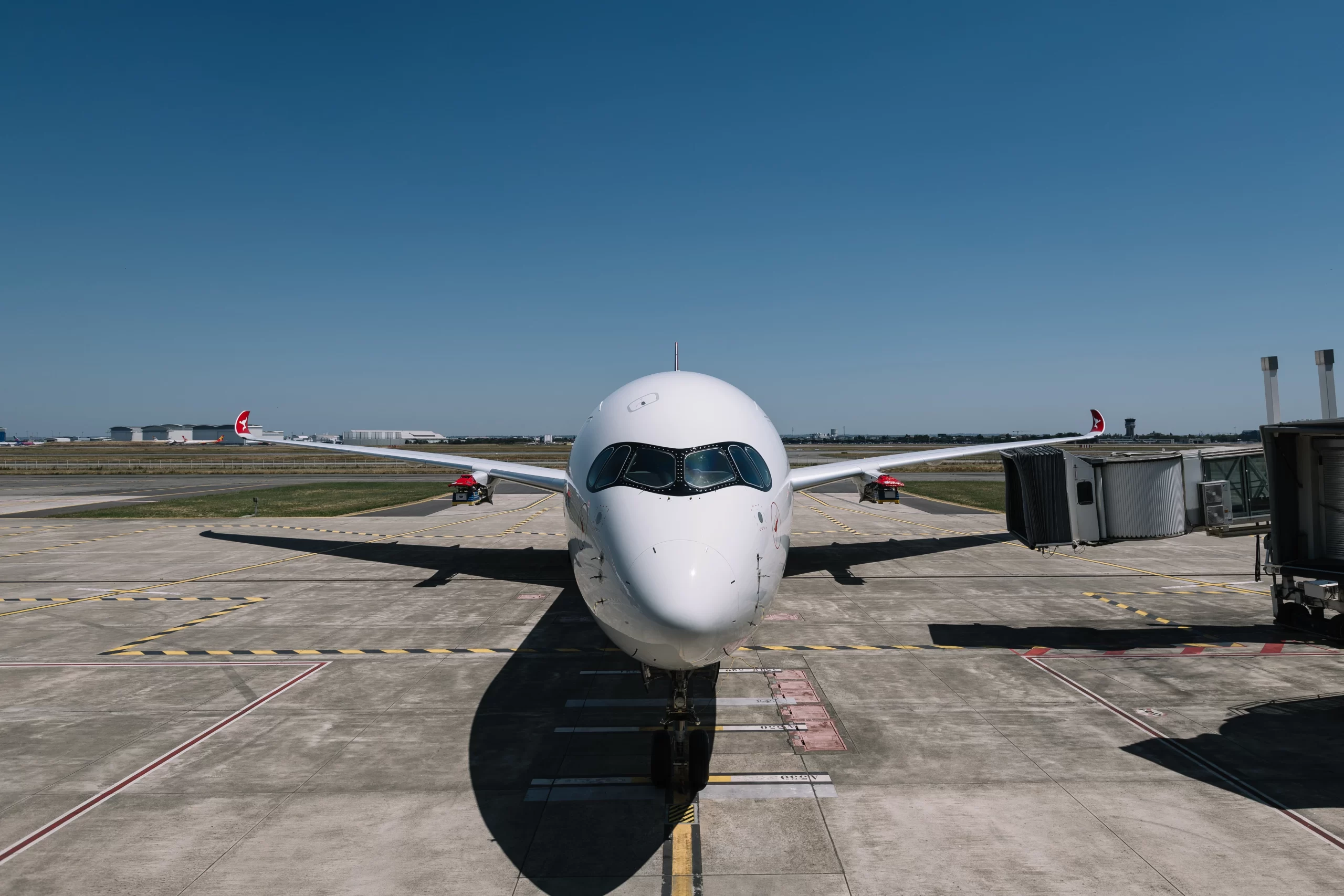
Photo: Qantas

Qantas Confirms London As The First Project Sunrise Route

Qantas announced the launch of the world’s first non-stop service between Sydney and London in October 2027, fulfilling a core objective of its “Project Sunrise.” The roughly 20-hour daily flight will use custom-ordered Airbus A350-1000ULR aircraft, designed for ultra-long-haul travel and equipped to help mitigate jetlag.

The route will immediately become the world’s longest scheduled commercial flight, at up to 22 hours. At a distance of 10,573 miles (17,015 km), the Sydney–London flight will leapfrog Singapore Airlines’ Singapore Changi Airport (SIN) to Newark Liberty International Airport (EWR) non-stop service, which is blocked at almost 19 hours.

Qantas Group CEO Vanessa Hudson revealed the record-breaking non-stop route will begin in time for the IATA 2027–2028 Winter Season. Hudson stated that Sydney–New York will launch towards the end of 2027, with a confirmed date to be announced early next year.

Qantas Group CEO Vanessa Hudson commented on the milestone in the official press release:

“Since we first flew the Kangaroo Route in 1947, where we stopped seven times on the way to London, every generation of aircraft has taken a stop out of the journey. Today, we’re taking out the last one.”

Hudson also addressed the broader passenger experience, saying that elimating the stopover “saves customers up to four hours of travel time”:

This aircraft has been designed from the ground up for ultra long-haul travel, with a cabin built around science and combatting jetlag, with an onboard experience purpose-built for the length of the journey.”
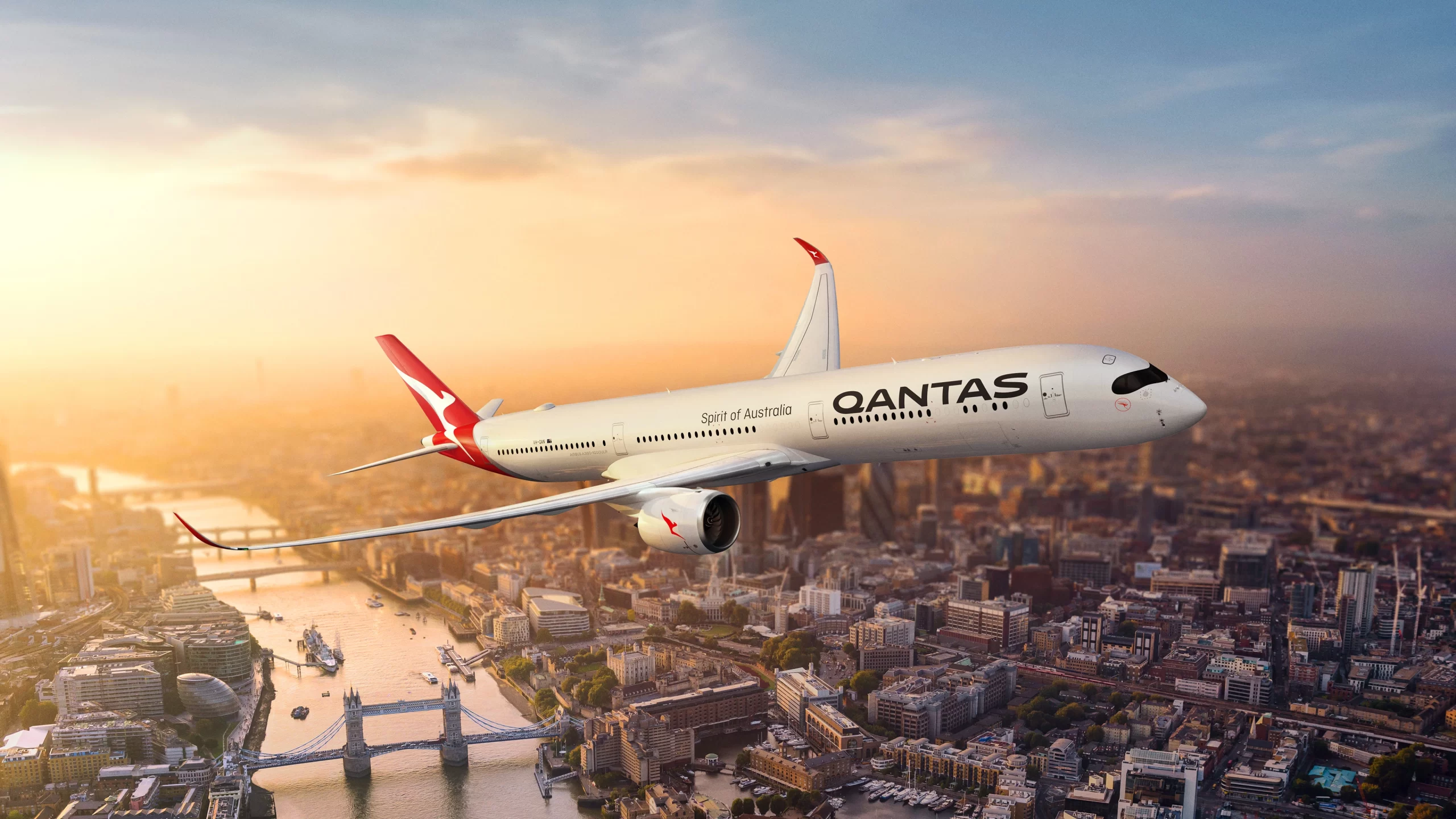
Photo: Qantas

The Kangaroo Route: From Four Days To 22 Hours

Qantas has flown from Sydney to London since 1947. In its early years, the flight gained the nickname ‘The Kangaroo Route’ due to the large number of stopovers, or hops, needed to fly between Australia and the UK.

When the original Kangaroo Route launched, it took four days with seven stops in Darwin, Singapore, Calcutta, Karachi, Cairo, Castel Benito, and Rome on the way to the UK. Each stop reflected the range limitations of aircraft of the era.

The name “Project Sunrise” carries historical significance. During the Second World War, after the fall of Singapore, Qantas operated Catalina flying boats from Western Australia to Sri Lanka to connect with onward flights to London. Those non-stop flights, carrying just three passengers and 70 kg of essential mail, lasted 33 hours — during which passengers and crew saw the sun rise twice.

Non-stop flights from Perth International Airport (PER) to London Heathrow commenced in March 2018 with Boeing 787s, making the Kangaroo Route a non-stop route for the first time and connecting Australia and Europe via a non-stop route for the very first time. The October 2027 Sydney–London service now extends that milestone further, bringing non-stop service to Australia’s most populated city.
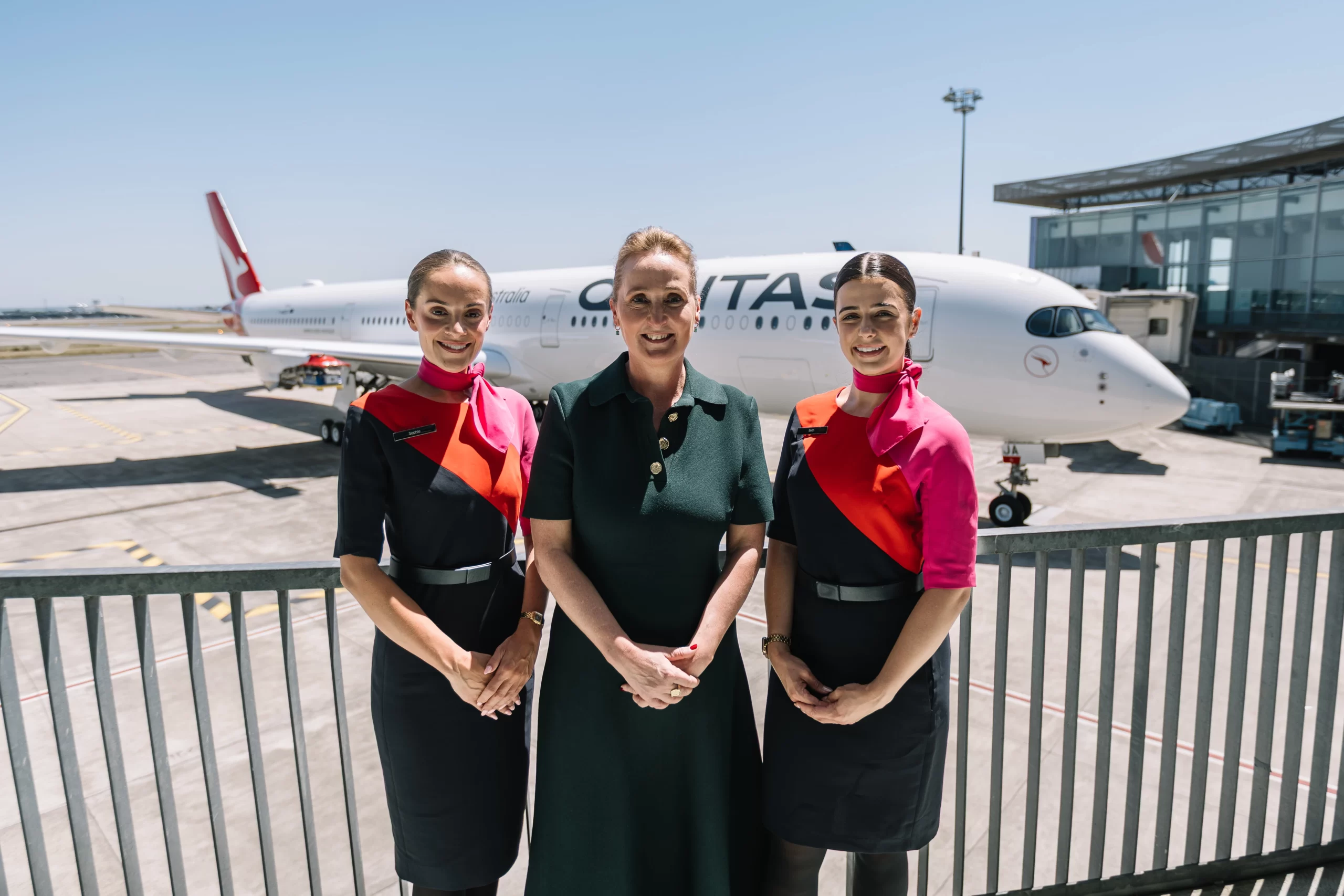
Photo: Qantas

The Airbus A350-1000ULR: Built Exclusively For Project Sunrise

The A350-1000ULR is not a standard aircraft. Airbus developed this variant exclusively to meet Qantas’ requirements for Project Sunrise, making it the only commercial aircraft currently capable of sustaining 22-hour flights without a fuel stop.

Airbus modified its A350-1000 to enable the ultra-long-haul travel Qantas requires for Project Sunrise. The most significant modification is a new rear centre fuel tank, which brings total fuel capacity to 130,700 kilograms — 6,000 kilograms more than the standard A350-1000. Combined with aerodynamic improvements, including taller wingtips that reduce drag and improve fuel efficiency, the ULR is expected to exceed a range of 18,000 kilometres.

The ULR designation refers to a specially modified version of the standard A350-1000, fitted with an additional 20,000-litre rear centre fuel tank that extends operational range to enable flights of up to 22 hours.

Airbus developed the A350-1000ULR to extend the base A350-1000 model’s range by 1,000 nautical miles (1,852 km) by adding the rear centre tank. This extra range puts both Sydney–London and Sydney–New York within safe operating limits.

The first aircraft, named Vega, will be delivered in April 2027. Vega will also reuse the registration VH-OJA — the same registration carried by Qantas’ first Boeing 747 in 1971, a nod to the airline’s history.

According to the Airbus newsroom, the first A350-1000ULR completed its maiden test flight from Toulouse on June 2, 2026, reaching an altitude exceeding 41,000 feet and flying for three hours and 43 minutes.

Photo: Qantas

Four Classes Designed Around Science

Qantas configured the A350-1000ULR with passenger wellbeing at its core. The aircraft features just 238 seats across four cabins, including first class, business class, premium economy, and economy. Qantas will have the fewest seats of any A350-1000 operator in the world.

More than 40% of seats are allocated to premium cabins, with a mix of First, Business, and Premium Economy. The cabin breakdown is as follows:

  • First Class (6 suites): Each suite features an 80-inch lie-flat bed, a separate 22-inch-wide reclining armchair, and privacy walls. The middle suite replaces its window with a special lighting panel designed to mimic the timezone at the destination, helping passengers adjust their body clock.
  • Business Class (52 suites): Each suite includes an 80-inch lie-flat bed and a sliding privacy door — a first for Qantas.
  • Premium Economy (40 seats): Seats feature 40 inches of pitch, an adjustable winged privacy headrest, a calf and leg rest, and a 13.3-inch touchscreen.
  • Economy (140 seats): Arranged in a 3-3-3 configuration with 33 inches of pitch, an adjustable headrest, calf rest, and Bluetooth headphone connectivity.

The A350 features 12 lighting scenes including ‘Sunrise,’ ‘Sunset,’ and ‘Awake,’ which are grounded in circadian-rhythm science to help passengers adjust to destination time zones and reduce jet lag.

The plane will also have a wellbeing zone located between premium economy and economy. It is not a seating area, but rather a place where passengers can stretch or grab a drink or snack. There will be TVs in this area with guided stretching exercises.

Passenger Demand and Pricing for Qantas’ Project Sunrise

Qantas commissioned independent research in May 2026 to gauge passenger sentiment ahead of the announcement. New research shows that Australians’ appetite for non-stop, ultra long-haul flying has continued to grow, with intent to book rising from 58 to 70 per cent since February 2026. Among premium travellers, that figure reaches 80 per cent, up 12 percentage points over the same period.

Since 2018, more than 1.7 million passengers have flown on Qantas’ non-stop long-haul services from Perth to London, Rome, and Paris, and its Melbourne to Dallas and Auckland to New York services, with these routes recording the highest customer satisfaction scores on the airline’s international network.

On pricing, Qantas CEO Vanessa Hudson has confirmed that fares on the non-stop Sunrise flights will carry a roughly 20% premium over existing one-stop alternatives. She also confirmed that Qantas Points can be used to secure a Classic Reward seat in every cabin, including first class, along with the more expensive Classic Plus seats.

Qantas will maintain its existing one-stop routes alongside the Project Sunrise services. The airline’s current stopover routes — such as Sydney–Singapore–London and Sydney–Auckland–New York — will remain, giving passengers the choice to break their journey.

Photo: Qantas

Project Sunrise In Context: Comparing with Qantas’ Other Ultra-Long-Haul Moves

The Sydney–London announcement represents the latest step in a broader Qantas strategy to push the boundaries of long-haul aviation. It also comes alongside significant developments across the carrier’s network.

Perth–London: On March 25, 2018, Qantas wrote aviation history by becoming the first airline to commence direct non-stop flights between Australia and Europe with a route from Perth International Airport (PER) to London Heathrow Airport (LHR). However, as reported by Simple Flying, the carrier quietly suspended the non-stop Perth–London service in 2026 due to changed wind routing adding up to 45 minutes to the flight, making it commercially unviable to carry a full revenue payload non-stop. The route was rerouted as QF209 with a stop at Singapore Changi Airport (SIN).

Project Fysh and the A350-1000LR: Alongside Project Sunrise, Qantas is executing a separate fleet renewal under “Project Fysh,” named after airline co-founder Hudson Fysh. Reuters reports that Qantas currently operates approximately 128 jets and is in the middle of a fleet renewal programme involving 200 aircraft in total. Qantas has 12 standard A350-1000LR widebodies on order for delivery from FY28 onwards for broader long-haul expansion.

Melbourne and future routes: Qantas CEO Hudson has confirmed that the first six A350-1000ULRs are committed to Sydney–London and Sydney–New York. The next six aircraft, arriving from early 2028 through to late 2029, are not locked into giving Melbourne the same non-stop services. Hudson suggested these later aircraft may supplement existing routes such as Perth–London and Auckland–JFK, freeing up Boeing 787s for new destinations. Potential future routes mentioned by Hudson include East Coast–Chicago, points in Canada and South America, and seasonal services to Athens from Perth.

A321XLR expansion: Qantas became the first carrier in the Asia-Pacific region to operate the Airbus A321XLR when its inaugural example entered commercial service in September 2025. The carrier has 48 A321XLRs on firm order — its largest-ever fleet transformation programme — targeting domestic and short-haul international routes previously served by Boeing 737-800s.

Photo: Qantas

Crew Training and Operational Readiness

In preparation for the aircraft’s arrival in 2027, Qantas pilots have commenced training on Australia’s first A350 simulator in Sydney and with British Airways (BA) in the UK. Over the coming months, some pilots will also fly with Cathay Pacific (CX) in Hong Kong.

Qantas’ current A330 pilots are making up the initial intake of Project Sunrise pilots, with 40 already in the process of training for the A350 alongside their existing A330 flying.

In total, more than 360 Qantas pilots and 1,200 cabin crew will be trained to operate Qantas’ fleet of Project Sunrise aircraft by the time the 12th A350-1000ULR is delivered.

On the ground, Qantas engineers have also started classroom training in Sydney and cabin crew will do the same shortly.

According to Qantas, it needs three aircraft to operate a daily service on each route. The airline expects to take delivery of three A350-1000ULRs before the October 2027 launch date.

Photo: Qantas

What Government and Industry Leaders Said

The announcement drew responses from senior officials in both Australia and the United Kingdom.

Australian Minister for Trade and Tourism, Senator Don Farrell, said in Qantas’ official press release:

“Every year millions of people travel between Australia and the United Kingdom to visit family, for holidays or for business, and from 2027 the journey will become more comfortable, quicker, and easier. This is a significant milestone for aviation and tourism in both Australia and the UK and a demonstration of the strong friendship between our two nations.”

The UK government also welcomed the development, with a spokesperson quoted in Qantas’ press release:

“Qantas’ decision to make London the first destination for Project Sunrise is a powerful vote of confidence in the UK as a hub for global tourism, and a reflection of the deep ties between our two countries. Today marks a new phase of this role, opening up new opportunities for businesses, tourism, and the people who make both possible across Australia and the UK.”

CNN’s Richard Quest covered the announcement live from Toulouse, calling Project Sunrise a significant moment for commercial aviation.
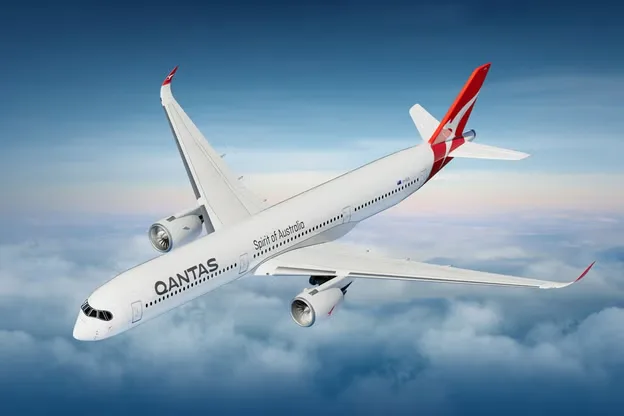
Photo: Qantas

Delays And the Road to October 2027

Project Sunrise has not followed a straight line from announcement to launch. In 2019, Qantas announced Project Sunrise, originally targeting 2025 for launch. Between 2020 and 2022, the COVID-19 pandemic disrupted travel, manufacturing, and global supply chains.

The October 2027 launch date represents an approximately six-month delay from the timeline Qantas pointed to last November. Delivery delays from Airbus, driven in part by seat manufacturing bottlenecks, have repeatedly shifted the schedule.

At a panel discussion in Toulouse hosted by CNN’s Richard Quest, Benoit de Saint-Exupery, Executive Vice President Sales of the Airbus Commercial Aircraft business, was asked directly about the cause of delays. As reported by Point Hacks:

“What is it [causing the delay?] Is it the ovens, the seats?” Quest asked.

“Unfortunately, it’s all of the above. It’s mainly the seats… with premiumisation comes complexity. The seat situation is definitely the bottleneck for us,” de Saint-Exupery replied.

Qantas says the success of its Boeing 787-9 routes, including its one-stop from Sydney to London via Singapore, “continues to show Project Sunrise’s potential.” Qantas International division achieved a 20 percent improvement in underlying EBIT to A$903 million during FY2025.
Leave a Comment

Your email address will not be published. Required fields are marked *

Scroll to Top