

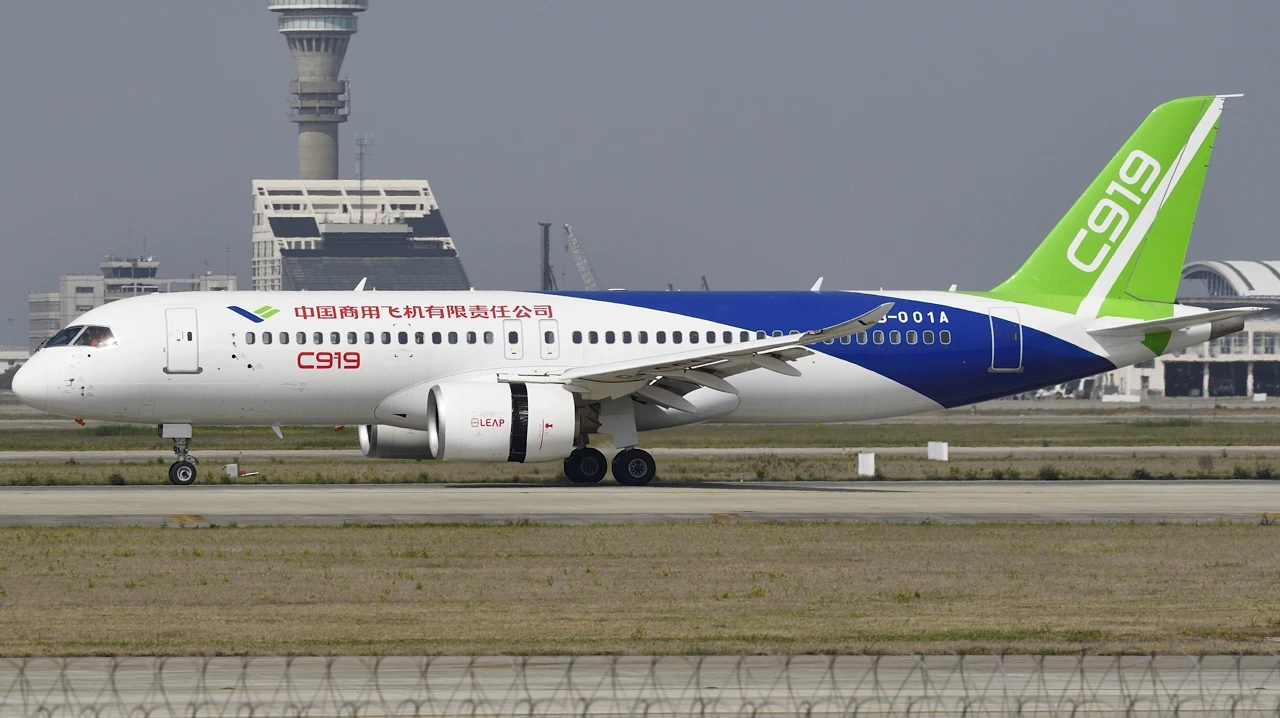
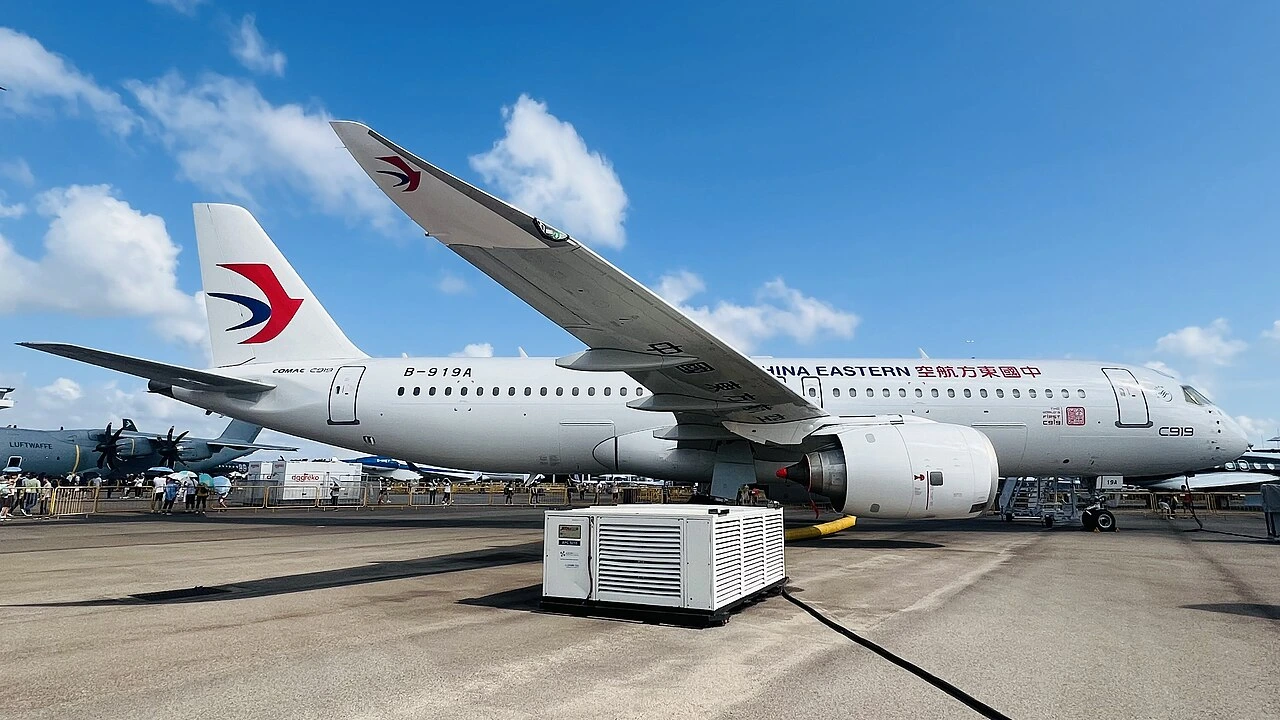
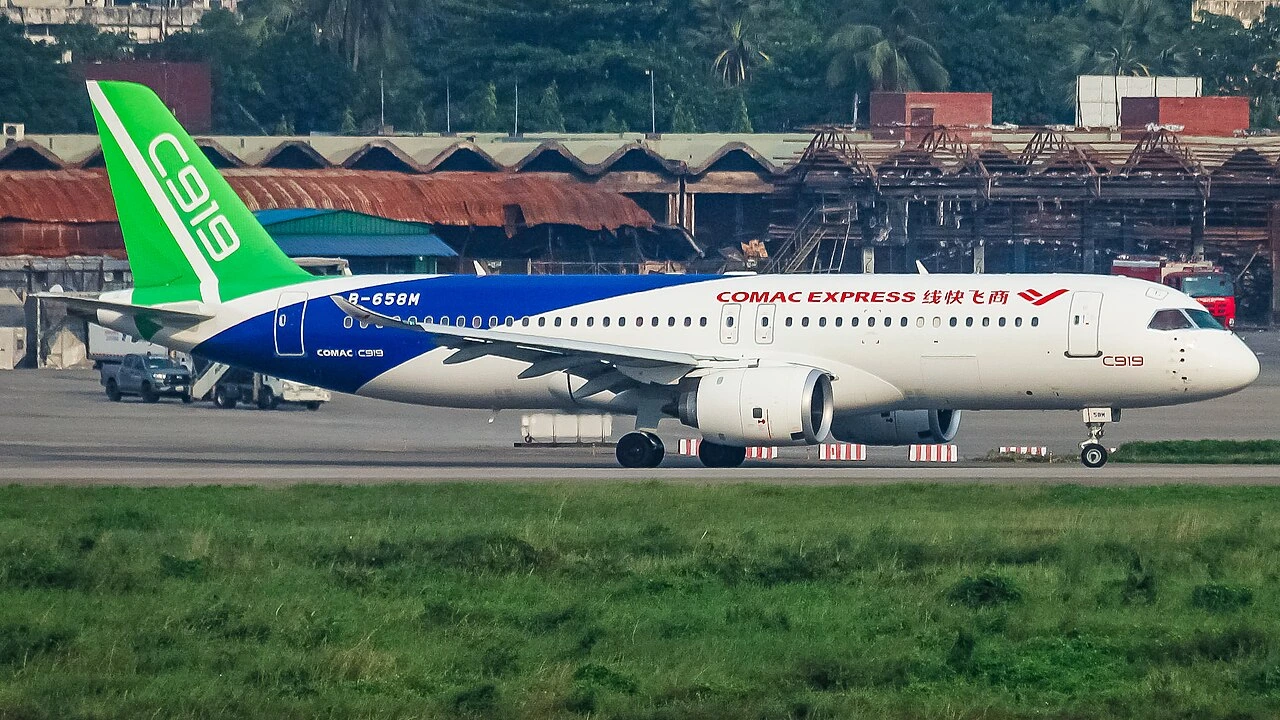
China’s state-owned aircraft manufacturer, the Commercial Aircraft Corporation of China (COMAC), launched the C919 programme in 2008 with one clear goal: to build a Chinese-made narrowbody jet that could challenge the Airbus A320 and Boeing 737 on domestic and international routes. The aircraft made its first commercial flight on 28 May 2023 with China Eastern Airlines (MU), more than 15 years after the programme began, and has since carried millions of passengers across dozens of domestic routes in China.
Today, the C919 sits at a pivotal moment. COMAC has delivered far fewer aircraft than it originally planned. Western regulators have pushed back certification timelines. US export controls suspended engine supplies in 2025, exposing deep vulnerabilities in the supply chain. Yet China’s five-year national plan, approved in 2026, lists C919 output and supply-chain resilience as top priorities. The story of the C919 is now as much about geopolitics as it is about aviation.
A Timeline of the C919 Programme: From 2008 To First Flight
The C919 programme has a long and complicated history. COMAC officially announced it in January 2009, with a maiden flight originally targeted for 2014 and first deliveries by 2016.
The programme ran into repeated delays. The maiden flight did not take place until 5 May 2017 at Shanghai Pudong International Airport (PVG). The Civil Aviation Administration of China (CAAC) granted the aircraft its type certificate on 29 September 2022.
COMAC delivered the first production C919 to China Eastern Airlines on 9 December 2022. The aircraft entered revenue passenger service on 28 May 2023, roughly nine years behind its original schedule.
Passengers, Routes, And Operators of the C919 In Service
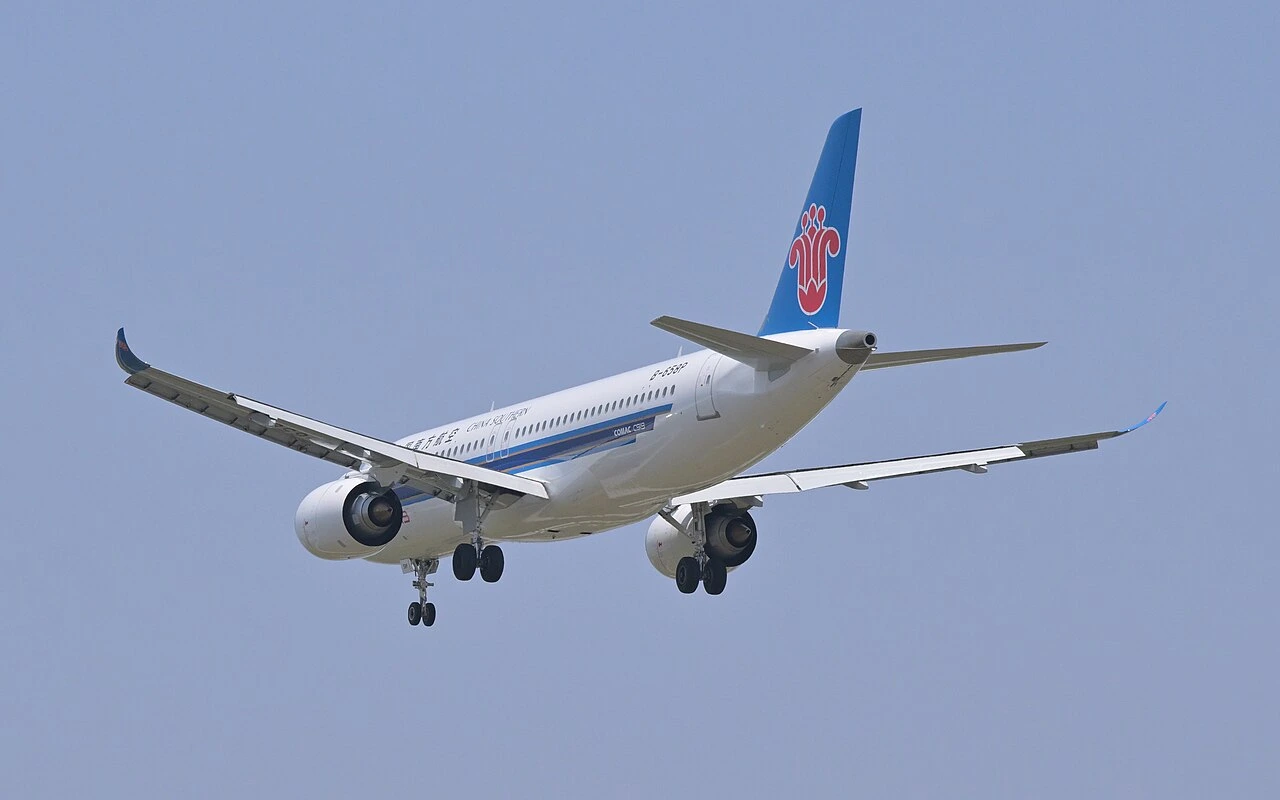
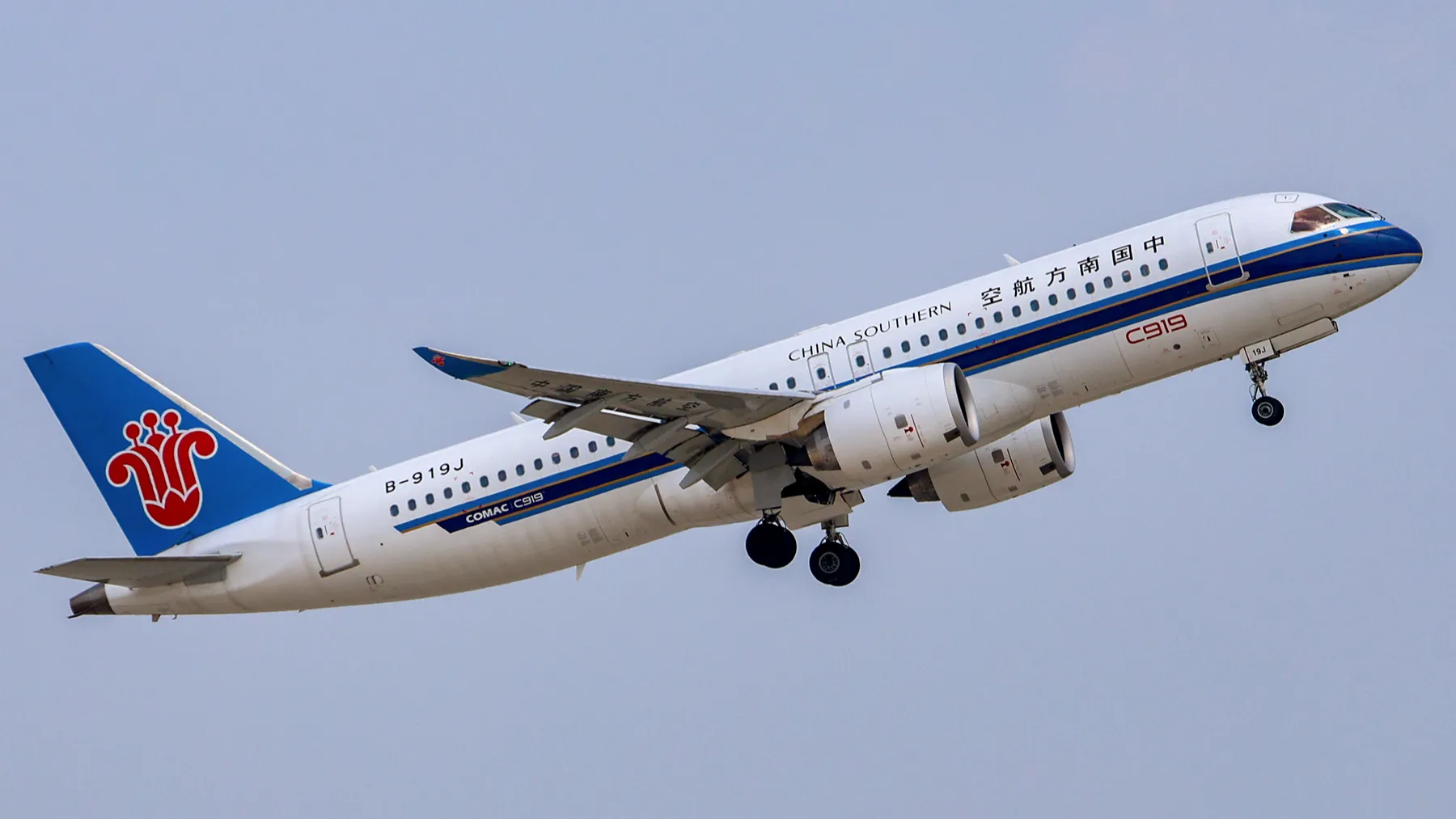
Since entering service, the C919 has expanded steadily within China. As of early 2026, China Eastern Airlines operates the type across 19 routes from 16 airports, making it the largest C919 operator in the world.
The three major Chinese carriers — China Eastern Airlines (MU), Air China (CA), and China Southern Airlines (CZ) — are the only commercial airlines currently flying the type. By the end of 2025, COMAC had delivered 32 C919 aircraft to Chinese carriers, according to Flight Master data cited at the Singapore Airshow 2026.
The aircraft has carried more than four million passengers across 46 domestic routes. During the recent Lunar New Year travel period, it operated over 4,300 flights, reflecting growing utilisation. The C919 made its first flight outside mainland China on a commercial charter from Shanghai Hongqiao International Airport (SHA) to Hong Kong International Airport (HKG) in June 2024.
Ambitions Versus Reality of the C919 Production Targets
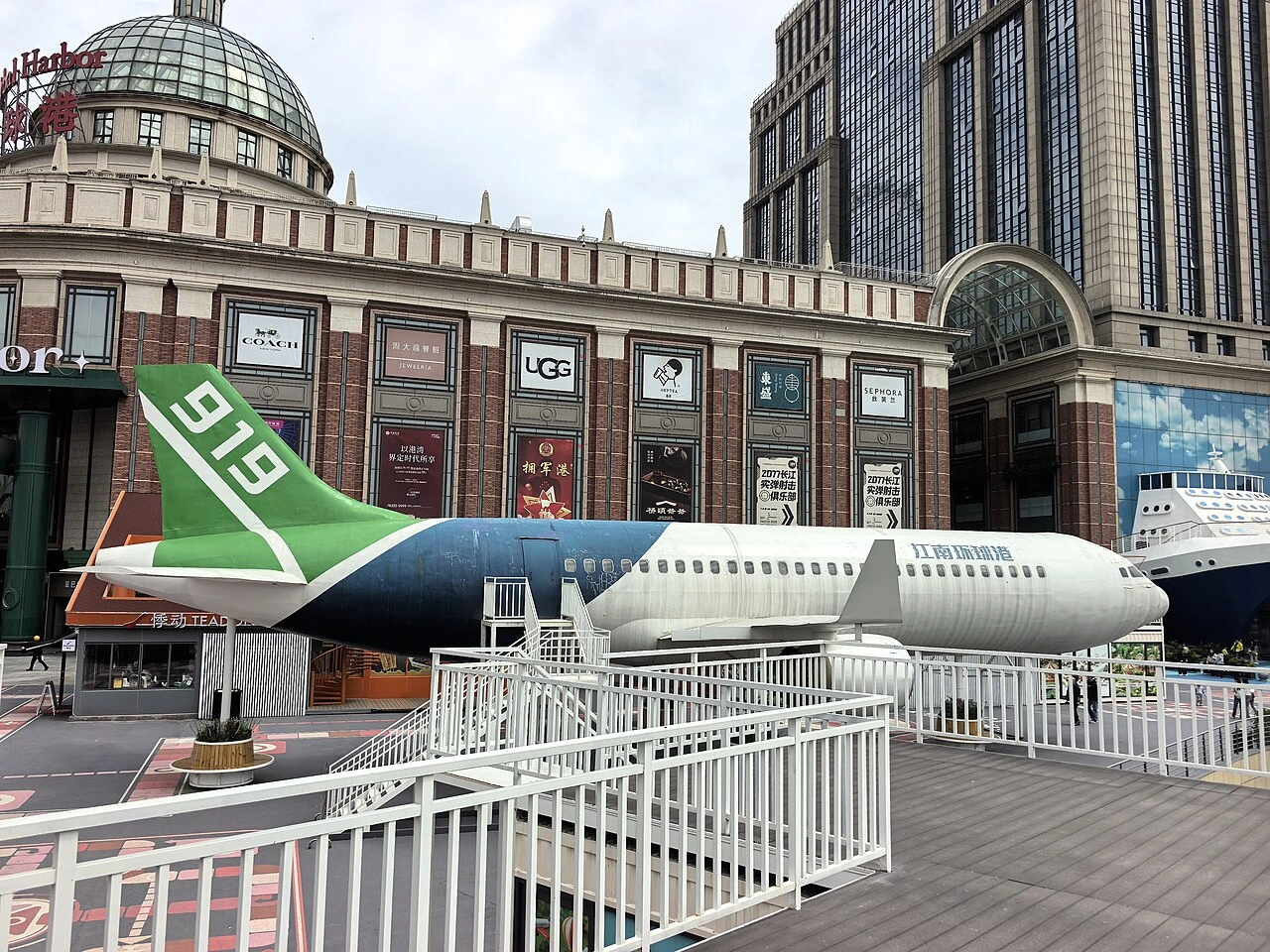
COMAC’s production ambitions have consistently outpaced actual deliveries. The gap between targets and outcomes has become one of the defining stories of the programme.
COMAC delivered approximately 12–13 C919 aircraft in 2024, well short of its targets for that year. The company then set a goal of delivering 75 aircraft in 2025, which it later raised to 75 before slashing it to 25 by September 2025, according to reports from Reuters and Bloomberg.
COMAC ended 2025 with just 15 C919 deliveries, missing even its revised target by nearly half. China’s three largest carriers had anticipated receiving a combined 32 aircraft by the end of 2025 but received only around a dozen.
For comparison, consider where COMAC’s production stands against global competitors, according to IBA data:
- C919: approximately 18 aircraft per year (2025 projected capacity)
- Boeing 737 MAX: approximately 448 aircraft per year
- Airbus A320neo family: approximately 654 aircraft per year
At a supplier conference in March 2025, COMAC outlined plans to produce 100 aircraft in 2026, 150 in both 2027 and 2028, and reach 200 annually by 2029. Aviation consultant Brian Yang Bo told the South China Morning Post that for the C919, the keywords are “output and supply chains”.
US Export Controls Shook the C919 Programme
The single biggest disruption to C919 production in 2025 came from Washington, not the factory floor. In late May 2025, the US Department of Commerce suspended export licences allowing American companies to supply aircraft engines and related technologies to COMAC.
The C919 depends on the CFM International LEAP-1C turbofan engine, produced by a joint venture between US manufacturer GE Aerospace and France’s Safran. The suspension also affected avionics and flight control components supplied by Honeywell Aerospace and Collins Aerospace, a subsidiary of RTX.
In June and July 2025, the export halt stalled production entirely. Although the US lifted the ban at the beginning of July 2025, enabling GE Aerospace to resume shipments of LEAP-1C engines, the disruption created a lasting backlog. Dan Taylor, head of consulting at aviation consultancy IBA, told CNN that US-controlled technology in the LEAP-1C engines means the C919’s supply chain is “inherently sensitive to political shifts.”
The Pentagon added COMAC to its Chinese Military Companies list under Section 1260H on 6 January 2025, adding a further layer of geopolitical risk. COMAC has stockpiled engines and key components as a buffer, but IBA analysts note these reserves cover only months of production, not years.
CJ-1000A is a Domestic Alternative COMAC is Looking At
China is actively developing a domestic alternative to the LEAP-1C engine. The Aero Engine Corporation of China (AECC) is building the CJ-1000A turbofan, designed to power future versions of the C919.
In March 2025, AECC reported that development was progressing well in trials. Shi Jianzhong, a former deputy general manager of COMAC and honorary president of the Shanghai Society of Aeronautics, told an aviation forum that “the CJ-1000 engine is in trial runs and it fared better than my most optimistic expectations.”
Zhang Yanzhong, a member of the Chinese Academy of Engineering and a key figure in China’s aerospace programme, told state broadcaster China Central Television in August 2025 that the project’s progress was very positive and suggested that an announcement about its installation on Chinese aircraft would come in due course.
However, the timeline remains stretched. AECC now projects certification of the CJ-1000A by 2027 and entry into service by 2030, roughly eight years behind its original schedule. Aviation analysts caution that China remains far from achieving jet-engine self-sufficiency and that matching the performance and reliability of Western engines will take many more years after certification.
China’s 14th Five-Year Plan (2026–2030) specifically calls for accelerating the certification and use of the CJ-1000 engine, signalling that this is now a national strategic priority.
What European Regulators Are Saying
The C919 currently holds a type certificate from China’s CAAC but has no certification from either the European Union Aviation Safety Agency (EASA) or the US Federal Aviation Administration (FAA). Without EASA certification, no European airline can operate the type, and airlines in dozens of countries that follow EASA standards are also excluded.
COMAC had originally hoped to achieve EASA approval by 2025. That target has slipped significantly. EASA Executive Director Florian Guillermet told French magazine L’Usine Nouvelle that C919 would not be certified in 2025 but in “within three to six years“.
By August 2025, European regulators confirmed that EASA certification would be unlikely before 2028 and could slip as far as 2031. Despite this, the certification process has continued to advance. EASA has now entered an advanced stage involving in-flight testing and technical validation as part of a structured four-stage approval process. Two European test pilots carried out evaluation flights from Shanghai Pudong International Airport (PVG) in late November 2025.
EASA representatives have also conducted site visits to Shanghai assembly facilities to better understand production standards. The use of real-world operational data, including records from routine A and B maintenance checks on early-production C919s, is seen as an important element in demonstrating reliability to European regulators.
FAA Certification is Not on the Table
While EASA certification remains a long-term goal, the FAA approval process is not currently being pursued. COMAC is not pursuing certification from the Federal Aviation Administration as of April 2025, given US-China tensions and COMAC’s placement on the Pentagon’s military companies list.
This significantly limits where the C919 can fly commercially. Most major international carriers require either FAA or EASA approval before adding a new aircraft type to their fleet. Willie Walsh, Director General of the International Air Transport Association (IATA), stated in April 2025 that COMAC remains decades away from breaking the global dominance of Boeing and Airbus.
However, some countries have begun accepting CAAC certification directly. Brunei officially adopted CAAC airworthiness standards in October 2025, and Vietnam has also added CAAC to its list of approved regulators. These are modest steps, but they chip away at the certification wall that constrains international sales.
C919 Variants: Shorter, Stretched, And Extended-Range Plans
COMAC is not standing still with the baseline C919. The company has announced plans to develop multiple variants to match the range of options offered by Airbus and Boeing.
In 2023, COMAC announced plans to develop both a shortened and a stretched version of the C919, mirroring the sub-variant strategy used by Boeing with the 737 MAX and Airbus with the A320neo family. COMAC has stated it wants the stretched C919 variant in service by 2030.
A plateau-specific shortened variant also rolled out of the factory in 2025, designed for high-altitude operations at airports in Tibet and other elevated regions of China.




_China_Eastern_Airlines_Comac_C919-100ER_B-919A_@_Singapore_Airshow_2024-02-25_(1).jpg)
_taking-off_from_CGO_02.jpg)

Leave a Reply