United Airlines (UA) formally accepted delivery of its first Airbus A321XLR from Airbus’ Hamburg Finkenwerder facility on 3 June 2026, closing a chapter on years of programme delays and opening a consequential new phase in the Chicago-based carrier’s long-haul narrowbody strategy. The aircraft, registered N64321, departed Hamburg at 1:25 PM local time and crossed the North Atlantic in a flight of over ten hours before landing at Tampa International Airport (TPA) in Florida. It is the first of 50 A321XLRs United ordered in December 2019 — an order intended to replace its ageing Boeing 757-200 fleet and expand the carrier’s footprint on secondary transatlantic and Latin American routes.
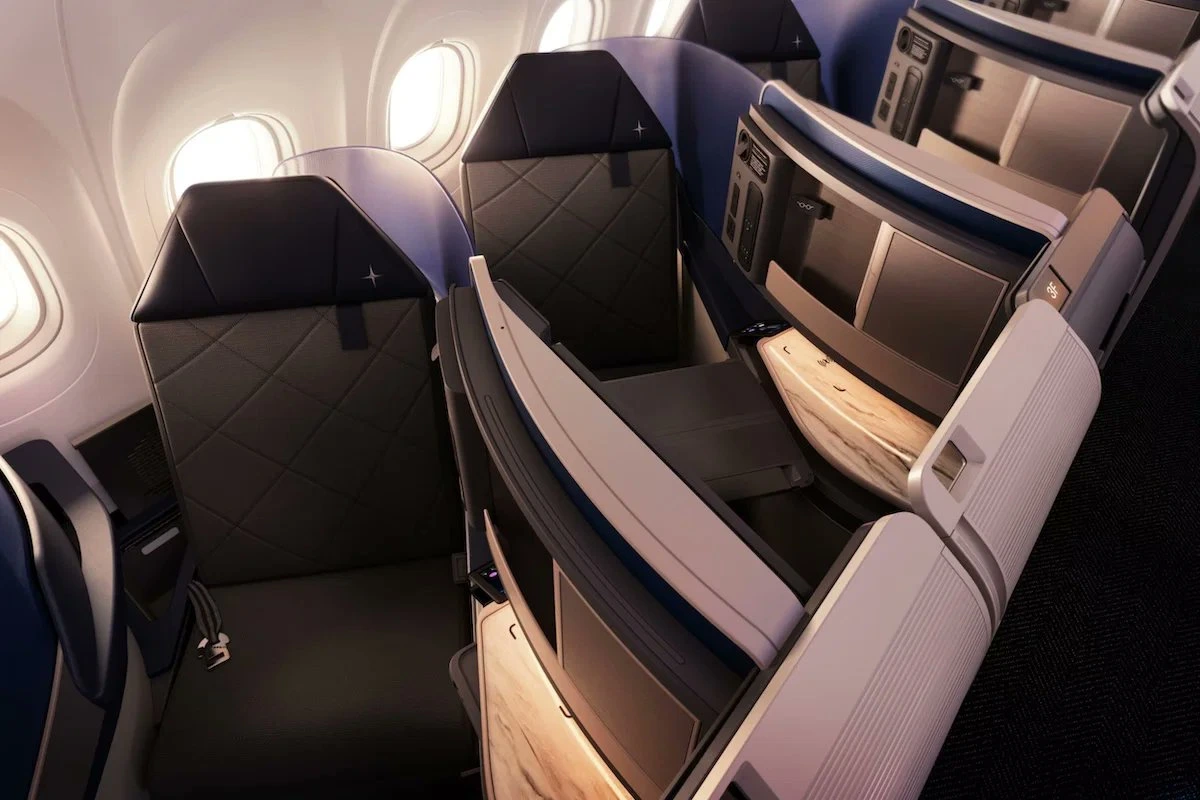
The delivery is strategically significant because the A321XLR is not a marginal upgrade to an existing product. Configured with just 150 seats across four cabin classes — including United’s first lie-flat Polaris suites on a narrowbody aircraft — the jet doubles the premium seating offered by the 757-200 it succeeds while burning 30 per cent less fuel per seat and extending the carrier’s single-aisle range from approximately 3,900 nautical miles to 4,700 nautical miles. United Senior Vice President for Global Network Planning Patrick Quayle has stated the type will take over virtually all of United’s existing 757 routes and open new ones that were previously unviable with any aircraft in the fleet.

The Who, What, When, And Why of United’s A321XLR Delivery
United placed its order for 50 A321XLRs in December 2019, becoming the fourth US carrier to commit to the type. The programme’s original delivery schedule placed the first aircraft at United in 2024, but a combination of certification complexity and supply chain disruptions pushed the timeline back repeatedly. During an earnings call on 17 June 2025, United’s then-CFO Michael Leskinen confirmed that no A321XLR deliveries would occur in 2025, with Chief Commercial Officer Andrew Nocella clarifying that the first aircraft would arrive in the summer of 2026.
The delivery occurred on schedule with that revised guidance. AeroXplorer confirmed that N64321 departed Hamburg and arrived at United’s US facilities earlier this week, with more deliveries scheduled through the remainder of the decade.
The aircraft completed its maiden delivery flight from Hamburg on 29 April 2026, before the formal acceptance ceremony on 3 June. United expects more than half of its 50-aircraft XLR order to be in active service by 2028.
United CCO Andrew Nocella articulated the strategic rationale at the time of the 2019 order, and his words have only grown more resonant with each year of delay. In a press release issued through United’s official channels, Nocella stated:
“The new Airbus A321XLR aircraft is an ideal one-for-one replacement for the older, less-efficient aircraft currently operating between some of the most vital cities in our intercontinental network. In addition to strengthening our ability to fly more efficiently, the A321XLR’s range capabilities open potential new destinations to further develop our route network and provide customers with more options to travel the globe.”
The A321XLR Is a Rightful Successor to United’ s Boeing 757’s
The Boeing 757-200 has served United’s transatlantic narrowbody network for over three decades, occupying a unique market position as an aircraft capable of serving long but low-demand routes that neither a widebody nor a standard narrowbody could support economically.
United currently operates 40 Boeing 757-200s with an average age of 29.2 years — aircraft largely inherited from Continental Airlines following the 2010 merger. The type has historically flown routes from Newark Liberty International Airport (EWR) to Edinburgh Airport (EDI), Keflavik International Airport (KEF) for Reykjavik, Faro Airport (FAO), Porto Francisco Sá Carneiro Airport (OPO), and Shannon Airport (SNN), among others.
The 757’s capabilities on these routes are considerable. According to ePlaneAI, United deployed the 757 on 14 transatlantic routes in 2026, with eight departing from Newark, three from Chicago O’Hare International Airport (ORD), and three from Washington Dulles International Airport (IAD). However, the economics of operating aircraft averaging nearly 30 years of age are deteriorating with each passing season.
Patrick Quayle acknowledged precisely this tension in comments reported by Business Insider:
“We use the 757 to fly to smaller markets like Tenerife and Reykjavik. The 757 is getting a bit uneconomic, but we want to continue flying to these cities, and the A321XLR is longer-ranged and has much better fuel burn and maintenance costs.”
The 757-200 fleet is expected to be fully phased out by 2028 or 2029, with XLR deliveries accelerating progressively through the replacement period.
Where Will United Will Deploy the A321XLR
United has not announced a formal inaugural revenue service date, but has confirmed commercial operations will begin this summer, with the aircraft replacing 757-200s on existing international routes. Air Data News reported that the aircraft is expected to serve Tenerife Sur Airport (TFS), Keflavik International Airport (KEF) for Reykjavik, Faro Airport (FAO), Porto Francisco Sá Carneiro Airport (OPO), Edinburgh Airport (EDI), and Shannon Airport (SNN).
These are all routes previously operated by the 757-200 for which the A321XLR is a natural successor, each representing a “long and thin” market where widebody deployment would be economically unjustifiable.
The XLR’s additional 800 nautical miles of range over the 757-200 opens destinations that simply cannot be reached from Newark or Washington with any existing narrowbody. United’s Patrick Quayle told Business Insider: “You can’t really get further than Spain with a 757. The A321XLR can fly much further,” adding that France, Northern Italy, Scandinavia, West Africa, and North Africa are all now within range from US East Coast hubs.
Simple Flying noted that routes to Málaga Airport (AGP), Split Airport (SPU), Aeropuerto de Tenerife Sur (TFS), Faro, and Bari Karol Wojtyła Airport (BRI) all reflect the same network logic — reaching places competitors cannot easily support nonstop. Additionally, the carrier has identified secondary European cities, along with select routes from East Coast hubs to destinations in the Middle East and northern Africa, as primary deployment candidates.
