Qantas Airways (QF) has unveiled a striking new livery on its seventh Airbus A321XLR, drawing visual inspiration from one of the planet’s seven natural wonders. The aircraft, christened Coral Sea and registered VH-OGG, rolled out of Airbus’ paint facility in Hamburg, Germany, on 28 May 2026, wrapping its 44-metre fuselage in a vivid underwater tableau designed in partnership with the Great Barrier Reef Foundation. Qantas pilots are scheduled to ferry the aircraft home to Australia in June 2026, after which it will enter domestic service.
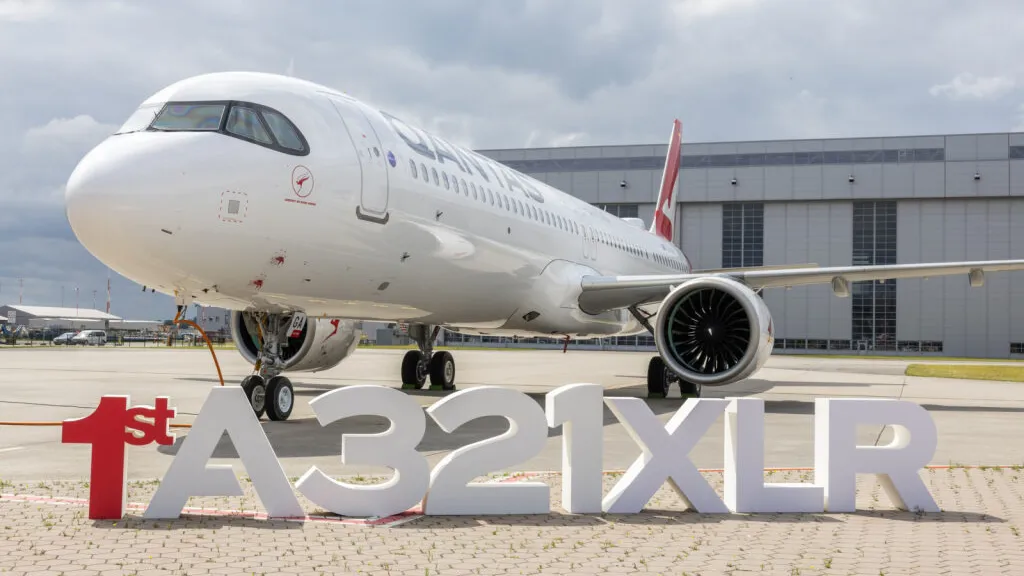
The unveiling extends a broader fleet renewal narrative at Australia’s flag carrier. According to AeroTime, Coral Sea is the seventh of 48 next-generation A321XLRs on firm order with Qantas — an order that constitutes the airline’s largest-ever fleet transformation programme — and arrives as the type continues to displace ageing Boeing 737-800s across both the domestic and short-haul international network. Qantas became the first carrier in the Asia-Pacific region to operate the A321XLR when its inaugural example, Great Ocean Road, entered commercial service in September 2025.
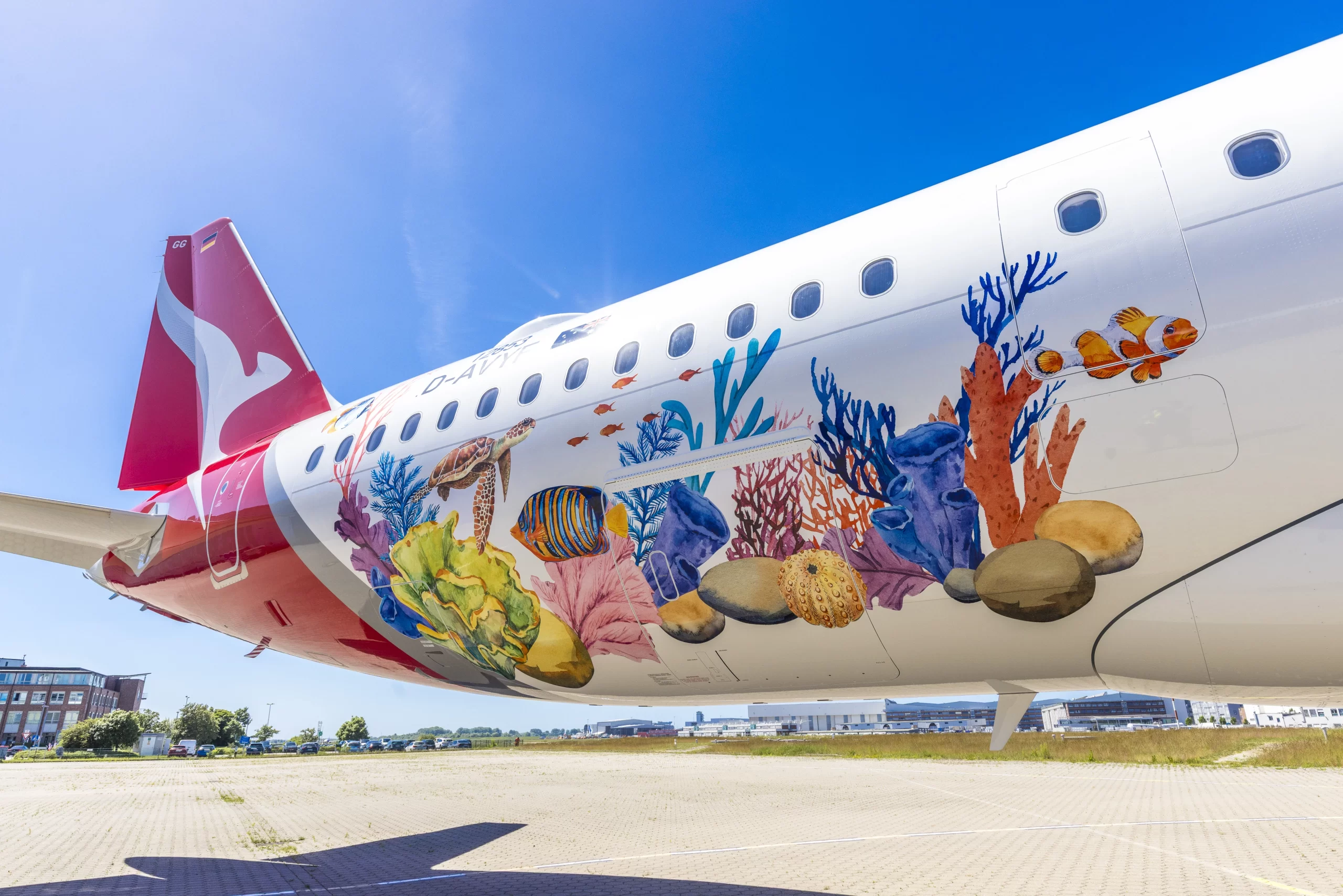
The Design in Qantas’ Coral Reef registered VH-OGG
The livery spans both sides of the aircraft and features sea turtles, clownfish, and intricate coral formations rendered in bold oceanic blues, pinks, and oranges across the fuselage. The artwork is not the product of a single designer but rather a collaborative effort between Qantas and the Great Barrier Reef Foundation.
The aircraft’s name, Coral Sea, references the body of water that cradles the reef off Queensland’s northeastern coastline. It continues a Qantas tradition of assigning aircraft names tied to iconic Australian places and journeys — previous examples include Wunala and Yananyi, painted in Indigenous designs created by artists from the Balarinji studio for Qantas Boeing 747s and 787 Dreamliners. The naming theme for the A321XLR fleet, however, gravitates toward walks, rivers, and roads — a nod to Australia’s vast, traversable landscape.
Anna Marsden, Managing Director of the Great Barrier Reef Foundation, articulated the cultural weight the aircraft now carries. In a statement released alongside the unveiling, she was quoted as saying:
“Few places on Earth capture the imagination quite like the Great Barrier Reef — its colours, its creatures, its sheer scale. This aircraft will carry that story to millions of people every year, including those who are lucky enough to fly on her and the many more who will see it on the ground.” She added that the livery “captures the energy, the colour, and the wonder of this remarkable ecosystem.”
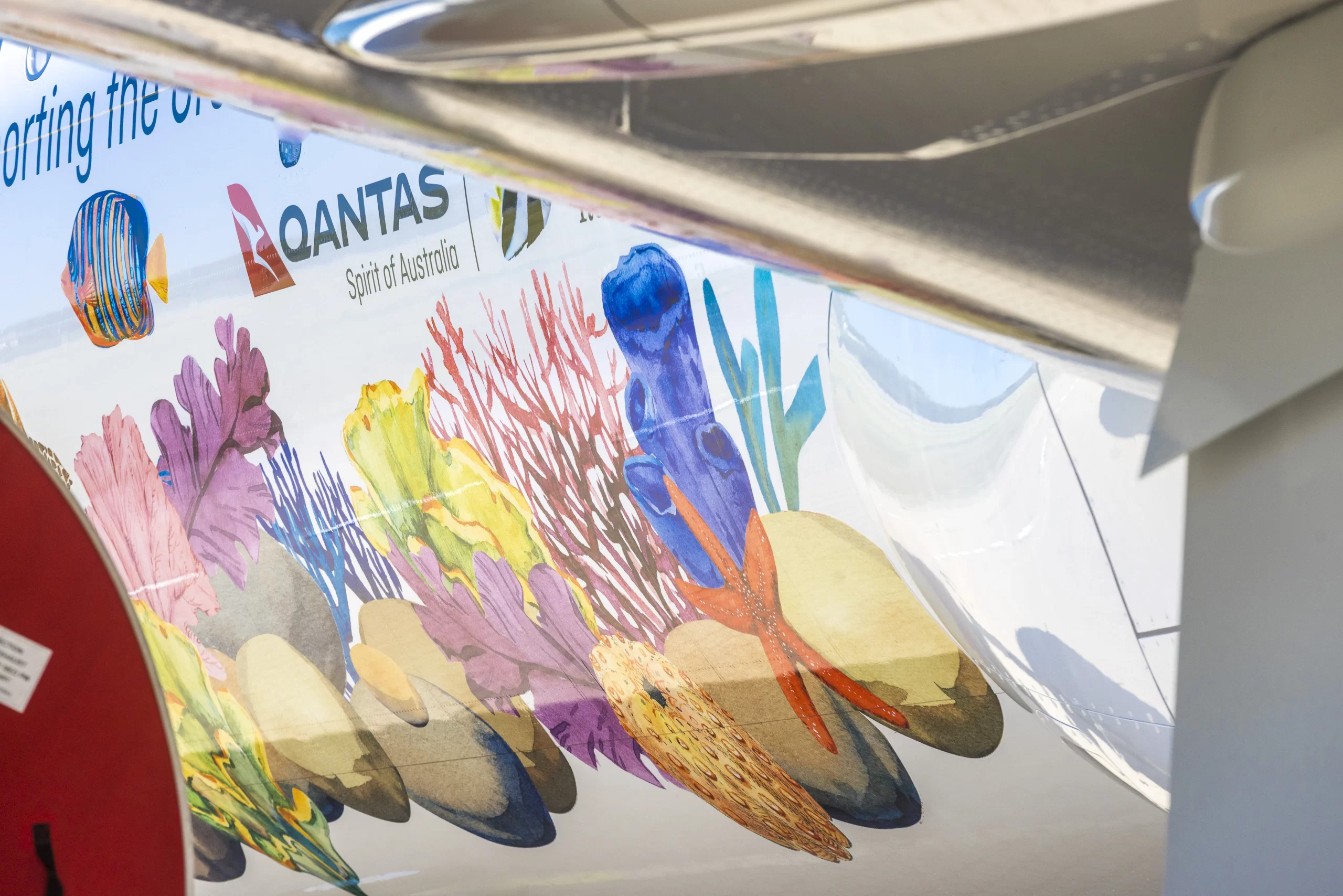
Specifications and Cabin Configuration of Qantas A321XLR
The A321XLR — where XLR denotes Extra Long Range — represents a generational leap over the Boeing 737-800 it supersedes. The type can fly more than 3,000 kilometres further than the aircraft it replaces. Qantas’ Coral Sea carries the updated domestic cabin configuration.
Key specifications and cabin features of Qantas’ A321XLR:
- Seating: 20 Business class seats and 177 Economy seats (including 36 Qantas Economy Plus seats), totalling 197 passengers
- Business class layout: 2-2 configuration with 37-inch (94 cm) pitch, 25-inch (63.5 cm) seat width, and 5-inch (12.7 cm) recline; recliner-style leather seats with wireless charging pads
- Economy layout: 3-3 configuration with 30-inch (76.2 cm) pitch and 17.6-inch (44.7 cm) seat width
- Overhead storage: Up to 60% more carry-on capacity than the Boeing 737 it replaces
- Cabin ambience: LED mood lighting, high ceilings, and enlarged windows for enhanced natural light
- Connectivity: Free inflight Wi-Fi on select domestic and international routes; passengers stream content via the Qantas Entertainment app
- Propulsion: Pratt & Whitney PW1100G-JM geared turbofan (GTF) engines, delivering a 50% smaller noise footprint compared to previous-generation aircraft
- Environmental profile: Generates lower carbon emissions per seat than the Boeing 737 on equivalent routes
- Length: 44 metres — five metres longer than the 737-800
Of the 48 A321XLRs on order, 16 will be configured with lie-flat business class seats and seatback entertainment systems, intended for longer domestic sectors and international thin routes. Those internationally configured aircraft are expected to enter service from 2028.
Markus Svensson, Qantas Domestic Chief Executive Officer, offered his assessment of the milestone:
“The A321XLR is a remarkable aircraft and Coral Sea is the seventh of this aircraft type to join the Qantas fleet. It’s really special to unveil such a bold livery celebrating the Great Barrier Reef and its extraordinary marine life, and to mark our partnership with the Great Barrier Reef Foundation and the amazing work they do. Queensland is a critical part of our network, and through the thousands of seats we provide into the state every week, we continue to play an important role in supporting tourism and regional connectivity.”
Partnership Between Qantas and the Great Barrier Reef Foundation
The artwork on Coral Sea is not merely decorative — it is anchored in a long-standing institutional commitment. Qantas has been a partner of the Great Barrier Reef Foundation since 2009 and has pledged AUD $10 million (approximately US $6.5 million) over ten years through the Reef Restoration Fund. The fund directs resources toward scientists, Traditional Owners, and local tourism operators engaged in coral restoration across the reef and other Australian reef ecosystems.
The Great Barrier Reef welcomed more than 2.3 million visitors in 2025, making it one of the country’s most economically significant natural attractions. Total visitor expenditure in Queensland topped AUD $44 billion in 2025 — equivalent to approximately $121 million per day. Qantas’ investment in the region is correspondingly substantial: the Qantas Group operates more than 1,600 domestic and international return services into Queensland every week.
Anna Marsden further noted the depth of the airline’s financial commitment, stating that Qantas is “one of our longest partners and have committed over $10 million to help turn groundbreaking science into real-world action.” She expressed hope that the aircraft’s visibility would inspire a broader ethos of reef stewardship.
Qantas’ Routes, Expansion, And the Role of the A321XLR’s Role
The Coral Sea‘s domestic deployment places it at the heart of Qantas’ Queensland connectivity strategy. A321XLR services are currently operating between Brisbane Airport (BNE) and Perth Airport (PER), while Airbus A220 flights connect Brisbane with Cairns Airport (CNS). The type entered commercial service on the Brisbane–Sydney route following its Asia-Pacific debut in November 2025.
The A321XLR’s extended range profile is also reshaping Qantas’ international ambitions. Simple Flying reported that beginning in October 2026, Qantas will deploy the A321XLR on international services between Brisbane International Airport (BNE) and Ninoy Aquino International Airport (MNL), Manila — replacing the wider Airbus A330 on that sector.
In 2025 alone, Qantas and its low-cost affiliate Jetstar (JQ) added ten new routes to Queensland, including international services from Brisbane to Vanuatu, Manila, and Palau, alongside domestic connections such as Cairns to Sunshine Coast and Darwin to Gold Coast. This trajectory of expansion underscores the strategic centrality of Queensland to the Qantas Group’s network, and the A321XLR’s pivotal role in sustaining it.
Qantas’ Broader Fleet Ambitions: Project Sunrise and the A350-1000ULR
The Coral Sea delivery arrives against a backdrop of equally significant activity elsewhere in the Qantas fleet programme. Qantas’ most technologically ambitious undertaking — Project Sunrise — centres on a fleet of up to 12 ultra-long-range Airbus A350-1000ULR aircraft intended to operate the world’s longest nonstop commercial flights.
Qantas’ first A350-1000ULR, MSN 707, was spotted fitted with Rolls-Royce Trent XWB-97 engines at Airbus’ Toulouse assembly facility in France, with deliveries scheduled for the end of 2026 and commercial entry targeted for early 2027. The aircraft will initially operate nonstop services between Sydney Kingsford Smith Airport (SYD) and London Heathrow Airport (LHR), as well as New York John F. Kennedy International Airport (JFK) — sectors of up to 22 hours that are presently unserved by any carrier on a nonstop basis.
Qantas has also committed to a separate tranche of conventional A350-1000 aircraft to support long-haul expansion and widebody fleet renewal, beyond the ultra-long-range Project Sunrise variant. Taken together with the 48-aircraft A321XLR programme and a concurrent Airbus A220 intake for QantasLink regional operations, the airline is simultaneously transforming every segment of its fleet — narrowbody, regional, and ultra-long-haul — in what amounts to the most sweeping renewal in its centenary history.
Where the A321XLR resolves the economics of thin short-to-medium-haul routes with fuel efficiency and range, the A350-1000ULR is designed to eliminate the geography that has long compelled Australian travellers to transit through Asian or Middle Eastern hubs.
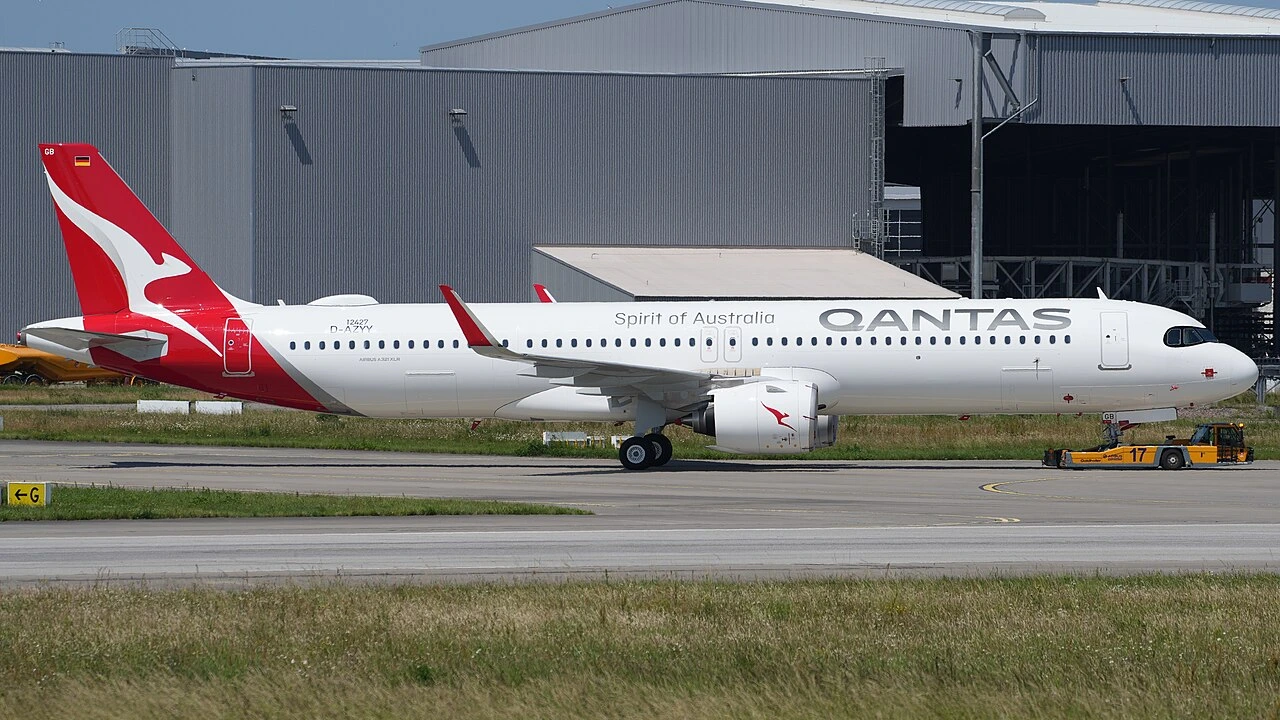
.jpg)
Qantas’ Heritage of Special Liveries: Context and Precedent
The Coral Sea‘s Great Barrier Reef artwork fits within a rich tradition of Qantas aircraft wearing designs that double as public advocacy. Previous special liveries have included Aboriginal-inspired ‘Flying Art’ designs, Olympics-themed aircraft, and promotional artwork tied to tourism campaigns. Among the most celebrated were the Balarinji-painted Boeing 747s — Wunala Dreaming and Nalanji Dreaming — which attracted global attention in the 1990s and remain benchmarks for what aviation livery design can achieve when cultural intent informs the creative brief.
Qantas employees participated in the naming of the A321XLR fleet under the theme of Walks, Rivers and Roads, rooting each aircraft in the experiential geography of Australia. The Coral Sea name, by contrast, draws on marine geography — an intentional departure that reflects the unique character of this particular livery commission and its environmental messaging.
The broader significance of the Coral Sea livery lies in its simultaneity: it promotes a tourism destination, honours a conservation partnership, and celebrates a fleet milestone all within a single visual statement. For an airline that has historically used its aircraft as a form of soft diplomacy and national brand projection, the Coral Sea represents that tradition operating at full maturity.