Two U.S. Navy EA-18G Growler electronic warfare aircraft collided in mid-air on May 17, 2026, during an aerial demonstration at Mountain Home Air Force Base (MHC) in southwestern Idaho, destroying both jets in one of the most expensive non-combat aviation losses the U.S. Navy has sustained in recent memory. The aircraft were assigned to Electronic Attack Squadron (VAQ) 129 from Naval Air Station (NAS) Whidbey Island, Washington, and were performing as part of the Navy’s Growler Airshow Team at the “Gunfighter Skies” event — a public air show that had not been held at the base since 2018. The collision occurred at approximately 12:10 p.m. Mountain Daylight Time, approximately two miles northwest of the base. All four aviators aboard the two jets ejected and survived.
Commander Amelia Umayam, spokesperson for Naval Air Forces, U.S. Pacific Fleet, confirmed the incident in an official statement:
“On May 17, 2026, two U.S. Navy EA-18G assigned to Electronic Attack Squadron (VAQ) 129 from Whidbey Island, Washington, collided in mid-air while performing an aerial demonstration involving four air crew for the Mountain Home Air Force Base Gunfighter Skies Air Show, near Mountain Home Air Force Base at about 12:10 p.m. MDT. All four of the air crew successfully ejected and they are being evaluated by medical personnel. First responders are on the scene. The incident is under investigation.”
According to Simple Flying, the U.S. Navy subsequently confirmed to that each aircraft carries a unit price of approximately $68 million, placing the combined loss at roughly $136 million.
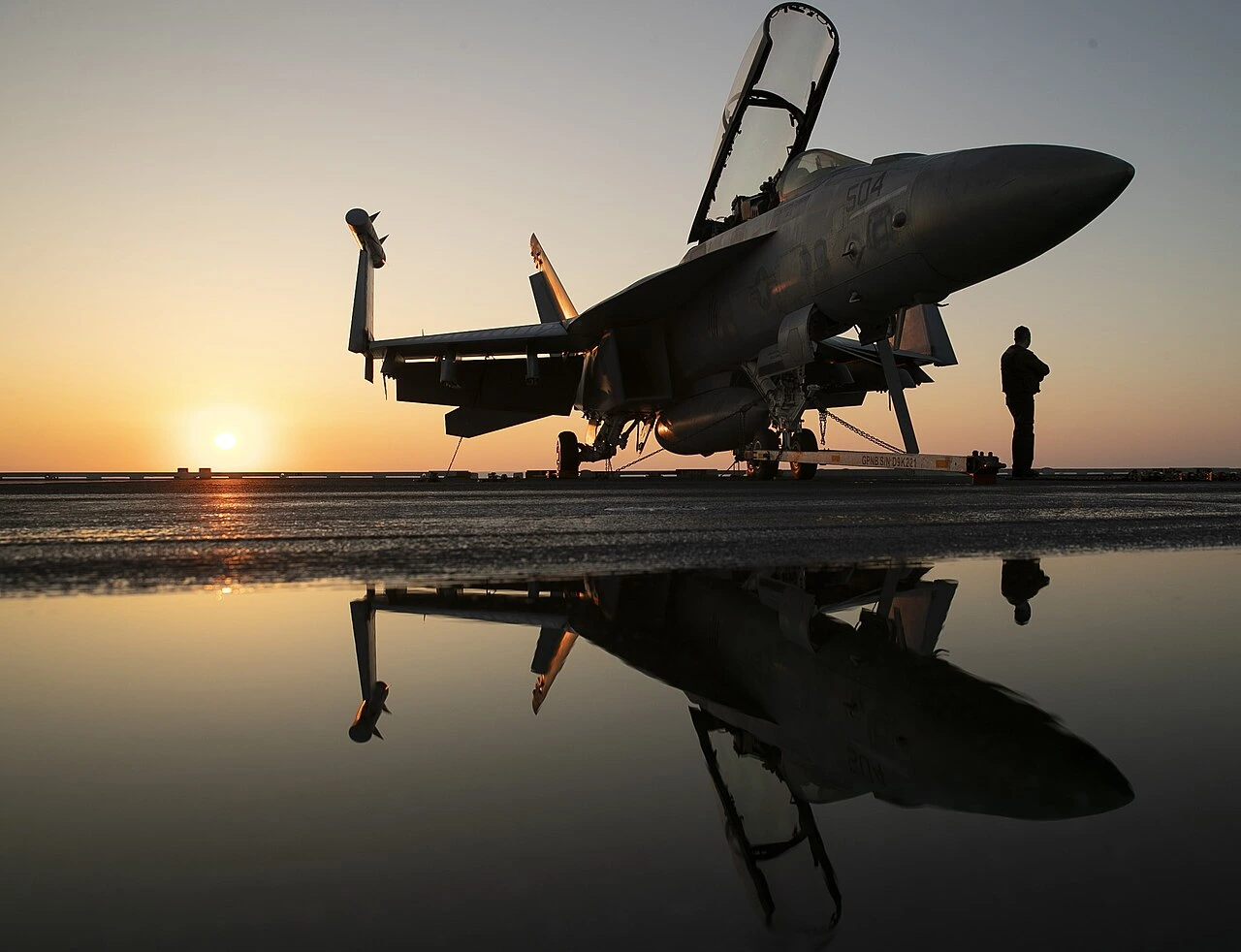
Dramatic Footage Reveals Split-Second Sequence of the Collision
Video footage of the incident, subsequently shared across social media and verified by multiple outlets, captured the final moments of both aircraft with jarring clarity. According to reporting by The Aviationist, the trailing Growler closed in from behind before its nose struck the lead aircraft’s rear from above. Both jets then pitched upward violently, entering an uncontrolled spin before descending toward the ground.
Analysis by Aerospace Global News noted an unusual aerodynamic phenomenon: rather than separating immediately as typically occurs in mid-air collisions, the two aircraft appeared to remain partially entangled throughout their descent. The site observed that the lower speed differential inherent in formation flying likely prevented an instantaneous catastrophic detonation, but paradoxically may have caused the structural entanglement that kept the jets mechanically connected all the way to impact. Ironically, that same entanglement may have slowed the rate of descent, granting the crews fractions of a second more time to initiate ejection.
One eyewitness, posting on Simple Flying’s community forum, described watching from a roadside position near the base:
“I noticed the two jets seemed to be out of a perfect formation. Then I saw a bright spark and thought maybe there was a firework associated with the demonstration. Then immediately the explosion occurred and I knew the jets had touched and were exploding. Then I saw the four parachutes coming down and felt so glad the pilots were out of the planes.”
The grass field surrounding the crash site ignited, and the smoke column shifted from pitch black to orange as the fire expanded.
_%22The_Gauntlets%22_(13864155185).jpg)
The EA-18G Growler is a Strategically Critical and Irreplaceable Platform
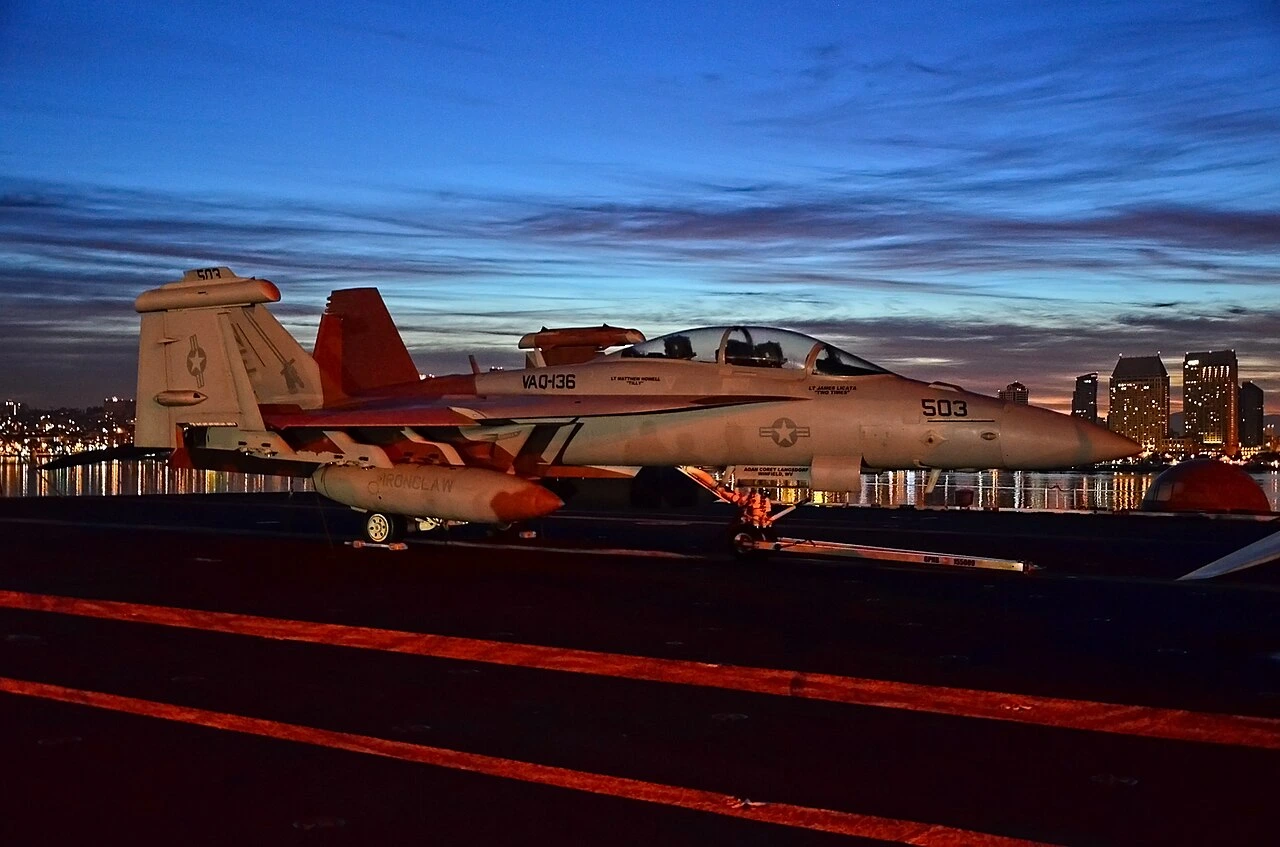
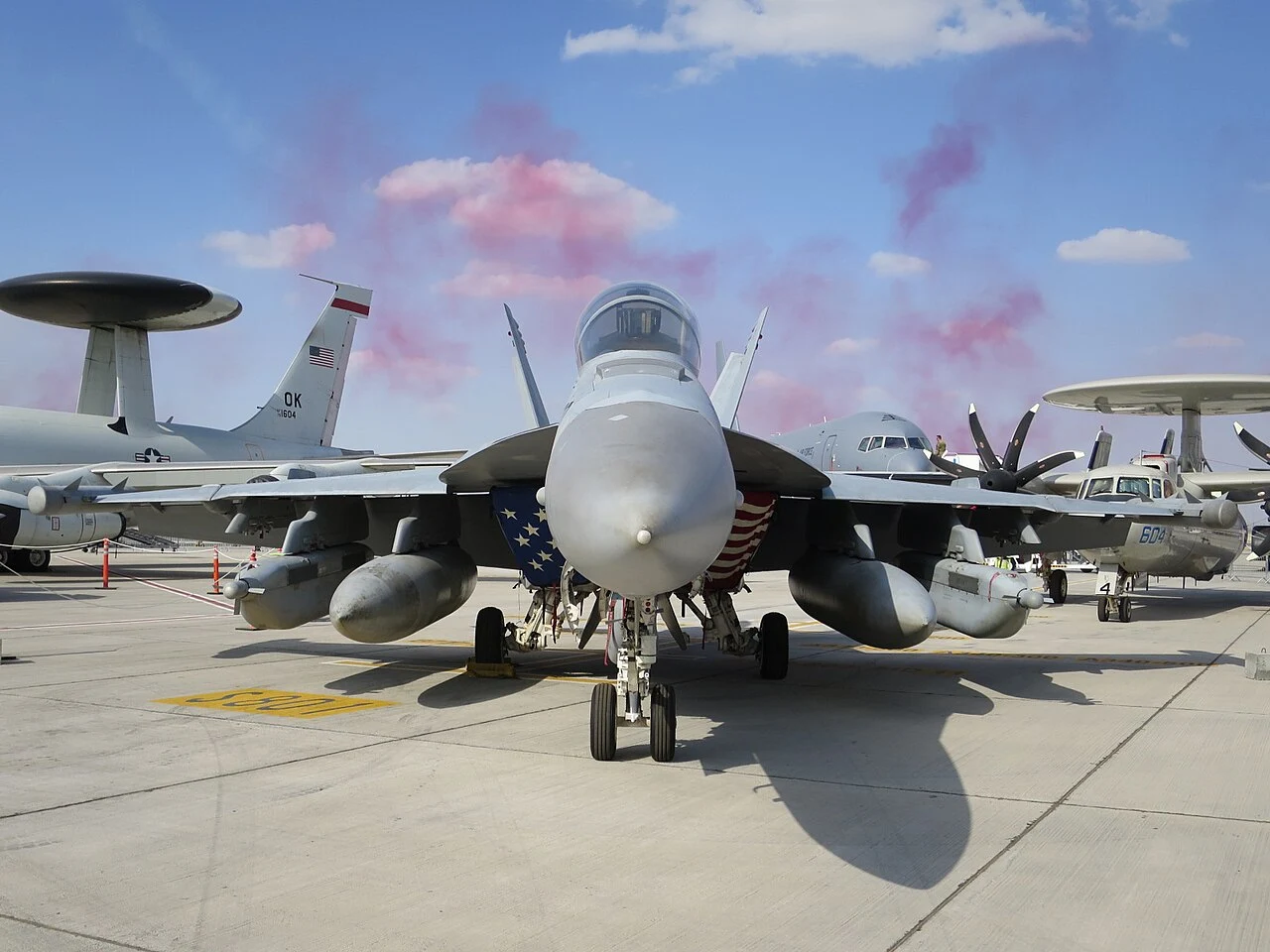
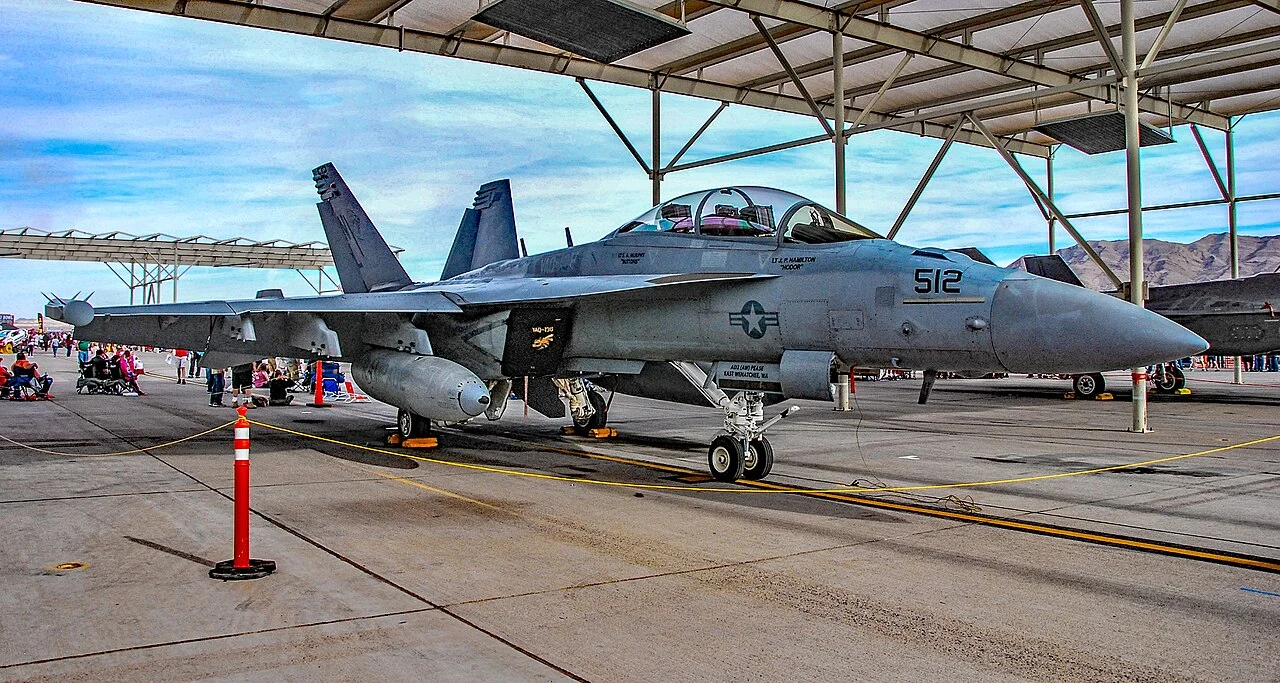
The EA-18G Growler was derived from the Boeing F/A-18F Super Hornet and entering operational service with the U.S. Navy in 2009, the Growler serves as the United States’ sole carrier-based dedicated electronic warfare platform. According to NAVAIR’s official program page, the aircraft carries the AN/ALQ-218 receiver suite and ALQ-99 tactical jamming pods. These systems that allow crews to detect and geolocate electronic emissions, identify threat radars, and disrupt enemy targeting networks in real time.
The aircraft also retains an air-to-air combat capability and can carry AIM-120 AMRAAM missiles alongside its jamming equipment. It operates with a two-person crew (a pilot and an electronic warfare officer) and can exceed Mach 1.8. Crucially, as The World Data reported in a comprehensive profile, Boeing has formally closed the Growler production line, with 160 aircraft confirmed in the Navy’s inventory per April 2025 Department of Defense budget documents. No new-build replacements will ever be manufactured under the current program.
The operational weight of the Growler fleet has intensified sharply in 2026. According to Defence Express, EA-18G Growlers from VAQ-142, embarked aboard USS Gerald R. Ford (CVN-78), were executing active Suppression of Enemy Air Defenses (SEAD) missions against Iran’s integrated air defense network as part of Operation Epic Fury, which launched on February 28, 2026. 153 aircraft were in operational service prior to the collision. This figure that has now dropped to 151.
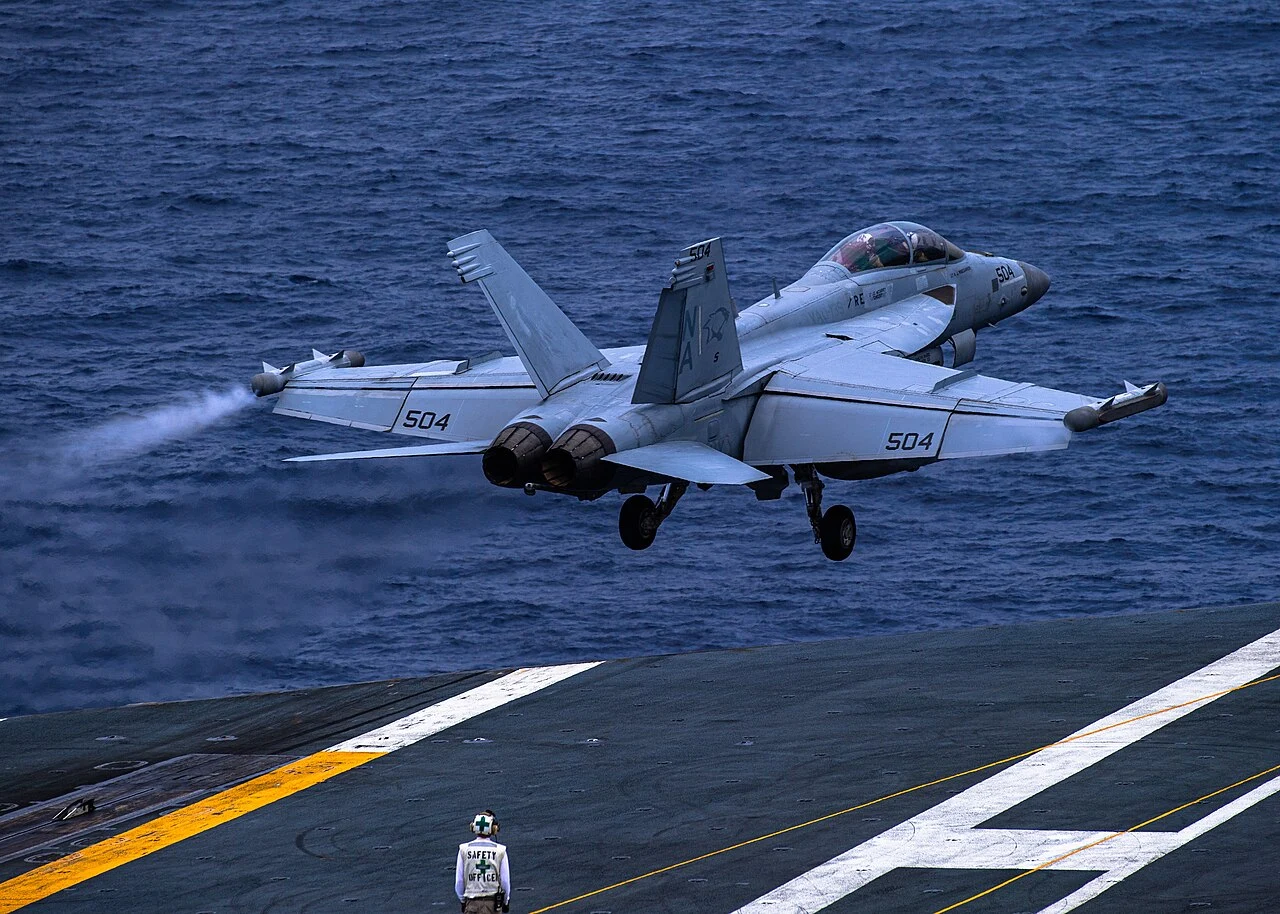
The Real Cost is More than Just $68 Million
The Navy’s stated unit cost of approximately $67–68 million per aircraft reflects only the base airframe value. The true replacement cost is considerably higher, and that distinction matters. According to The Pricer, a single Raytheon contract in 2024 covered 13 Next-Generation Jammer Mid-Band (NGJ-MB) ship sets for approximately $590 million — roughly $45 million per ship set before contract variables. The NGJ-MB is the planned successor to the legacy ALQ-99 pods that the Growler currently carries, and these jammer systems are not included in the $68 million aircraft figure.
Defence Express estimated that replacing both aircraft — using a September 2021 contract to replace a single burned-out Growler for the Royal Australian Air Force as a benchmark — could cost the United States approximately $304 million in current dollars when support services are factored in.
That figure excludes weapons systems, mission software, and classified technology packages. Because the production line is permanently closed, any replacement aircraft would need to come from existing fleet inventory through redistribution, or require an entirely new procurement effort, one that would demand Congressional authorisation and Department of Defense budget realignment.
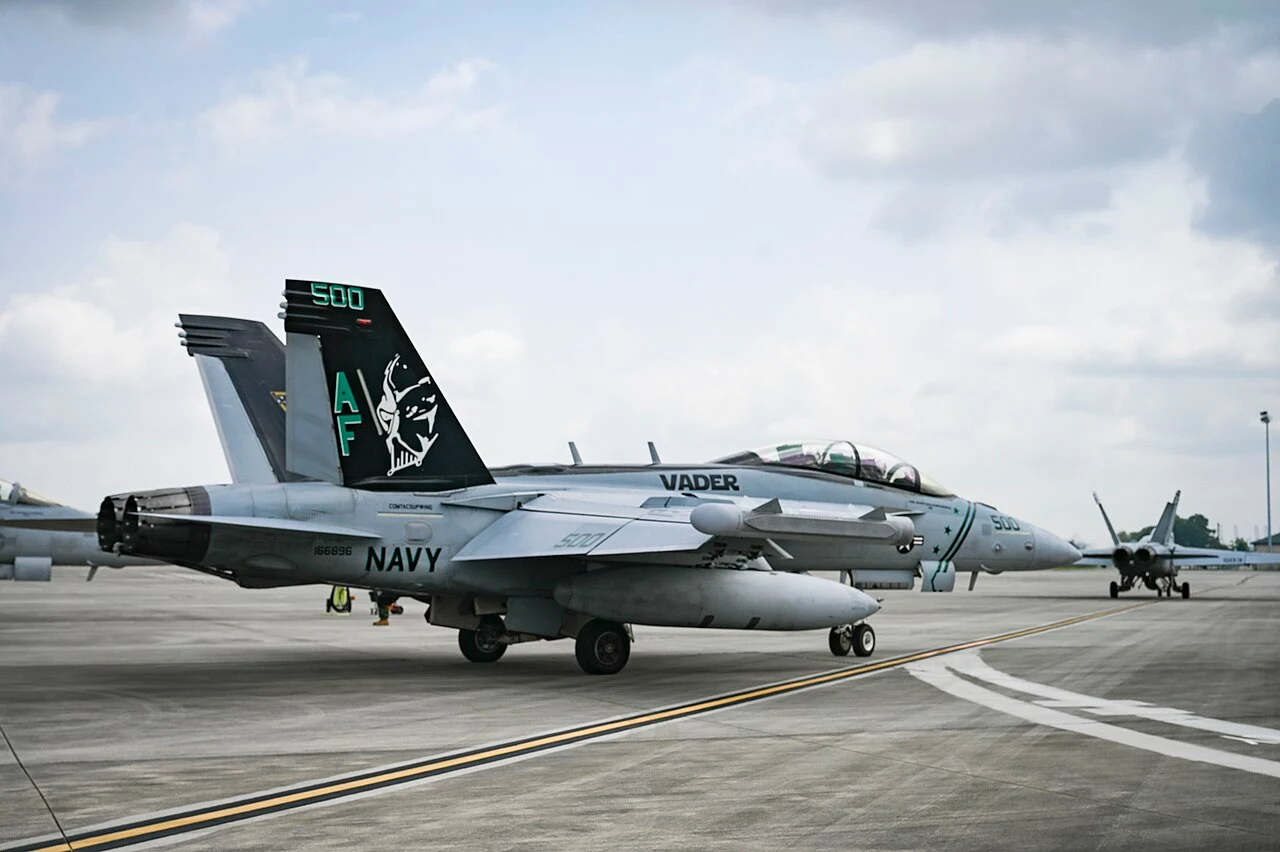
Air Show Safety Under Scrutiny
The Gunfighter Skies collision has reignited a debate that surfaces after virtually every serious military air show accident. CNN reported that John Venable, a senior resident fellow at the Mitchell Institute for Aerospace Studies and a former U.S. Air Force fighter pilot, pushed back against calls to abolish military flight demonstration teams. Venable argued that the demonstrations serve a genuine national purpose, and addressed their value directly:
“The real purpose of a military air show is to give people a sense of the precision and professionalism of the military to people who wouldn’t otherwise have an opportunity to see it and, in a special few, spark the urge to serve.”
Venable also explained the structural rationale for smaller dedicated teams like the Growler Airshow Team.
The Navy’s Blue Angels and the Air Force’s Thunderbirds, the two most prominent military demonstration units, can collectively cover only around 70 of the 325 to 350 air shows staged across North America each year.
Venable told CNN:
“Both the Air Force and the Navy really value smaller venues that can’t get a major jet team, which is why teams like the EA-18G Growler Demonstration Team exist. The services have created small demonstration teams that, when requested, can serve those communities.”
The question of financial justification has lingered for years without adequate official answers. According to CNN, Congress required the Pentagon in 2024 to conduct a new cost-benefit analysis of military air show programs.
As of the date of this article’s publication, the military has not released any public figures from that study — an omission that critics argue becomes harder to defend in the aftermath of a $136 million loss in a peacetime demonstration context.
Comparing This Incident with the U.S. Navy’s Recent Aviation Record
The Mountain Home collision does not stand alone. The U.S. Navy has experienced a pattern of high-profile and costly aviation incidents in recent years, several involving the Super Hornet and Growler platform family. Simple Flying’s earlier report noted that the previous Gunfighter Skies event in 2018 ended in tragedy when a hang glider pilot died in a crash, forcing organizers to cancel the remainder of the show.
Mountain Home Air Force Base also recorded a Thunderbirds crash in 2003, in which a pilot successfully ejected moments before impact without injuring spectators.
In a broader operational context, the Navy’s Super Hornet and Growler inventory has faced sustained attrition pressure. Flight-control surface repair contracts for the F/A-18E/F and EA-18G fleets reached $211,986,000 in 2024, per data cited by The Pricer.
Meanwhile, in 2026, Boeing received a not-to-exceed $489 million order for Beowulf non-recurring engineering and test assets tied to the EA-18G platform — an upgrade initiative intended to extend the operational life of existing airframes rather than procure new ones. These investments underscore the reality that the existing Growler fleet must be preserved and maintained rather than supplemented through new procurement, a fact that amplifies the significance of every hull lost.
PBS NewsHour reported that one of the four crew members sustained an injury requiring hospital treatment, a detail confirmed the following day by Commander Umayam. The remaining three crew members were evaluated and released without life-threatening injuries. Air Force Col. David Gunter, commander of the 366th Fighter Wing at Mountain Home Air Force Base, issued a statement that read:
“First and foremost, we are incredibly thankful that everyone involved in today’s incident is safe. The extraordinary professionalism of our emergency response teams, including the city and county, allowed for quick response to the aircrew as well as securing the scene.”

The Martin-Baker NACES Seat Saved Four Lives
The survival of all four crew members was not incidental. It was the product of decades of engineering refinement concentrated in one piece of equipment: the Martin-Baker US14A Navy Aircrew Common Ejection Seat (NACES).
According to NAVAIR’s NACES program page, the system has recorded a 100 percent successful ejection rate within its operational envelope and has saved more than 100 lives since it entered service in 1991. Martin-Baker acknowledged the successful ejections on social media the day after the accident, specifically crediting the NACES system.
The seat operates on a digital electronic sequencer with airspeed sensors and electrically fired cartridges, allowing five separate modes of operation. As Asian Military Review detailed, the system provides the seated platform, restraint, and all cockpit interfaces necessary to execute an escape sequence even under extreme conditions — including during low-altitude flight at close to zero airspeed.
All four crew members — one pilot and one electronic warfare officer per aircraft — ejected nearly simultaneously according to Aerospace Global News, which characterised the synchronised response as evidence of excellent crew discipline and rapid cockpit decision-making.
Navy Times, citing Reuters reporting, confirmed that a portion of State Highway 167 near the crash site remained closed for several days as investigators secured the wreckage and began collecting flight data, communications records, and maintenance documentation. The formal military investigation, led by the U.S. Navy with support from Mountain Home AFB, has not yet released any preliminary findings on causation.
.jpg)
Investigation and Accountability of the Crash
The investigation into the Gunfighter Skies collision will draw on multiple evidentiary streams. According to The Aviationist, video footage captured from multiple vantage points at the air show suggests the trailing aircraft may have descended onto the lead aircraft after losing visual contact in a blind spot — though official investigators have not confirmed or denied this hypothesis. Having direct cockpit testimony from four surviving crew members will provide investigators with an unusually complete picture of events.
The strategic implications of this incident extend well beyond the accident itself. The EA-18G Growler is actively engaged in combat operations in 2026, with VAQ-142 conducting SEAD missions against hardened air defense networks during Operation Epic Fury.
A conflict scenario involving China, as Defence Express noted, would demand substantial numbers of electronic warfare aircraft to suppress modern, layered air defense systems. The permanent closure of the Growler production line means that every aircraft destroyed in any context — combat or airshow — cannot be replaced with a new-build airframe.