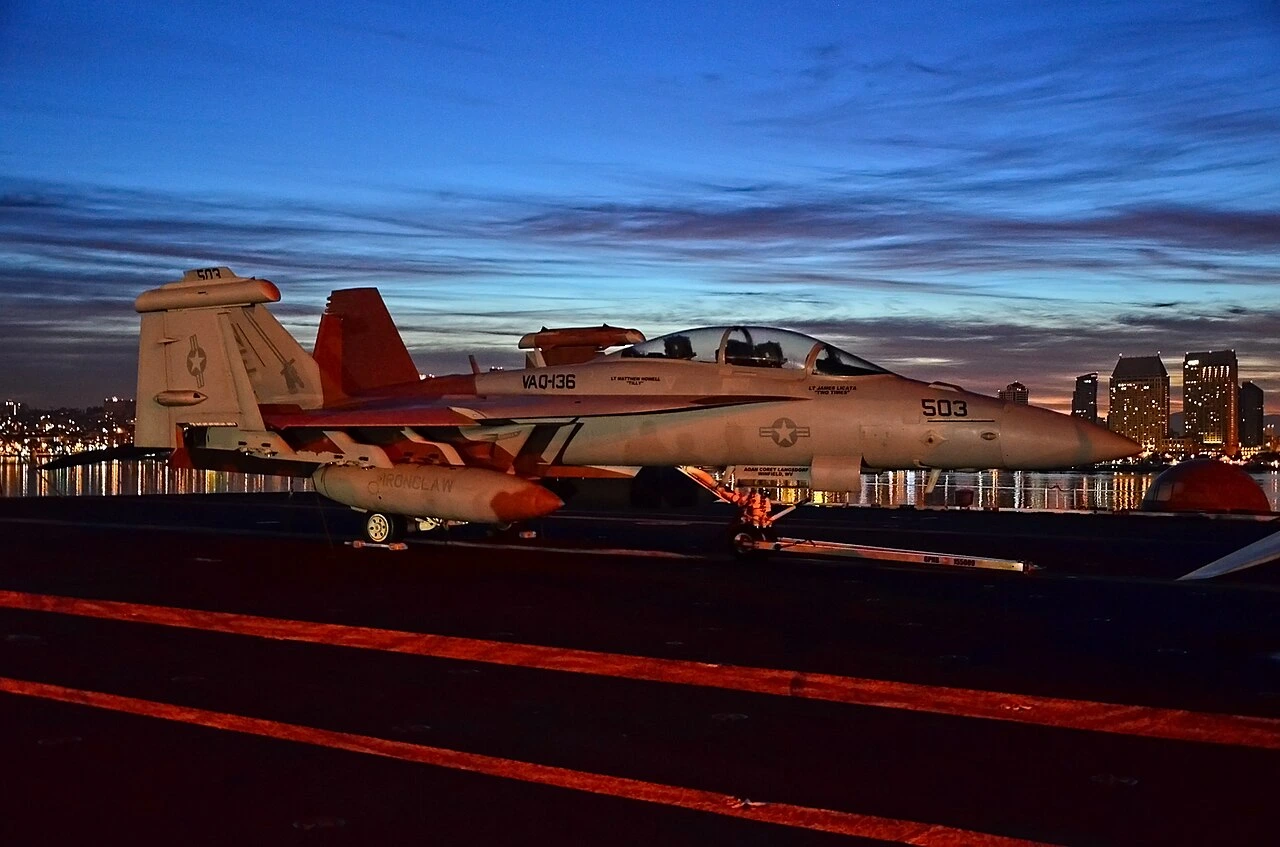
Two U.S. Navy Boeing EA-18G Growler electronic warfare aircraft assigned to Electronic Attack Squadron 129 (VAQ-129) “Vikings” of the Growler Demonstration Team collided in midair at approximately 12:10 p.m. Mountain Daylight Time on Sunday, May 17, 2026, during an aerial demonstration at the Gunfighter Skies 2026 Air Show at Mountain Home Air Force Base, approximately 50 miles (80 kilometres) south of Boise, Idaho.
All four crew members — two pilots and two electronic warfare officers, one from each aircraft — successfully ejected from the tumbling, entangled jets and descended safely under parachutes.
The crash injured no spectators or ground personnel. The two aircraft — registered as Bureau Numbers 168895 (callsign NJ-502) and 168252 (callsign NJ-540), per The Aviationist’s identification of the specific airframes — struck the ground approximately two miles northwest of the base and erupted in a fireball on impact.
What Video Evidence and Expert Analysis Reveal about the Collision Sequence
The Aviationist’s frame-by-frame analysis of spectator footage describes the lead aircraft appearing to initiate a turn while the trailing Growler was closing in from behind — the trailing aircraft’s nose striking the lead aircraft’s rear section from above.
The two jets then appeared to pitch upward simultaneously, as if the contact had driven them into a nose-high attitude together, before departing controlled flight and beginning a violent tandem descent — appearing almost entangled in the air, though The Aviationist cautions this impression may be partly a product of lens compression and perspective distortion in the widely circulated footage.
Task & Purpose reported that the crews ejected less than five seconds after the initial collision. Aviation safety expert Jeff Guzzetti, in a statement quoted by Associated Press and republished by The Himalayan Times, explained the paradox:
“It looks like they struck each other in a very unique fashion to cause them to remain intact and kind of stick to each other and that very well could have saved them.”
The War Zone’s analysis identified that the lead aircraft may have entered the under-nose blind spot of the trailing Growler immediately before impact. John Cox, CEO of Safety Operating Systems and a veteran aviation accident investigator, told the Associated Press: “Air show flying is demanding. It has very little tolerance. The people who do it are very good and it’s a small margin for error.”
Why Two Lost Growlers Matter So Much
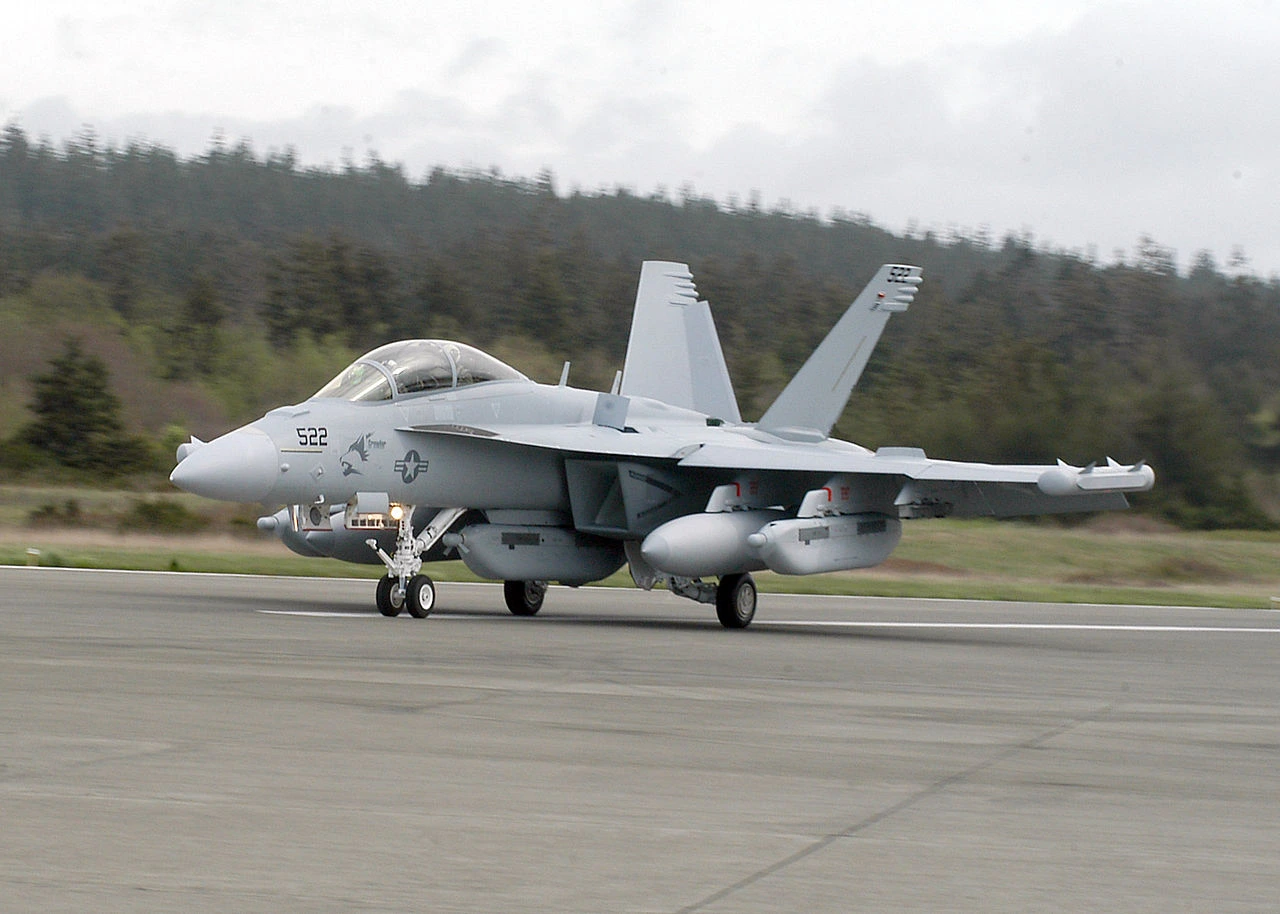
NAVAIR’s official EA-18G product page lists the unit cost of the Growler at USD 67 million per aircraft — a figure The World Data’s 2026 Growler analysis notes dramatically understates the true 2026 replacement value, since Boeing has already closed the Growler production line and no comparable carrier-based electronic warfare aircraft exists at any price.
The War Zone’s report confirmed that Boeing expects to close out production of new Super Hornets in 2027 and has already stopped building EA-18Gs — meaning every airframe destroyed or lost to accident is permanently removed from a U.S. Navy inventory that, per The World Data’s April 2025 DoD budget citation, totals approximately 160 active aircraft.
The Growler is the only dedicated carrier-based electronic warfare aircraft the Western world operates. Wikipedia’s EA-18G entry confirms the type replaced the Northrop Grumman EA-6B Prowler — which retired in 2019 — and is operated exclusively by the United States Navy and Royal Australian Air Force (RAAF), which purchased 13 aircraft under Foreign Military Sales arrangements finalised in 2014.
Boeing’s own EA-18G product page describes the Growler as providing “full-spectrum airborne electronic attack to detect, deny and degrade adversary sensors, communications and networks” .
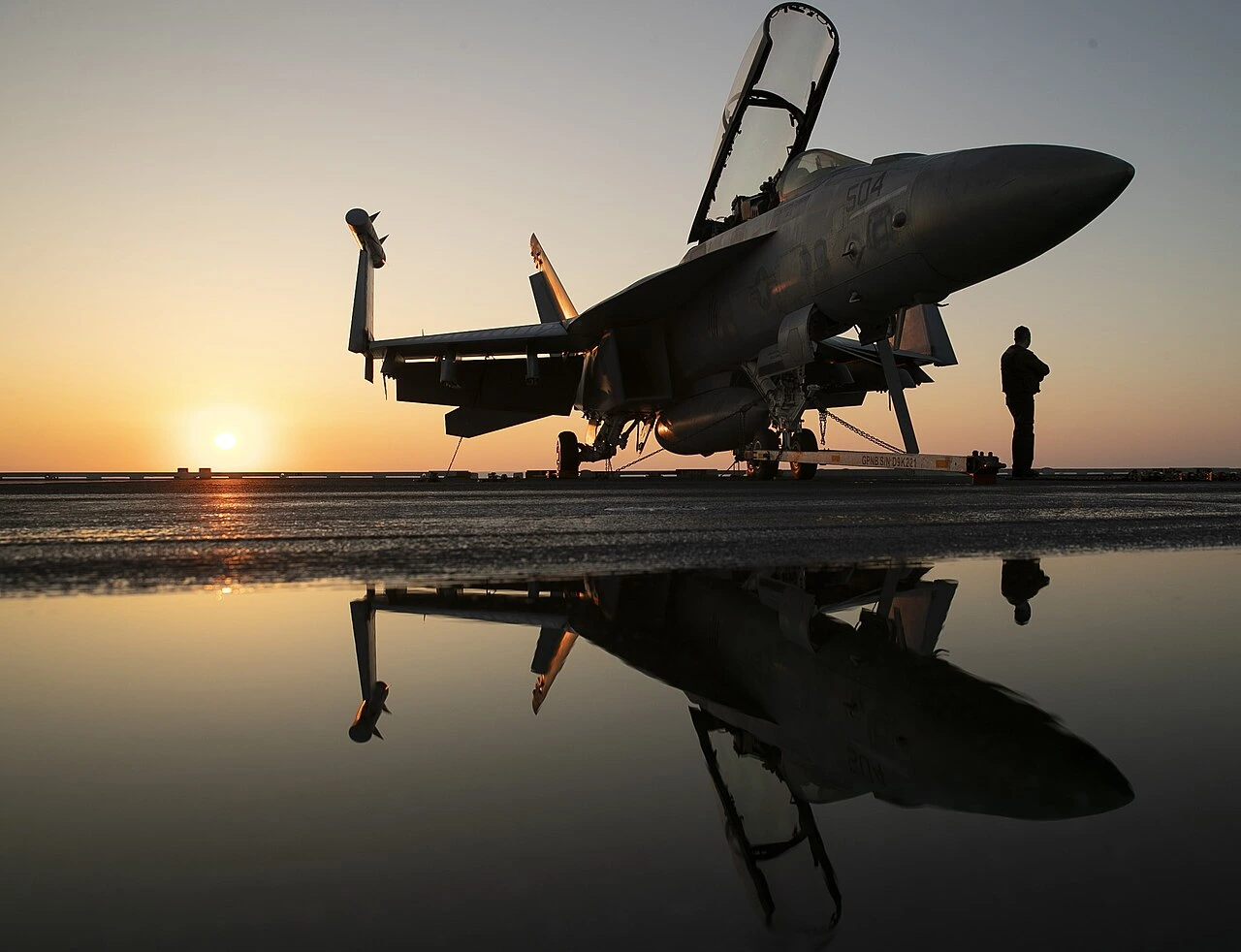
The aircraft and crews that collided belong to one of the most operationally significant squadrons in U.S. Naval Aviation. VAQ-129 “Vikings,” based at Naval Air Station Whidbey Island (NAS Whidbey Island) in Washington State, is the Navy’s sole Fleet Replacement Squadron for the EA-18G — the unit responsible for training every pilot and electronic warfare officer who will fly the type, including personnel from:
- U.S. Navy
- Marine Corps
- Air Force
- Royal Australian Air Force.
The Aviationist’s report confirmed that prior to Sunday’s accident, VAQ-129 maintained a fleet of 55 EA-18G Growler aircraft at Whidbey Island — the single largest concentration of this aircraft type in the world. The two lost airframes represent 3.6 percent of that fleet in a single demonstration event.
The Growler Demo Team itself was formally stood up by the U.S. Navy in February 2020, per The Aviationist’s 2020 establishment report and AerobaticTeams.net’s contemporaneous coverage, as an extension of the U.S. Navy Legacy Flight Team programme.
Unlike the Blue Angels aerobatic display team, the Growler Demo Team flies alongside legacy aircraft in formation passes rather than solo aerobatic sequences. AirHistory.net’s VAQ-129 photo archive documents the team’s appearances at events including EAA AirVenture Oshkosh 2024 demonstrating that Sunday’s crash involves a team with an established multi-year demonstration history before its first major accident.
What Went Wrong During the Idaho Air Show Collision?
The Mountain Home collision enters a small and sobering catalogue of military jet accidents at public air demonstrations. The last directly comparable U.S. military incident was the November 2022 Dallas Wings Over Dallas crash, in which a North American B-25 Mitchell and a Bell P-63 Kingcobra collided in front of thousands of spectators and killed all six people aboard.
The 2003 Thunderbirds incident (in which a pilot safely ejected less than one second before impact) at the Mountain Home base itself remains the most directly analogous prior event at the same venue.
EurAsian Times noted investigators will likely examine the separation standards used by the Growler Demo Team during its two-jet close formation display, crew communications before the collision, and whether strong wind gusts — reaching 29 mph (47 kph) near Mountain Home according to the National Weather Service.
One can plausibly argue whether the recruitment and heritage value of military air shows justifies the risk to aging aircraft whose production lines have already closed and cannot be replaced.

_%22The_Gauntlets%22_(13864155185).jpg)