The United States State Department has expanded its visa restriction framework across the Western Hemisphere, targeting individuals accused of supporting adversarial states and undermining American strategic interests. The policy move includes immediate enforcement action against 26 foreign nationals across multiple countries, Reuters reported.
The announcement underscores a broader US effort to strengthen regional security, protect critical infrastructure, and limit foreign influence operations. Officials stated that individuals and their immediate family members may now face ineligibility for entry into the United States under the expanded rules.
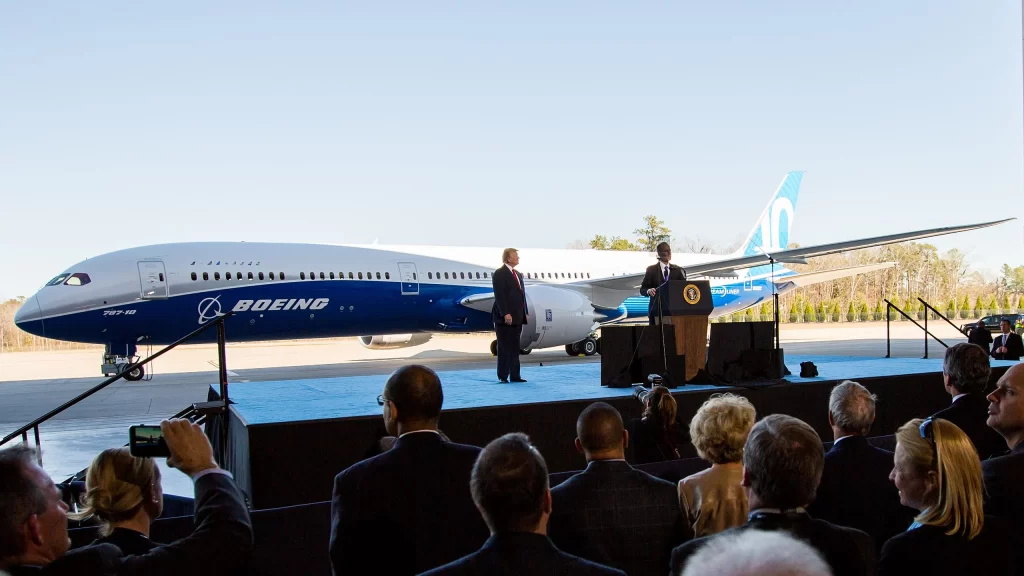
_(cropped).jpg)
US Expands its VISA Restriction Policy
The US State Department has formally broadened its visa restriction policy to include nationals in the Western Hemisphere alleged to be acting on behalf of adversarial powers. The revised framework allows authorities to deny entry to individuals who knowingly direct, fund, or support activities deemed hostile to US interests.
Officials stated that the policy is designed to address actions such as interference in regional security structures, economic destabilization, and attempts to influence sovereign governance. It also extends enforcement authority to individuals engaged in influence operations targeting political or economic systems within allied nations, the Department said:
This expanded policy enables us to restrict U.S. visas for nationals of countries in our region who, while within Western Hemisphere countries and while intentionally acting on behalf of adversarial countries, their agents, or enterprises, knowingly direct, authorize, fund, or provide significant support to, or carry out activities that are adversarial to and undermine America’s interests in our hemisphere. These individuals – and their immediate family members – will be generally ineligible for entry into the United States
The department emphasised that the expansion strengthens Washington’s ability to respond to hybrid threats involving both state and non-state actors operating across borders.
Actions Againt 26 Individuals
As part of the implementation, the State Department confirmed that visa restrictions have already been imposed on 26 individuals across several countries in the Western Hemisphere. These individuals are accused of providing material support or operational assistance to adversarial entities.
Authorities stated that the affected individuals are now generally ineligible for entry into the United States. The policy also extends restrictions to immediate family members, significantly broadening the scope of enforcement beyond primary targets.
The action forms part of a wider effort to deter networks that facilitate foreign strategic influence and limit access to US territory for individuals linked to activities such as:
- Conducting influence operations aimed at undermining the sovereignty and stability of nations in the region
- Undermining American economic interests
- Destabilizing regional security efforts
- Enabling adversarial powers to acquire or control key strategic assets and resources in the Western Hemisphere
The news came on the same day when six Chinese nations were arrested in Colombo Airport, possibly in a case of telecom fraud.
Who are the 26 individuals Trageted?
It is not clear who these twenty-six people are. According to Al Jazeera, the statement referenced the same provision of the Immigration and Nationality Act previously invoked by the Trump administration in efforts to deport pro-Palestine student protesters last year.Under this legal framework, foreign nationals may be denied entry into the United States if the Secretary of State determines that their presence could result in “potentially serious adverse foreign policy consequences” for the country.
US VISA Restriction Actions in the Past
| Category / Region | Individual / Group | Role / Affiliation | Action Taken | Context / Basis |
|---|---|---|---|---|
| United States (legal cases) | Mahmoud Khalil | Pro-Palestine student protester | Deportation proceedings initiated (ongoing case) | Cited under Immigration and Nationality Act provisions used for foreign policy concerns |
| United States (legal cases) | Badar Khan Suri | Pro-Palestine student protester | Deportation proceedings initiated (ongoing case) | Case linked to national security and foreign policy assessment standards |
| United States (Iran-linked cases) | At least 7 individuals (unnamed) | Individuals with family or political ties to Iranian government or 1979 revolution figures | Immigration visas terminated | Linked to national security concerns and foreign government associations |
| Brazil | Alexandre de Moraes (Supreme Court Justice) | Judiciary official involved in Bolsonaro-related prosecutions | US visa revoked | Action tied to political tensions involving former President Jair Bolsonaro cases |
| Brazil | Brazilian officials (group) | Officials involved in Bolsonaro prosecution | US visas withdrawn | Part of broader political disagreement between US and Brazilian institutions |
| Colombia | Gustavo Petro (President of Colombia) | Head of state | US visa revoked (later diplomatic reset) | Criticism of US policy at UN General Assembly cited as trigger |
Data: Al Jazeera
United States’ National Security Focus
US officials framed the policy expansion as a direct response to evolving security challenges across the Western Hemisphere. The State Department stated that it aims to protect national interests, secure critical trade and transport routes, and reinforce regional stability.
The department highlighted that the measure aligns with broader national security objectives focused on countering adversarial acquisition of strategic assets and safeguarding democratic institutions. Officials also stressed that the United States will continue using diplomatic and legal tools to enforce compliance.
The policy reflects a more assertive posture in addressing geopolitical competition in the region, particularly where economic leverage and influence operations intersect with security concerns.