Ryanair (FR), Europe’s largest low-cost airline, has launched a provocative promotional fare sale dubbed the “Big Idiot Seat Sale” aimed at Elon Musk, owner of X and CEO of Tesla and SpaceX, and “any other idiots on X.” The sale, which has come after Ryanair claimed that the budget carrier would not install Starlink, offers 100,000 seats from £16.99 one-way for travel in February, March, and April.
The unusual marketing campaign emerged after Musk criticized Ryanair’s refusal to install Starlink satellite internet service across its fleet, citing that installing Musk’s internet service would lead to a 2% increase in fuel burn. Then ensued an exchange of sharp words played out publicly on social media platform X (formerly Twitter), with both sides trading insults before the airline turned the controversy into a headline-grabbing fare promotion.

Background of the Musk-O’Leary Dispute
The origins of this unusual spat trace back to a disagreement over Starlink in-flight Wi-Fi. O’Leary publicly dismissed the potential installation of Musk’s Starlink system on Ryanair planes, arguing that the antennae required would increase drag and costs, estimating a $200–$250 million annual fuel penalty, costs that would be “an extra $1 per passenger”, reported The National News.
O’Leary characterized Musk’s understanding of airline operations as “zero” and said he “would pay no attention whatsoever to anything that Elon Musk posts on that cesspit of his called X.”
• Musk responded by calling O’Leary an “utter idiot” and suggested Ryanair’s CEO should be fired, prompting online polls about whether Musk should buy the airline.
The feud quickly became a global social media spectacle, with both executives leveraging their platforms to voice personal barbs rather than narrow technical debate.
Details of Ryanair’s “Big Idiot Seat Sale”
Ryanair’s “Big Idiot Seat Sale” appears to be a tactical blend of humor, brand personality, and fare discounting. According to the airline’s official X posts and promotional materials:
-
The sale is marketed directly at Elon Musk and “any other idiots on X.”
-
100,000 one-way seats are available from £16.99 (approx. €19-20).
-
It targets travel across Europe between February and April, covering various Ryanair routes.
-
The airline’s social media team used provocative language such as “Don’t thank us, thank that big ‘IDIOT’ @elonmusk.”
Ryanair’s public relations strategy here clearly capitalizes on the viral nature of the feud, leveraging humor to draw attention to a promotional campaign aligned with its ultra-low-cost ethos.
Ryanair’s Will Address Elon Musk’s Tantrum in a Conference
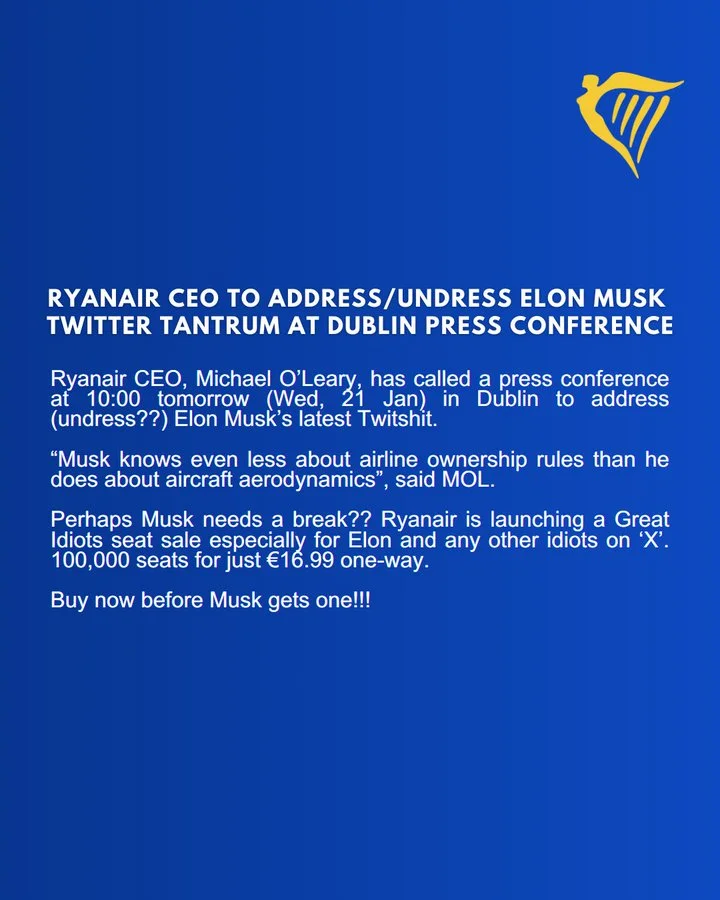
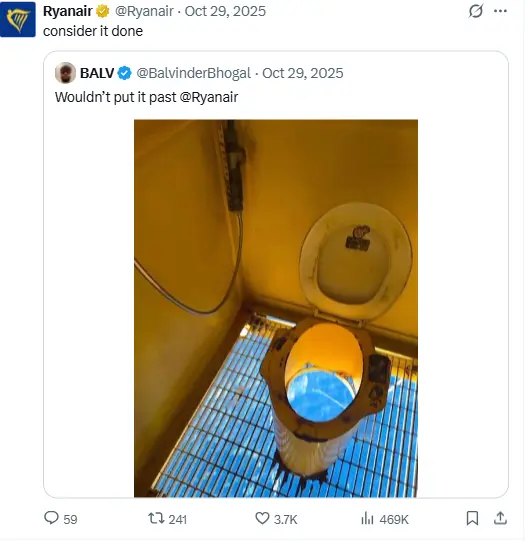
Here’s the excerpt of Ryanair’s tweet expressing the sale in full:
RYANAIR CEO TO ADDRESS/UNDRESS ELON MUSK TWITTER TANTRUM AT DUBLIN PRESS CONFERENCE
Ryanair CEO, Michael O’Leary, has called a press conference at 10:00 tomorrow (Wed, 21 Jan) in Dublin to address (undress??) Elon Musk’s latest Twitshit.
“Musk knows even less about airline ownership rules than he does about aircraft aerodynamics”, said MOL.
Perhaps Musk needs a break?? Ryanair is launching a Great Idiots seat sale especially for Elon and any other idiots on ‘X’. 100,000 seats for just €16.99 one-way.
Buy now before Musk gets one!!!
Regulatory and Industry Context Around Elon-O’Leary Feud
Industry bodies such as the International Air Transport Association (IATA) set broad marketing guidelines that encourage truthful, non-misleading advertising but do not explicitly prohibit humorous or provocative branding strategies. When it was found that airlines in Europe had been engaged in misleading advertising about green fares, airlines were punished.
Only a few years ago, climate protesters hit O’Leary with two cream pies during a press briefing in Brussels. Following this incident, Ryanair CEO Michael O’Leary said the company received ‘10 times more free publicity‘, reported Sky, “for its petition which calls for flights over Europe to be better protected from air traffic control strikes“. In 2009, O’Leary had proposed that Ryanair would be charging a pound for air travelers onboard for using lavatory. Although the proposal didn’t go through, it did give the carrier the publicity it was looking for.
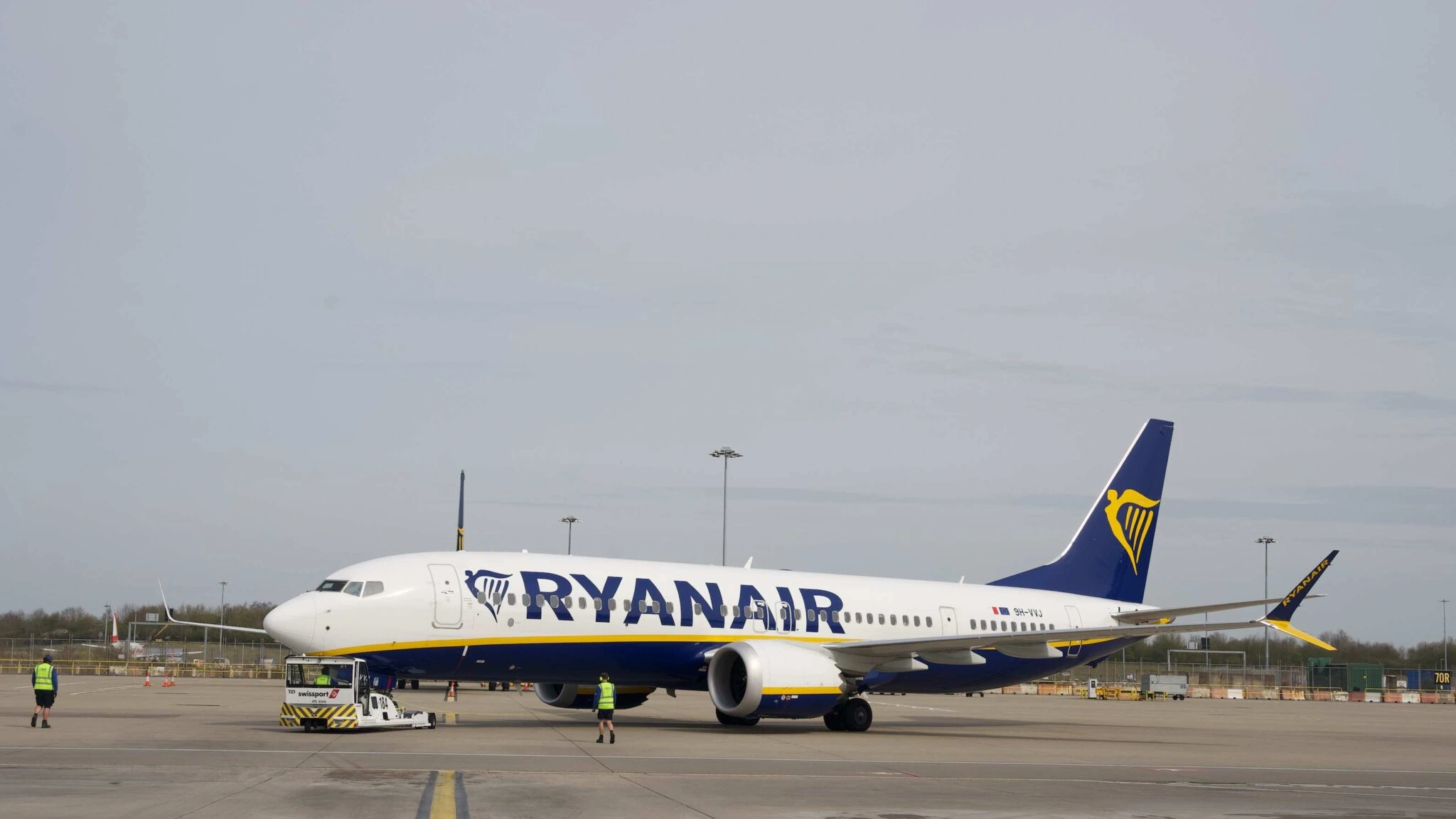
Musk’s suggestion of buying Ryanair, with a tweet that read “How much would it cost to buy you?”, sparked discussion of aviation ownership rules. European Union law typically requires airlines to be majority-owned and controlled by EU nationals or entities, which could impede any non-EU acquisition attempt.
According to CNBCTV18, however, last year:
“… Ryanair’s board decided to allow non-EU nationals to buy ordinary shares listed on Euronext Dublin and depositary shares on Nasdaq. Ryanair could be excluded from certain stock tracking indexes if there are concerns about those ownership restrictions being breached.”
O’Leary, who has expanded the airline into the largest low-cost carrier in the region over the past few decades, ranks among its top 10 shareholders. He recently received a substantial bonus after meeting specific performance targets, with the company’s stock rising 55% over the past year.
All in All
Ryanair’s “Big Idiot Seat Sale” emerged from a public exchange between CEO Michael O’Leary and Elon Musk over the potential impact of SpaceX’s Starlink connectivity system on aircraft fuel consumption.
After Musk criticized O’Leary’s assessment that installing Starlink could increase fuel burn by around 2%, O’Leary responded by calling Musk an “idiot” and questioning his understanding of aviation. He also criticized X, Musk’s social media platform, describing it in derogatory terms.
Musk subsequently responded on X, calling O’Leary an “utter idiot” and arguing that the Ryanair CEO should be dismissed. Ryanair then turned the public dispute into a marketing campaign, launching its “Big Idiot Seat Sale” as a tongue-in-cheek reference to the exchange.