On 28 October 2025, X‑59 QueSST — the joint development of NASA and Lockheed Martin’s Skunk Works® — achieved its first flight, as it took off from U.S. Air Force Plant 42 in Palmdale, California, before landing near the Armstrong Flight Research Center in Edwards, California.
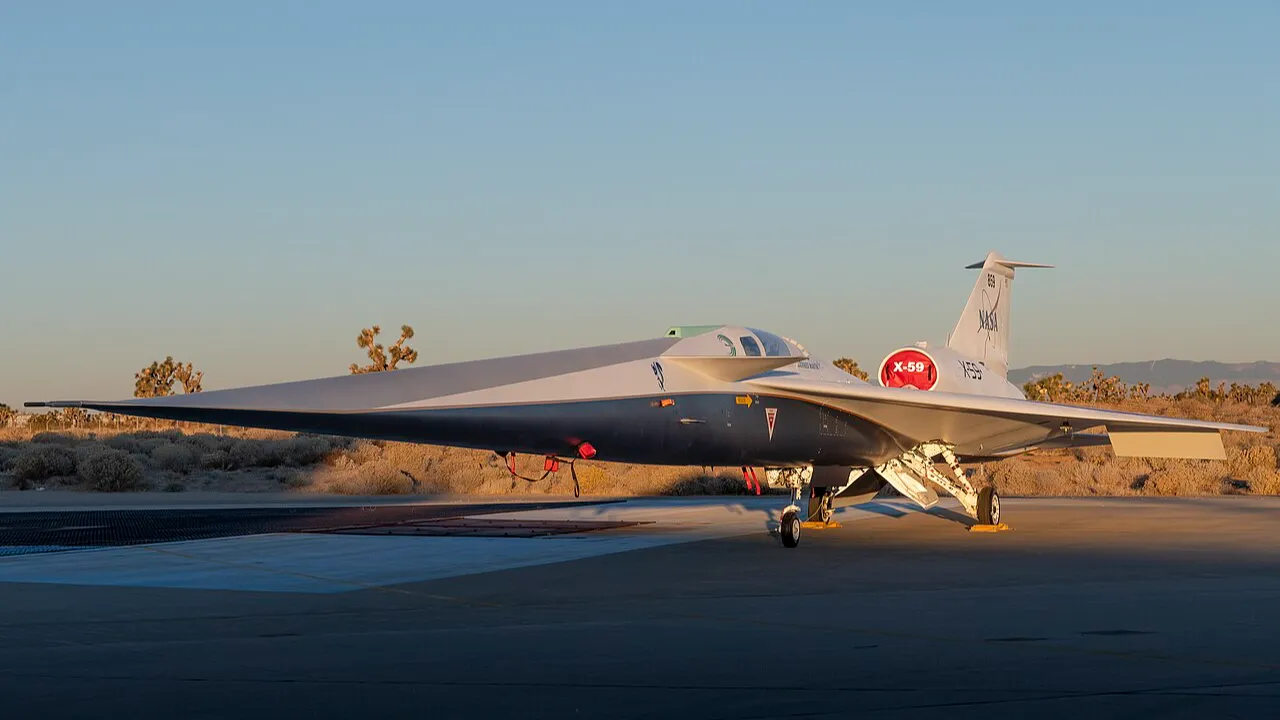
The piloted test sortie marks a pivotal step toward enabling commercial supersonic travel over land by reducing the sonic-boom to a minute “thump” and thereby removing a major barrier to overland supersonic operations. The sonic boom was one of the primary reasons why the European supersonic airliner, Concorde, was never given a chance for regular operations over the skies of the US mainland.
| About Lockheed Martin | Details |
|---|---|
| Country | United States |
| Founded | March 15, 1995 (merger of Lockheed Corporation and Martin Marietta) |
| Predecessor | Lockheed Corporation (founded 1912) and Martin Marietta (founded 1961) |
| Group / Part of | Independent Aerospace and Defense Company |
| Headquarters | Bethesda, Maryland, USA |
| Main Divisions | Aeronautics, Missiles & Fire Control, Rotary & Mission Systems, Space |
| Key Facilities / Hubs | Fort Worth (Texas), Marietta (Georgia), Palmdale (California), Denver (Colorado) |
| Notable Aircraft Produced | F-22 Raptor, F-35 Lightning II, C-130 Hercules, C-5 Galaxy, U-2 Dragon Lady, SR-71 Blackbird, F-104 Starfighter |
| Supersonic / High-Speed Aircraft | SR-71 Blackbird (Mach 3.3), F-104 Starfighter (Mach 2.0), F-22 Raptor (Mach 2.25), F-35 Lightning II (Mach 1.6) |
| Average Production Output (Aviation) | ~150 F-35 aircraft delivered annually (2024 data) |
| Employees | ~122,000 (2024) |
| Revenue (2024) | Approx. US $68 billion |
| Primary Focus Areas | Advanced military aircraft, defense systems, space technologies, and hypersonic research |

Development and first flight of the X-59
The X-59 QueSST (Quiet SuperSonic Technology) took off from Plant 42 and flew an hour-long mission at a sub-sonic speed of around 230 mph and peaked at an altitude of approximately 12,000 ft, verifying flying qualities and air-data performance before its safe landing. To put the altitude that the X-59 gained in this flight: the highest ever helicopter landing at the top of Mount Everest was recorded at an altitude of nearly 29,000 ft. The forgotten Airport of the Everest region known as Mingbo Airport is located at an altitude of nearly 15,000 ft. [If Mingbo had survived the test of time, it would have been considered more dangerous than Lukla], which is regarded as the most dangerous airport in the world]
Lukla: 5 Fast Facts About The World’s Most Dangerous Airport
Lockheed Martin’s vice-president and general manager of Skunk Works, O.J. Sanchez, described the first flight of the X-59 as “a testament to the innovation and expertise of our joint team” and “proof that we are at the forefront of quiet supersonic technology development.” According to acting NASA Administrator Sean Duffy, the same flight places the United States “as the leader in aviation and has the potential to change the way the public flies.”

Technical Features of the X-59 that enable the Quiet Boom
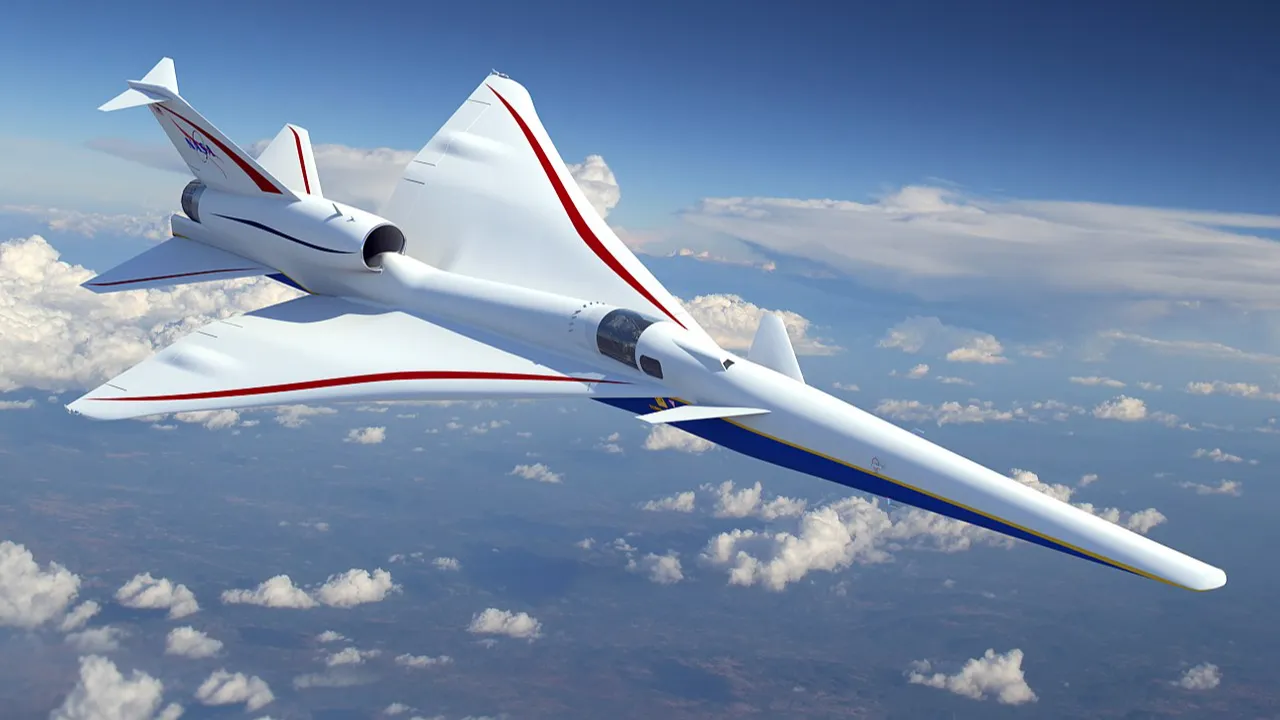
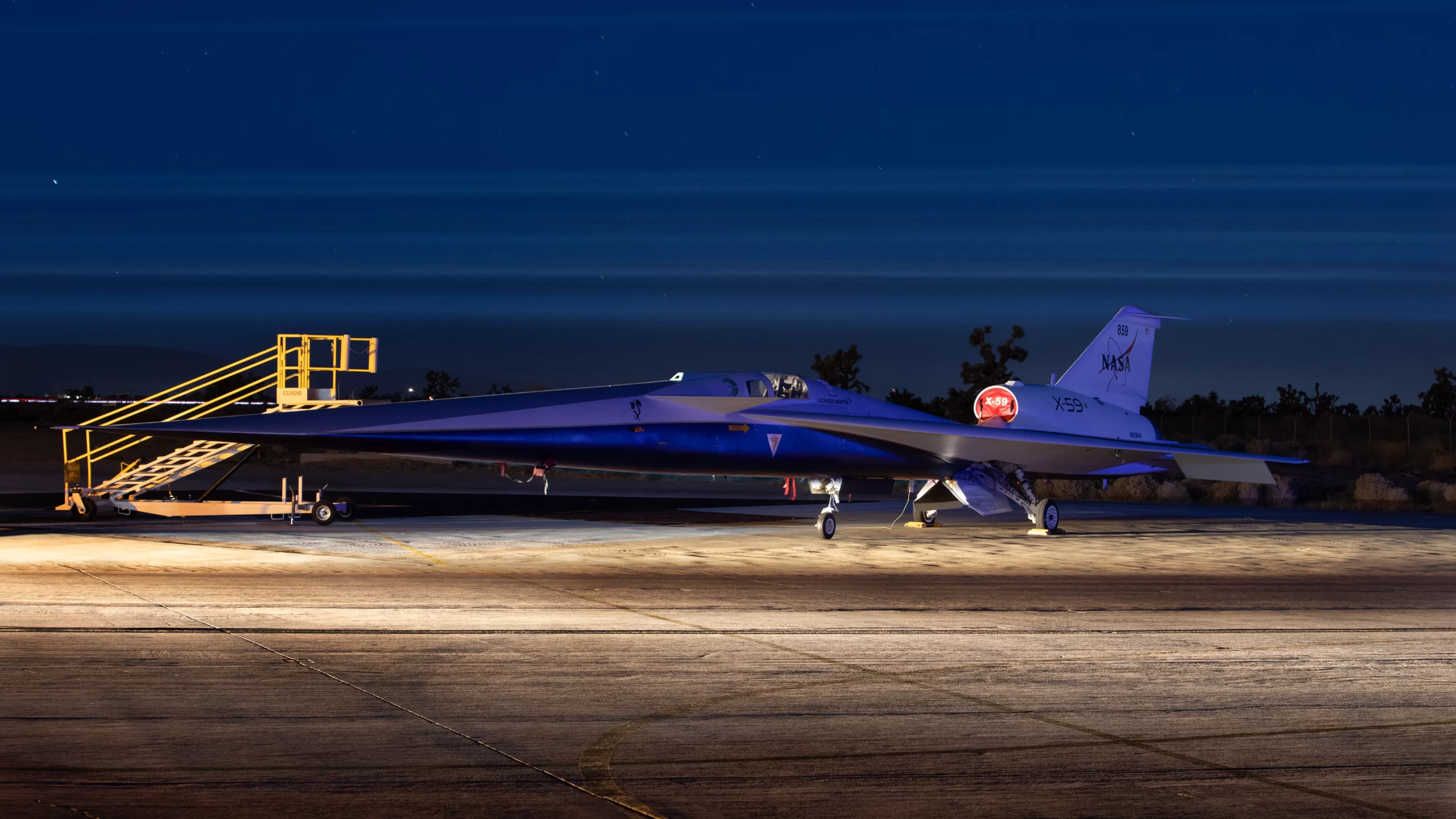
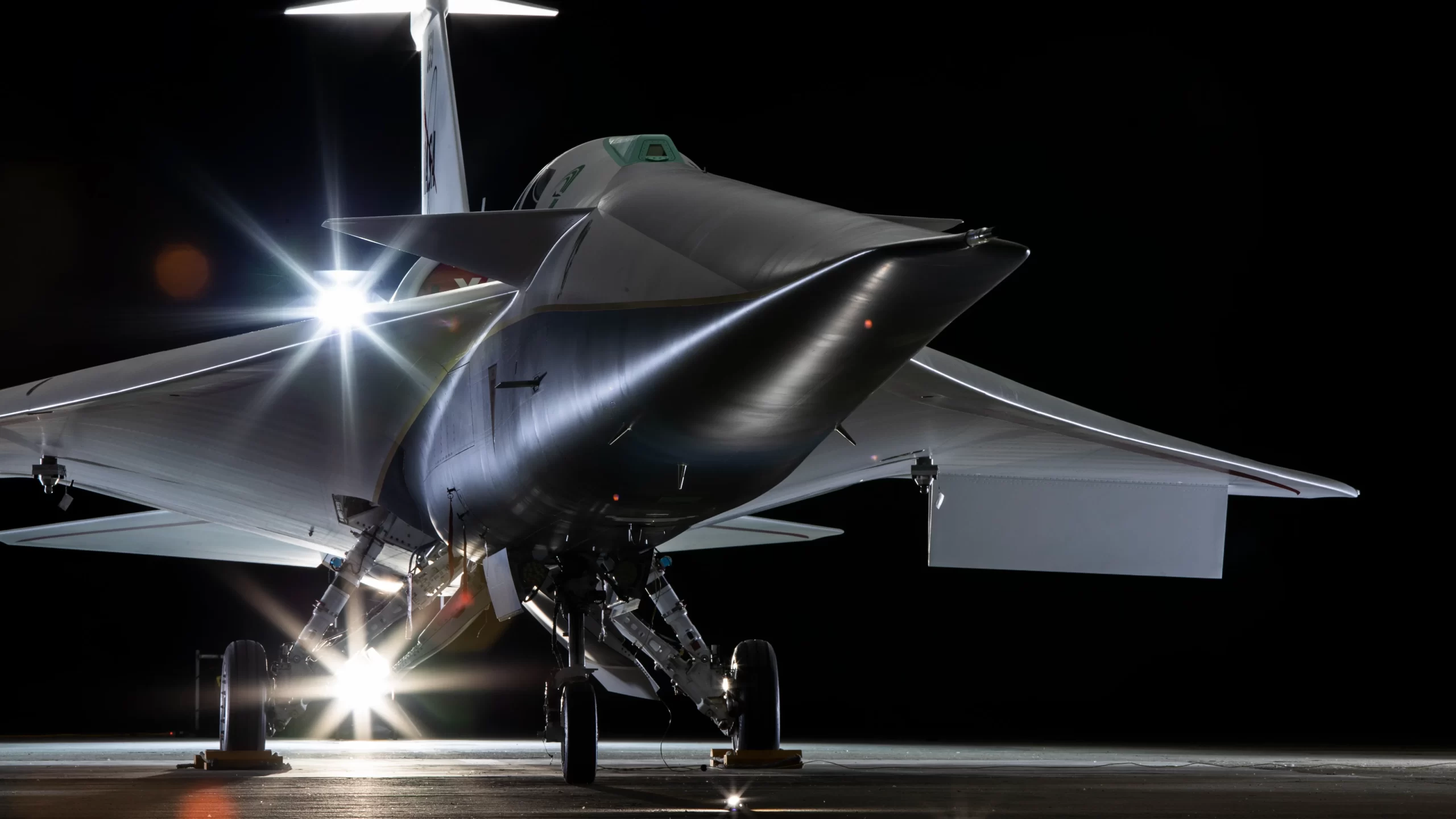
The X-59 is nearly 100 ft long but has been designed with a slender fuselage and dramatically elongated nose to reshape shock-waves and reduce ground-level noise. It uses a single F414-GE-100 turbofan engine, producing around 22,000 lbf of thrust, mounted on top of the fuselage to help smooth the underside and manage shock-wave propagation.
X-59 Design and Configuration Specifications
| Category | Parameter | Specification |
|---|---|---|
| Design Parameters | Length | 99 ft |
| Wingspan | 29.5 ft | |
| Maximum Speed | Mach 1.4 (≈ 925 mph) | |
| Service Ceiling | 55,000 ft | |
| Configuration | Maximum Design Gross Weight | 25,000 lbs |
| Empty Weight | 14,990 lbs | |
| Fuel Capacity | 8,700 lbs | |
| Payload | 600 lbs | |
| Design Mach Number | Mach 1.4 | |
| Target Loudness Level | < 75 PLdB (Perceived Loudness Decibels) | |
| Engine Type | 1 × General Electric F414-GE-100 | |
| Nose Landing Gear | F-16 Block 25 NLG | |
| Main Landing Gear | F-16 Block 25 MLG |
X-59’s cockpit lacks a traditional forward-facing window. The pilot, instead, uses the eXternal Vision System (XVS) which delivers high-resolution camera imagery (4K) to a monitor. The long-nose configuration that makes it quite an eye-catching spectacle is necessary for boom reduction. One of the consequences of the long nose is that the pilot of the X-59 is located almost halfway down the length of the aircraft.
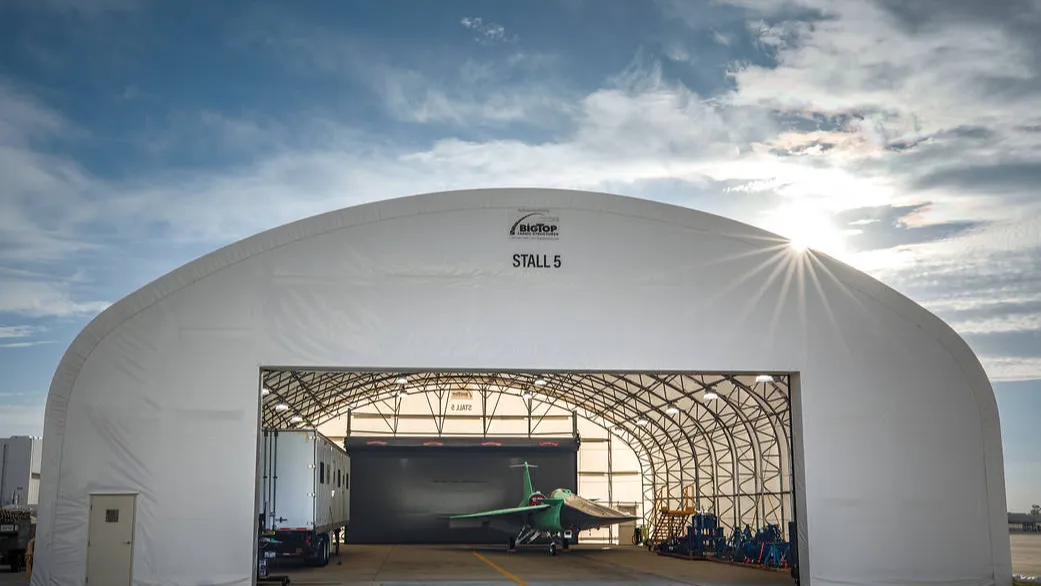
The design goal is to achieve cruising at Mach 1.4 (≈925 mph) at 55,000 ft while producing an “effective perceived noise level” (EPNdB) comparable to a closed car door rather than a thunderous boom. Some of the other key engineering highlights of the X-59 include the following:
-
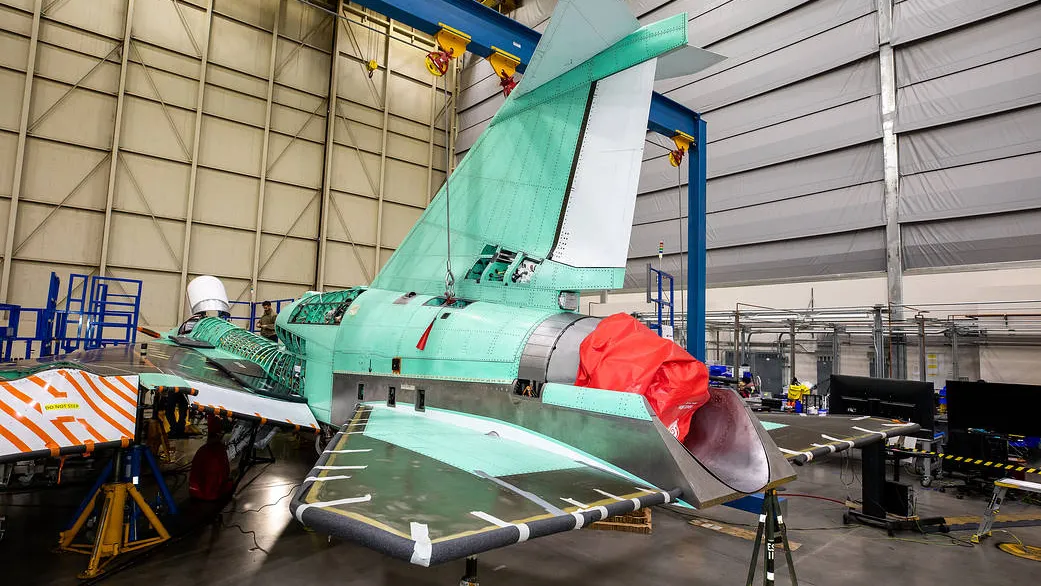
A conventional tail layout that simplifies aerodynamic stability and flight-control systems.
-
A fixed canard assembly provides nose-up trim during low-boom cruise conditions, ensuring balanced control at supersonic speeds.
-
Proven F-16 landing gear and other legacy subsystems from high-performance fighters are integrated to reduce certification time and program expense.
-
The General Electric F414 engine, fitted with a standard exhaust nozzle, was selected for cost-efficiency and schedule reliability.
-
The T-38 aft canopy and ejection seat were chosen to leverage existing qualified hardware, cutting down on new safety approvals.
-
Wing shielding mitigates the effects of inlet spillage, helping maintain the aircraft’s low-boom acoustic profile.
-
Unitized outer skin structures significantly reduce the overall part count and manufacturing costs, improving assembly precision.
Regulatory environment around the X-59 and over-land supersonic flight laws in the US
Historically, civil supersonic flight over land in the United States has been prohibited due to noise concerns. In a policy statemnet draft in 2008, the FAA said that “for supersonic aircraft is the same as for subsonic, that the same noise certification limits apply for
supersonic aircraft when flown in subsonic flight configurations“:
“Since March 1973, supersonic flight over land by civil aircraft has been prohibited by regulation in the United States. The Concorde was the only civil supersonic airplane that offered service to the United States, and it is no longer in service….. We anticipate that any future Notice of Proposed Rulemaking issued by the FAA affecting the noise operating rules would propose that any future supersonic airplane produce no greater noise impact on a community than a subsonic airplane. Noise standards for supersonic operation will be developed as the unique operational flight characteristics of supersonic designs become known and the noise impacts of supersonic flight are shown to be acceptable.”
The FAA further states that all civil aircraft cannot exceed Mach 1 over land unless they obtain a Special Flight Authorization (SFA), which in its own words FAs “is considered a major federal action under the National Environmental Policy Act (NEPA)”. Even for SFA, the FAA must complete “an environmental review compliance with NEPA and other environmental laws and requirements“.
In June 2025, the White House issued an executive order directing the Federal Aviation Administration (FAA) to repeal the over-land supersonic ban and establish noise-based certification standards. Donald Trump, the president of the United States, said that the changes would allow the nation to “stands at the threshold of a bold new chapter in aerospace innovation”:
“For more than 50 years, outdated and overly restrictive regulations have grounded the promise of supersonic flight over land, stifling American ingenuity, weakening our global competitiveness, and ceding leadership to foreign adversaries.”
Trump further argued that science and technology had made the supersonic travel “not just possible, but safe, sustainable, and commercially viable”:
“This order begins a historic national effort to reestablish the United States as the undisputed leader in high-speed aviation,” the president declared. “By updating obsolete standards and embracing the technologies of today and tomorrow, we will empower our engineers, entrepreneurs, and visionaries to deliver the next generation of air travel, which will be faster, quieter, safer, and more efficient than ever before.”
Historical Comparators: How fast can the X-59 travel
| Aircraft | First flight | Max cruise speed | Over-land impact | Basis for comparison |
|---|---|---|---|---|
| Concorde (Air France/BA) | 1969 | ~Mach 2 | Supersonic only over ocean; boom restricted over land. | Last commercial SST |
| XB‑1 (Boom Supersonic demonstrator) | 2024 | ~Mach 1.3 | Designed for “boomless cruise” over land. | Modern civil-tech test bed |
| X-59 QueSST | Oct 28 2025 | Target Mach 1.4 | Designed to reduce boom to “thump” and enable over-land flight. | Current milestone aircraft |
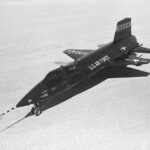
However, this is not an exhaustive list of all the supersonic aircraft that have ever taken to the skies: only the ones that have still been capturing the public’s imagination. The North American X-15, the hypersonic research program for example touched Mach 6.72 (4,534 mph).And how does the X-59 compare with the fastest aircraft designed till date? Let’s find out:
| Rank | Aircraft | Country / Developer | Max Speed (Mach / km/h / mph) | First Flight | Service Ceiling | Engine (Type & Thrust) | Notable Features / Role |
|---|---|---|---|---|---|---|---|
| 10 | General Dynamics F-111 Aardvark | USA – General Dynamics | Mach 2.5 / 2,656 km/h / 1,650 mph | 21 Dec 1964 | 66,000 ft (20,000 m) | 2 × Pratt & Whitney TF30-P-100, 25,100 lbf with afterburner | Supersonic long-range fighter-bomber; used in Vietnam & Desert Storm; variable-geometry wings |
| 9 | McDonnell Douglas F-15 Eagle | USA – McDonnell Douglas (Boeing) | Mach 2.5 / 2,655 km/h / 1,650 mph | 27 Jul 1972 | 65,000 ft (20,000 m) | 2 × Pratt & Whitney F100-PW-220, 23,770 lbf with afterburner | Legendary air-superiority fighter with 100+ kills, 0 losses; exported globally |
| 8 | Mikoyan MiG-31 Foxhound | USSR / Russia – Mikoyan Design Bureau | Mach 2.83 / 3,000 km/h / 1,900 mph | 16 Sep 1975 | 82,000 ft (25,000 m) | 2 × Soloviev D-30F6, 34,000 lbf with afterburner | Supersonic interceptor; first with PESA radar; still in Russian service |
| 7 | XB-70 Valkyrie | USA – North American Aviation | Mach 3.02 / 3,310 km/h / 2,056 mph | 21 Sep 1964 | 77,350 ft (23,580 m) | 6 × GE YJ93, 28,000 lbf with afterburner | Experimental bomber; research platform for supersonic transport |
| 6 | Bell X-2 Starbuster | USA – Bell Aircraft / USAF / NACA | Mach 3.2 / 3,370 km/h / 2,094 mph | 27 Jun 1952 (glide); 18 Nov 1955 (powered) | 126,200 ft (38,500 m) | 1 × Curtiss-Wright XLR25, 15,000 lbf | Rocket-powered research aircraft for high-altitude/speed tests |
| 5 | Mikoyan MiG-25 Foxbat | USSR – Mikoyan-Gurevich | Mach 3.2 / 3,000 km/h / 1,900 mph | 6 Mar 1964 | 78,740 ft (24,000 m) | 2 × Tumansky R-15B-300, 22,500 lbf with afterburner | High-altitude interceptor; built from stainless steel; Cold War icon |
| 4 | Lockheed YF-12 | USA – Lockheed | Mach 3.2 / 3,661 km/h / 2,275 mph | 7 Aug 1963 | 90,000 ft (27,400 m) | 2 × Pratt & Whitney J58, 31,500 lbf with afterburner | Manned interceptor variant of A-12; served NASA & USAF |
| 3 | Lockheed SR-71 Blackbird | USA – Lockheed Skunk Works | Mach 3.4 / 3,540 km/h / 2,200 mph | 22 Dec 1964 | 85,000 ft (26,000 m) | 2 × Pratt & Whitney J58, 34,000 lbf | World’s fastest jet-propelled aircraft; reconnaissance & research platform |
| 2 | North American X-15 | USA – North American Aviation / NASA / USAF | Mach 6.7 / 7,270 km/h / 4,520 mph | 8 Jun 1959 | 354,200 ft (108 km / 67 miles) | 1 × Reaction Motors XLR-11, 16,000 lbf | Rocket-powered hypersonic research aircraft; reached edge of space |
| 1 | NASA X-43A (Hyper-X) | USA – NASA | Mach 9.6 / 11,855 km/h / 7,366 mph | 2 Jun 2001 | ~110,000 ft (33,500 m) | Dual-mode ramjet/scramjet | Unmanned experimental aircraft; holds record as fastest aircraft ever |
The table above shows that the X-59’s speed (which is expected to be Mach 1.4) is comparably lower than the ten fastest planes that have ever been made, though we need to note that the aircraft in the table above are military in nature.

Implications of X-59’s flight for Commercial Aviation and Future Prospects
The successful initial flight of X-59 signals that the technological barrier of sonic-boom noise may be surmountable. If the aircraft validates its low-boom signature in upcoming community-overflight tests, it could catalyse regulatory change and enable commercial supersonic transport (SST) over land.
It has been noted that X-59’s design should “theoretically reduce its effective perceived noise level (EPNdB), making the supersonic aircraft much quieter than previous vehicles“.
Here’s a notable comparison table:
| Aircraft / Type | Estimated Noise Level (EPNdB) | Sound Comparison | Difference vs. X-59 | Remarks |
|---|---|---|---|---|
| NASA X-59 (target) | 75 EPNdB | Similar to a car door slamming a few houses away | — | Designed to drastically reduce sonic boom impact on the ground |
| Typical Commercial Aircraft | 82–103 EPNdB | Equivalent to moderate urban noise or passing trucks | +7 to +28 dB louder | Standard subsonic aircraft noise range |
| Concorde | 119.5 EPNdB | Comparable to a thunderclap or rock concert | +44.5 dB louder | Extremely loud sonic boom; led to restrictions on supersonic travel |
If X-59 trickes into passenger transport, it could translate to drastically shorter flight-times — for example coast-to-coast US or trans-European routes — if infrastructure and certification follow: one might be able to traverse New York-to-London journey in approximately 3.5 h. Still, commercial viability remains contingent not only on noise regulation but also economic factors (fuel consumption, seating capacity, maintenance) which plagued past SSTs like the Concorde.