A former senior aviation executive who helped build both the Qantas Frequent Flyer programme and Jetstar has gone public with plans to launch Australia’s first genuine ultra-low-cost carrier (ULCC), targeting Western Sydney International (Nancy-Bird Walton) Airport (WSI) as its base. Zinc is a proposed Australian domestic ultra-low-cost carrier founded by Peter Kelly, a senior aviation executive with experience at Ansett and Qantas, who was also involved in the group that established Jetstar. According to Karryon, the airline plans to operate new leased Airbus A321neo aircraft in a 232-seat, all-economy configuration, using a single-type fleet and unbundled low-cost model designed to strip out complexity and push fares down.
Kelly is calling for up to AU$200 million ($143 million) to fund Zinc. He would initially seek AU$100 million ($71 million) to cover aircraft deposits and operations leading up to a launch and then raise a further AU$100 million ($71 million) in debt. The airline has no set operational date and no Air Operator’s Certificate from the Civil Aviation Safety Authority (CASA) yet. What it does have is a singular structural argument: that Western Sydney International Airport, scheduled to open to passenger services in October 2026, removes the curfew and slot barriers that have stopped every earlier attempt at a Sydney market entry.

Who Is Peter Kelly and Why His Background Matters?
Peter Kelly ran Ansett’s Golden Wing Club before being poached to run Qantas’ frequent flyer program. That was in the nineties and noughties. Kelly, who has run an aviation consultancy since leaving Qantas, was also involved in the founding of now-defunct Cypriot carrier Cobalt Air. Alongside senior roles at Qantas and Ansett, Kelly was involved in the launch of Jetstar and later founded Cyprus-based low-cost carrier Cobalt Air.
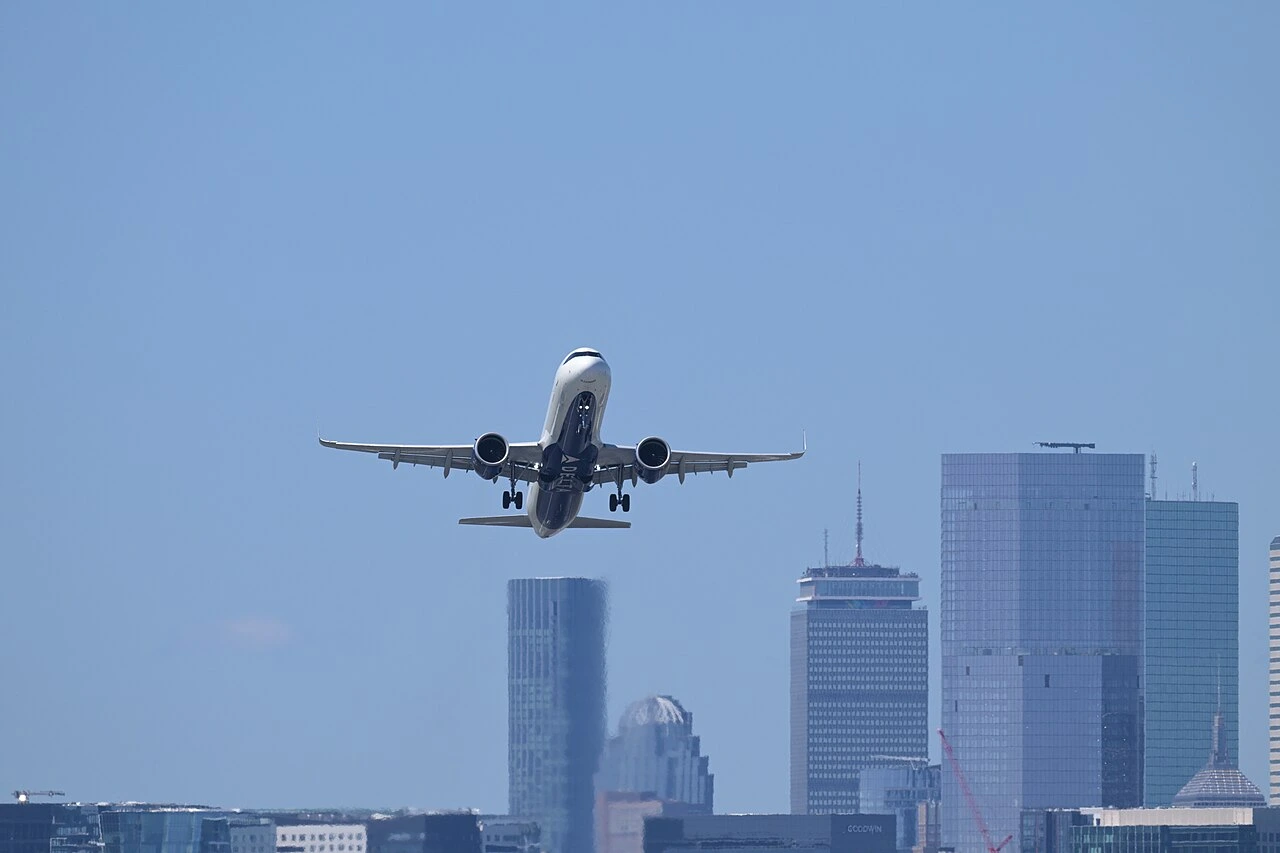
That résumé is not incidental to the Zinc proposition. Kelly’s insider knowledge of how Australia’s major carriers operate, how their loyalty program function, and precisely where their cost structures leave room for a leaner competitor forms the analytical foundation of the business case. The Zinc website states that Kelly has watched the failures of Compass, Impulse, Tiger Airways, Bonza and Rex’s domestic jet operations, and labels each as “predictable.”:
“The business models were flawed from inception — and he could articulate exactly why, long before the market rendered its verdict.”
Kelly’s own account draws a precise distinction from predecessors:
“Bonza was undone by capital structure. Rex by specific strategic and operational issues. Neither failed for want of demand for an independent domestic carrier. Zinc is being built to be capital-disciplined, single-fleet, focused, efficient, and to deliver consistent value to passengers and returns to investors.”

The A321neo Fleet, The 232-Seat Configuration, And the Ryanair Template
The airline plans to operate an all-Airbus A321neo fleet with a 232-seat all-economy configuration. “One of the main features of an ULCC model is its efficiency,” said Kelly in a report for the Australian Financial Review. “Some think it’s about not paying staff and low costs; it’s not. Our model is about sweating the assets and running the planes for 12 hours a day minimum.”
The A321neo, if modelled on the Ryanair service offering, could accommodate a total of 244 passengers in a single-class layout at high density. Additionally, like most budget carriers, the cost of checked luggage, seat selection, priority boarding, and other services onboard and at the airport would likely be charged as additional fees on top of the base fare.
The choice of the A321neo is deliberate: operating a single aircraft type eliminates the training and maintenance complexity that burdens fleets spread across multiple narrowbody variants, and the type’s fuel burn advantage over older aircraft reduces the single largest variable cost in airline operations.
Kelly has drawn explicit inspiration from Ryanair, the Irish ULCC that has become Europe’s dominant short-haul carrier, and one that has said that it wouldn’t install Starlink, thereby creating a spat with Elon Musk. Mr Kelly was also part of the team that helped create Jetstar and has extensively analysed Ryanair’s operations to understand how they stay profitable while keeping costs low.
He added that the airport would serve as a base for Zinc, so its planes “end up in the same place every night, reducing our cost with the overnight maintenance and deep cleaning.” That base-assigned model — where aircraft and crews return home nightly — eliminates the overnight positioning costs that proved corrosive for some of Zinc’s predecessors.
Why Western Sydney International Airport (WSI) Might be Zinc’s Playground
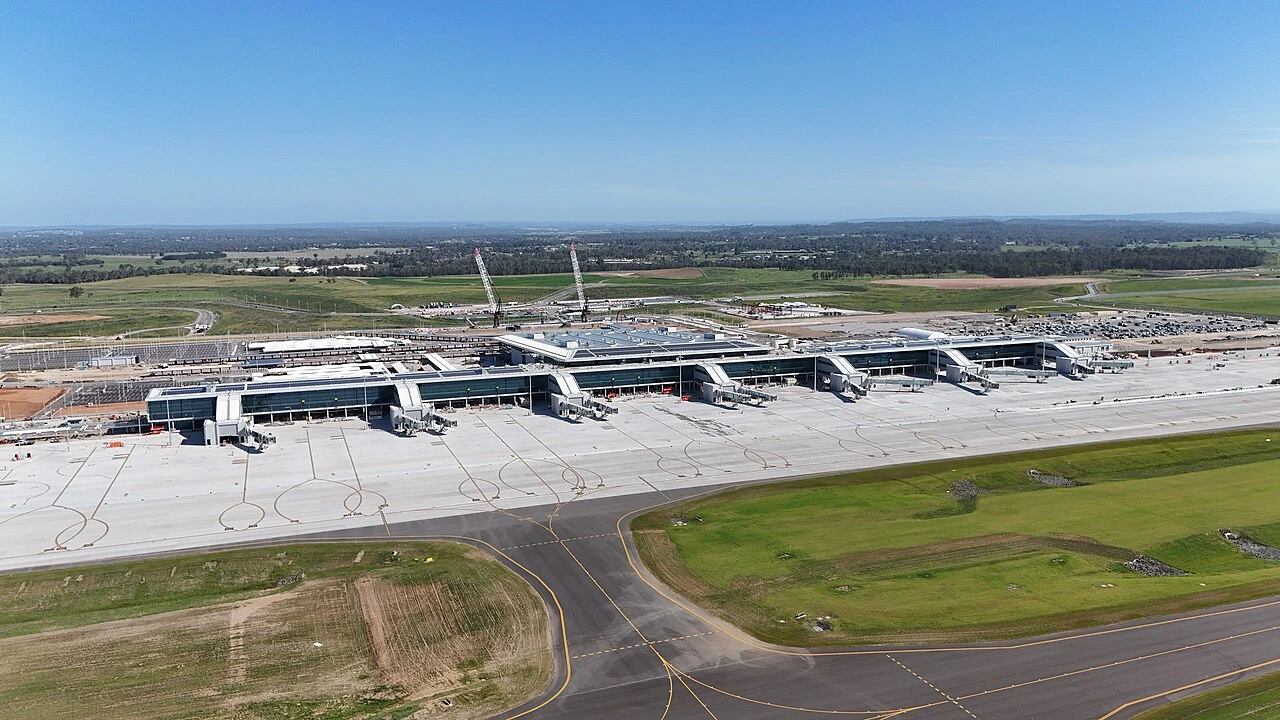
Western Sydney International (Nancy-Bird Walton) Airport, also known as Badgerys Creek Airport, is an international airport under construction in Luddenham and Badgerys Creek, New South Wales, located 44 km from the Sydney central business district. Expected to be operational by October 2026, the airport is planned to have 24-hour and curfew-free operations and will supplement Sydney Airport, which has reached capacity due to a legislated curfew and flight caps.
The airport opens for cargo operations in July 2026 and for passenger flights from 26 October 2026. It will also be the first major airport in Australia to not have an air traffic control tower on site. Stage 1, opening in 2026, is expected to be able to handle a capacity of up to 10 million annual passengers.
| Category | Western Sydney International Airport (WSI) Details |
|---|---|
| Traditional Owners | Cabrogal people of the Dharug Nation |
| Airport Operator | WSA Co Limited |
| Ownership | Fully owned by the Commonwealth of Australia |
| CEO | Simon Hickey |
| Runway Length | 3,700 metres |
| Runway Width | 45 metres |
| Runway Designation | Runway 05/23 |
| ILS Capability | CAT IIIB at both runway ends |
| Runway Usability | 99.5% |
| Forecast Passenger Traffic 2030 | 8.4 million passengers |
| Forecast Passenger Traffic 2045 | 19.3 million passengers |
| Ultimate Long-Term Capacity | 82 million passengers annually |
| Future Expansion Plan | Two runways and four interconnected terminals |
| Passenger Aircraft Stands | 13 MARS stands |
| Cargo Stands | 8 dedicated cargo stands |
| Second Runway Timeline | Expected commissioning in mid-2050s |
| Airlines Confirmed at Launch | Air New Zealand, QantasLink, Jetstar, Singapore Airlines |
| First International Route | Air New Zealand Auckland service |
| Singapore Airlines Launch | November 23, 2026 |
| Qantas Group Domestic Routes | Melbourne, Brisbane, Gold Coast |
| Qantas Aircraft Type | Embraer E190 |
| Jetstar Aircraft Type | Airbus A320 family |
| Cargo Operator | Qantas Freight |
| Cargo Facility Size | 24,000 sqm |
| International Connectivity Limitation | Subject to Sydney bilateral air service caps |
| Metro Rail Opening | Mid-to-late 2027 |
| Initial Airport Transport | Free WSI Link shuttle bus |
| M12 Motorway Opening | March 14, 2026 |
| Parking Capacity | 6,259 parking spaces |
| EV Charging Availability | Yes |
| Design Target Security Wait | Under 5 minutes |
| Design Target Border Wait | Under 10 minutes |
| Check-In Queue Target | Under 3 minutes |
| Terminal Design Firms | Cox Architecture, Zaha Hadid Architects, Woods Bagot |
| Construction Start | September 24, 2018 |
| Terminal Completion | June 11, 2025 |
| Construction Budget | A$5.3 billion |
| Total Wider Infrastructure Investment | Approximately A$19 billion |
| Metro Investment Cost | Approximately A$11 billion |
| Road Infrastructure Investment | Approximately A$4.4 billion |
| First Aircraft Landing | NSW Rural Fire Service Boeing 737-700 |
| First Major Test Landing Date | October 28, 2025 |
| Duty-Free Retail Partner | Lagardère AWPL |
| Advertising Partner | JCDecaux |
| Future Urban Development | Bradfield City Centre |
| Expected Main Transport at Opening | Private vehicles (around 90% of passengers) |
| Long-Term Rail Usage Forecast | 21% of passengers by 2045 |
Data: West Sydney Airport
Kelly’s case rests on a direct causal relationship between WSI’s structural attributes and what is structurally possible for a new entrant:
“Every previous new entrant to the Sydney market hit the same wall: slot scarcity, peak congestion at Kingsford Smith, and a curfew that wrecks aircraft utilisation. WSI removes all three. That changes what is structurally possible…”
The Sydney–Melbourne corridor, on which Zinc would initially compete, is one of the world’s busiest short-haul routes, and access to it without the slot constraints of Sydney Kingsford Smith Airport (SYD) represents a competitive entry point that no previous challenger possessed.
Zinc is pitching Western Sydney as more than a second Sydney airport. The airline says WSI serves a catchment of nearly three million people, comparable in scale to the Greater Brisbane market, within Australia’s largest aviation market. Western Sydney’s diverse population of more than two million is expected to increase by 46% over the next 20 years.
Zinc is Looking for Five Airports And 15 Aircraft in Four Years
Initially, Zinc plans to focus on high-traffic routes operating between Western Sydney, Melbourne and Brisbane before expanding towards the Gold Coast and other destinations, including Adelaide in year four of operations. According to Aerospace Global News, by year five, Zinc will operate across five airports and seven route pairs with 15 aircraft.
The airline would launch within 17 months of securing funding. “Jetstar is operating a larger model with the number of places they fly to — the type of network they have, with a large number of aircraft and places, they can’t apply the same model.” Kelly told the Australian Financial Review. The Zinc model inverts the traditional new-entrant approach of seeking under-served regional markets.
Rather than avoiding incumbents, it targets the thick trunk routes where the volume of demand is sufficient to absorb below-market fares. Former Qantas chief economist Tony Webber endorsed precisely this strategy in a presentation earlier this year:
“It should use WSI as an initial hub. It shouldn’t shy away from the thick trunk routes because they need these routes to build scale and these routes have high leisure content. The new airline needs to get its fleet utilisation above at least 10 hours per day.”
How Zinc Compares to Other Failed Challengers
The context in which Zinc is proposing to operate is one of the most concentrated domestic aviation markets in the developed world. Qantas Group and Virgin Australia have not faced a serious domestic competitor since the collapse of Rex’s 737 operations in mid-2024.
The ACCC’s latest Domestic Airline Competition report noted “strong financial performance and growth” for both groups, with nearly 99 percent of all flights serviced by either Qantas Group or Virgin Australia, citing “high barriers to entry” as a contributor to a “concerning lack of competition and choice for consumers.”
According to a quarterly report released by the Australian Competition and Consumer Commission (ACCC), domestic airfares on major city routes increased by 13.3% to September after Rex Airlines halted its capital city services at the end of July. The ACCC has been explicit: when three airlines operate on a route, prices halve. The departure of Bonza and Rex removed that third-carrier effect from virtually the entire network.
Zinc’s competitor in the new-entrant space is Koala Airlines, the Melbourne-based startup led by Bill Astling. Koala Airlines confirmed lease agreements for at least three Boeing 737-8 aircraft, with deliveries anticipated, and targets a late-2026 launch. Its CEO Bill Astling stated the airline plans to reach at least 20 aircraft within the first few years.
However, Koala’s regulatory position is complicated. A CASA spokesperson confirmed that while Koala Airlines does possess an AOC, “it is subject to a direction not to operate” and is “considerably different” from the certification required for large aircraft airline operations. Koala and Zinc represent two philosophically distinct new-entrant approaches: Koala as a tourism-feeder carrier not explicitly positioning itself as ultra-low-cost, Zinc as a head-on structural disruptor modelled explicitly on Ryanair.

Possible Competition to Zinc from Australian Carriers
Kelly is under no illusions that the major domestic airlines would “try to make life difficult” for Zinc. “Operating from Western Sydney also makes it difficult for them because they have to bring capacity from somewhere to do that and potentially lose slots at Sydney — they’re going to rob Peter to pay Paul, so to speak,” he was quoted in Australian Aviation.
Qantas and its subsidiary Jetstar became the first airlines to reach a commercial agreement with WSA Co on 8 June 2023. Qantas and Jetstar aircraft would be based at WSI within a year of opening, with projected destinations including Melbourne, Brisbane and Gold Coast.
However, that commitment uses QantasLink’s Embraer E190 jets in Year 1, which seat roughly 95 passengers — a markedly different capacity proposition than Zinc’s dense 232-seat A321neo configuration. Incumbents deploying smaller regional jets to WSI would not match Zinc’s per-seat cost structure on the trunk routes Zinc plans to prioritise.
Singapore Airlines confirmed a daily service using Airbus A350-900 aircraft from WSI with an inaugural flight scheduled for 23 November 2026, taking advantage of the airport’s curfew-free operations to offer a late-night departure from Sydney.
Flight SQ202 departs WSI at 23:55 — a departure time that would be prohibited at Sydney Kingsford Smith Airport, which operates under an 11pm–6am curfew. Singapore Airlines’ rationale for choosing WSI over SYD for its late-night departure illustrates precisely the operational advantage Kelly is attempting to monetise for domestic flying.
What Zinc Still Needs to Achieve Before Its First Flight
Zinc’s ambitions are substantive, but so are the remaining prerequisites. The airline has no Air Operator’s Certificate from CASA, no confirmed aircraft leases, and no announced investors. According to AFR, documents circulated to prospective investors show Zinc is seeking approximately AU$200 million in total funding.
Around half would support aircraft deposits and pre-launch operational costs, while the remainder would reportedly be raised through debt financing. The company says it is currently engaging with a small group of sophisticated investors and strategic partners under non-disclosure agreements.
Zinc’s website acknowledges the graveyard directly: “Compass. Impulse. Tiger Airways. Bonza. Rex, when it stepped beyond its lane. Zinc’s founder has watched every one of them. Each failure was predictable.” The site enumerates the structural causes:
“Structural slot and gate constraints of SYD. Structural cost disadvantage. Undercapitalisation. The wrong aircraft. The wrong routes. The wrong moment. He knows precisely why they failed. Zinc has been engineered so that none of those reasons apply.”
That self-assessment may well be accurate. Whether it translates into investor conviction, regulatory approval and operational execution will ultimately decide whether Zinc adds its name to Australia’s long list of failed challengers — or to a far shorter list of carriers that survived.