
Much in line with how Boeing planes start and end with the number seven, most of Airbus’ planes start with the letter A followed by the number 3. Perhaps the most iconic of Airbus A3xx series is the double-decker airliner that is the Airbus A380, which is the biggest passenger aircraft to have ever been constructed.
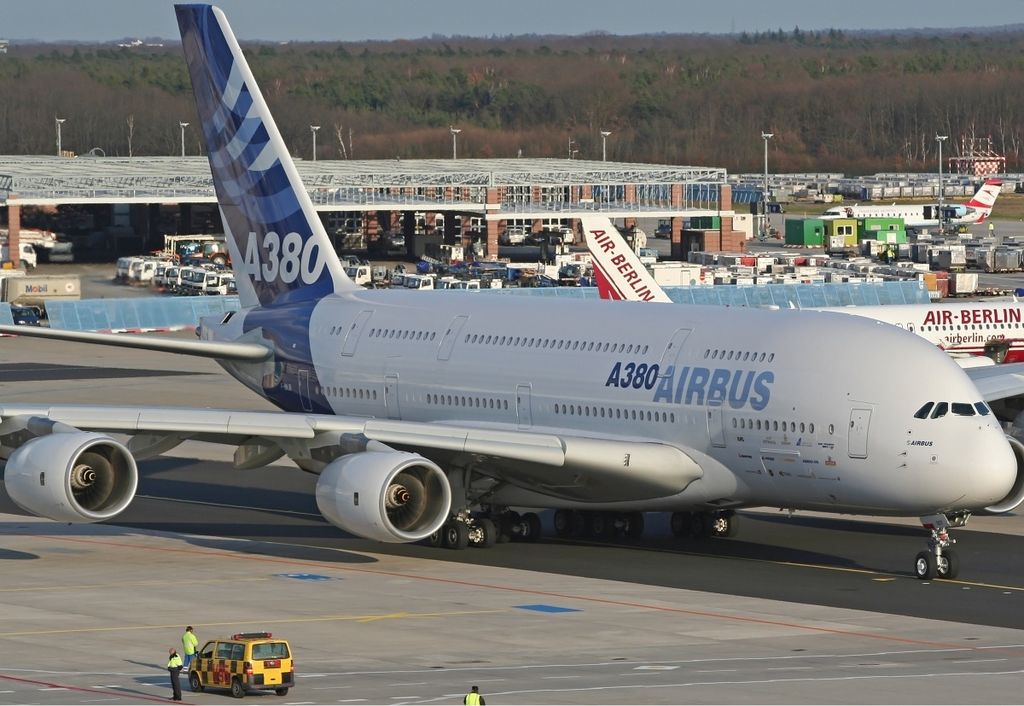
Image: Timo Breidenstein | Wikimedia Commons

The A380 is one of the major attractions of the Big Three Middle Eastern Airlines. However, the A380 was not the success that Airbus had hoped it would be. Between 2020 and 2022, Air France, China Southern, and Malaysia Airlines permanently (and prematurely at that) retired their A380 fleets- 12% of all A380s have been scrapped. In light of such facts, people often wonder if there will be an Airbus A390 in the future, a plane that would supplant the biggest passenger jets.
Why do airbus planes start with the letter A and the number 3?
One would logically think that the A360s and the A370s would be rolled out before the A380s
Airbus’ A350s are operated on some of the longest flights in the world. The longest one-stop flight between Singapore and Houston via Manchester spans 10,013 nautical miles (18,544 km) [operated by Singapore Airlines] is carried out on the A350-900.
When Airbus introduced the A300 series, it was named so because the aircraft could fit 300 passengers. Airbus A220 might be a lone exception to this rule, as the A220-300 can accommodate 120–150 (max 160) passengers while the A220-100 can accommodate 100–120 (maximum 135) passengers. Let’s have a look at the carrying capacity of a few other aircraft operated by Airbus:
- The A350 typically accommodates 300-400 passengers. [Singapore Airlines’ A350-900s (operated on the longest flight routes) have 42 business class seats, 24 premium economy seats, and 187economy class seats, while Air India’s A350s have 28 business class seats, 24 premium economy seats, and 264 economy class seats]
- The Airbus A330 can accommodate 210-406 passengers [ Virgin Atlantic’s Airbus A330-300s are configured with 31 business class seats, 48 premium economy seats, 185 economy class seats. Airbus claims that the A330-200 can be configured for a maximum of 406 seats i high-density layouts.
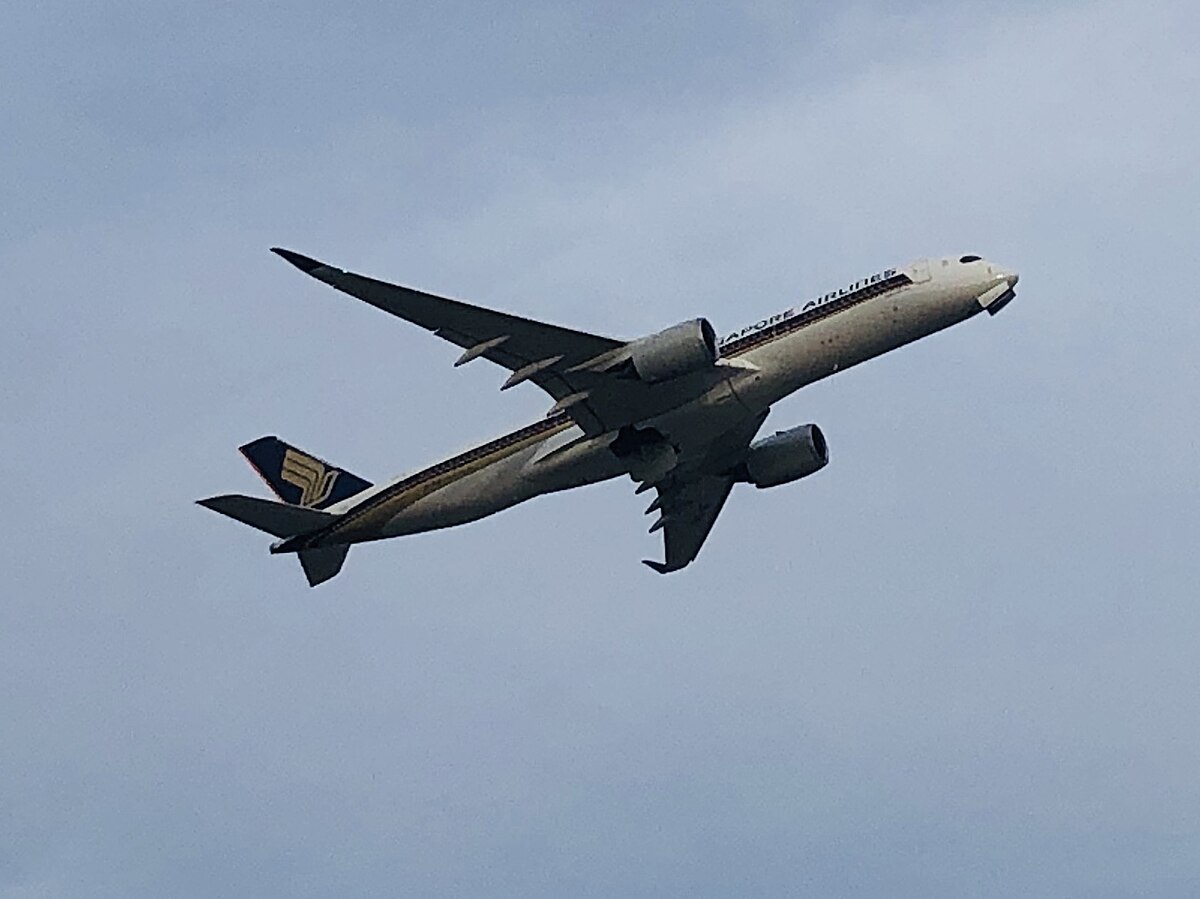
Photo: DaHuzyBru | Wikimedia Commons

Airbus A380 can accommodate more than 850 passengers on a single-class layout.
There are observers who think that the Airbus A390, if it is rolled out, has the prospect of being a triple-deck airline- after all, the combination of the A330s and A350s means that the developer already has covered the 300-400 passenger capacity aircraft. The A380 accommodates even more passengers. So if the A390 is ever rolled out, it could be larger and more commodious than the A380. And could we rule that the A390 would be a behemoth, a triple-decker that no one has ever laid their eyes on?
Airbus A370: Airbus’ another unrealized variant
But one should note that in the development of the A380, Airbus skipped the Airbus A360 and the Airbus A370. When the A380 was being developed, even the A350 wasn’t in place. A report published in GlobalSecurity.org once mentioned Airbus’ plans of developing an A370 – an aircraft that would follow on the Airbus A350. The publication thought that it would essentially be a paper plane. It was also rumored that the A370 would be initially operated by Singapore Airlines and Emirates. It was even said that this plane, that was to rival Boeing’s Dreamliner, “would come in two sizes; approximately sized like the A350-900 and A340-600”:
“The A370 Airbus is now touting to airlines will have new wings, designed and built in Britain, made entirely of lightweight composite materials. It will have a wider cabin than the B787 and, like its Dreamliner rival, enable higher cabin pressurisation, improving passenger comfort. Crucially, it will also have the ability to be extended upwards from 250 seats to perhaps 350 or more, enabling different versions to do the job of the Boeing 787 and Boeing 777. This requires engine makers to develop new power plants able to provide up to 95,000 lbs of thrust, compared to a maximum of 75,000 lbs required for the A350 design.“
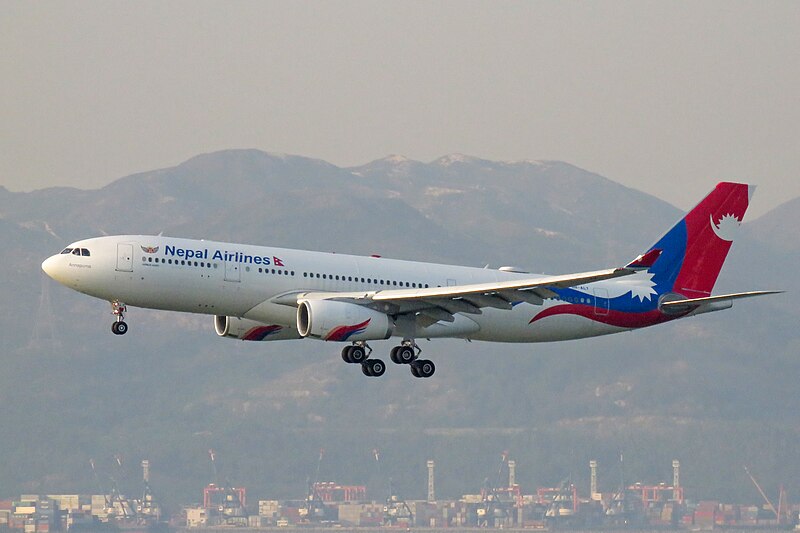
Photo: N509FZ Wikimedia Commons
_@_HKG,_Oct_2018_(01).jpg)
It was also posited that the A370 could have been an all-composite single-decker twin with aircraft that would have either of the following specifications:
-
Circular fuselage wider than the B747 (251 inches) but narrower than the A380 (281 inches).
-
A 9000nm, 450 passenger, composite design with 2 engines, something of a mini Airbus A380.
The speculations about the development of the A370s had surfaced after this Aerospace manufacturer, which has designed a helicopter that lands at the top of Everest, had filed patents and patent applications in 2005-2010 timeframe for various tri-jet designs.
One of the reasons why the Aibus hasn’t come up with the 370 series might also be because the number 7 is closely associated with Boeing- after all, the aerospace manufacturer, that once saw glory days when people said “If it is not Boeing, I ain’t going”, has iconic aircraft such as the Boeing 747, Boeing 777, among others.
Airbus A360: at the end of a joke
Aviation publication Simple Flying once wrote an article about how Airbus was expanding its production line with the A360, which would possess a revolutionary design. The aircraft would supposedly be powered with “unobtanium”, and would resemble the shape of Avrocar- one of the must-see aircraft at the US Air Force Museum. However, it was merely an April Fool’s Day joke, and since the article doesn’t explicitly mention that it intended as a facetious piece, some might wonder if the project was true.
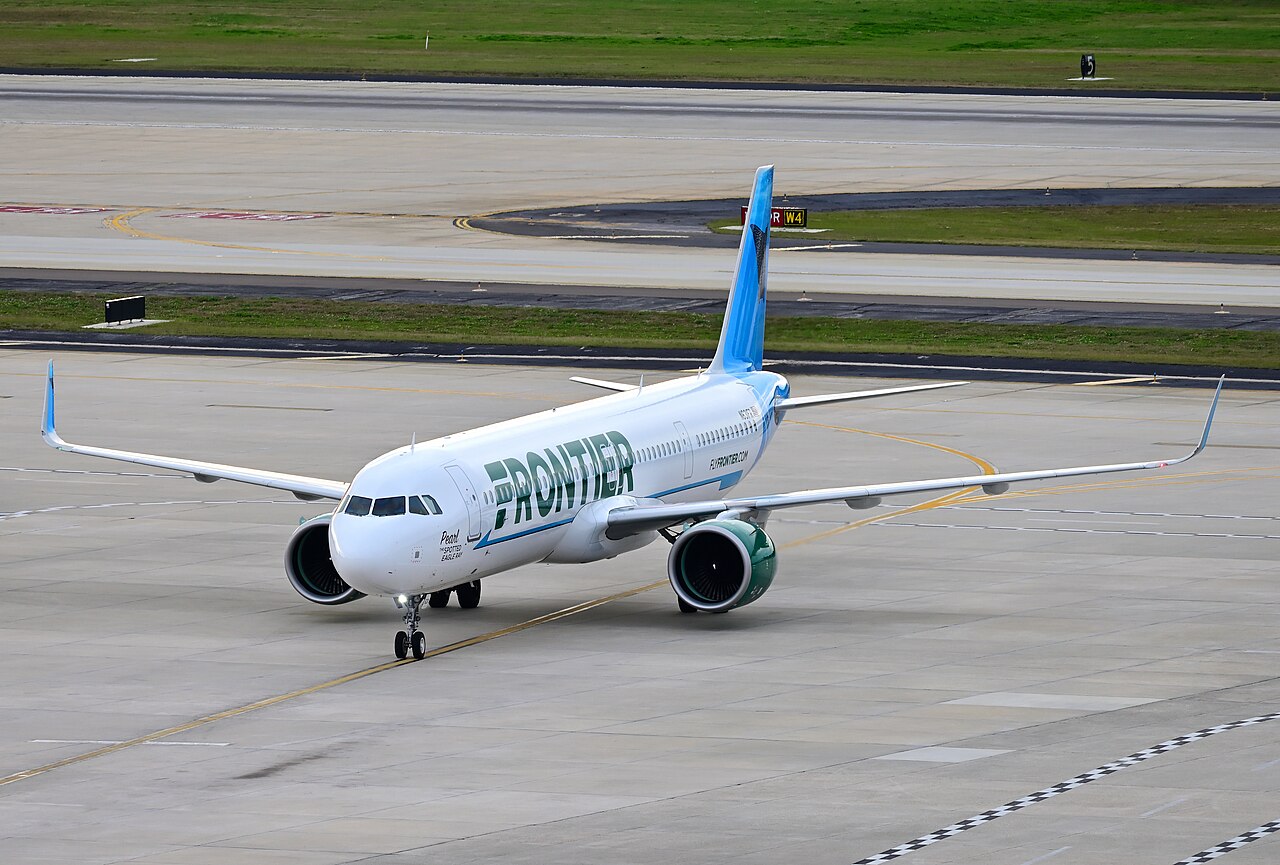
Image: Andrew Heneen | Wikimedia Commons

An executive from Airbus was quoted in Forbes to have said (in 2108) that the manufacturer did not have plans for the A360 to be employed (at that time). The same piece also wondered that given the A360, A370, and A390 were the only possible numbers up for grabs, if the designer of the Belugaa super transporter, was running out of numbers, much like how airlines have been stuck with the possibility of running out of flight numbers:
What Will Happen When The World’s Airlines Run Out Of Flight Numbers?
What might the Airbus A390 look like: a jumbo larger than the A380 or competitor to Boeing’s plane with the number 9?
There are various Facebook/ Instagram/ Twitter posts about how the Airbus A390 will be a behemoth, a triple-decker aircraft that can potentially carry more than a thousand passengers, with some web sources claiming that it will be “expandable to 1200+ passengers in high-density arrangements”. This aircraft is dubbed to be six-engined aircraft having a range of 7,500 nm. But given the failure of the A380 project, the chances that the A390 will be even larger than the largest quadjet ever might only be a figment of aviation enthusiasts’ imagination.
With the rise in oil prices around the world, operators would be looking for a more fuel-efficient aircraft. Further, even if the A390 can serve the longest routes around the world, there would be limited buyers for such a plane: out of the 251 A380s delivered to 14 customers, a significant bulk (more than 120) were delivered to Emirates. There were a few other reasons that the A380 failed, and these reasons might be applicable to the supposed triple-decker- the A390:
- Airbus’ enormous size meant that only 140 airports around the world are able to accommodate it. To accommodate an even bigger aircraft (the A390) will necessitate greater airport upgrades.
- An aircraft as big as the A380 might have worked if operators had operated on a hub-and-spoke model [where operators had indirect routes through hub(s)], but the shift to the point-to-point model [where operators chose to fly Direct routes between origin and destination] made other smaller aircraft such as the Boeing 787 Dreamliner more potent.


One of the larger nations with a growing middle-class population having access to aviation is India, a country that doesn’t operate the Airbus A380. Perhaps, when the time is ripe collossus such as the A380 and A390 might be operated in such nations, but the time is just not ripe enough.
What mid-sized options there are for the A390
When talks of Boeing coming out with its Boeing 797 surfaced in 2015, many people felt that Airbus would up its game, and come up with its own plane with the number 9, the Airbus A390. Boeing christened the project “New Midsized Plane“ which would have the following capacities:
- 225 passenger capacity and a range of 5,000 nautical miles
- 275 passenger capacity and range of 4,500 nautical miles
After Covid-19, the plans of the aircraft were put to a halt, and Boeing announced a clean sheet re-evaluation of the project, with David Calhoun, then chief executive of Boeing saying the following (as quoted in Reuters):
“Since the first clean sheet of paper was taken to it, things have changed a bit … the competitive playing field is a little different. We’re going to start with a clean sheet of paper again; I’m looking forward to that.“

However, Airbus doesn’t quite need an aircraft to compete with the former of the two options of the “New Midsized Plane” project anyhow: the Airbus A321XLR offers 180-220 passengers in two-class seating capacity, and has a range of 4,700 NM (8,700 km). If it were to compete with latter of the capacities, the A390 might be a 220-280 seater that can accommodate 400 passengers at the maximum, and has a range of 5,000 nautical miles.
Observers have also noted that the A390 might be a two-engine aircraft that accommodates 400-450 passengers, a plane that is somewhere between the A350/777 and the A380/747. As Boeing 777X is set to introduce the GE9X, which is likely to become the world’s largest commercial jet engine, the A390 can function like a more efficient version of the A380, albeit with a smaller passenger capacity. Airbus might want to be a tad cautious about this, though: the A340 and the A380 were two aircraft that were not operated in the United States, and if another high-capacity aircraft is not operated in the nation with the most powerful aviation, it will be a tough pill for Airbus to swallow.
Will the A390 see the light of day amidst other aircraft that Airbus is developing?
Airbus is already on the verge of completing the feasibility study on the Airbus A220-500, which is a stretched version of the A220. The manufacturer wants to get the aircraft rolling in the early 2030s.
Airbus has an imminent rival as well- the Boeing 777X. To compete with this plane that is also known as triple X, Airbus is considering stretching the A350, as reported in AviationWeek:
“It will probably be a natural evolution of the product line to continue to increase capacity from the -900 to the -1000 to something slightly longer, bigger, with more capabilities that will come close to the 777X in terms of seat count.”
Airbus, it seems, already has its hands full. The development of the A390, at least for now, is speculation at best. The A350s stretch looks far more viable for now. When the A390 comes, when it its time truly has, will be a novelty.