On September 23, 2025, United Airlines (UA), which was the sixth most punctual airline in the US for January 2025, experienced a brief but significant operational disruption. All its flights departing from U.S. and Canadian airports were temporarily grounded, and the carrier requested the Federal Aviation Administration (FAA) to implement a ground stop.
The disruption lasted approximately 30 minutes, and operations resumed shortly thereafter, and the airline was quoted in CBS News that it had “experienced a brief connectivity issue just before midnight Central time on Tuesday, but has since resumed normal operations“.

Photo: Philip Mallis |Wikimedia Commons
_Boeing_787-9_at_Terminal_2_at_Melbourne_Airport.jpg)
This incident marks the second time in less than two months that United Airlines has faced a system-wide ground stop due to a technical issue – the first of these was due to “triggering of an emergency fire alarm leading to evacuation at its Chicago-area operation centre“.
United Airlines’ Flight Disruptions
The FAA confirmed that the ground stop was a precautionary measure and that there was no immediate safety threat. The airline, on the other hand, did not provide further details on the nature of the connectivity issue.
United Airlines is one of the largest carriers in North America, headquartered in Chicago, Illinois. The airline operates an extensive domestic and international network, with major hubs at the following airports
- Chicago O’Hare International Airport (ORD)
- Newark Liberty International Airport (EWR)
- Denver International Airport (DEN)
- San Francisco International Airport (SFO)
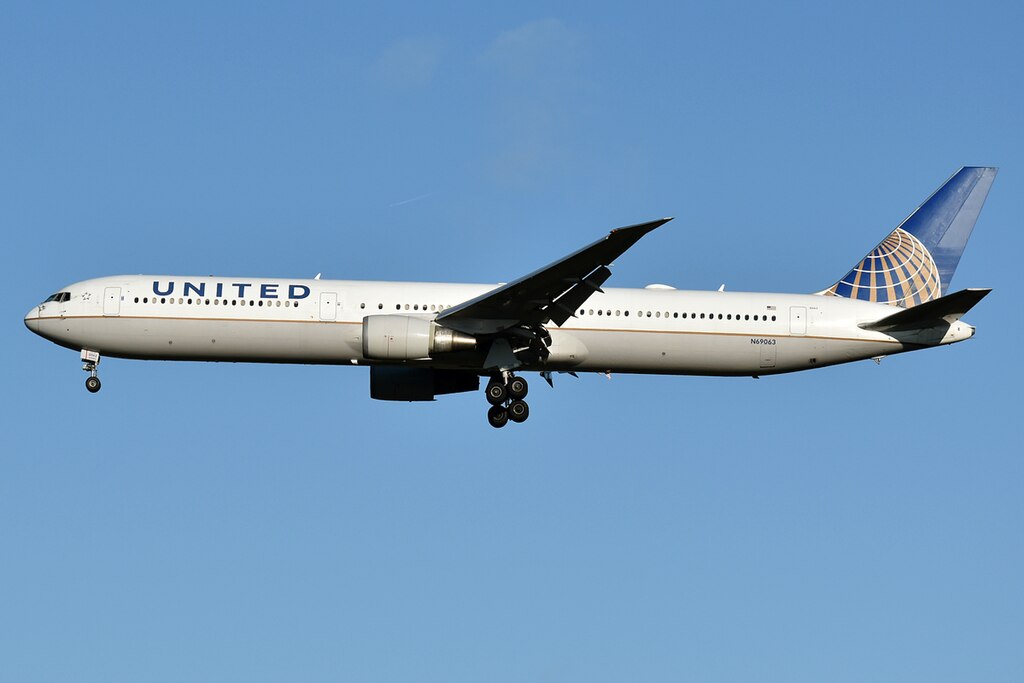
Image: Anna Zvereva | Wikimedia Commons
.jpg)
| Attribute | Details |
|---|---|
| Headquarters | Chicago, Illinois, U.S. |
| Founded | 1926 |
| Fleet Size | 1052 |
| Hubs | ORD, EWR, DEN, SFO, IAD, LAX |
| Destinations | 300 across six continents |
| Passengers | 140 million per year |
Modern airlines rely on digital flight scheduling and operational control systems. This means that even small technical glitches have the potential to cascade across the airline’s network. While it is not quite clear what connectivity issue the airline encountered, IATA says that connectivity is based on the following concept:
Movement of passengers, mail and cargo involving the minimum of transit points which;
- makes the trip as short as possible;
- with optimal user satisfaction;
- at the minimum price possible.
United operates a large fleet of over a thousand aircraft, a number comparable to China’s top airline, China Southern Airlines.
| Aircraft Type | Current in Service | Current Parked | Current Total | Future | Avg. Age | Total Fleet |
|---|---|---|---|---|---|---|
| Airbus A319 | 75 | 6 | 81 | 19 | 23.9 Years | 100 |
| Airbus A320 | 70 | 3 | 73 | 32 | 25.7 Years | 105 |
| Airbus A321 | 45 | 1 | 46 | 27 | 0.9 Years | 73 |
| Boeing 737 | 534 | 29 | 563 | 28 | 12.1 Years | 899 |
| Boeing 757 | 55 | 6 | 61 | 99 | 26.8 Years | 160 |
| Boeing 767 | 51 | 2 | 53 | 32 | 27.9 Years | 85 |
| Boeing 777 | 87 | 9 | 96 | 8 | 22.1 Years | 104 |
| Boeing 787 Dreamliner | 78 | 1 | 79 | 10 | 7.2 Years | 89 |
| Total | 995 | 57 | 1052 | 255 | 15.7 Years | 1615 |
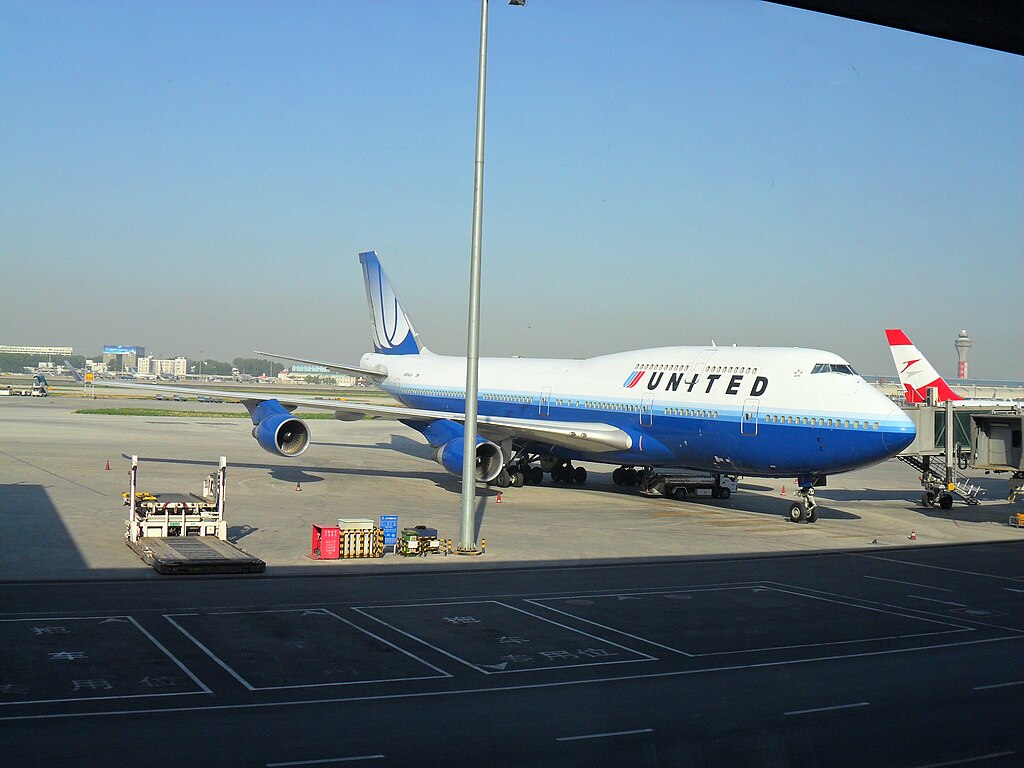
Photo: Ezbolor|Wikimedia commons

United Airlines Ground Stops: A Recent History
This September 23 event is the latest in a series of technological interruptions at United Airlines, which operates 4,000 to 5,000 flights per day. The following table summarizes comparable incidents in the past two years:
| Date | Airports Affected | Duration | Cause | Notes |
|---|---|---|---|---|
| August 8, 2025 |
|
Several hours | Technology issue | Widespread flight delays |
| December 12, 2024 |
|
90 minutes | Software glitch | Flights held; no safety threat |
| March 3, 2024 |
|
2 hours | Connectivity issue | Air traffic coordination delayed |
When United Airline experienced a Ground Stop (GS) in August this year, 1071 of its flights were delayed and 67 were canceled, and the airline’s statement was quoted in MSN:
“Due to a technology issue, we are holding United mainline flights at their departure airports. We expect additional flight delays this evening as we work through this issue. Safety is our top priority, and we’ll work with our customers to get them to their destination”

Photo: Danny Yu |Wikimedia Commons

Regulatory Context Ground Stops
United’s most recent Ground Stop came in the month when the biggest Ground Stop was implemented in the history of aviation, during the September 11 attacks, where a rather archaic seeming technology called airfone was deployed.
Ground Stop (GS), which is regarded as the most restrictive traffic management initiative (TMI), is issued by the FAA Air Traffic Control System Command Center (ATCSCC) in either of the following conditions:
- Catastrophic events
- Extreme weather that reduces usable routes
- Major equipment outages
- Weather too inclement to prevent landing
According to the FAA, a GS can be implemented “in severely reduced capacity situations (below most user arrival minimums, airport/runway closed for snow removal, or aircraft accidents/incidents)” or “in the event a facility is unable or partially unable to perform ATC services due to unforeseen circumstances”.
Here are a few points one should be wary of when implementing a local ground stop:
-
A terminal facility can implement a local ground stop when the impacted facilities are entirely within its area of responsibility and the conditions are not expected to last more than 30 minutes.
-
If a local ground stop is to be implemented, the terminal facility must notify the traffic management unit.
-
The traffic management unit is responsible for notifying the Air Traffic Control System Command Center (ATCSCC) once a local ground stop is initiated.
A nationwide ground stop, on the other hand, such as the one following 9/11 attacks are rare, and might require special measures.

Photo: Bidgee | Wikimedia Commons
_Boeing_787-9_Dreamliner_departing_Sydney_Airport_(3).jpg)
All in all
The details of the United’s ground stop are not out. Aviation professionals are waiting to learn more about United’s recent GS and see whether this has any parallels with its previous ground stops.