President Donald Trump (the person after whom Palm Beach Airport’s code was changed to DJT) opted to fly home aboard one of the U.S. Air Force‘s legacy VC-25A aircraft instead of the newly introduced VC-25B “Bridge” jet after attending the NATO Summit in Ankara (ESB). While the new aircraft continued to RAF Mildenhall in the United Kingdom, Trump boarded the older presidential aircraft, saying he chose it “for old time’s sake”, TWZ reported.
The decision came shortly after Trump reportedly authorized a new round of U.S. military strikes against Iran from the summit, drawing renewed attention to whether the recently commissioned VC-25B is fully equipped for high-security presidential missions.
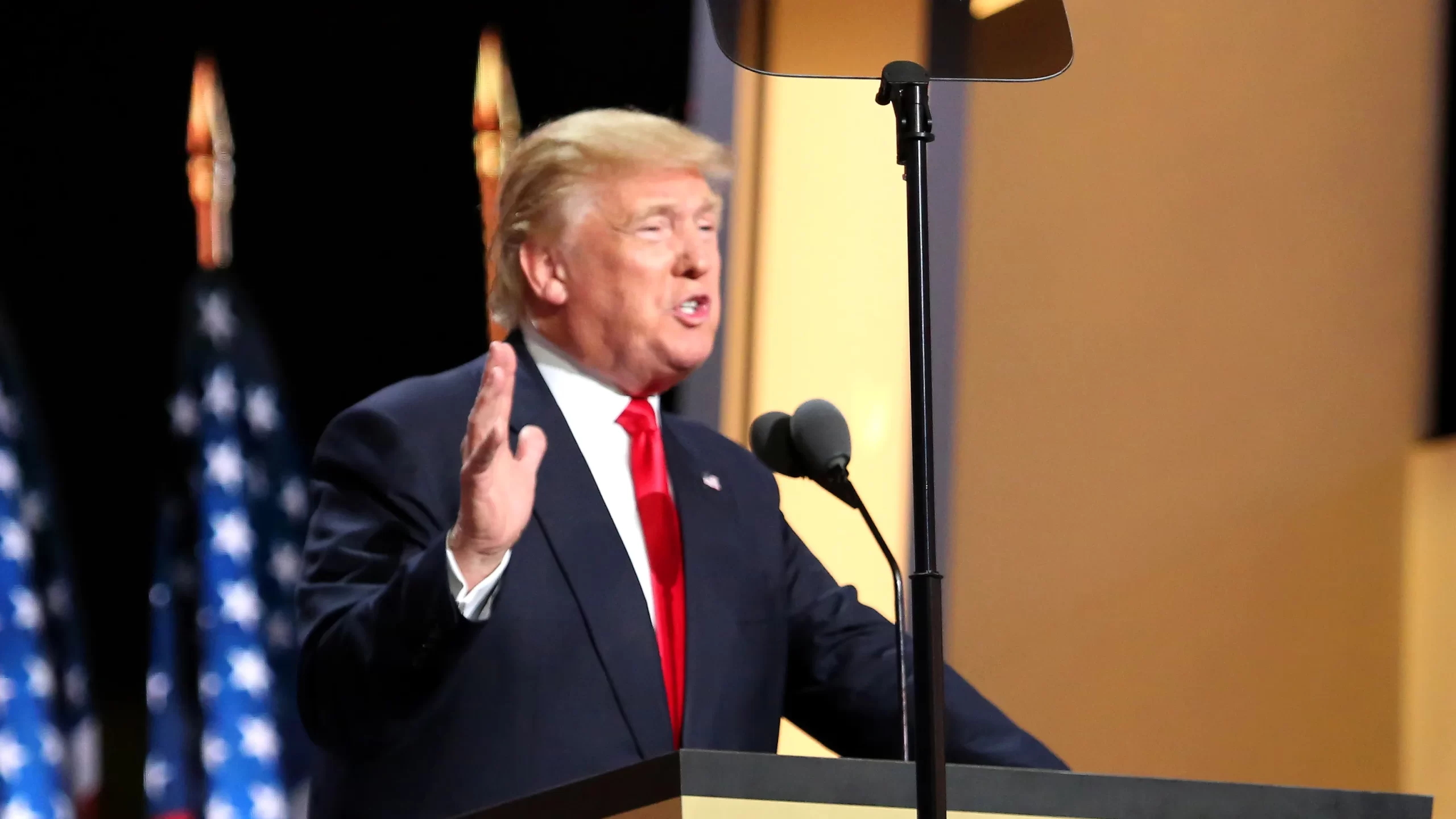
Trump Switched Aircraft Before Leaving Turkey
The VC-25B carried Trump to Ankara, marking its first international deployment since entering presidential service. However, when it was time to depart, the aircraft flew to RAF Mildenhall without the President on board.
Instead, Trump boarded one of the Air Force’s two VC-25A aircraft, which had accompanied the new jet as part of the standard backup arrangement. Maintaining a second presidential aircraft on overseas trips is routine practice, allowing the President to switch aircraft if operational requirements change.
Trump later remarked that he selected the older aircraft out of nostalgia.
The VC-25B, based on a Boeing 747-8 Intercontinental originally owned by the Qatari government and later transferred to the United States, only recently entered service. Trump first flew aboard the aircraft during a domestic visit to North Dakota last week, with a VC-25A also serving as the backup aircraft on that trip.
Although Trump referred to the older aircraft as “former” Air Force One jets, the U.S. Air Force has confirmed that both VC-25As will remain part of the presidential fleet. Any Air Force aircraft carrying the President uses the “Air Force One” callsign regardless of its model.
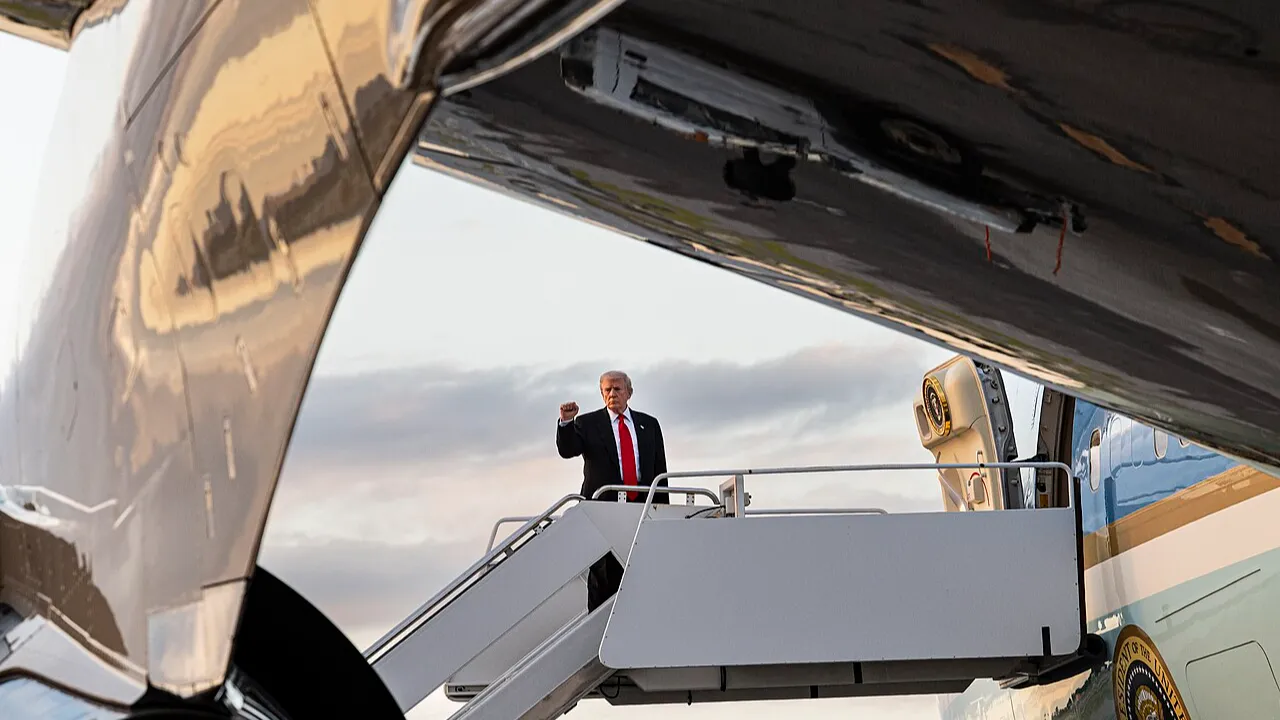
Flight Change Came After Iran Strike Decision
The aircraft swap coincided with escalating tensions in the Middle East.
According to The New York Times, citing a U.S. official, Trump approved a fresh wave of military strikes against Iran while attending meetings in Ankara with senior national security officials, including Joint Chiefs Chairman Gen. Dan Caine, Defense Secretary Pete Hegseth, and Secretary of State Marco Rubio.
The strikes reportedly followed new Iranian attacks on commercial vessels near the Strait of Hormuz. Trump subsequently suggested that additional military action remained possible, raising concerns about a broader regional conflict.
Such situations place heavy demands on presidential communications, requiring uninterrupted access to military commanders and national security advisers throughout the flight.
Journalists traveling with the President also reported tighter-than-usual security procedures before departure. Members of the press pool were instructed to keep window shades closed, preventing any view of the President while boarding the aircraft.
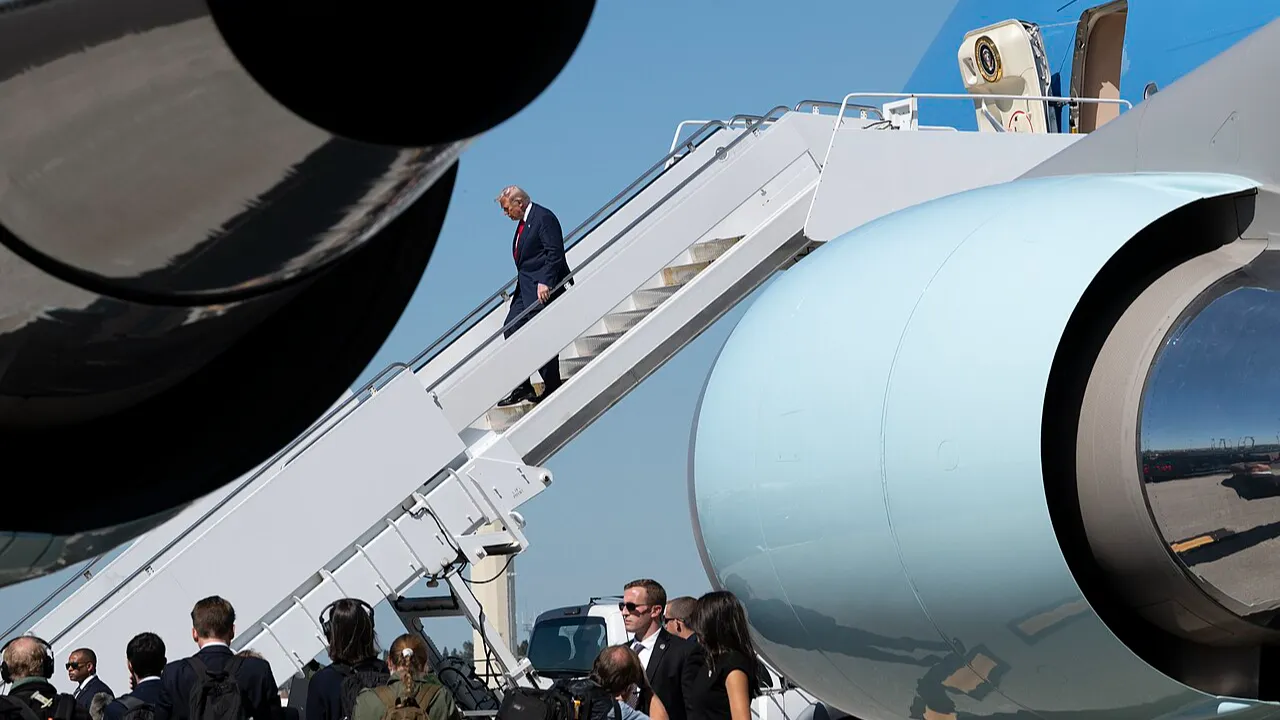
New VC-25B Faces Continued Scrutiny
Trump’s decision to use the older aircraft has also reignited debate surrounding the capabilities of the VC-25B.
The aircraft was converted from a former Qatari Boeing 747-8 by defense contractor L3Harris in roughly 10 months—a considerably shorter timeline than is typical for aircraft carrying the President of the United States.
That accelerated schedule has prompted questions from aviation and defense observers about whether all defensive countermeasure systems, secure communications equipment, and other classified mission systems have been fully integrated. Unlike the existing VC-25As, the new aircraft has not displayed some of the externally visible defensive features commonly associated with the presidential fleet.
While U.S. officials and L3Harris have dismissed concerns about the aircraft’s readiness, scrutiny has continued.
A group of 13 Democratic senators led by Senator Chris Murphy recently requested additional details from Air Force Secretary Troy Meink and L3Harris CEO Chris Kubasik regarding the aircraft’s conversion and security capabilities, saying earlier inquiries had gone unanswered.

Presidential Fleet Continues to Expand
The VC-25B currently flying alongside the President represents only part of the Air Force’s modernization effort.
Boeing is continuing work on two purpose-built VC-25B aircraft based on the Boeing 747-8 platform. However, the long-delayed program is not expected to deliver its first aircraft before 2029 after years of schedule setbacks and rising costs.
Meanwhile, the Air Force has acquired additional former Lufthansa (LH) Boeing 747-8 aircraft to support the program. One aircraft is being used to train flight crews and maintenance personnel, while another will serve primarily as a source of spare parts.
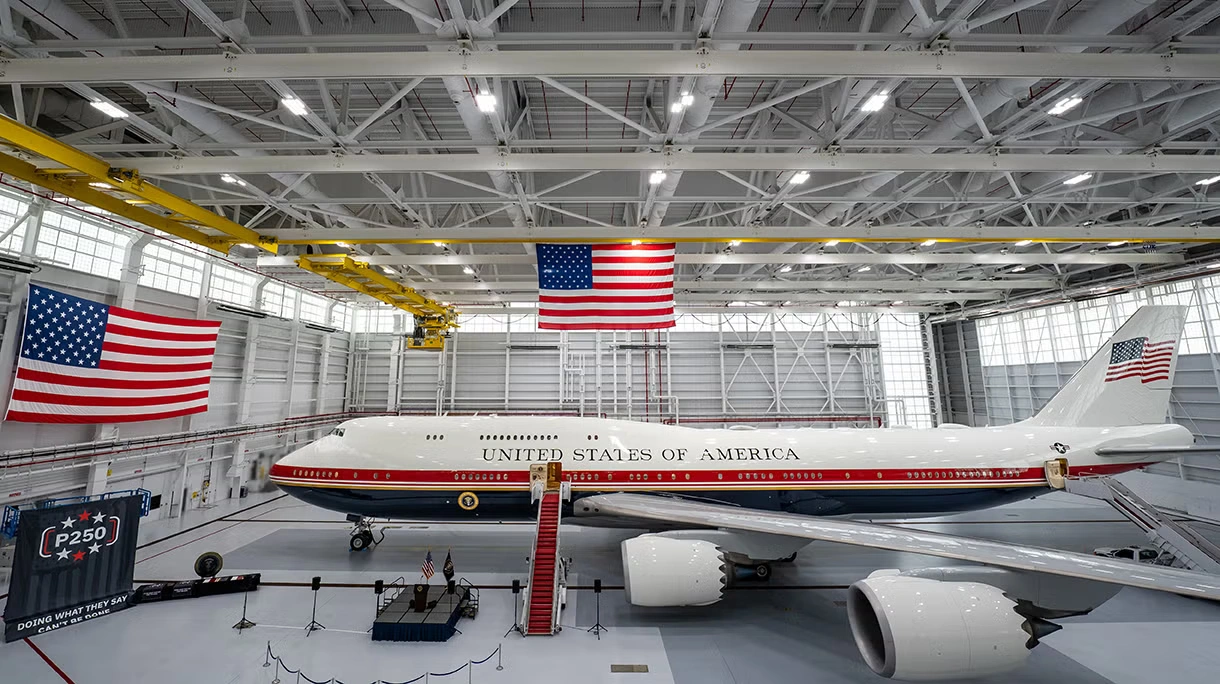
After departing Ankara, Trump’s VC-25A landed at RAF Mildenhall, where a C-32A executive transport had already arrived. Local observers also reported that military personnel positioned trucks and temporary barriers around the airfield to restrict public views of the new VC-25B aircraft.
Although the VC-25B has now entered international service, the latest trip demonstrated that the long-serving VC-25A fleet continues to play a central role in presidential operations, particularly during high-security overseas missions.


_(cropped).jpg)