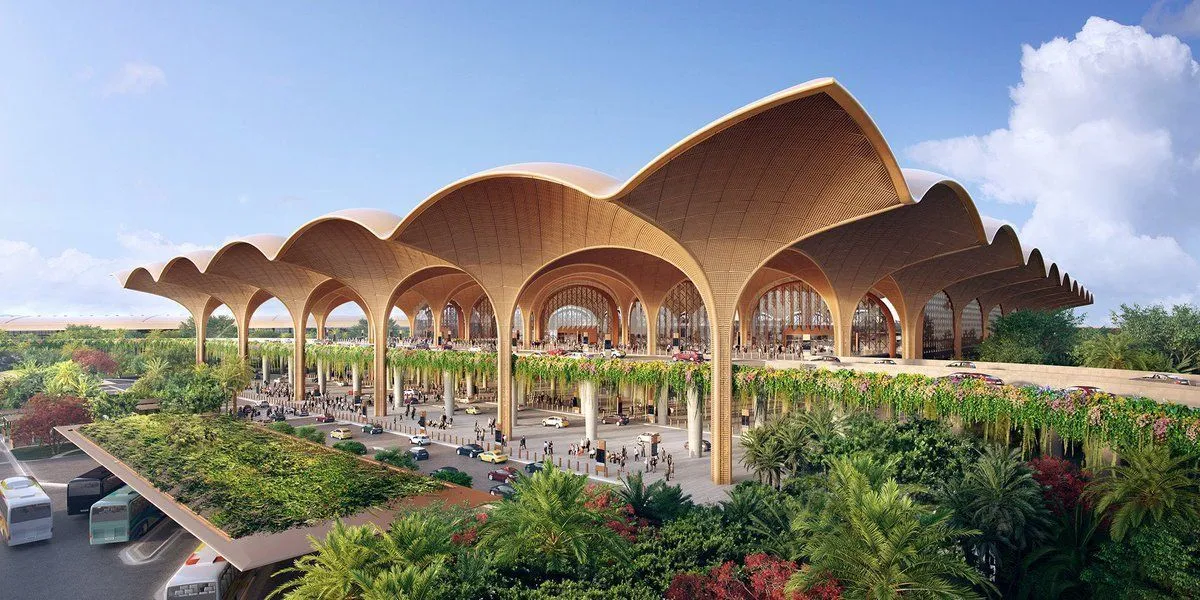
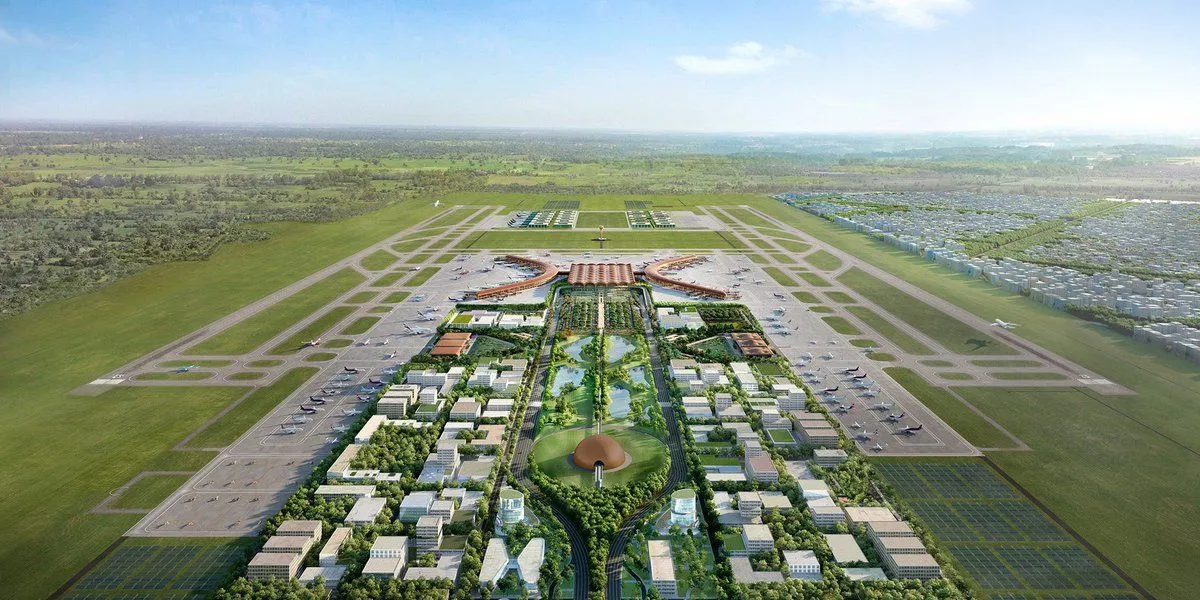
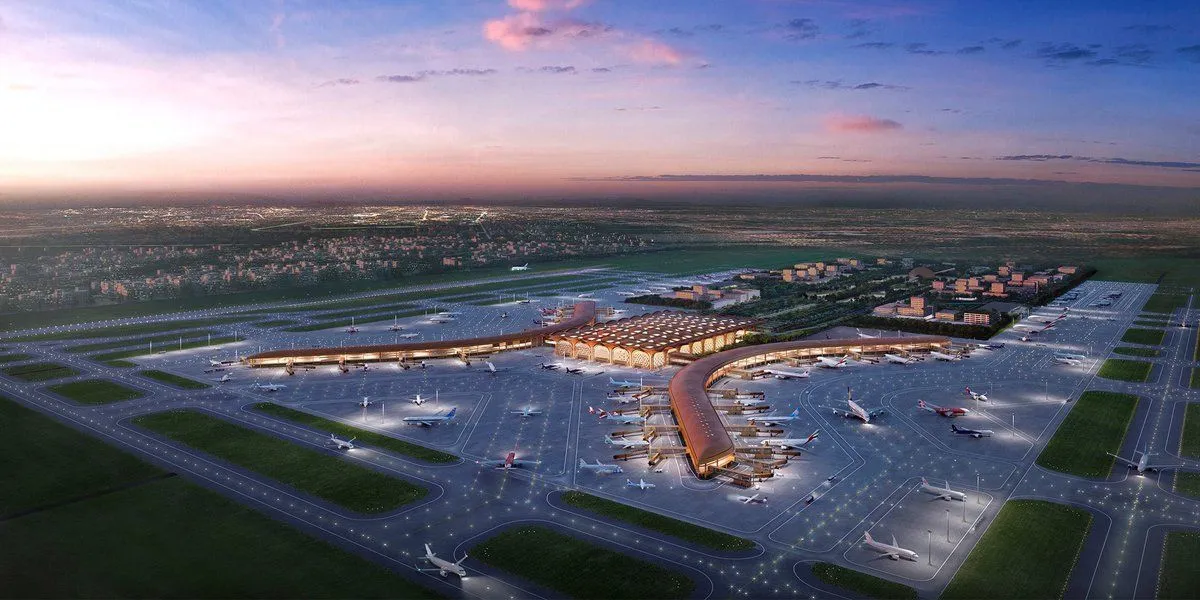
On 9 September 2025, Cambodia officially inaugurated its new international airport – Techo International Airport (KTI). This aerodrome is located in Kandal Province and is built under a joint venture between the Cambodian government and Overseas Cambodian Investment Corporation.
This three-runway facility was constructed at a staggering $2-billion and is to supplant the Phnom Penh International Airport (PNH), which wasn’t strong enough to meet increasing passenger demand and bolster the nation’s tourism sector.
Lukla: 5 Fast Facts About The World’s Most Dangerous Airport

How Techo airport is set to change Cambodia’s aviation
Techo International is designed by the UK firm Foster + Partners and constructed mainly by China Construction Third Engineering Bureau Group Co., Ltd. This airport is expected to handle 13 million passengers annually, though after the second and third phases of the construction is set to increase this passenger fourfold.
Key details of Techo International Airport (KTI), Cambodia
| Aspect | Details |
|---|---|
| Location & scale | 20–30 km south of Phnom Penh, in Kandal Province; site area ~2,600 hectares |
| Replacement & operations |
|
| Runways & initial capacity |
|
| Future capacity (expansions) |
|
| Estimated project cost |
|
| Funding & contractors |
|
| Architect & design |
|
Social and Environmental concerns surrounding KTI
The former Prime Minister of Cambodia, Hun Sen, remarked that the opening of KTI is a major step for Cambodia’s aviation and economy. The name “Techo,” can be translated as “powerful” in Khmer language and is an honorific that is traditionally bestowed upon Cambodia’s senior military commanders. Hun Sen was one of them.
In 2024, Cambodia welcomed approximately 6.7 million international visitors, which was a rise of almost 23% compared to the previous year. However, sceptics feel that the ongoing tensions between Cambodia and Thailand (its neighbor) might be a hindrance to the nation’s growth, as armed border clashes has led to the loss of the lives of 41 soldiers and civilians.
A couple of years ago, Cambodia opened the Siem Reap-Angkor International Airport, which is located on 700 hectares (1,730 acres) of land about 40 kilometers (25 miles) east of Angkor Wat. According to Associated Press, this airport cost $1.1 billion (almost half of the cost of KTI airport) and “was financed by Angkor International Airport (Cambodia) Co., Ltd., an affiliate of China’s Yunnan Investment Holdings Ltd, under a 55-year build-operate-transfer deal“.
One of the concerns with regard to Siem Reap-Angkor International Airport was that it could turn into the emptiest airport in the world – the Mattala Rajapaksha Airport that was also built under the aegis of China. A similar fate was seen in Nepal’s Pokhara Airport– a near $200 million airport that has turned into a great fiasco. While one might feel that KTI might suffer the same fate, the authorities told AP that Techo International Airport was “a joint venture between the Cambodian government and the Overseas Cambodian Investment Corp”.
Land displacement and compensation
It has been reported that the construction of the airport has led to the displacement of more than 400 families in Kandal Stueng and Bati districts, with Radio Free Asia said that NGOs had reported that up to 2,000 households were facing eviction due to the airport’s construction:
“The planned airport would cover 2,600 hectares and affect hundreds of families in Kandal province’s Kandal Stung district and Takeo’s Bati district. Hundreds of villagers whose farmland and houses about five kilometers from the airport site have been affected have since refused the company’s compensation offers of $8 per square meter even though their farmland has already been cleared.”
the displacement of farmland was something that was seen during the construction of Dharan Airport in Nepal as well. However, the glaring difference is that the people in Dharan never got to see the completion og an airport.
Here is a comparison table of similar cases where countries built new airports or replaced old ones, encompassing cost, scale, controversies, and outcomes.
Previous similar airport replacement or expansion incidents
| Project | Country & Airport | Capacity & Runways | Land / Displacement Issues | Outcome / Status |
|---|---|---|---|---|
| Siem Reap–Angkor International Airport (SAI) | Cambodia | Phase 1 capacity ~7 million passengers annually; 1 runway, with future expansion planned | Limited displacement reported; concerns raised over ecological impacts near Angkor Wat | Opened October 2023; now handling international and domestic flights |
| Techo International Airport (KTI) | Cambodia | Initial capacity ~13 million passengers annually; 3 runways; future expansions to 30m and 50m capacity | Large-scale land disputes involving thousands of families; compensation and land title controversies | Opened September 2025; assumed role of Phnom Penh’s primary airport |
| Beijing Daxing International Airport (PKX) | China | Designed for 72 million passengers by 2025, expandable to 100 million; 4 runways initially | Relocation of several villages and environmental concerns over wetlands | Opened September 2019; quickly became one of China’s largest aviation hubs |
| Istanbul Airport (IST) | Turkey | Planned ultimate capacity of 200 million passengers annually; currently 4 runways, with more phases under construction | Significant environmental impact on forests and wetlands; worker protests over labor conditions and safety | Opened October 2018; progressively expanding, now serving as Turkey’s main international hub |
The Fascinating History and Evolution of Airports: A Look into the Past and Future
All in all
Techo International Airport (KTI) is a vision of connectivity that could reshape tourism and trade in Cambodia for decades. But the airport has its complex trade-offs: displacement of communities, compensation disputes, and land title ambiguity are something the government should carefully analyze.