Swiss International Air Lines (LX) has confirmed the permanent decommissioning of two Airbus A220-100s from its nine-aircraft sub-fleet, designating the airframes for part-out at Toulouse Francazal Airport in France. The two aircraft — registered HB-JBC (msn 50012) and HB-JBD (msn 50013) — were originally delivered to Swiss Global Air Lines, a since-closed regional subsidiary, in late 2016, ranking them among the oldest examples of what was then the Bombardier CS100. Swiss confirmed the decision to Aviation Week on May 28, 2026, stating the two aircraft will not be reactivated.
The move is a direct consequence of the protracted reliability crisis affecting the Pratt & Whitney PW1500G geared turbofan (GTF) engine, which powers every variant of the A220 family. Swiss has been grappling with GTF-related groundings since at least 2023, and the part-out decision represents its most definitive action yet toward winding down the smaller A220-100 sub-fleet entirely. “By dismantling [parting out] these two aircraft, we are specifically securing components for our own use,” a Swiss official told Aviation Week, crystallising a strategy that prioritises the economics and seat capacity of the 145-seat A220-300 over the smaller variant.
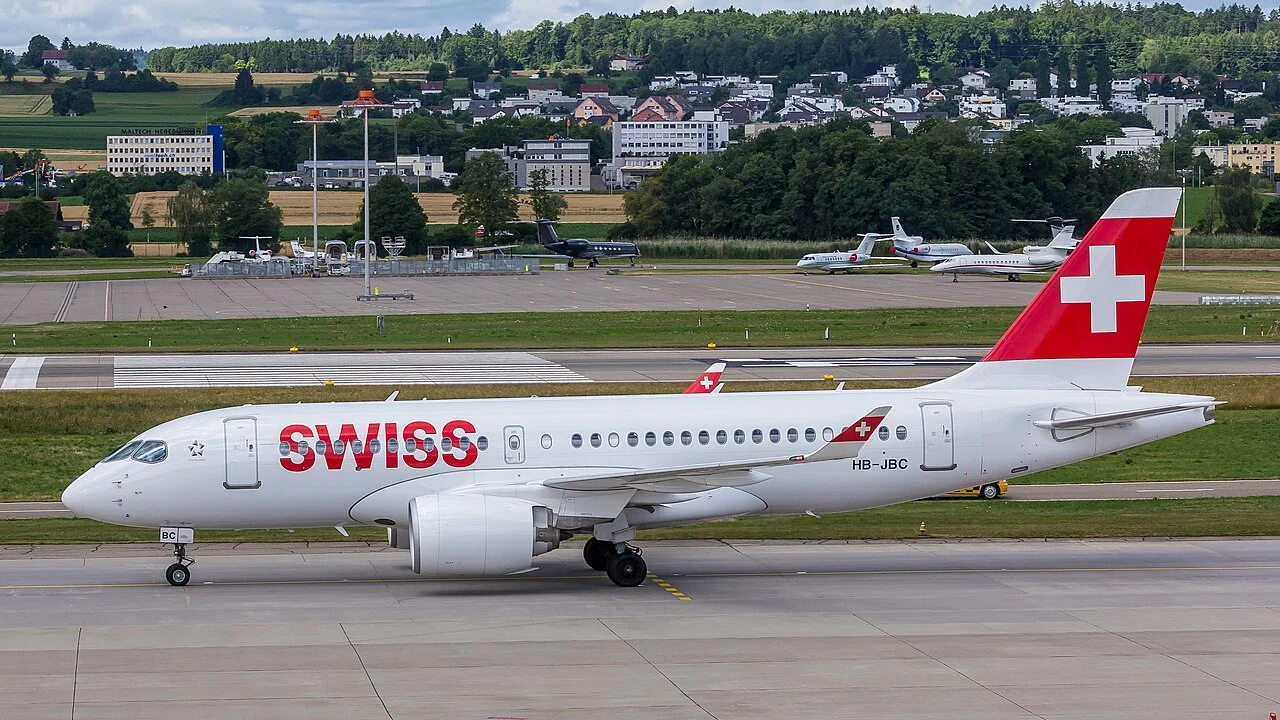
Registration, History, And Current Status of the two Aircraft Being Parted Out
HB-JBC completed its final revenue flight in mid-December 2025 and was ferried to Toulouse on January 16, 2026. Its companion airframe, HB-JBD, operated its last paying passenger service at the end of November 2025 and has been parked at Toulouse Francazal since January 5. Both aircraft spent their entire service lives with Swiss, which acquired them under the original Bombardier branding before Airbus completed its programme takeover in 2018.
Toulouse Francazal Airport is home to TARMAC Aerosave, one of Europe’s foremost aircraft storage and recycling specialists — jointly owned by Airbus, Safran, and Suez — with a storage capacity exceeding 60 aircraft at the Francazal site alone. The facility’s proximity to Airbus’s own headquarters makes it a natural staging ground for A220 teardowns, with components remaining within the manufacturer’s immediate ecosystem.
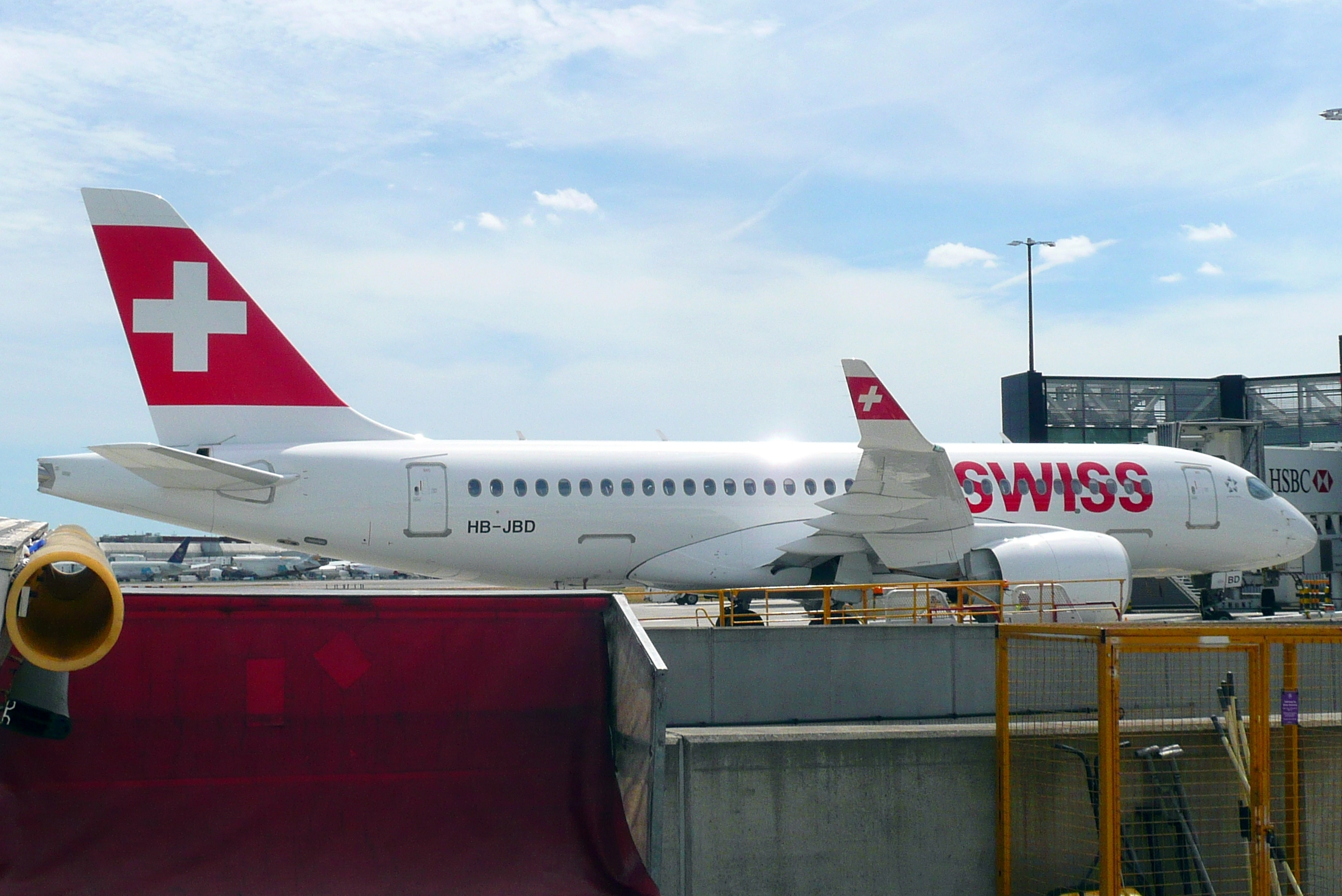
Specifications And Design Features of the A220
The Airbus A220-100 is the smaller of two variants in the A220 family, originally developed by Bombardier as the CS100 and designed to serve the 100–135 seat market with a combination of fuel efficiency, passenger comfort, and exceptional airport performance. Swiss configured its A220-100s in a single-class layout accommodating approximately 125 passengers.
Key technical characteristics of the Airbus A220-100 include:
- Fuselage length: 35.0 metres (3.7 metres shorter than the A220-300’s 38.7 metres)
- Wingspan: 35.1 metres (shared with the A220-300)
- Seating capacity: 100–135 passengers depending on configuration
- Range: up to 3,600 nautical miles (6,700 km)
- Engines: Two Pratt & Whitney PW1500G geared turbofan engines
- Cabin width: 3.28 metres — the widest in the single-aisle market segment
- CO₂ reduction: 25% per seat versus previous-generation aircraft
- NOx reduction: 50% per seat versus previous-generation aircraft
- Commonality with A220-300: 99% parts commonality, enabling pilots with a single type rating to operate both variants
- Assembly locations: Mirabel, Canada and Mobile, Alabama, USA
- Special performance: Certified for steep approaches, including into London City Airport (LCY)
The A220-100’s steeper approach certification was historically central to Swiss’s operational rationale for the type. “In the past it was necessary to use the A220-100 mainly for the London City connection,” Swiss CFO Dennis Weber explained in October 2025. That rationale has since been negated by Helvetic Airways, a Swiss partner carrier, taking over LCY operations with its own A220-100 fleet.

How did the PW1500G Engine Crisis Come About?
The Pratt & Whitney PW1500G, a member of the wider GTF (geared turbofan) engine family, has been plagued by durability problems centered on contaminated powdered metal in high-pressure turbine and compressor components manufactured between 2015 and 2021. Pratt & Whitney has reduced life limits on PW1500G high-pressure compressor front hubs after corrosion was discovered during routine engine overhaul, forcing operators across the A220 fleet to pull powerplants for inspection far earlier than originally planned.
For Swiss, the knock-on effect has been severe. The airline has had more than ten aircraft grounded simultaneously at peak periods due to engine and spare-parts shortages, spanning both its A220 family and its A320neo sub-fleet, which uses the closely related PW1100G. “Currently, four A320neos are grounded due to engine failure,” a Swiss official confirmed to Aviation Week in May 2026.
As of early November 2025, approximately 17% of the global Airbus A220 fleet was parked or inactive owing to PW1500G issues. Pratt & Whitney has stated that improvements to engine deliveries, technology upgrades, and expanded MRO network investment should cut aircraft-on-ground incidents on the A220 fleet to near zero by the end of 2026 — but Swiss CEO Jens Fehlinger has expressed scepticism, telling Aviation Week that the airline expects GTF reliability problems to continue throughout the decade.
By extracting the 18 PW1500G engines embedded in its nine A220-100s and redirecting them to its 21-aircraft A220-300 fleet, Swiss can restore previously grounded -300s to revenue service without waiting for Pratt & Whitney’s MRO backlog to clear. The dismantling process will additionally yield other serviceable components for the airline’s broader maintenance operations, turning two airframes that would otherwise sit idle into a productive inventory of high-value parts.

How The Part-Out Decision Fits Into Swiss’s Broader A220-100 Grounding
The part-out of HB-JBC and HB-JBD is the sharpest expression of a strategic pivot that Swiss announced formally in October 2025. At the time, Swiss CFO Dennis Weber confirmed during a quarterly earnings conference call that the airline would ground all nine A220-100s for at least 18 months, with phased decommissioning beginning in November 2025 and continuing through the summer of 2026. The airline framed the decision as operationally neutral, arguing that engines harvested from the -100s would enable grounded A220-300s to return to service, leaving total active fleet capacity unchanged.
Weber also highlighted the economic dimension of the decision: the A220-300, with 145 seats versus the A220-100’s 125, offers better unit economics and a higher revenue ceiling per departure. Consolidating around a single A220 subtype also reduces operational complexity, from crew scheduling to spare-parts inventory. By May 2026, that theoretical simplification had translated into a concrete action: two of the oldest airframes would never fly again.
Swiss plans to gradually take the remaining A220-100s out of service and park them for at least 18 months, with the exact schedule calibrated to operational needs. A Swiss official confirmed to Aviation Week that the precise timetable will continue to flex as the airline assesses A220-300 availability in real time. The decision on whether any A220-100s will eventually return to service remains formally open: “No decision has yet been made,” an airline official told Aviation Week when asked about the long-term future of both A220 variants. But the part-out of the two oldest airframes makes any full-fleet revival of the -100 sub-fleet increasingly implausible.

How The A220 Crisis Is Leading to Swiss Route Cuts
The A220-100 grounding has forced Swiss to make difficult network decisions across both its Geneva Cointrin International Airport (GVA) and Zurich Airport (ZRH) hubs. The airline cut approximately 25% of short-haul destinations from Geneva in the summer 2026 schedule, citing weak profitability against the backdrop of the engine crisis and intensifying competition from easyJet. “Geneva is currently a loss-making business,” Weber acknowledged candidly.
For the 2026/27 winter timetable, the cuts have deepened further. Swiss will discontinue services from Geneva to Berlin, Hamburg, and Pristina — a direct consequence of the continued pressure on its A220 fleet availability. The airline’s parent, Lufthansa Group (LH), is exploring whether other group carriers such as Eurowings could absorb some of the affected Geneva routes, reflecting the group-wide coordination required to manage the fallout.
Meanwhile, Swiss is simultaneously expanding its long-haul presence. The airline launched a new five-times-weekly Zurich–Bengaluru service for the 2026/27 winter schedule, adding to Airbus A350-900 deployments on Zurich–Johannesburg and Zurich–Shanghai. The divergence is stark: Swiss is contracting aggressively on short-haul where it lacks aircraft, while expanding deliberately on long-haul with its incoming A350 fleet.
The GTF crisis has also produced a surplus of cabin crew. Swiss offered flight attendants up to CHF 15,000 ($20,000 approximately) in voluntary departure packages effective March 2026, as the reduction in active aircraft left the airline with excess staffing it could not sustainably carry. Weber confirmed the overstaffing imbalance publicly: flight attendant recruitment and training have been paused and are not expected to resume until the second half of 2026.
Swiss is Among Several Operators Affected
Swiss is far from alone in confronting the destructive economics of PW1500G unavailability, though it has arguably suffered the most visible operational disruption among European A220 operators. The GTF engine family — which spans the PW1100G for the A320neo, the PW1500G for the A220, and the PW1900G for the Embraer E-Jet E2 — has produced industry-wide inspection requirements stemming from a contaminated-powdered-metal manufacturing defect affecting components built between 2015 and 2021.
Air Austral took the even more drastic step of moving to retire its entire A220-300 fleet, with a carrier spokesperson describing the decision as a “forced choice” prompted by the technical problems. The French regional carrier effectively had an average of just 1.75 aircraft available throughout 2025 from a fleet of three, forcing flight cancellations and a fundamental revision of its route network.
In North America, JetBlue Airways (B6) has reported six A220s grounded as of late 2025 due to engine overhaul requirements, with each engine overhaul taking roughly 200 days for the A220. Across the entire global A220 fleet, Swiss International Air Lines has been notably affected by persistent engine reliability problems, resulting in a substantial reduction in flight hours and the grounding of its entire A220-100 fleet until at least 2027. By contrast, Swiss’s 21 A220-300s are all currently flying — the precisely intended outcome of the engine redistribution strategy.
The December 2024 incident aboard flight LX1885 cast an additional shadow over Swiss’s A220 operations. A Swiss A220-300 (registration HB-JCD) operating from Bucharest Henri Coandă International Airport (OTP) to Zurich Airport (ZRH) experienced an engine malfunction on December 23, 2024, causing smoke to fill the cabin and cockpit, forcing an emergency diversion to Graz Airport (GRZ) in Austria.
One cabin crew member subsequently died on December 30, 2024, from brain damage caused by oxygen deprivation — the first fatality associated with an Airbus A220. Swiss CEO Jens Fehlinger publicly stated, “We are devastated at our dear colleague’s death. His loss has left us all in the deepest shock and grief.” Austrian federal investigators found damage to the left engine’s fan drive gear system and bearings. The investigation is ongoing.
The Future of the A220-100 Sub-Fleet: Permanent Retirement or Eventual Revival?
Swiss has been careful to avoid formally announcing the permanent retirement of the A220-100 sub-fleet as a whole. The airline’s official position is that the remaining seven airframes are in storage for a minimum of 18 months, with no long-term decision yet taken. However, the operational and commercial logic increasingly points in one direction.
In July 2025, Swiss’s head of aircraft assessment management said the A220-100 was hindering the airline’s operations; the subsequent grounding, now formalized through part-out of the two oldest aircraft, has made reactivation progressively more difficult to justify.
The airline’s fleet simplification ambitions reinforce that trajectory. Swiss CEO Fehlinger has articulated a strategic goal of operating just two aircraft types by 2028, a target that points firmly toward the A220-300 and A350-900 as the airline’s twin pillars for the next decade. Maintaining a nine-aircraft A220-100 sub-fleet — requiring its own inventory of parts, its own maintenance procedures, and a dedicated pool of type-qualified crew — runs counter to that simplification goal whether or not the GTF crisis ever fully resolves.
Pratt & Whitney PW1500G engines from the A220-100s will be transferred to the A220-300s, which offer better economics for the airline. The A220-300 seats 145 passengers versus the A220-100’s 125, generating meaningfully higher revenue per flight at equivalent operating costs. For a carrier operating point-to-point European and selected North African routes from Zurich and Geneva, the capacity differential matters significantly on competitive thin routes.