A senior engineer at a major U.S. aviation company has pleaded guilty to lying to federal officers after Customs and Border Protection (CBP) agents at Dallas Fort Worth International Airport (DFW) found proprietary company files on his personal devices as he prepared to fly to China, according to a report by Paddle Your Own Kanoo. Junjie Zhang, 57, also known as Jeff Zhang, entered his plea on April 1, 2026, in the U.S. District Court for the District of Kansas.
Zhang, a naturalized U.S. citizen originally from China, worked as a senior material and process engineer for a Wichita-based aviation company. CBP officers stopped him in September 2019 as he was about to board a flight bound for China, and discovered a thumb drive and laptop containing blueprints, graphs, and files marked “Proprietary” and “Confidential.”
How CBP Officers Caught Zhang at the Gate
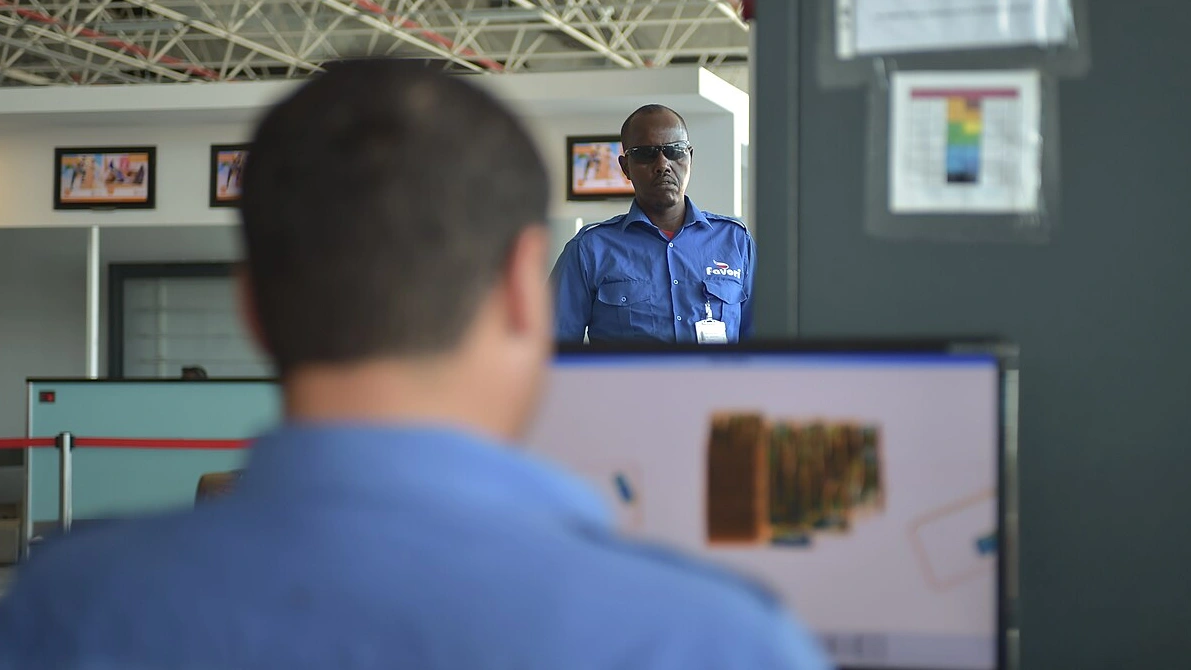
Zhang was pulled aside for secondary screening just as he was about to board his flight to China in September 2019. Officers searching his carry-on bag found a laptop and a thumb drive loaded with technical material belonging to his employer.
When agents asked whether he had any work-related information on his devices, Zhang told them no. He said the devices only held personal and family files.
That claim did not hold up once officers examined the contents. The devices contained documents explicitly labeled “Proprietary” and “Confidential,” along with engineering graphs and blueprints tied to his employer’s aviation programs.
Zhang Changed His Story, Then Pleaded Guilty to Lying
Confronted with the files, Zhang shifted his account and told CBP agents his employer had authorized him to carry the documents. That claim also proved false.
CBP alerted the FBI, which contacted Zhang’s employer directly. The company informed the FBI that Zhang was not authorized to have confidential documents on his personal devices or to leave the country with that information.
Zhang ultimately pleaded guilty to a single count of making a false statement to federal officers, under the law that criminalizes lying to CBP and other agencies during an official inquiry. Prosecutors have not pursued espionage or trade secret theft charges against him.
- Zhang faces a maximum statutory sentence of five years in federal prison.
- The charge also carries a possible fine of up to $250,000 and three years of supervised release.
- Prosecutors estimated the value of the proprietary data at more than $100,000, with some filings citing a range up to $150,000.
- Sentencing is scheduled for July 23, 2026, before a federal district court judge in Kansas City.
Why The Investigation Started In 2018, A Year Before the Airport Stop
The case against Zhang did not begin at the airport. His employer first reported him to the FBI in 2018, a full year before the DFW stop, after he displayed suspicious behavior during a sanctioned work trip to China.
That early red flag triggered a federal investigation that continued quietly for months before Zhang attempted to leave the country again in 2019. U.S. Attorney Ryan Kriegshauser, who oversaw the case, said intellectual property theft costs American companies billions of dollars every year and that the losses often land on consumers.
“Not only are Internet hackers a risk for this theft, but so are insider threats from rogue employees,” Kriegshauser said in a statement announcing the plea.
Wichita’s Role as the “Air Capital of the World”
Court documents have kept Zhang’s employer’s name redacted, but the case centers on Wichita, Kansas, a city long nicknamed the “Air Capital of the World” for its concentration of aircraft manufacturers. Cessna, Textron Aviation, Learjet, and fuselage-parts maker Spirit AeroSystems all maintain major operations there, alongside a significant Airbus presence.
Zhang’s attempted trip to China also coincided with a pivotal stretch for the COMAC C919, China’s home-built narrowbody jet designed to compete directly with the Boeing 737 and Airbus A320 families. What Zhang intended to do with the data remains unclear, and prosecutors have not alleged he planned to hand it to a Chinese aerospace rival.
Zhang’s prosecution is not an isolated event in the aerospace sector. In a separate case reported last November, a former engineer holding dual U.S.-Chinese citizenship was sentenced to nearly four years in prison after admitting to stealing infrared technology the U.S. military uses to detect missile launches.
Federal prosecutors have pursued similar cases against aerospace insiders for years, including a former Boeing engineer convicted of passing Space Shuttle and military aircraft secrets to Chinese contacts.
All in All
Zhang’s sentencing hearing is set for July 23, 2026, when a federal judge in Kansas City will weigh the U.S. Sentencing Guidelines alongside statutory factors to determine his final punishment. Prosecutors have indicated they will recommend a sentence toward the lower end of the applicable guideline range.



_Boeing_787-9_Dreamliner_VGHS.jpg)

.jpg)
.jpg)