Ryanair (FR) has begun implementing its long-planned move to digital boarding passes, ending the routine use of home-printed boarding passes across its network. Passengers must now check in online and access their boarding passes through the myRyanair app, although several exceptions remain.

This policy has been framed by the airline as something that will improve its operations, bolster its cause of environmental protection, and customer-experience. The transition means passengers must check in online and present a boarding pass displayed in the myRyanair app at security and at boarding. Ryanair says the move will reduce airport costs, encourage app adoption and save an estimated several hundred tons of paper annually; the carrier retains contingency measures for passengers who cannot access a phone at the airport.

Why Ryanair Introduced a Mandatory Paperless Boarding Pass?
Ryanair announced the change in a formal corporate release and on its help pages, explaining that the measure will standardize check-in, reduce queuing and lower per-passenger costs. The airline argued that more than 80% of its passenger base already uses mobile boarding passes, making the measure commercially rational.
Besides, there were some viable reasons that the carrier explicitly stated as to why it why it introduced the measure:
-
Enhance operational efficiency and sustainability, eliminating more than 300 tonnes of paper waste each year across its network.
-
Reduce airport handling costs, a change the airline says will ultimately help maintain lower airfares for passengers.
-
Deliver a smoother customer experience on the day of travel, offering real-time flight updates and improved app-based services.
-
Simplify re-booking and disruption management, enabling faster communication and assistance during schedule changes or delays.
Ryanair also highlighted the environmental benefits of the move, noting that it considers itself Europe’s lowest-emissions airline. According to the carrier’s CMO, Dara Brady, switching entirely to digital boarding passes would eliminate around 300 tons of paper waste while making the travel process faster and more streamlined.
The airline said the transition would take effect on November 12, following the busy mid-term break period, allowing passengers to access their boarding passes exclusively through the myRyanair app. The app will also provide features such as live flight information and Order to Seat, which Ryanair said would contribute to a faster, smarter and greener travel experience.
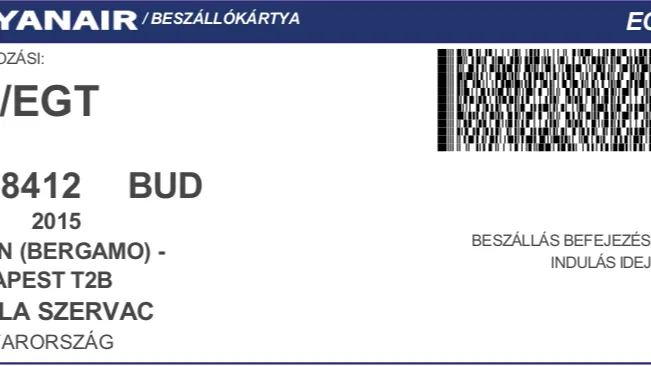
How Ryanair’s Digital Boarding Passes Will Affect Passengers?
Ryanair first introduced a digital boarding pass in 2014. Since then, it has been reported that four-fifth of Ryanair customers (that amount to 207 million) have shifted to digital boarding pass.
To be in ease with the digital boarding passes by Ryanair, passengers must ensure they have the myRyanair app installed, are checked in, and have their digital boarding pass available offline where possible.
Previously, the customers who had checked online but couldn’t access their boarding pass on their smart phone were charged £20 but now they will receive it for free. Passengers who do not complete online check-in before their Ryanair flight will be charged an airport check-in fee of up to £55
Simon Calder, a travel expert talked to BBC and remarked that while most passengers “were likely to adapt to digital-only passes but it would prove challenging for others“.
In his piece for The Independent, the same travel expert also touched upon a glaring oddity that “you can use a paper boarding pass that is printed out at the airport by ground staff working for Ryanair – at no charge.”
| Question related to Ryanair going fully digital | Answer |
|---|---|
| Will passengers still find check-in desks at airports? | Yes. |
| What should I do if my phone or tablet battery dies before security? | Airport staff will provide you with a complimentary boarding pass, given you’ve already checked in online, but your device runs out of power. |
| What happens if I don’t complete online check-in before arriving at the airport? | Must pay the standard airport check-in charge. |
| What if I lose my phone or tablet? | Travelers who have completed online check-in but lose their mobile device will be given a replacement boarding pass at no extra cost at the airport. |
| Will Ryanair still charge for boarding pass re-issues? | No |
| What if I’m flying from Morocco? | For flights departing Morocco from 12 November 2025 onward, passengers must check in online as usual and then collect a printed pass at the airport using their DBP. |
| What if I have poor Wi-Fi or no mobile data at the airport? | After checking in online, your DBP will remain available offline through the Ryanair app, even without an internet connection. |
| What happens if my phone or tablet stops working after airport security but before boarding? | Airline staff at the gate will verify your details in the system and assist you in boarding. |
| What assistance is offered to visually impaired passengers? | Ryanair’s digital passes comply with accessibility standards, and dedicated airport staff are available to help passengers who require assistance. |
| What if I don’t own a smartphone or tablet? | You can still check in online and will receive a free boarding pass at the airport. |

Exceptions: Morocco, Albania & Certain Airports
As the table above notes, there will be some exceptions to the fully paperless boarding as mandated by Ryanair. This is due to the fact that some countries (Morocco and Albania) still require printed boarding passes, while some aerodrome might not be sophisticated enough to be fully equipped to process digital systems.
According to Simple Flying, Ryanair has acknowledged that regulatory differences remain a challenge and is working with authorities to expand the availability of digital boarding passes. The airline recently reached an agreement with Albanian authorities to permit digital boarding passes for flights from March 2026, while paper passes will continue to be issued on certain routes until similar arrangements are finalized elsewhere.
The move is also part of Ryanair’s broader effort to encourage online check-in and greater use of its mobile platform. The airline has previously charged passengers for choosing airport check-in over digital options, with fees reaching €40 ($47) in Austria and €30 ($35) in Spain.
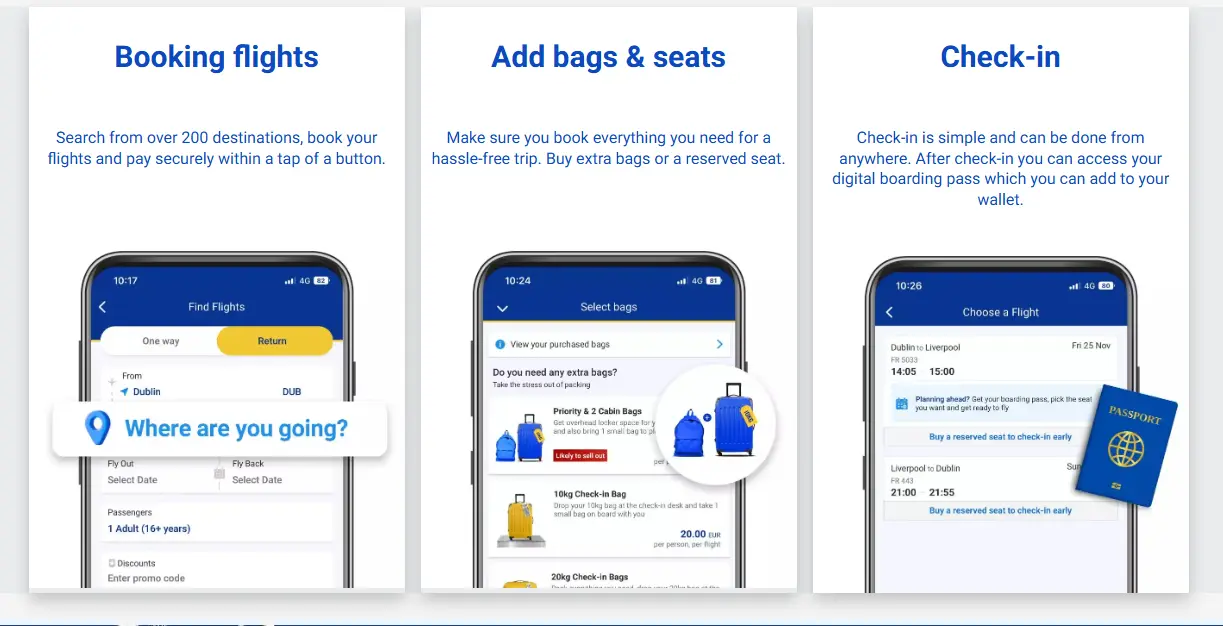
According to Ryanair, there are many benefits for switching into paperless boarding. Passengers would also get “easier access to a range of innovative in-app features“:
-
Travel Documents: All your boarding passes and travel documents available in one easy-to-access location.
-
Direct Updates: Receive instant alerts from Ryanair’s operations team during flight disruptions.
-
Order to Seat: Use your phone to order food and drinks and get served first onboard.
-
Alternative Flight Options: Explore real-time alternative flights if your journey is disrupted.
-
Live Flight Information: Stay updated with real-time details on gates, boarding, and delays.