
On Monday morning, Qantas (QF) Flight QF1889, Qantas flight operated by Alliance Airlines, operating from Darwin International Airport (DRW), Northern Territory, to Cairns Airport (CNS), Queensland, encountered an in-flight emergency when a warning light illuminated in the cockpit, leading pilots to perform a rapid descent of approximately 20,000 feet.
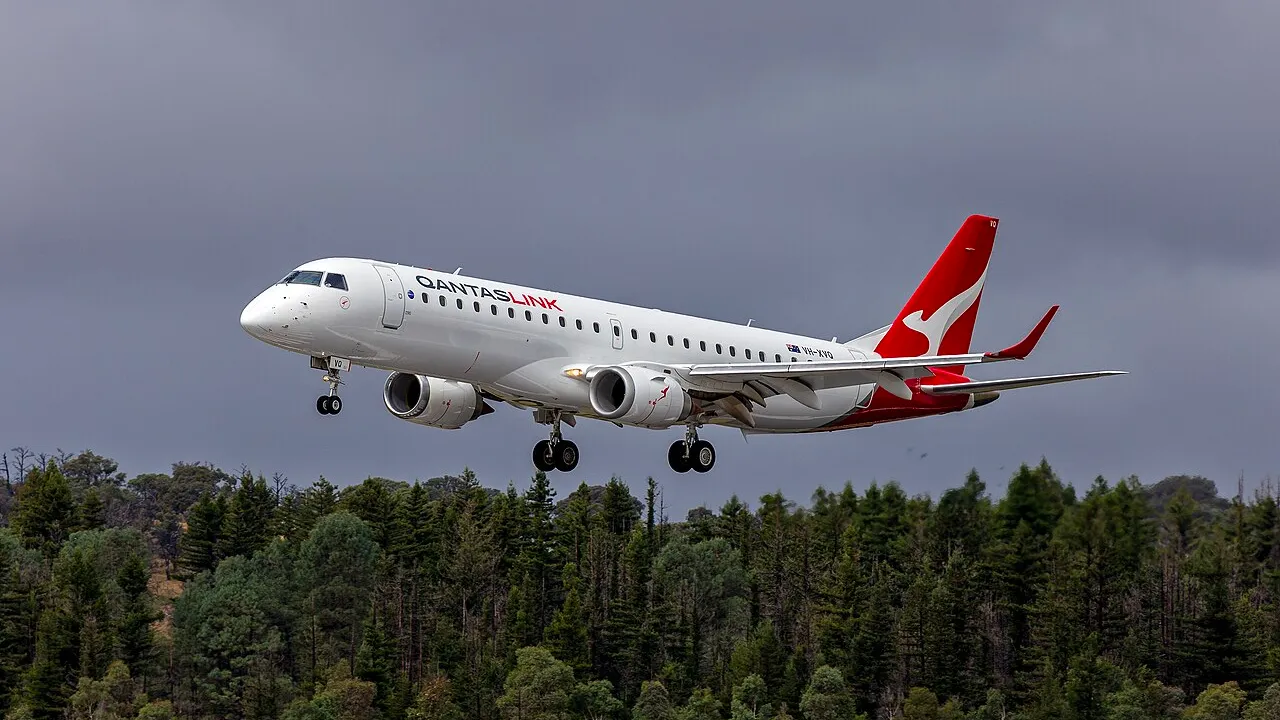
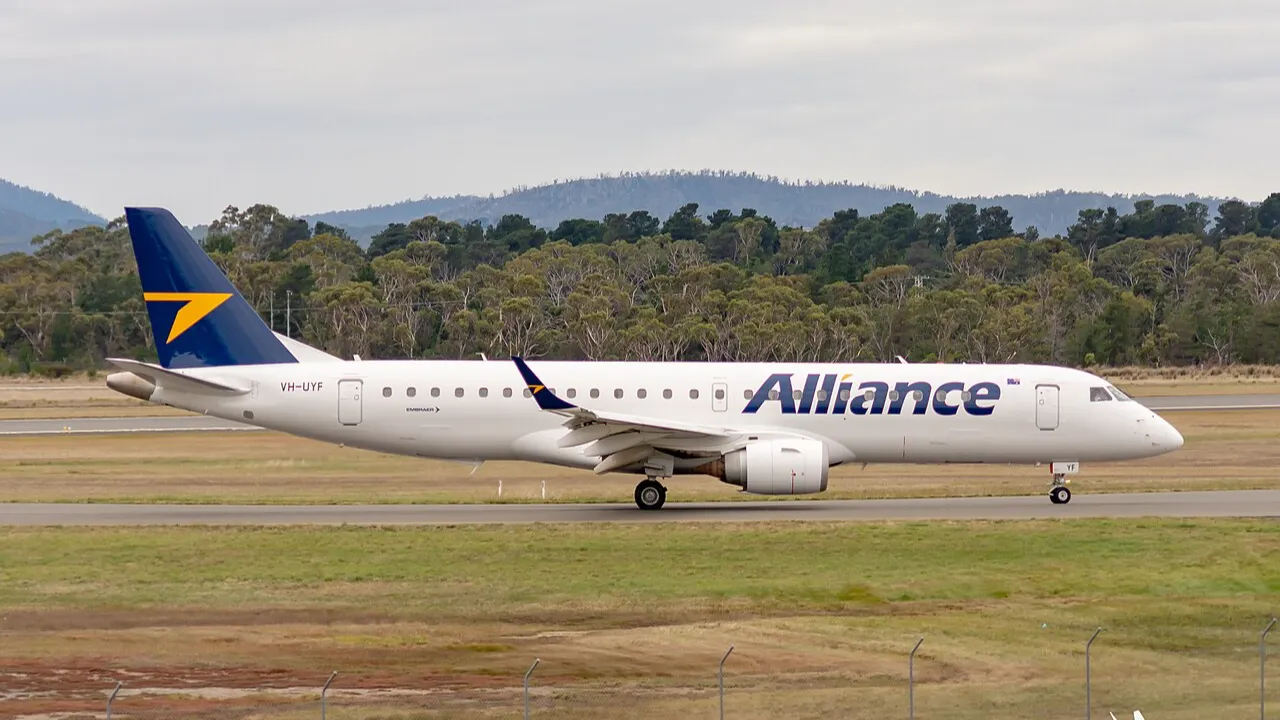
According to data from Flight Aware the aircraft in question was an Embraer E190. After takeoff, the airplane reached approximately 30,000 feet shortly after take-off. Following the triggering of a pressurisation warning light, the aircraft descended to roughly 10,000 feet before returning to Darwin.
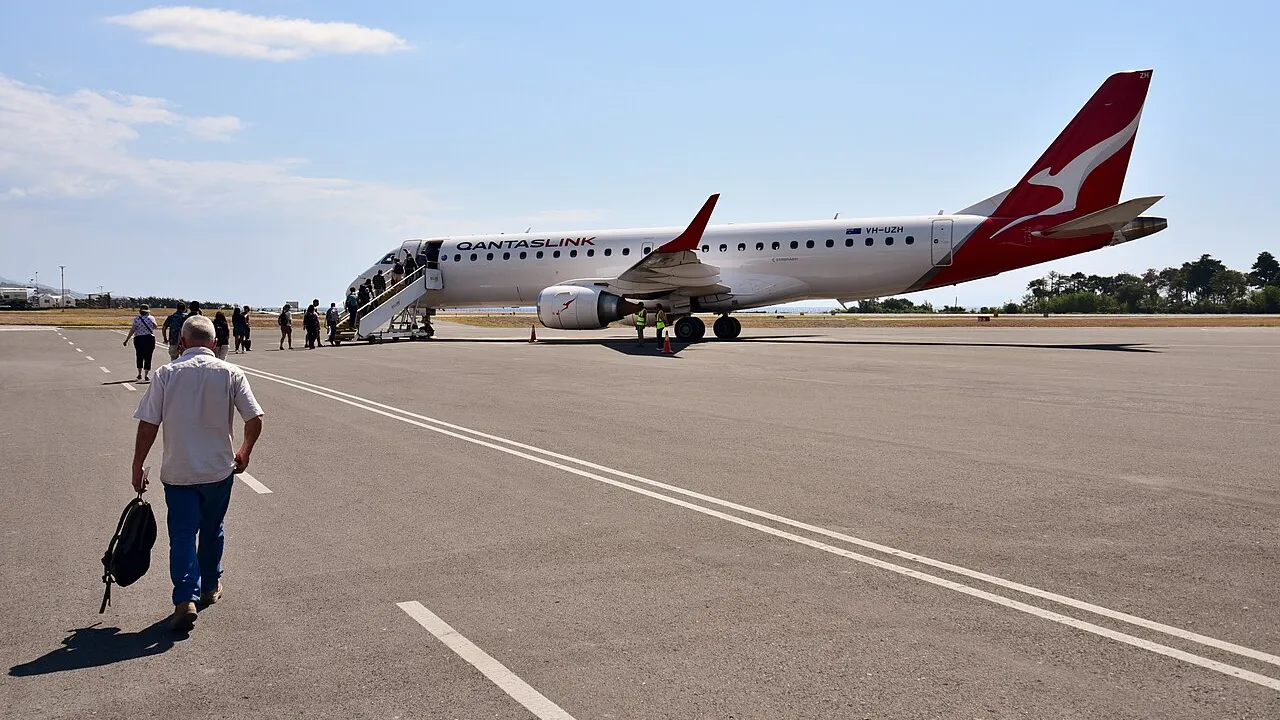
QF1889: Timeline and Emergency
QF1889 took off at 6.15am. Approximately 30 minutes after departure, The West reported that “a warning light went off and the plane went into a ‘rapid descent’, which was manually conducted, bringing the plane from 30,000 feet, to 10,000.early“.
Here’s a table summarizing the events:
| Time since take-off | Altitude before warning | Trigger / issue | Action taken | Outcome |
|---|---|---|---|---|
| ~0 minutes | Ground | Take-off from Darwin (DRW) | Normal climb | Stable climb to cruise altitude (~30,000 ft) |
| ~30 minutes | ~30,000 ft | Cockpit pressurisation warning light | According to the Standard operating Procedure, pilots initiate controlled descent |
|
| Shortly after | ~10,000 ft | Decision to return | Flight diverts back to Darwin |
|
.jpg)
,_VH-ZXC_%27Stanwell_Park%27_Boeing_767-336(ER)_Qantas_%26_VH-OJI_%27Longreach%27_Boeing_747-438_Qantas_(6601958561).jpg)
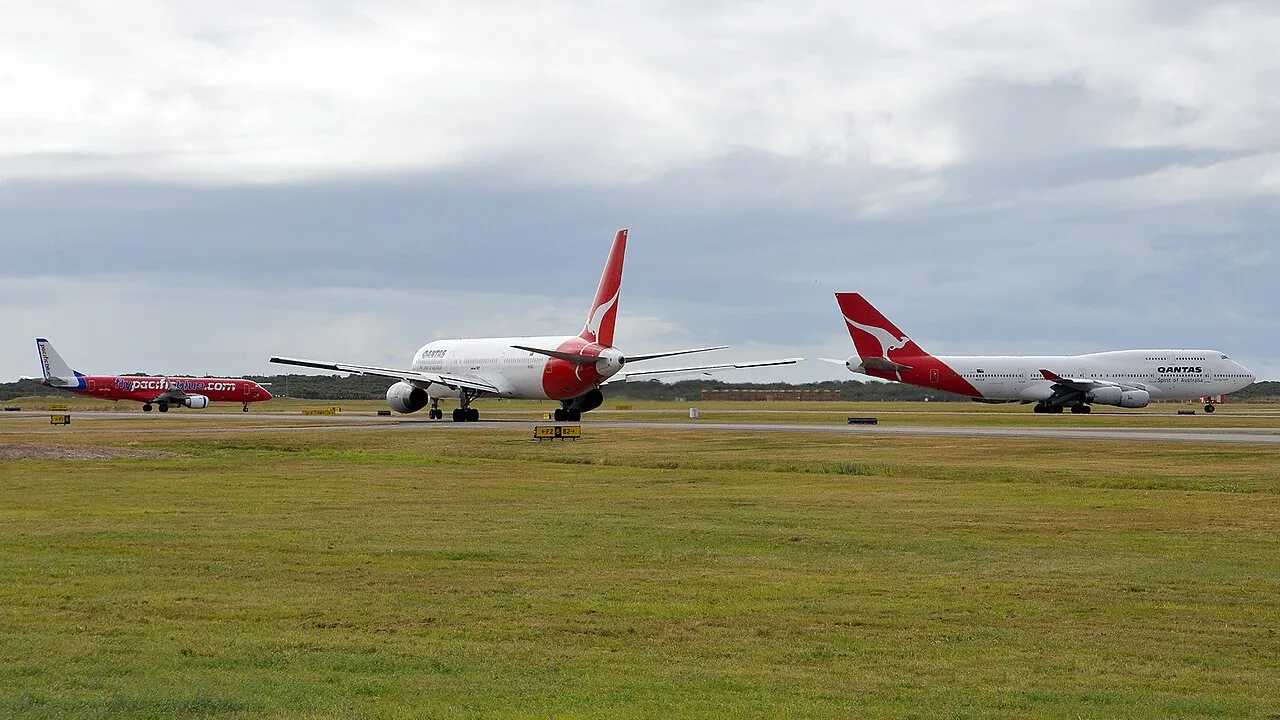
Qantas, which operates one of the most comfortable economy seats for long-haul flights in its Boeing 787-9s, is the flag carrier of Australia and got its name as an acronym for Queensland and Northern Territory Aerial Services Limited. Here is a summary of Qantas as airline:
| Attribute | Detail |
|---|---|
| Airline | Qantas |
| Founded | 1920 |
| Headquarters | Sydney, Australia |
| Fleet size (approx.) | According to data in planespotters.net, it has a fleet of 128 aircraft having an average age of 16.1 years. |
| Main hubs |
|
| Safety record | As quoted in Forbes, Qantas was regarded as the second-safest airline in the world, only behind Air New Zealand. |
Qantas recently started its services from Airbus A321XLR from Sydney and Perth. Data from planespotters also reveals that Qantas’ fleet doesn’t comprise the Embraer E190 aircraft.
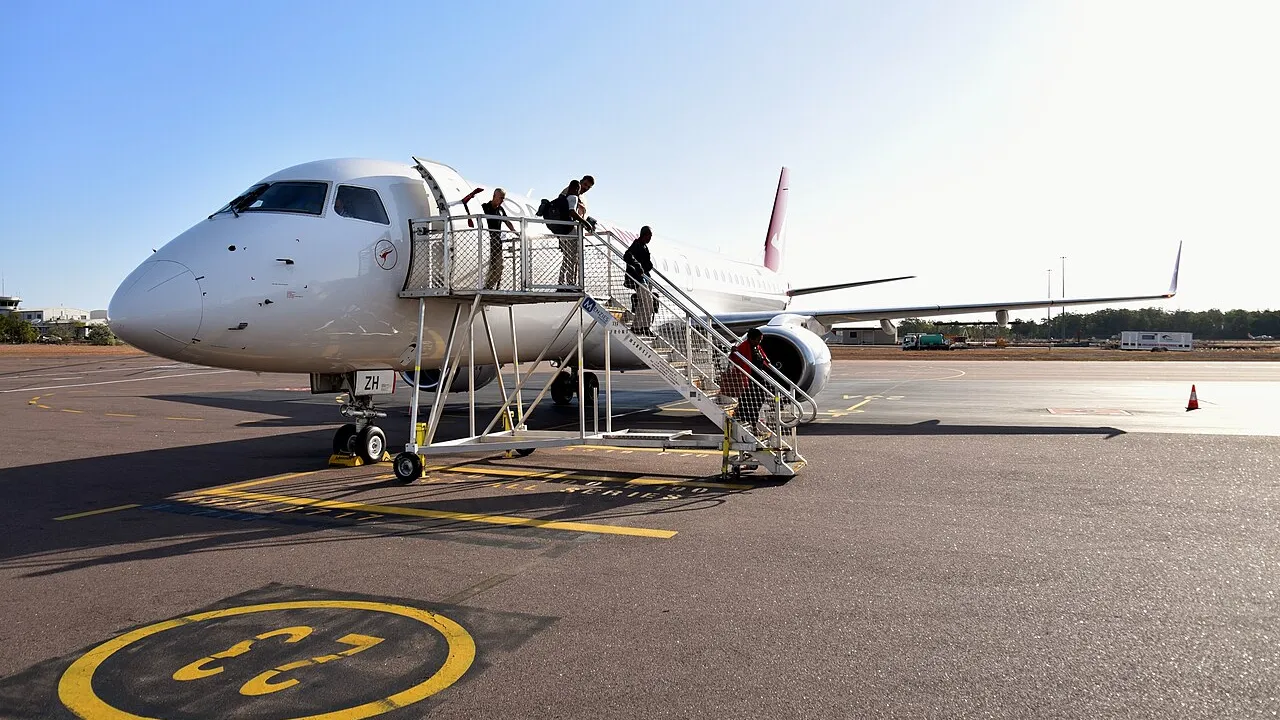
The Embraer E190 involved in the incident was operated by Alliance Airlines under the Qantas banner. Alliance Airlines has 53 E-190s in its fleet, ten of these are currently parked. Alliance’s E-190s have an average age of 18.2 years.
.jpg)
QF1889: passengers reported and airline statements
Qantas, the operator of the fourth longest one-stop flight in the world, said that though the experience for the passengers might have been unsettling, the plane had not plunged:
“After receiving a pressurisation warning light shortly after take-off on Monday morning, the pilots followed standard operating procedures and initiated a controlled descent to 10 thousand feet over a number of minutes. We understand this might have been an unsettling experience for our customers and want to thank them for their patience and understanding.”
For passengers, the experience was scary, as the cabin was was deluged with screams and one even felt that “we were going to die” during the rapid descent. A child reportedly experienced pain in the ears due to the quick drop, while another was quoted in the local outlet NT News in the following way:
“I think it is the closest all of us passengers ever want to come to a plane crash.. There was no notification before descending quickly. Paramedics were waiting when we landed.”
_Embraer_ERJ_190AR_landing_at_Canberra_Airport.jpg)
Similar incidents to QF1889: pressurisation warnings and rapid descents
Below is a table comparing this event with past incidents involving pressurisation failures or rapid altitude losses in commercial aviation:
| Flight / Date | Aircraft Type | Nature of Incident | Altitude Loss / Change | Fatalities |
|---|---|---|---|---|
| Qantas QF1889 (Sep 2025) | Embraer E190 | Pressurisation warning, rapid descent | From ~30,000 ft to ~10,000 ft (~20,000 ft drop) | No reported injuries
|
| Qantas Flight 72 (Oct 2008) | Airbus A330-300
registered as VH-QPA |
Faulty air data inertial reference unit causing pitch downs | “abruptly pitched nose-down and descended 650 ft” followed by “second uncommanded pitch-down event and descended about 400 ft“ |
|
| American Airlines Flight 5916
(August 10, 2023) |
Embraer ERJ145 | “indication of a possible pressurization issue and immediately and safely descended to a lower altitude”, as reported in today.com | descended from 29,900 feet down to 10,050 feet in just three minutes | no injuries |

All in all
While the rapid descent and warning light were unquestionably alarming to those aboard, Qf1889’s safe return and absence of injuries is a bright light. More information about the aircraft in question will be revealed in the future as the carrier investigates the matter at hand.