A Qantas Airways flight (QF) from Sydney Airport (SYD) to Auckland International Airport (AKL) diverted after the crew reported a fire alert in the forward cargo hold. The crew also made a mayday call roughly an hour before landing, when the aircraft was flying over the Tasman Sea. The aircraft landed safely at Auckland International Airport (AKL), and all 156 passengers disembarked without injury.
The alert triggered a full emergency response with 16 fire trucks deployed to the runway. After preliminary inspection, the carrier could detect no evidence of smoke or fire. It also announced that engineers would conduct further analysis to determine a root cause.
.jpg)
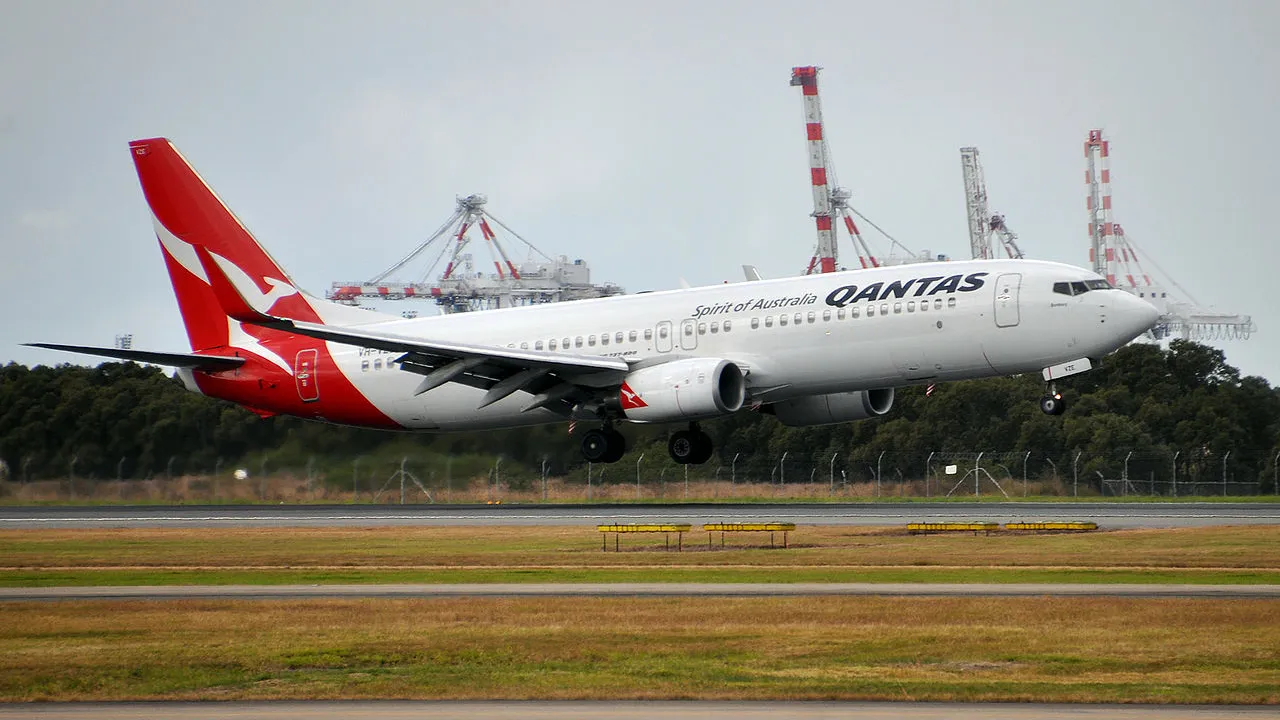
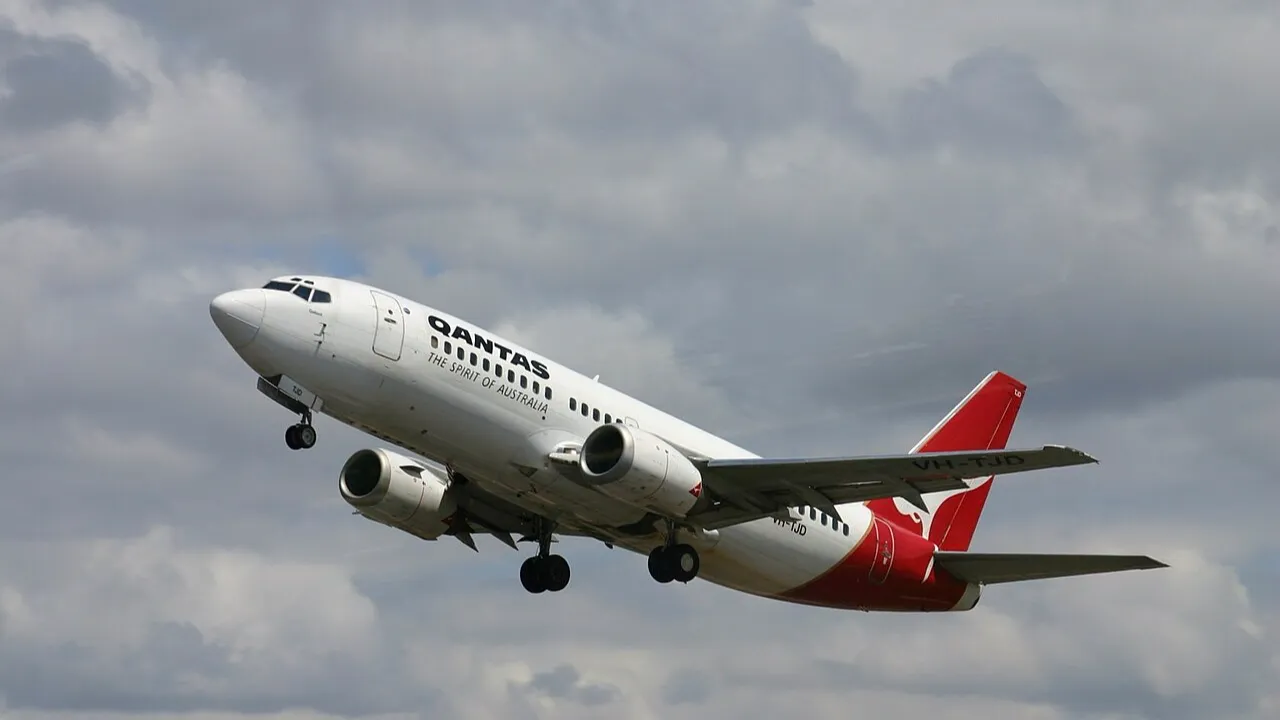
Qantas’ VH-VZE that was involved in the incident
Qantas QF141’s diversion and emergency response
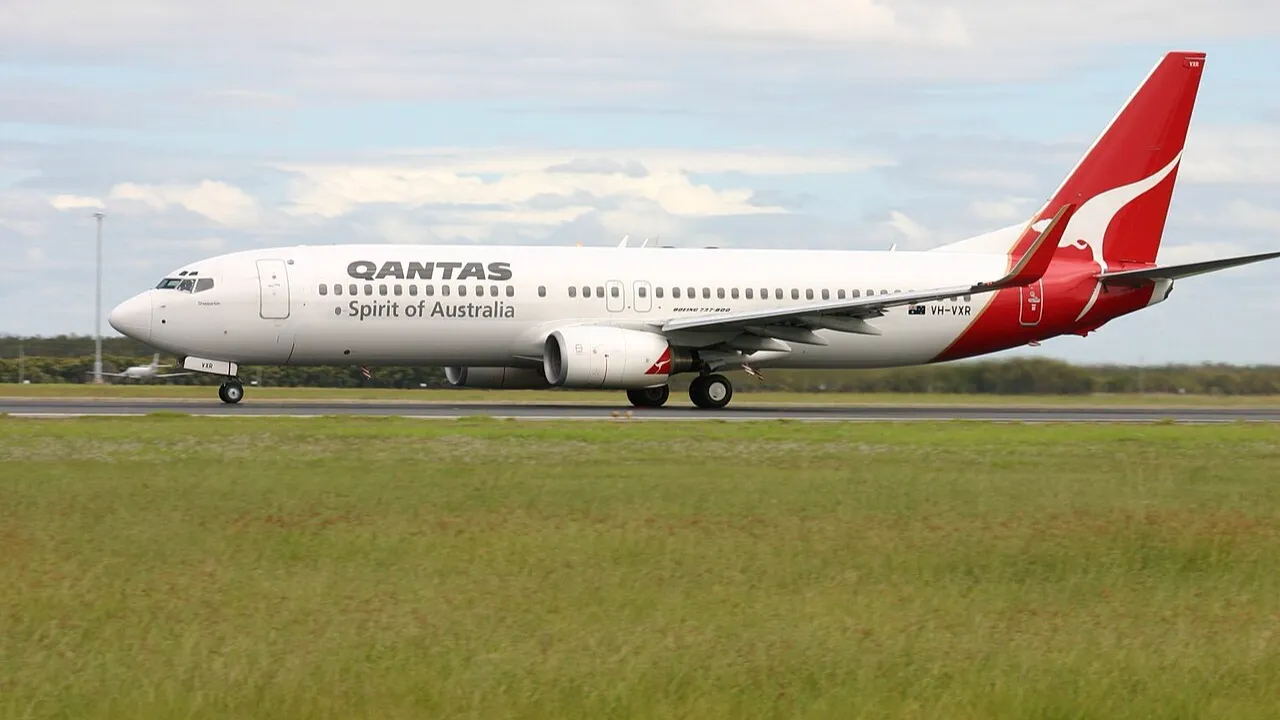
Flight QF141 was a Boeing 737-800, which is a backbone of Qantas’ short- and medium-haul operations, issued a mayday call and “requested an emergency landing after receiving intermittent indications about a potential fire in the cargo hold“, reported Reuters. Emergency services were on standby, and the aircraft arrived safely at Auckland roughly 20 minutes early.
Here’s a timeline of how events unfolded in QF141:
-
11:05 am local time (9:05 am AEST) – Fire and Emergency New Zealand received reports of a possible fire on board an aircraft at Auckland Airport.
-
11:47 am local time (9:47 am AEST) – The Boeing 737 landed safely at Auckland Airport.
-
Shortly after landing – Around 16 fire trucks and multiple ambulances were deployed to the scene as part of the emergency response.
On touchdown, fire crews examined the fuselage, cargo bays, and systems but found no signs of combustion. Preliminary findings point to a false alarm or sensor fault rather than a real fire.
.jpg)
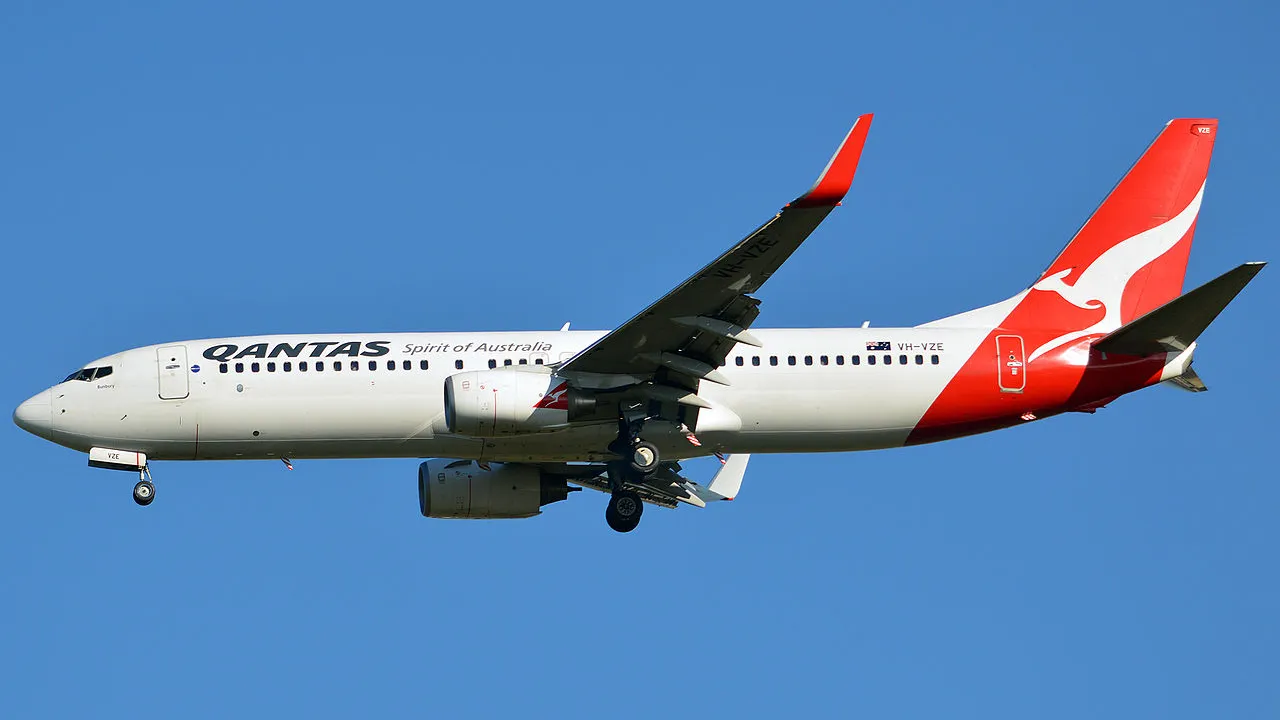
Qantas QF141 aircraft details
Qantas is the Australian state carrier and is named after how it originally started out: Queensland and Northern Territory Aerial Services Limited.
| Attribute | Details |
|---|---|
| Base | Sydney, Australia |
| Founded | 1920 |
| Fleet size | 128 aircraft (including 737s and widebodies) |
| Hub airports | Sydney (SYD), Melbourne (MEL), Brisbane |
| Narrowbody type | Boeing 737-800 (core) |
Qantas fleet also comprises of the Boeing 787 Dreamliner, an aircraft type which it operates on the longest routes in the world, such as the 9,475miles (15,248km) flight between Kingsford Smith International Airport (SYD) and Charles De Gaulle Airport (CDG) via Perth International Airport.
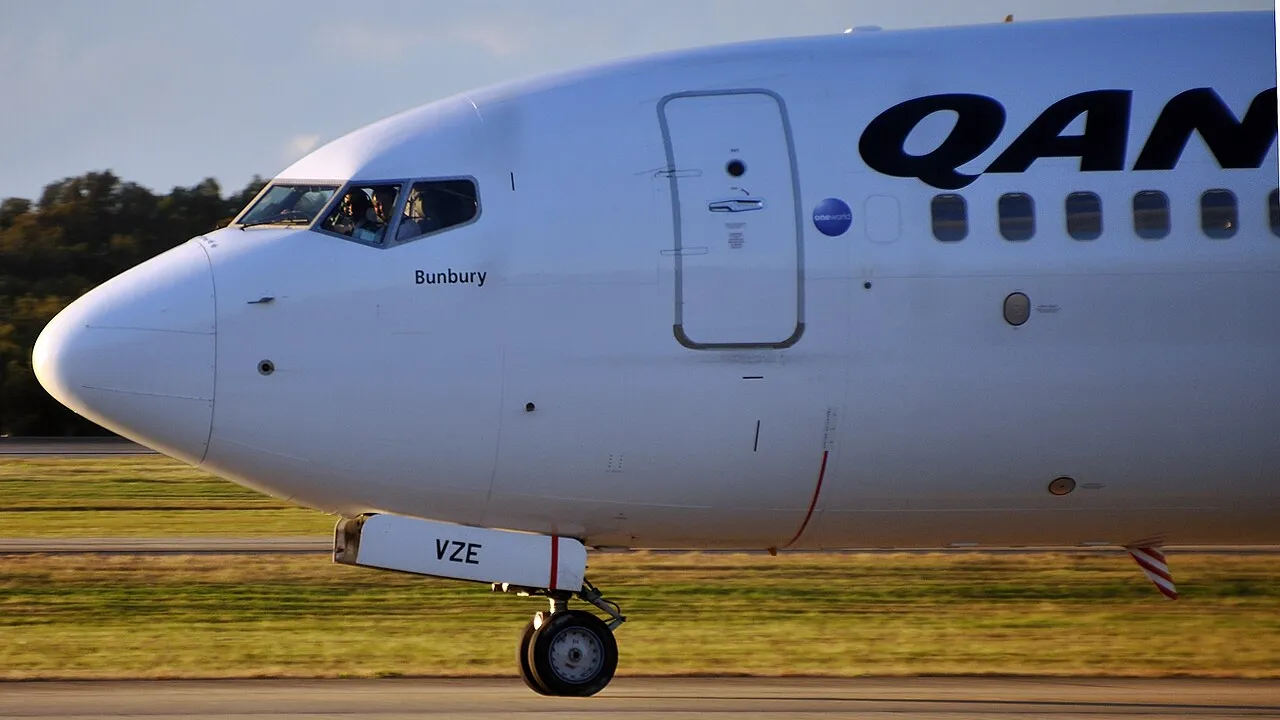
Nonetheless, the Boeing 737 is the aircraft type that Qantas has operated the most. It currently operates 76 aircraft of this type and these have an average age of 17.4 years. The aircraft involved in the incident is registered as VH-VZE, and is 17.3 years old. It was delivered to Qantas in July 2008.
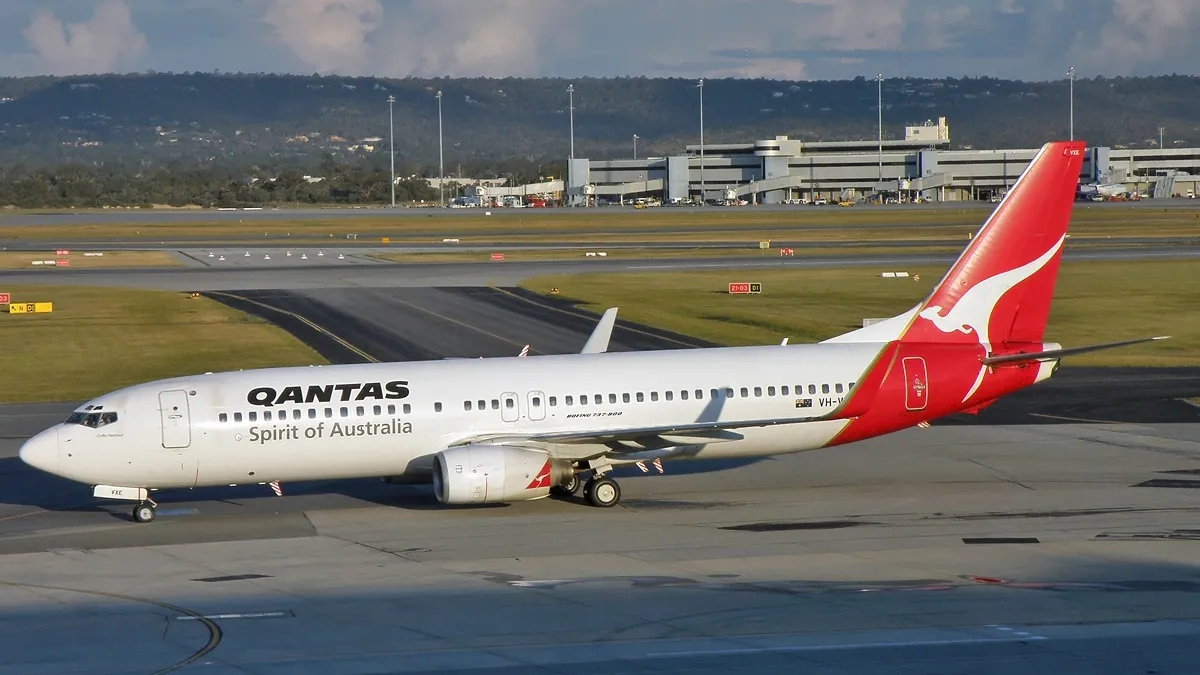

Here’s how Qantas configures its 373-800s used in QF141:
| Feature | Business Class | Economy Class |
|---|---|---|
| Seating Layout | 12 Recaro recliner seats in 2-2 configuration | 162 Recaro seats in 3-3 configuration |
| Seat Width | 18.7″ | 17.2″ |
| Row Pitch | 37″ | 30″ (37″ at overwing exit rows 13 and 14) |
| Seat Recline | 8″ | 5″ (seats in rows 12 and 13 do not recline) |
| Additional Features | Swing-out leg rest, footrest, 4-way adjustable headrest, retractable bi-folding table | 4-way adjustable headrest |
For connectivity, the flight has Complimentary Ka-band satellite wifi powered by ViaSat, while its In-Flight entertainment consists of (reported by aerolopa):
“Approx 50% of the fleet offer audio/visual on demand content delivered to seat back screens. Those aircraft without screens are equipped with overhead displays plus content streamed to your personal laptop, tablet, or smart phone.”
.jpg)
Past in-flight fire alerts such as QG141: comparative incidents
A Qantas spokesperson commented to SkyNews that there was no evidence of fire, and reaffirmed that the carrier would look into the incident.
During a flight this morning between Sydney to Auckland the pilots were receiving intermittent indication about potential fire in the cargo hold..The pilots followed standard procedures and notified authorities through a mayday call….Preliminary investigations report that there was no fire in the front cargo hold. Our engineers will inspect the aircraft to determine the cause.
An Auckland Airport representative commented that though the aerodrome returned to normal following the landing, there “may be some slight delays for departing and arriving flights.”
| Date | Carrier | Route | Outcome |
|---|---|---|---|
| Aug 31, 2025 | Air India | Delhi (DEL) → Indore (IDR) | Returned to Delhi after right engine fire alert; passengers re-accommodated. |
| Sep 27, 2023 | Air India Express | Karipur (CCJ) → Dubai (DXB) | Diverted to Kannur due to cargo fire warning light; false alarm confirmed. |
| Oct 2, 2024 | Firefly | Subang (SZB) → Penang (PEN) | Returned to Subang after smoke in cabin from air-conditioning fault. |
| May 15, 2024 | British Airways | London (LHR) → Oslo (OSL) | Diverted to Amsterdam (AMS) after smoke reported on board; landed safely. |
| Aug 2024 | Southwest Airlines | Chicago Midway (MDW) → Miami (MIA) | Diverted to West Palm Beach (PBI) due to smoke in cockpit; no injuries. |
| Mar 20, 2025 | Hong Kong Airlines | Hangzhou (HGH) → Hong Kong (HKG) | Diverted to Fuzhou (FOC) after fire in overhead bin; extinguished, safe landing. |
The examples in the table above shows that fire alerts are a part of modern aviation, and aren’t associated with fatalities onboard, though.
.jpg)
What happens after a MAYDAY call like the QF141?
Whenever pilots are facing an emergency, they communicate the information to ATC by either calling “MAYDAY, MAYDAY, MAYDAY” or “PAN PAN, PAN PAN, PAN PAN”, as they find appropriate. In case of a fire, or a loss of cabin pressure,
“the flight crew will don oxygen masks. The wearing of oxygen masks may make the voice messages more difficult to understand and increases the risk of a clearance being misunderstood and the risk of readback/hearback errors”
reports Skybrary. The following steps that can be acronym-ized into ASSIST, are taken by the ATCs, in return.
| Step | Action |
|---|---|
| Acknowledge (A) | Confirm and clearly understand the nature of the reported emergency. |
| Separate (S) | Keep the aircraft safely distanced from other traffic and terrain. |
| Silence (S) | Restrict radio chatter on the frequency if needed, and avoid disrupting critical cockpit tasks with unnecessary calls. |
| Inform (I) | Notify supervisors, nearby sectors, and relevant airports as required. |
| Support (S) | Offer every possible form of assistance to the flight crew. |
| Time (T) | Give the pilots the necessary time to handle and stabilize the situation. |
.jpg)
Which are the other airlines that offer alternatives to Qantas QF141?
Qantas, which recently launched the Airbus A321XLR flights, has a lot of competitor on the route where it operates QF141. The following tables gives you a glimpse into the airlines and the types of planes these carriers deploy on the SYD-AKL route:
| Airline | Aircraft Type | Flight Time |
|---|---|---|
| Jetstar | Airbus A321neo | 3 hours 5 minutes |
| LATAM | Boeing 787-9 | 3 hours 5 minutes |
| Air New Zealand | Airbus A320neo | 3 hours 10 minutes |
| China Eastern* | Airbus A330-200 | 3 hours 15 minutes |
China Eastern is one of the largest carriers in China and made it to the list of airlines offering some of the highest seats in the nation.