A man identified only as Jack, from the Wakefield area, brought Terminal 2 of Manchester Airport (MAN), Manchester, United Kingdom to a standstill on the afternoon of Wednesday, 27 May 2026, after he scaled the wrong side of safety barriers on a bridge spanning the main roadway into the terminal.
According to Jack’s own account, shared publicly on social media in a profanity-laced live video, he had urinated himself inside the airport building, a circumstance which led the carrier operating his Jamaica-bound flight to deem him unfit to fly and deny him boarding. Airport authorities and Greater Manchester Police were forced to close both the upper and lower level forecourts of Terminal 2, precipitating severe traffic congestion and leaving dozens of passengers to abandon their vehicles and walk to the terminal on foot.
The incident, which began at approximately 2 pm, escalated dramatically when airport management — in a bid to end the disruption — brought Jack a full cash refund of £3,000 at the bridge. He accepted the money but refused to descend from the ledge, stating he was remaining “out of principle.” Police negotiators worked for nearly two hours to resolve the standoff before Jack was ultimately taken into custody. Greater Manchester Police later confirmed they had arrested a man in his 40s on suspicion of causing a public nuisance and a public order offence.

How A Denied Boarding Turned into a Bridge Protest at Manchester Airport Terminal 2
Jack’s confrontation with the airline at the departure gate was, according to his own narration, the catalyst for everything that followed. He claimed the carrier denied him boarding because he had urinated himself inside the terminal building, making him, in the airline’s assessment, unfit to travel. The identity of the airline operating the Jamaica flight has not been confirmed in official statements or by the passenger himself in available footage.
Under UK air passenger rights regulations, airlines retain the legal authority to deny boarding on grounds of health, safety, or security without being obligated to provide compensation. The UK Civil Aviation Authority (CAA) confirms that denial of boarding is permissible in circumstances where a passenger presents a safety concern, and that the standard compensation entitlements under UK261 regulations do not apply in such cases. This regulatory framework likely informed the airline’s decision, although the precise internal assessment made at the gate remains unknown.
Incensed by the refusal, Jack exited the terminal building and scaled the safety barriers on a bridge that traverses the main road into Terminal 2. Emergency services spotted him quickly and, fearing for his safety, moved to close the access roads to the terminal without delay.
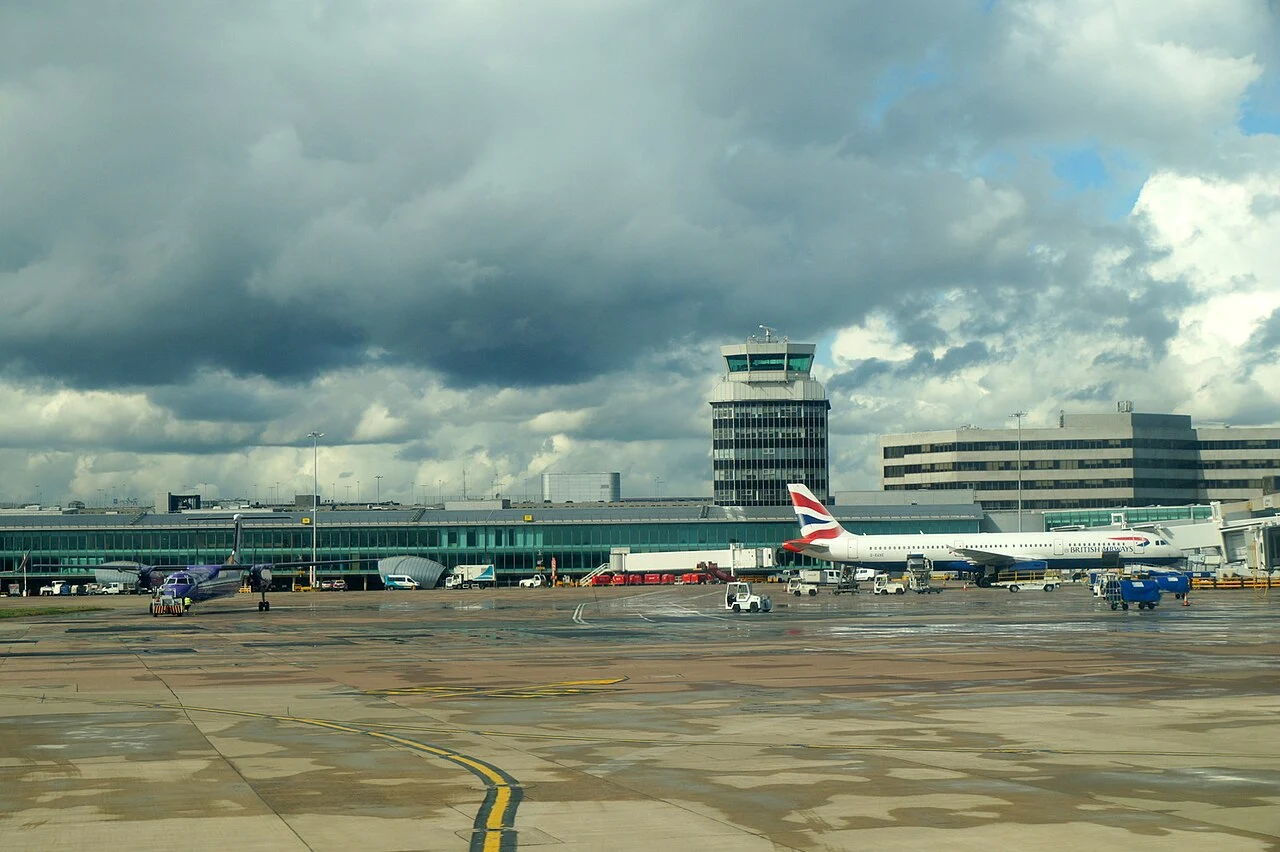
Terminal 2 Forecourts Closed: Chaos Unfolds for Passengers and Drivers
The closure of both the upper and lower-level forecourts of Terminal 2 during what is one of the busiest travel periods of the year — the UK’s half-term holiday week — triggered cascading disruption across the airport’s road network. A Manchester Airport spokesperson was quoted at the time in The Tab:
“Due to a police incident, the upper and lower-level forecourts of Terminal 2 are currently closed. Those dropping off passengers at Terminal 2 are advised to use the free drop-off area in the JetParks 1 car park until further notice, and to follow the instructions of traffic marshals on site. Terminal 3 is unaffected.”
The human cost of the closure was immediate and visceral. The Tab reported that a passenger named Mackenzie, who was travelling to Terminal 2, described a nine-minute bus journey that took 40 minutes as the vehicle was held in the congestion. She explained:
“They were supposed to take us to the roundabout and let us walk to Terminal 2, but that’s been shut off now. So we’ve gone from the old Terminal 1 and walked. Some people on the bus had planes in 20 minutes.”
Mackenzie further noted that the windows of the skywalk connecting to Terminal 2 were being covered up as she walked past, with one side of the walkway fully blocked off to prevent sightlines to the bridge below. Passengers who had arrived by taxi were seen abandoning their vehicles in the ensuing gridlock and walking the remainder of the distance to the terminal.

A £3,000 Cash Refund Failed to End the Protest
Perhaps the most extraordinary dimension of the incident was the airport’s decision to physically bring Jack a £3,000 cash refund at the bridge in an effort to coax him down. The gesture, however unusual in the context of airport operations, reflected the urgency with which management sought to restore normal access to Terminal 2. Jack accepted the money but refused to abandon his position.
As reported by Paddle Your Own Kanoo, Jack made clear that he would not leave the ledge “out of principle,” even after police negotiators repeatedly warned him that retaining the refund was conditional on ending his protest. At various points during the confrontation, he declared he intended to maintain his position until 10 pm that evening and even suggested he was capable of going without food for four days. In the end, the standoff lasted approximately two hours from the moment he first climbed the barrier, with Jack taken into custody well before his self-imposed deadline.
The entire episode was livestreamed by Jack himself, with the expletive-laden footage circulated widely on social media. The account confirmed by the Yapp social media application, which posted footage captioned:
“Jack from Wakefield caused chaos at Manchester Airport today when he was prevented from flying after ‘peeing’ himself he claimed.”
Greater Manchester Police Arrest and Official Statements
Greater Manchester Police moved in to make the arrest after the negotiation effort failed to produce a voluntary resolution. In an official statement, a police spokesperson said:
“Following an incident at Manchester Airport Terminal 2 today (Wednesday 27 May 2026) that has now been resolved, we have arrested a man in his 40s on suspicion of causing a public nuisance and a public order offence.”
The statement added: “He has been taken into custody to be questioned by officers.”
Following the resolution of the incident, Manchester Airport issued a further statement acknowledging that traffic volumes into and out of Terminal 2 remained elevated. A spokesperson expressed gratitude to passengers for their patience, while directing those travelling to the terminal to allow additional journey time. No information was provided about any flights that may have been missed as a direct consequence of the road closures.
Manchester Airport Terminal 2 is Britain’s Newest Super Terminal
The bridge at the centre of this incident sits within the infrastructure of Terminal 2, which has undergone a sweeping, decade-long transformation. Manchester Airport invested £1.3 billion in what it describes as the Manchester Airport Transformation Programme (MAN-TP), a project first announced in 2015 with a 10-year vision to overhaul the airport’s passenger experience. The first phase — an extension that more than doubled Terminal 2’s footprint — opened in July 2021, and the second phase, a further £440 million investment, brought the original terminal building in line with the new extension.
The expanded Terminal 2 is now the airport’s primary hub, handling approximately 75–80% of all passenger traffic across MAN’s 32 million annual passengers. Terminal 1, the airport’s oldest facility dating to 1962, formally closed in November 2025 after all airlines operating from it were relocated to the expanded Terminal 2. In the first month of 2026, Manchester Airport reported that 91% of passengers cleared security in under five minutes and 99.9% were through in under 15 minutes.

Parallel Passenger Incidents at Manchester Airport
This latest episode is far from the first time Manchester Airport Terminal 2 has found itself at the centre of a disruptive passenger incident. A comparison with other recent events involving the same facility reveals a pattern of high-profile confrontations that have drawn national attention.
In January 2026, approximately 35 passengers booked on Jet2 (LS) flight LS879 from Manchester Airport to Alicante, Spain, were inadvertently left behind after a boarding error directed them into a stairwell leading to a remote stand. We reported that the group waited for up to 40 minutes without communication before an airport worker informed them that “the plane’s gone.” In that instance, a passenger named Matt, from Denton, described feeling “literally stuck like caged animals” in the stairwell, and Jet2 later attributed the incident to “an error on the stairwell directions” while promising an urgent investigation.
By contrast, the 27 May 2026 incident originated not from an operational error by the airport or airline, but from a passenger’s unilateral escalation of a dispute over a boarding refusal. It was one that was, based on regulatory frameworks, within the airline’s lawful authority to make. The two incidents nonetheless share a revealing common thread: both exposed the degree to which individual circumstances at a single point of the passenger journey can spiral into disruption affecting far greater numbers of travellers.
It is also worth noting the broader context of security incidents at MAN. In 2024, four Just Stop Oil activists were arrested en route to the airport after officers found them equipped with angle grinders, bolt cutters, and adhesive materials intended for use in a protest on the taxiway. All four were subsequently convicted of conspiracy to intentionally cause a public nuisance and sentenced to between 18 and 30 months at Manchester Minshull Street Crown Court, with each also fined £2,000. That episode, while categorically different in motivation and organization, involved the same Greater Manchester Police response infrastructure and the same threat of mass disruption to the airport’s operations.

What UK Law Says About Passenger Fitness to Fly and Refund Entitlements
The legal underpinning of the airline’s decision to deny Jack boarding merits examination, not least because the dispute over a refund was the stated reason for the bridge protest. Under UK261 — the UK’s domestic successor to EU Regulation 261/2004 — airlines may lawfully deny boarding on grounds of health, safety, or security without incurring the standard compensation obligations that apply in cases of overbooking or operational disruption. Compensation of up to £520 per passenger is only available where the denial is attributable to the carrier rather than to the passenger’s own condition or behavior.
In Jack’s case, the airline’s refusal to board him on account of a hygiene-related condition would, on the face of it, fall within the health and safety exemption. The £3,000 refund brought to him at the bridge appears to represent the airline or airport offering a gesture of goodwill rather than any statutory obligation — a distinction that is legally significant even if it appeared to have little bearing on Jack’s determination to remain on the ledge.
The CAA’s guidance is explicit that it is reasonable for an airline to deny boarding where a passenger does not meet fitness-to-fly requirements, and that in such circumstances the passenger forfeits the right to standard compensation. Whether Jack had any legitimate avenue of complaint against the carrier remains a matter that would require full disclosure of the airline’s internal assessment and the applicable conditions of carriage.

The Broader Question of Disruptive Passenger Behaviour at UK Airports
The incident at Manchester Airport arrives at a moment when regulators and airlines across the UK are scrutinising passenger behaviour with renewed intensity. The FAA in the United States has recently moved to tighten enforcement around intoxicated passengers, with proposals that could affect how airports and airlines manage pre-departure alcohol service — a policy development that, while American in jurisdiction, reflects a global shift in how the aviation industry approaches passenger conduct standards.
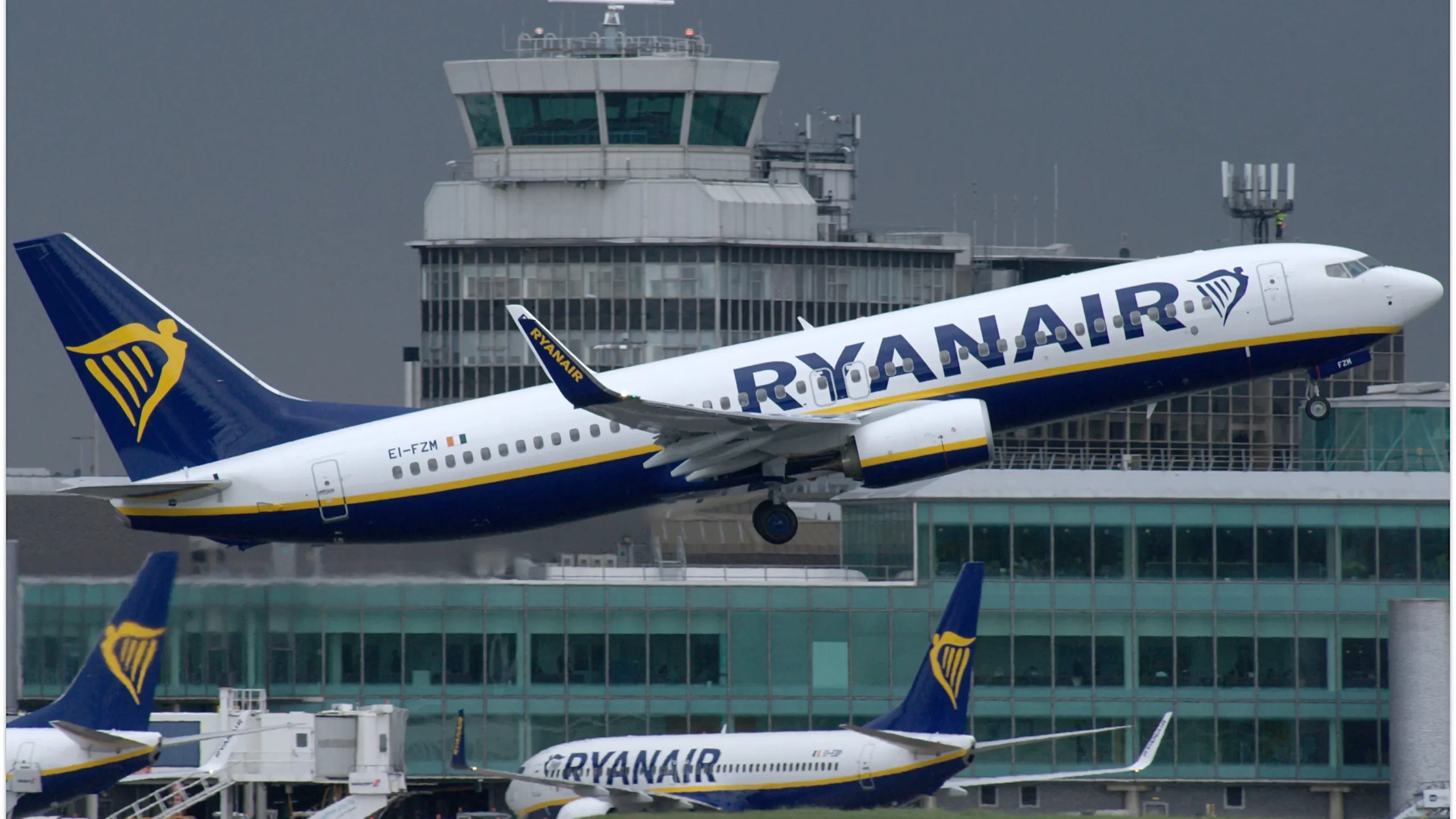
Ryanair, which operates from Manchester Airport’s Terminal 3, has been explicit about its zero-tolerance stance on unruly behaviour. A Ryanair spokesperson previously stated:
“Crew called ahead for police assistance, who met the aircraft upon landing at Bologna and removed these two disruptive passengers before this flight continued to Corfu later that same night. The airline has a strict zero tolerance policy towards passenger misconduct and will continue to take decisive action to combat unruly passenger behaviour, ensuring that all passengers and crew travel in a safe and respectful environment.”
That statement, made in reference to a separate incident involving a Manchester-originating Ryanair flight, encapsulates the broader posture that carriers operating from MAN have adopted.
Jack’s case, while not involving misconduct on board an aircraft, demonstrates that the consequences of passenger disputes can extend far beyond the gate — in this instance, to an airport-wide road closure that affected hundreds of travellers with no connection to the original complaint.