
A court in Beijing has ruled that Malaysia Airlines (MH) must pay 2.9 million yuan (≈ £307,571) to each of eight families whose relatives disappeared aboard Malaysia Airlines Flight MH370, reported Chinese broadcaster CCTV said on Monday. According to ecns.cn, the compensation covers the following:
- Death compensation
- Funeral expenses,
- Mental anguish damages
- and other losses and related costs
even though no definitive wreckage has been found and the passengers remain missing. The news comes in the month in which the search for this extraordinary disappearance of MH370 is set be revived.
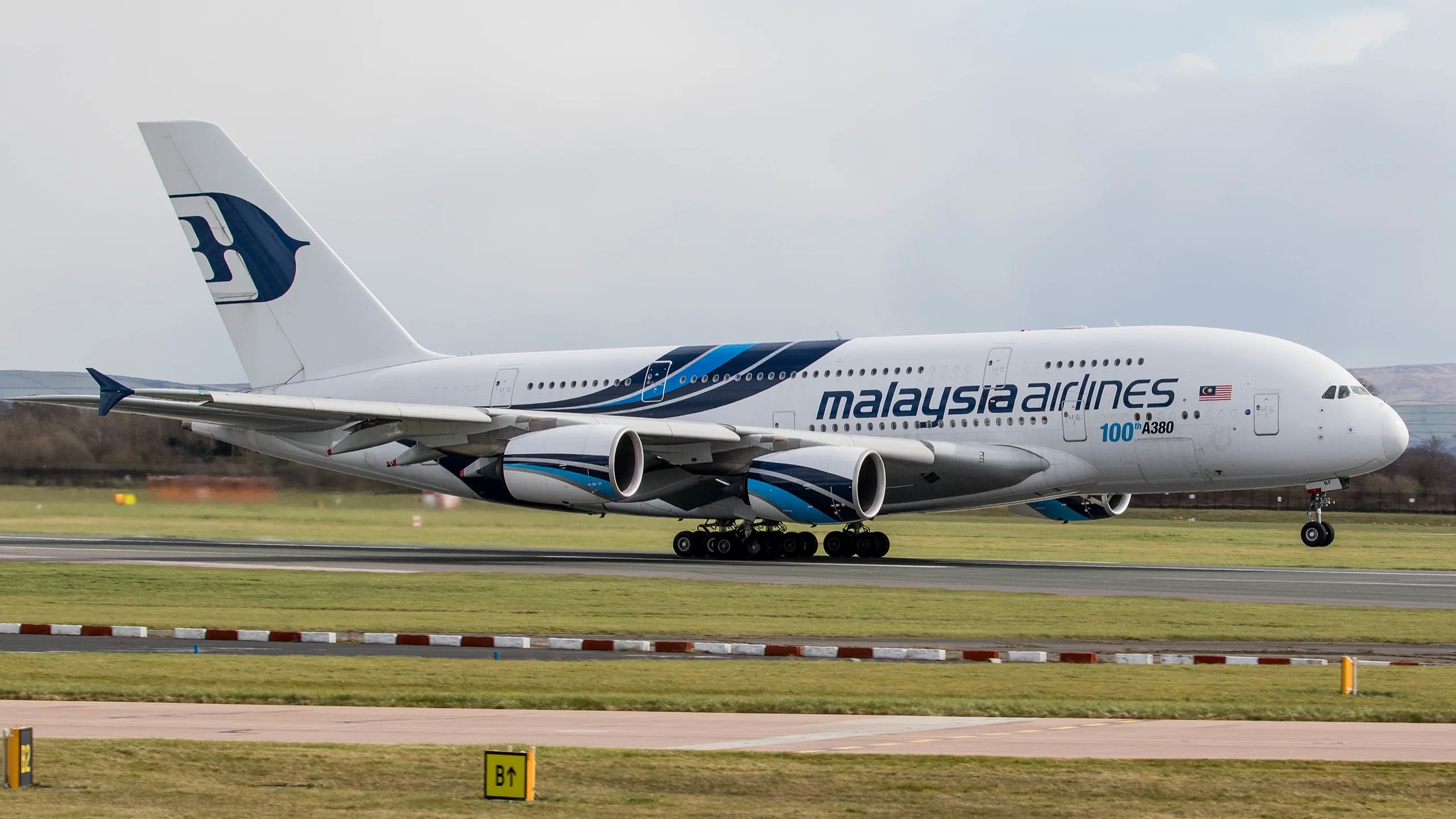
.jpg)
Background: Malaysia Airlines and MH370
| Category | Details |
|---|---|
| Flight Number | Malaysia Airlines Flight MH370 |
| IATA/ICAO Code | MH370 / MAS370 |
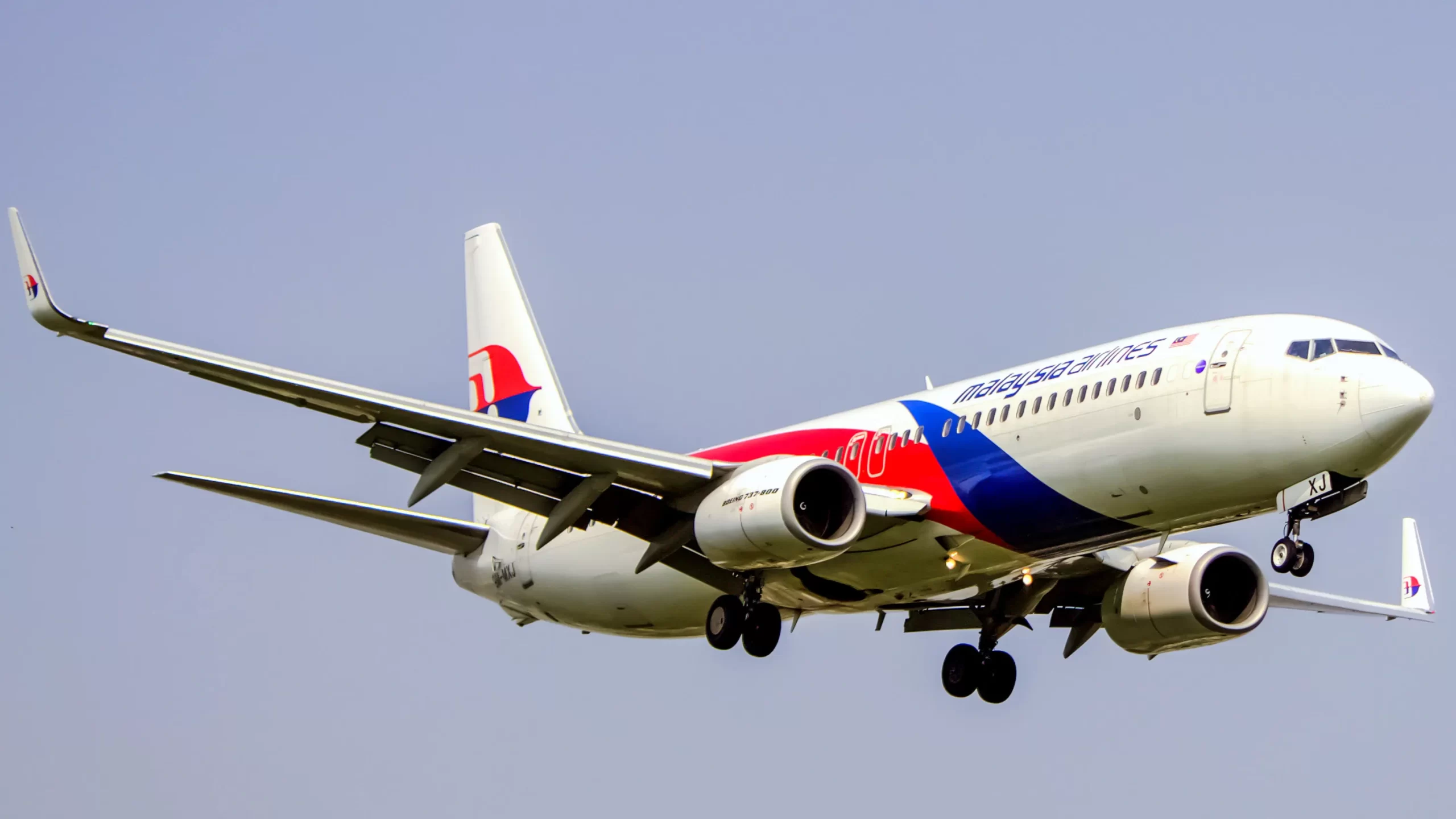
| Aircraft Type | Boeing 777-200ER |
| Aircraft Registration | 9M-MRO |
| Date of Disappearance | 8 March 2014 |
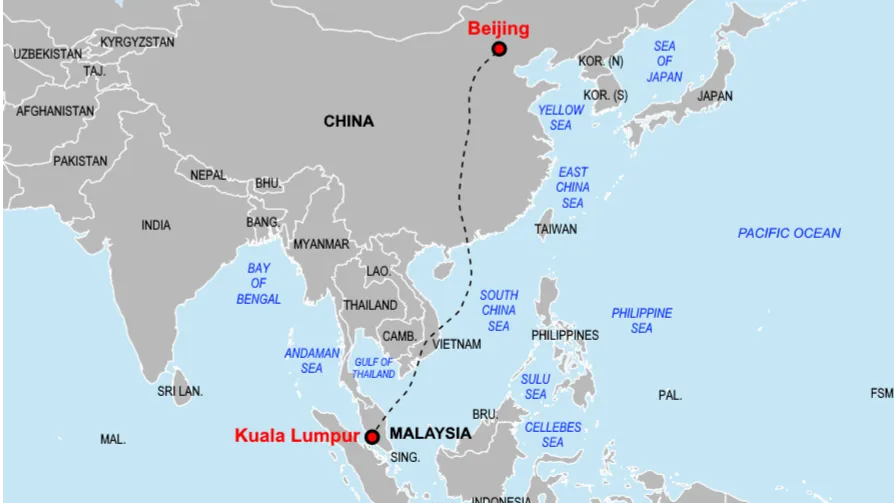
| Origin Airport | Kuala Lumpur International Airport (KUL), Malaysia |
| Destination Airport | Beijing Capital International Airport (PEK), China |
| Scheduled Duration | ~6 hours |
| Passengers on Board | 227 |
| Crew on Board | 12 |
| Total People | 239 |
| Captain | Zaharie Ahmad Shah, 53 |
| First Officer | Fariq Abdul Hamid, 27 |
| Last ATC Contact | 01:19 MYT — “Good Night, Malaysian three seven zero” |
| Last Primary Radar Detection | Over the Malacca Strait, after an unexplained course reversal |
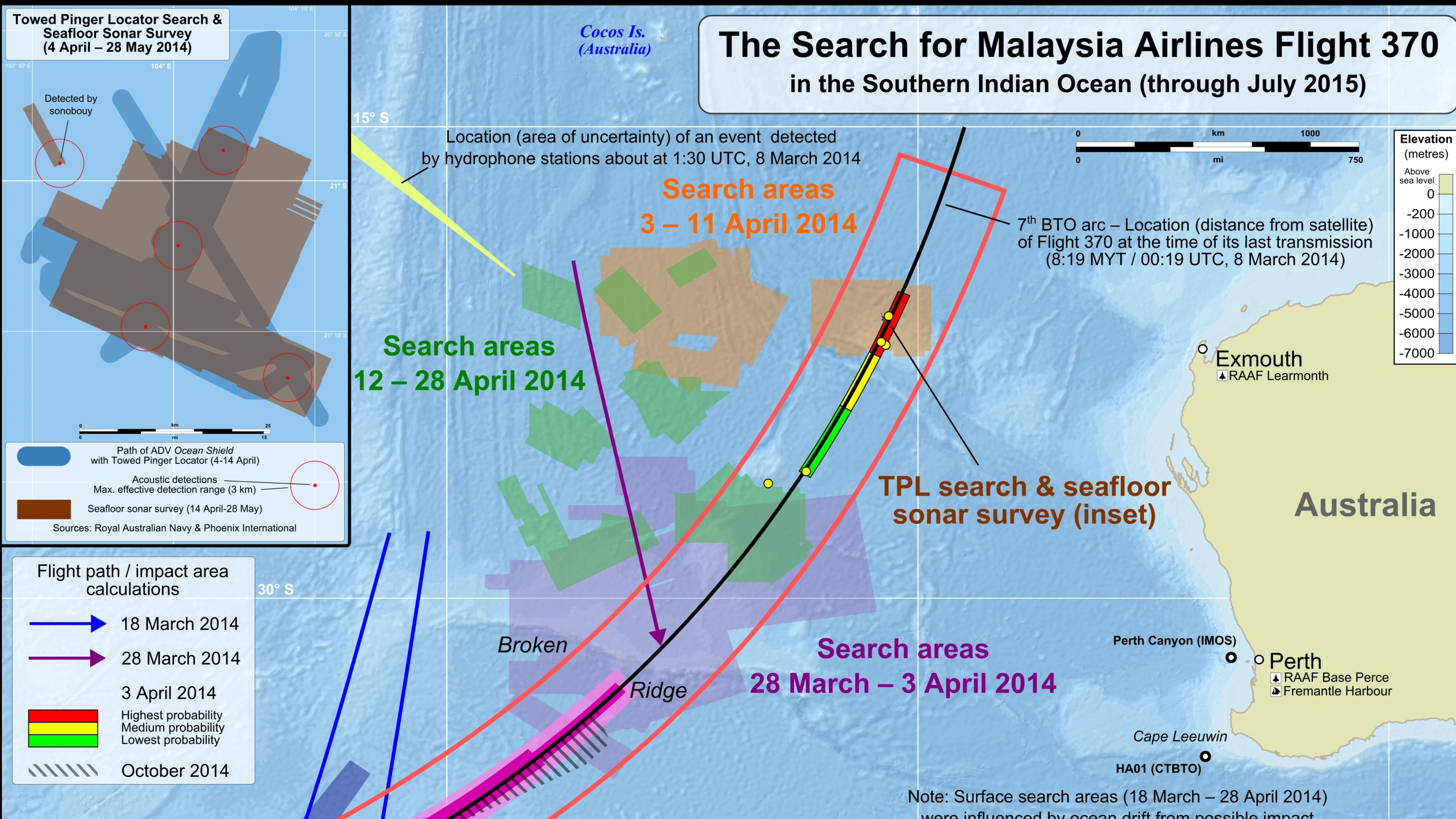
| Believed Crash Location | Southern Indian Ocean, west of Australia |
| Recovery Status | Aircraft not recovered; small debris confirmed from MH370 found on western Indian Ocean shores |
| Status of Passengers | Declared legally dead by Malaysian authorities in 2015 |
| Investigations Conducted By | Malaysia, China, Australia; ATSB, NTSB, AAIB assisted |
| Major Search Partners | Australian Transport Safety Bureau (ATSB), Ocean Infinity |
| Notable Findings | Aircraft diverted intentionally; transponder disabled; satellite “handshakes” placed aircraft along a southern arc |
| Search Status as of 2025 | Search scheduled to resume 30 December 2025 |

Photo: Official U.S. Navy Page | Wikimedia Commons
Court Ruling and Compensation Details
The ruling – a compensation of over 2.9 million yuan (≈ USD 410,000) per case – was handed down this week by the Chaoyang District People’s Court in Beijing.
According to court filings, the total number of lawsuits originally filed by families of 75 missing passengers was 78. Of those, 47 cases were withdrawn after out-of-court settlements, while 23 remain pending as other families have yet to complete legal procedures declaring their relatives deceased, reported China Daily:
“In accordance with the Montreal Convention and relevant Chinese laws, the court ordered Malaysia Airlines and Malaysia Airlines Berhad to compensate each passenger’s family for death compensation, funeral expenses, mental anguish damages, and other losses and related costs, totaling over 2.9 million yuan per case. The remaining 23 cases involve families who have not yet applied for or completed the legal procedure to declare the passengers deceased, and these cases remain under judicial review.”
The court based its judgment on both the Montreal Convention (to which many countries, including China and Malaysia, are signatories) and relevant Chinese national laws.

Legal Framework: Montreal Convention and National law
Under the Montreal Convention, carriers are strictly liable for passenger death or injury caused by an “accident which caused the death or injury took place on board the aircraft or in the course of any of the operations of embarking or disembarking”. The Montreal Convention of 1999, now more than two decades old, modernized and streamlined the long-standing Warsaw Convention System (WCS).
While the WCS supported international aviation throughout its early development, it had become outdated by the late 20th century, particularly because of rigid liability limits and inconsistent global adoption.
Let’s have a look at what the Montreal Convention covers and does not cover:
| What the Montreal Convention Covers | What the Montreal Convention Does NOT Cover |
|---|---|
| Passenger claims against airlines for death, bodily injury, or delay (Art. 17.1). | Claims against aircraft manufacturers by passengers or airlines. |
| Baggage claims — loss, damage, destruction, or delay for both checked and carry-on bags (Art. 17.2). | Claims brought under domestic passenger-rights regimes (though parallel proceedings may be allowed). |
| Cargo claims — loss, damage, destruction, or delay (Art. 18). | Purely domestic flights, unless a state voluntarily applies the Convention to non-international carriage. |
| International carriage by air, broadly defined. | Domestic flights like EDI–LHR unless national regulations extend coverage (e.g., EU Reg. 889/2002). |
| Domestic flights that are part of an international journey (e.g., EDI–LHR–MCT). | Compensation systems based on punitive, exemplary, or other non-compensatory damages (explicitly barred). |
| Jurisdiction for claims, including: country of airline’s domicile, ticket-purchase location (with conditions), destination, and the passenger’s principal residence (Art. 33). | A uniform global damages scale — amounts payable are determined by national law, not the Convention. |
| Allows claims to be filed in the passenger’s state of residence, if the airline operates there (new feature). | Situations where compensation is capped by artificial liability limits (these limits existed under the Warsaw system, not Montreal). |
| No pre-set cap for death or bodily injury compensation; liability depends on financial loss. | Any claims filed after the 2-year limitation period, as expired claims are not allowed. |
| Provides airline defenses (e.g., contributory negligence) depending on whether the claim is below or above 128,821 SDRs. | Uniform rules on the degree of negligence, which remain subject to national legal systems. |
Source: ICAO

In case of passenger claims for death or bodily injury (to succeed under Article 17) claimants must demonstrate:
-
A death or bodily injury occurred.
-
The harm resulted from an accident.
-
The accident took place on board the aircraft or during embarkation or disembarkation.
A claim must be filed within two years from the date of the accident. Negotiations alone do not stop the limitations clock, and while determining compensation, as is the case for the families of MH370, passengers must prove the extent of their financial loss. The Montreal Convention does not define how damages are calculated; this is left to the law of the court hearing the case, resulting in forum shopping across jurisdictions.

Restrictions and defenses
The Convention regulates:
-
Types of damages banned:
-
Courts cannot award punitive, exemplary, or other non-compensatory damages (Article 29).
-
-
Defenses available to carriers, depending on the value of the claim:
| Claim Amount | Carrier’s Available Defenses |
|---|---|
| Up to 128,821 Special Drawing Rights (SDRs) (~USD 173,000) | Contributory negligence by the passenger |
| Above 128,821 SDRs | (i) Contributory negligence
(ii) No negligence by the airline or its agents (iii) Negligence of a third party |
Note: 128,821 SDRs is not a liability limit nor a fixed payout; proof of loss is required.

Why This Ruling Matters Now
The ruling comes as the government of Malaysia plans to resume the search for MH370 on 30 December 2025, via a renewed deep-sea expedition led by Ocean Infinity.
For many families, the compensation represents a form of partial redress — acknowledging loss, offering financial support, and symbolically affirming responsibility even without morphological closure (debris or bodies).
The ruling comes almost a month after Boeing was ordered to pay approximately US $28 million to the family a United Nations environmental consultant who perished aboard Ethiopian Airlines Flight 302 (ET302), which was a part of a broader crashes of Boeing 737 MAX family of aircraft.
More than eleven years after the disappearance of MH370, the Beijing court’s decision to award substantial compensation to eight familiesmay also influence how airlines, regulators, and families approach closure, accountability, and remembrance for victims of long-missing flights.