SES and Japan Airlines (JL) have announced a major expansion of inflight connectivity across the carrier’s long-haul fleet. The agreement will see the deployment of advanced multi-orbit satellite connectivity systems, designed to deliver faster, more reliable internet access on international routes.

Major Fleet-Wide Connectivity Upgrade Across Japan Airlines
Under the new deal, Japan Airlines will equip 41 widebody aircraft with SES’s electronically steered antenna (ESA) technology.
The rollout includes:
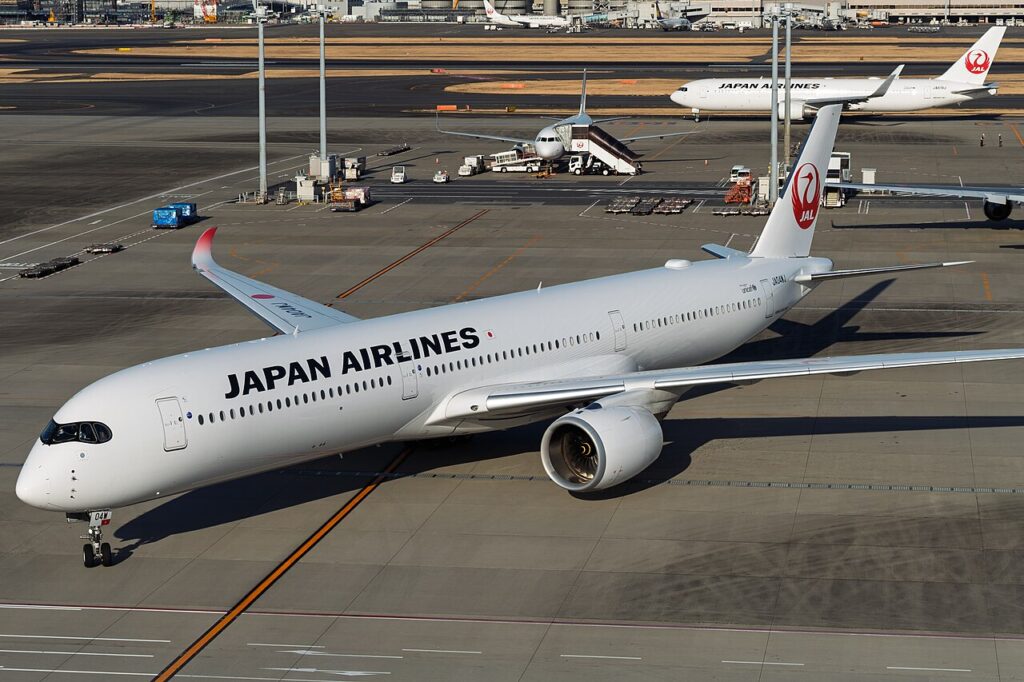
- 20 Airbus A350-900 aircraft (linefit)
- 10 Boeing 787-9 aircraft (linefit)
- 11 Boeing 787-9 aircraft (retrofit)
Installations on new aircraft will begin in 2028, while retrofits will be carried out progressively based on fleet availability.
This phased approach allows Japan Airlines to modernize its connectivity offering without disrupting operations—an increasingly important consideration as airlines upgrade onboard systems across active fleets.
Enrique Villasenor, SES Vice President of Global Airline Partnerships, said that Japan Airlines’ passengers will “will benefit from multi-orbit connectivity delivering fast, dependable internet access with wide coverage and low latency”:
Bringing this service to JAL’s A350 and 787 fleet builds on more than 10 years of partnership and supports the airline’s long-haul expansion of next-generation connectivity, advancing JAL’s leadership in inflight service innovation and its commitment to an exceptional customer experience.

Multi-Orbit Technology at the Core of SES
At the heart of the agreement is SES’s multi-orbit connectivity platform, which integrates both:
- Geostationary (GEO) satellites
- Low Earth Orbit (LEO) constellations
This hybrid approach enables:
- Lower latency compared to traditional satellite systems
- More consistent coverage, including over oceans and remote regions
- Seamless switching between satellite networks
The electronically steered antennas eliminate the need for mechanically moving parts, allowing for greater reliability and reduced maintenance requirements.
Passengers can expect improved browsing speeds, stable streaming performance, and uninterrupted connectivity, aligning with growing expectations for a “connected cabin” experience.
Japan Airlines to Enhance Passenger Experience and Efficiency
Japan Airlines has steadily positioned itself as a leader in inflight connectivity, already offering free internet on domestic services. Expanding these capabilities to long-haul routes reflects a broader strategy to enhance the passenger experience on international flights.
At the same time, the low-profile ESA design contributes to better aerodynamics, helping minimize drag and preserve fuel efficiency—an important factor for long-haul operations. After all, Ryanair cited aerodynamic concerns saying that it wouldn’t install Starlink as it feared aerodynamics would lead to greater fuel consumption.
Junko Sakihara, Deputy Senior Vice President – Customer Experience at Japan Airlines, said that the carrier was proud to have been “among the first airlines in the world to offer free service for all passengers flying on our domestic routes starting in 2017”:
We are proud to have been . Our decision to provide the SES inflight connectivity to our long-haul passengers is due to the multi-orbit redundancy, reliability and continuous innovation.
Japan and SES Are Looking for a Long-Term Partnership
The latest agreement builds on a more than decade-long relationship between SES and Japan Airlines, underscoring a shared commitment to advancing inflight technology. SES has been a trusted partner of JAL since 2013.
For airlines, investments in multi-orbit connectivity are increasingly seen as future-proof solutions, as expanding satellite networks allow for performance upgrades without requiring major hardware overhauls.
As passenger expectations continue to evolve, connectivity is becoming a key differentiator—placing Japan Airlines in a strong position to compete in the premium long-haul market.
All in All
By adopting SES’s multi-orbit connectivity systems across its widebody fleet, Japan Airlines is taking a decisive step toward a fully connected inflight experience. The move not only enhances passenger comfort but also aligns with broader industry trends toward smarter, more efficient aircraft.

.jpg)
