On December 2, 2025, InterGlobe Aviation, parent of IndiGo (6E), which is the largest airline in India, disclosed that it has been hit with a penalty order of ₹117.52 crore by the CGST Kochi Commissionerate. The demand arises from the disallowance of input tax credit (ITC) claimed by the airline for the financial years 2018–19 and 2021–22.
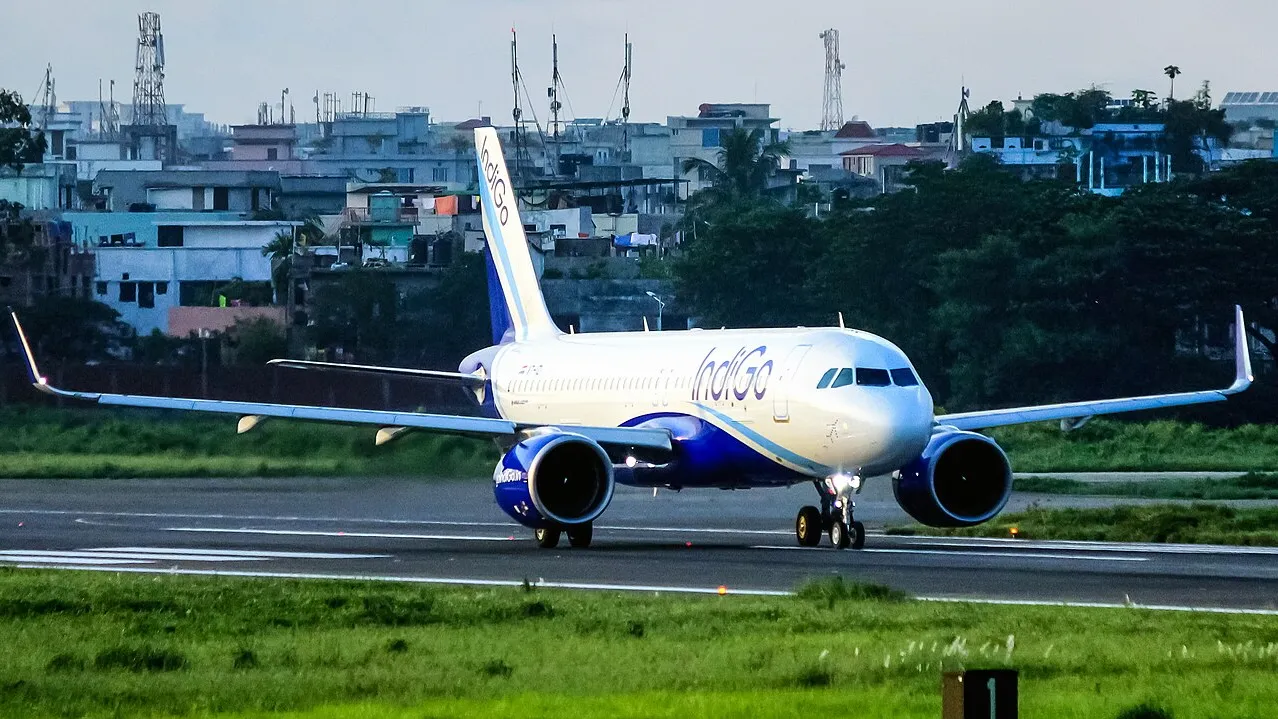
The airline said it considers the order “erroneous” and announced it will contest the demand before the appropriate authority. On the same day, a Kuwait-Hyderabad IndiGo flight 6E-1234—an Airbus A321-251NX— landed safely at one of its hubs Mumbai’s Chhatrapati Shivaji Maharaj International Airport at 7.45 am, following a bomb scare. The coupling of these two incidents resulted in the carrier’s “stock hitting a Rs 5,680 low, down by around 2 per cent from Monday’s close“, reported The Week.
Details of IndiGo’s Near $15 Million Penalty Order
The penalty order from CGST Kochi centers on the denial of input tax credit that IndiGo had availed during FY 2018–19 and FY 2021–22. According to the airline’s regulatory filing, the demand includes disallowed input tax credits and an associated penalty totaling ₹117.52 crore.
IndiGo’s public statement described the order as “erroneous” and asserted it has a “strong case on merits,” based on advice from external tax professionals. The Economic Times quoted the airline as having said:
“The department has denied input tax credit (ITC) availed by the Company and has issued a demand order along with penalty. The Company believes that the order passed by the authorities is erroneous. Further the Company believes that it has a strong case on merits, backed by advice from external tax advisors. Accordingly, the Company will contest the same before the appropriate authority.”
The airline further clarified that it foresees no material impact on liquidity, operations, fleet deployment, or future business plans.
Market reaction was relatively muted: shares of IndiGo opened nearly flat and dropped only slightly on day one, indicating that investors interpreted the penalty as a manageable regulatory headwind rather than a fundamental threat to the airline’s business model.
Broader Implications for Indian Aviation and Indigo
IndiGo holds roughly two-thirds of the share of the domestic aviation market in India, and in August 2025 alone, it carried over 8.3 million domestic passengers.
As of 1 December 2025, InterGlobe’s market capitalisation stood at about ₹2.24 lakh crore, with the stock delivering a solid 38% return over the past year and posting modest gains in recent weeks.
According to ts2.tech, key valuation metrics remain elevated, with a trailing P/E of roughly 43.8x, a P/B of about 24.2x, and a P/S near 2.7x. Despite IndiGo’s rapid growth trajectory, its consolidated debt-to-equity ratio for FY25 remains relatively conservative at around 0.27–0.29x, reflecting a manageable leverage profile.

Bottom Line
The ₹117.52 crore penalty served on IndiGo by CGST Kochi for disputed ITC claims marks one of the largest such regulatory demands on an Indian airline.
Two weeks earlier, InterGlobe Aviation was also charged a penalty of nearly $22,400 (Rs 20 lakh) in the “Implementation of Standard Instrument Departure (SID) Instrument Flight Procedure (IFP) formulated by the Company for Udaipur Airport, instead of being promulgated by Airport Authority of India (AAI) as mandated under Rule 133A of The Aircraft Rules, 1937 read along with DGCA CAR 9/EN para nos 2.2 and 2.34.“




.jpg)

.jpg)